
What you need to know about coffee bean density
There are many ways to judge the quality of coffee. For roasters, density of coffee beans is important data that helps them better understand the coffee flavor profile and choose the right roasting and grinding methods for each type. For more details about grain density and how it affects roasting, let’s find out with XLIII Coffee through this article!
Density definition of coffee beans
Coffee bean density is the term used to describe the consistency of coffee. It represents the mass density of coffee beans per unit volume.
Usually, you can tell the density based on the shape and size of the particle. If the grain has a straight and wide gap in the middle, it means the grain is less dense. If the grain has a narrow and curved fissure, it means the grain is denser or denser. Solid coffee beans typically have a stronger flavor, roast faster, and grind finer than less dense beans.
The density of coffee beans can be affected by many factors
Altitude is one of the main factors affecting the density of coffee beans. When coffee is grown in high places, the trees and cherries ripen more slowly than in low places. This means that the time the fruit is on the tree and the biological transformation in it will take place longer, leading to more cells multiplying inside the seed, resulting in denser seeds, containing more organic substances, creating complexity for flavor. coffee taste. In addition, the high altitude also creates the right conditions for the coffee plant to grow healthy, not too hot or too dry. As a result, the coffee beans will be fuller and sweeter. However, when planted too high (over 2,000 masks) the seeds will be difficult to grow because of the negative effects of frost.
In addition, cultivars, geographical conditions, growing methods, and care also affect the consistency of coffee. Because each coffee variety will have different characteristics, some types will have a dense, dense grain texture such as Gesha, Caturra coffee beans. However, the density of seeds can change if they are grown in a separate environment. Coffee grown in different climates, humidity, rainfall, and soil types leads to the beans absorbing different amounts of minerals. This makes the biological transformation process in the fruit when ripe will also have a certain difference, creating a uniqueness in the density of coffee varieties of each growing region. Moreover, even on a growing area, a trunk, coffee beans also have different density of beans. Coffee cherries near the stem will have a denser seed density than those at the end of the branch due to the uneven distribution of nutrients.

How to measure the density of coffee beans?
Currently, there is no standard unit or method for measuring the density of coffee beans. Many families often use the term “hardness” based on the height of the growing area to measure the density of coffee. Specifically like:
The terms Soft Bean (SB) and Strict Soft Bean (SSB) are commonly used to refer to coffees grown below 1,200m above sea level. These types of coffee are less dense, less sweet and sour because the plant grows quickly and must expend stored sugar to cope with the less stable environment.
Next comes Hard Bean (HB) or High Grown (HG). This is the term for coffees grown between 1,200 – 1,370 m above sea level. At these altitudes, the seeds are harder and denser because the air is cold, less oxygen makes the growth cycle longer, and the fruit accumulates more energy.
Finally there are Strict Hard Beans (SHB) or Strict High Altitude Grown Coffee (SHG). These types of coffee are grown at altitudes of 1,370m and above, where special climatic conditions cause the beans to grow more slowly. As a result, the coffee beans have a special structure, bringing unique and rich flavors to the people who enjoy them.
Roasting method for different types of coffee density
The density of coffee beans is an important factor affecting the roasting process and coffee flavor. Coffee beans with different densities will react differently to roasting temperature and time. Coffee beans are soft, have low density, often contain a lot of air inside. Therefore, the heat transferred to the coffee beans is not uniform and slower than that of ordinary coffee beans. To roast this type of coffee beans, roasters need to use a lower temperature and increase the roasting time to avoid over-ripening or burning the beans. For hard, high-density coffee beans, the opposite is true. This coffee bean contains less air, so higher temperatures and shorter roasting times are needed to produce the desired flavor. Besides, if roasting nuts of different densities together, it will be difficult to get consistency and clarity in the overall flavor. Therefore, before roasting, we need to classify and choose the appropriate roasting levels so that the batches of coffee are most perfect.

Understanding grain density will make your tasting process more enjoyable and complete. If you want to experiment, visit XLIII Coffee to choose for yourself original, single-origin coffee beans!
Source: perfectdailygrind
Articles you may be interested in
– Does a zero-waste cafe exist?
– Taste of Cerro Azul #0350 – Masterpiece of Cafe Granja La Esperanza
– Shaya #056 coffee beans – a precious gift from the people who protect Gesha Ethiopia

Bài viết mới


- Taste the Origin
Nigussie Nare – Murago Outgrowers #03028: Cultivated from the Values of Sustainable Reciprocity
Nestled beneath the shade trees of Sidama, Bensa, the Nigussie Nare – Murago Outgrowers #03028 coffee lot serves as a living testament to the values of sustainable reciprocity. This symbiosis begins with the intimate bond between a rich indigenous ecosystem and the smallholder farmers of the Murago region. Each harvested bean is the culmination of a virtuous cycle: a stable environment produces exceptional bean quality, and sustainable economic growth, in turn, continues to protect the verdant canopy of the great forest.

- Taste the Origin
Rift Valley Coffee Caucus #03757 – A Testament to Western Kenya’s Collective Spirit
Turning our gaze to the Great Rift Valley of East Africa, the fertile volcanic landscapes are witnessing an inspiring transformation. Moving away from fierce, survival-driven competition, smallholder farmers in Western Kenya have chosen to join forces, forging a resilient and unified network. The Rift Valley Coffee Caucus #03757 lot stands as the ultimate testament to this remarkable collective synergy.

- Breaking News
Airworks Coffee & XLIII Coffee – A “handshake” that brings original flavors across borders
XLIII Coffee, alongside our key wholesale partner Airworks Coffee, officially announces the latest release of specialty coffee lots for the North American market. This event reaffirms our commitment to bringing original flavors across all geographical barriers to coffee enthusiasts.
Early access (for Subscribers of Airworks): 10:00 AM (PST) | Wednesday, April 29, 2026
General access: 10:00 AM (PST) | Friday, May 1, 2026
We invite our Customers and Partners to visit (airworkscoffee.com) for detailed information and to prepare for this special release!
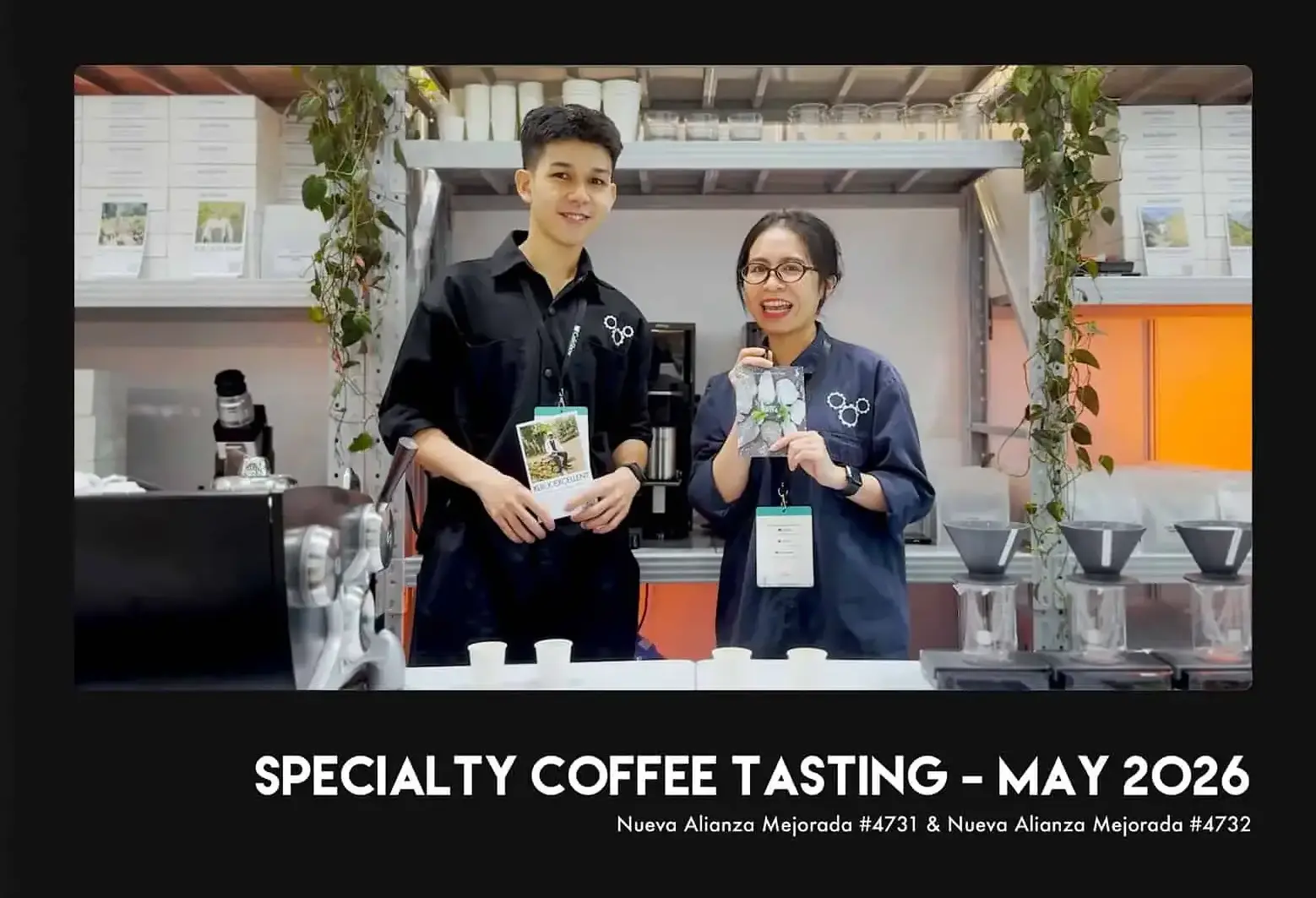
- Taste the Origin
Unveiling May Discovery Subscription: Nueva Alianza Mejorada #4731 & Nueva Alianza Mejorada #4732
The Discovery Subscription is a silent dialogue, a place where the soul of the connoisseur finds a harmonious beat with distant lands. Like a transparent lens, we become storytellers, meticulously peeling back layers of cultural sediment, the breath of the soil, and the human philosophies hidden within every coffee bean.
May arrives with brilliant streaks of golden sunlight, a time when we long to hide beneath the lush, dew-drenched canopies of Santa Teresa. Amidst the silence of the Andes, when compassion touches Mother Earth, what will we hear? Perhaps it is a sweet response that nature reserves solely for souls who know how to wait patiently.

- Taste the Origin
Nueva Alianza Pacamara #4733 – The essence of Cusco with elegant jasmine notes
Nueva Alianza Pacamara #4733 is a testament to the miraculous terroir and dedicated cultivation of the renowned Cusco region. The combination of the characteristic Pacamara bean size and ideal altitude has forged a flavor profile of immense sophistication and depth. From the very first moment, this lot captivates with its elegant jasmine notes, radiating a gentle, pure fragrance akin to a flower blooming in the morning dew.

Specialty Coffee in Vietnam
BRAND VALUE
YOU SHOULD HAVE KNOWN
XLIII Coffee has been aiming to become a big, impactful company with social responsibilities,
have access to high-quality raw materials and convey the complete original values of coffee to our customer
