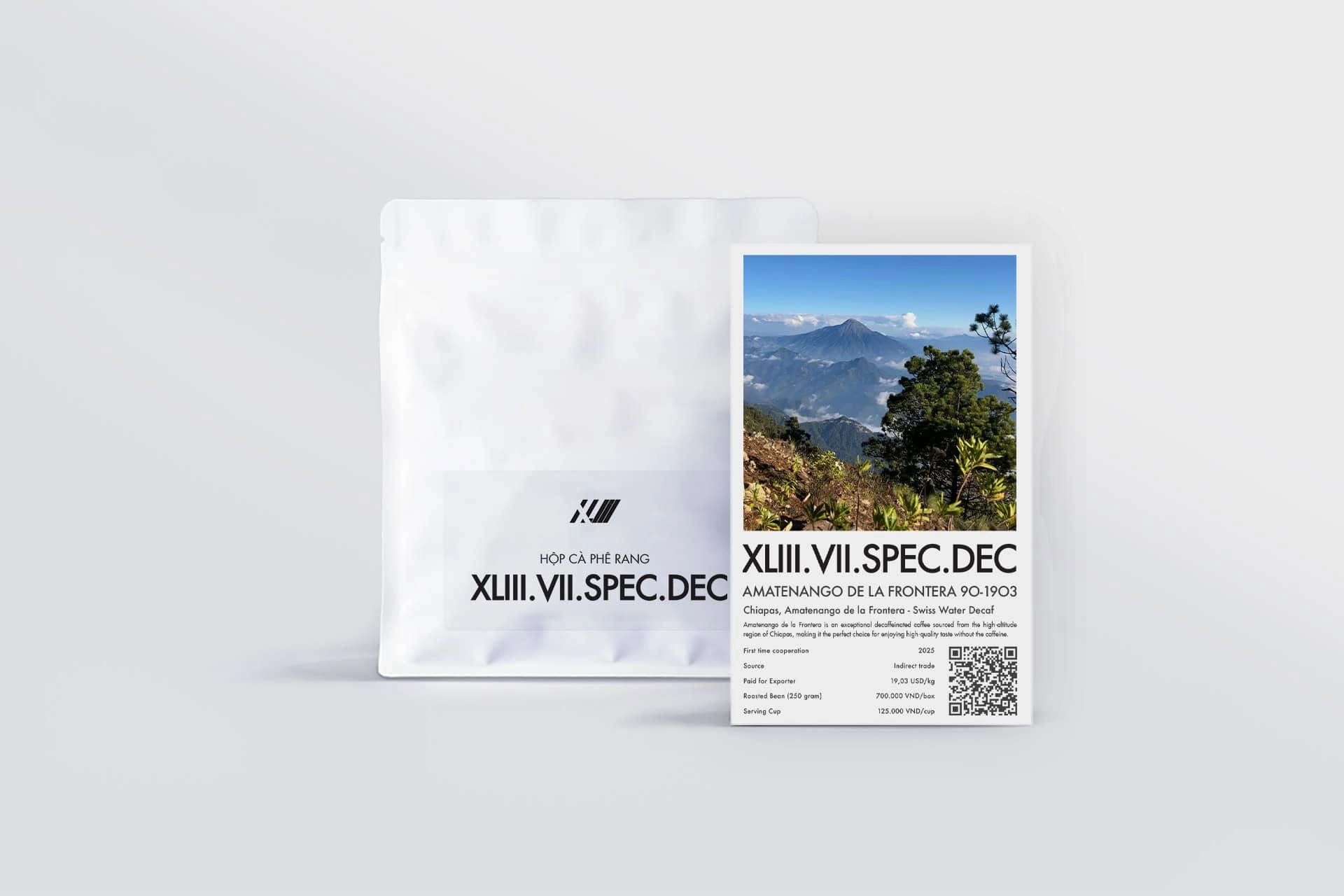
Amatenango de la Frontera
- First time cooperation: 2025
- Cooperation model: Indirect Trade
About
Amatenango de la Frontera is a special coffee-growing region located in the state of Chiapas, positioned just a short distance from the Guatemalan border. This strategic geographical location creates a unique microclimate, enabling the area’s coffees to exhibit remarkable flavor characteristics.
Located at an altitude of 1,600 meters above sea level in the Sierra Madre de Chiapas, this high-altitude mountainous area represents an ideal terroir, blessed with perfect natural conditions for cultivating high-quality Arabica coffee. Coffee is grown at altitudes between 1,300 and 1,700 meters above sea level. The region benefits from ample rainfall, stable temperatures, and nutrient-dense volcanic soil, which provides the essential minerals for optimal coffee plant development.
Chiapas - Land of Maya and Biodiversity
Located in the southwest of Mexico, the Chiapas region has a contrasting landscape of coasts, valleys, mountains and tropical forests. It is one of the most important coffee producing regions in Mexico, accounting for 40% of the country’s total production.
Significantly, Chiapas shares a border with Guatemala’s famous Huehuetenango region, which has a significant influence on the coffee’s aromatic profile. The climatic conditions in Chiapas make for rich and varied agriculture. Coffee and cocoa are grown here, as well as bananas, corn, mangoes, honey and cane sugar.
Mexico is a diverse and challenging coffee-growing region. It is home to many indigenous communities: Maya, Tseltal, Tzotzil, Ch’ol, Tojol-ab… farmers who are proud of their heritage and their unique varieties, which date back several centuries. Most of the coffee plantations are family-run and there is a growing number of solidarity-based cooperatives. In short, this is a region rich in culinary, cultural and geographical diversity!
A Community of Small Producers
The Beneficio Comunitario Sierra Madre, located in Amatenango de la Frontera on the border with Guatemala, brings together around a hundred small producers who share the same challenge: to confront the highly extractive agriculture that commodity buyers are shaping in the region.
They also want to restore the value of the classic Arabica varieties and not be satisfied with the trend towards the introduction of high-yielding varieties. The majority of farms are small, family-run estates where farmers employ traditional cultivation methods: intercropping with subsistence crops and maintaining natural shade provided by native trees. This practice not only protects the local ecosystem but also slows the coffee cherry maturation process, allowing the beans to accumulate sugars and develop deeper flavor complexity.
These independent farmers are supported by Jesús Salazar (Caféologo) and his team. Their goal: to promote sustainable coffee growing by involving producers from Mayan communities and to value their work through the prism of quality.


The Caféologo Project - A Humanistic and Philosophical Vision
Caféologo was founded by Jesús, who says he is the “generation 0” of his family in the coffee business. Originally from Tuxtla, the capital of the Chiapas region, he lives with his family in San Cristóbal de las Casas. He launched his “Cafeologia” project in 2010, which includes a hotel, a coffee shop and several washing and drying stations.
Jesús’ aim is to develop a coffee-growing project involving the Mayan communities. In 2010, he began working with 4 farmers. Today, he is in direct contact with 280 micro producers who grow coffee in their own gardens Belco. The diversity of flavour profiles in Caféologo’s coffees is incredible. His vision of coffee growing is philosophical and humanist.
Jesús Salazar is a doctor, philosopher, educator, entrepreneur, and most significantly, a global advocate for Chiapas coffee. He currently works with 250 families in the highlands of Chiapas and Amatenango de la Frontera in a scheme in which coffee growers are not obliged to comply with tonnages or qualities. He considers himself a developer rather than a buyer because he provides training, learns from the coffee growers, and supports them in their improvement initiatives.
Meticulous Processing Methods
This specific coffee lot is a meticulous consolidation from numerous small producers within the community. Despite their small scale, these growers uphold and refine fully washed production methods that have been passed down through generations.
After selective hand-picking, the cherries are pulped and undergo a careful fermentation stage in tile or cement tanks. This process is closely monitored to ensure proper acid and flavor development. Following a thorough washing to remove all mucilage, the green coffee is naturally patio-dried under the sun until it reaches the optimal moisture content.
Here, a blend of Typica, Bourbon, Caturra, Marsellesa and Catimor, in a washed process for a cup with notes of lemon, sugar cane and blueberry.
This meticulous attention to detail at every stage of processing results in high-quality green beans ready for subsequent treatments, such as decaffeination.
Why We Choose Amatenango de la Frontera
Amatenango de la Frontera represents a coffee model that XLIII Coffee has always believed in: small communities, big vision. Jesús Salazar’s Caféologo project is not just about buying and selling coffee, but about building a sustainable ecosystem where Mayan farmers are empowered through knowledge, training, and fair markets. This humanistic philosophy – placing people and community before profit – is completely aligned with XLIII Coffee’s core values.
We also value how the small producers here remain committed to classic Arabica varieties, refusing the trend of chasing high yields and instead focusing on quality. In an increasingly industrialized coffee world, Amatenango de la Frontera preserves traditional farming methods – intercropping, natural shade, no chemicals – practices that not only produce excellent coffee but also protect the biodiversity and Mayan culture that has existed for centuries.
This is the future XLIII Coffee wants to help build: where quality, sustainability, and social responsibility are not marketing words, but commitments lived daily through every cup of coffee.