
Ratnagiri Estate
- First time cooperation: 2025
- Cooperation model: Direct Trade
Overview
Nestled within the protected biodiverse sanctuary of Western Ghats, Ratnagiri Estate stands as a pioneering example of how specialty coffee can be cultivated in harmony with nature. This estate—whose name means “Pearl Mountain”, it alludes to the dense silver oak trees populating the hillside in and around Ratnagiri Estate, the oaks provide shade for coffee —is not only rich in elevation and natural canopy but also deeply embedded in one of the most ecologically sensitive and wildlife-rich regions.
Since initiating exports in 1994 following government liberalization, Ratnagiri Estate has emerged as one of foremost producers of high-grade specialty coffee. Today, it supplies some of the most discerning markets in the world—including the U.S., Europe, Japan, and the Middle East—with coffees renowned for their traceable origin, consistent quality, and forward-thinking processing.
FAMILY TRADITION
The story of Ratnagiri Estate begins in 1927 with the late Patre K Shivappaiya, who left the city to transform an untamed forest into a coffee-growing sanctuary. By 1934, the first harvests marked the fruits of his commitment. His son continued this legacy, and since 1989, the estate has been led by Ashok Patre, the third generation of the family.
Under Ashok’s stewardship, the estate underwent full replanting, introduced advanced varietals, and in 2016 began its transformation into a modern specialty producer. Today, with Divya Patre overseeing harvest quality and long-serving staff like Venkatesh Rao and Mahesh managing operations and agronomy, Ratnagiri represents a rare blend of family heritage and technological sophistication.
Philosophy of Quality Control and Development
At Ratnagiri Estate, quality is not merely a result—it is a deliberate value system, designed, maintained, and continually refined through structured thinking and strategic investment in people. Rather than relying solely on favorable seasons, the estate has built strong internal capabilities to control the entire value chain—from soil and plant to people and post-harvest processing.
Each harvest season functions as a closed loop of experimentation, calibration, and documentation, gradually forming a comprehensive dataset for each variety, plot, and microclimate. This disciplined approach—where nature meets data—has allowed Ratnagiri to maintain remarkable consistency in an industry inherently subject to fluctuation.
Beyond technical training, Ratnagiri has developed proprietary internal protocols aligned with global specialty standards. These ensure not only the monitoring of quality but also its continual improvement. As a result, the team at Ratnagiri doesn’t merely preserve quality—they innovate upon it, establishing new benchmarks for every batch that leaves the estate.

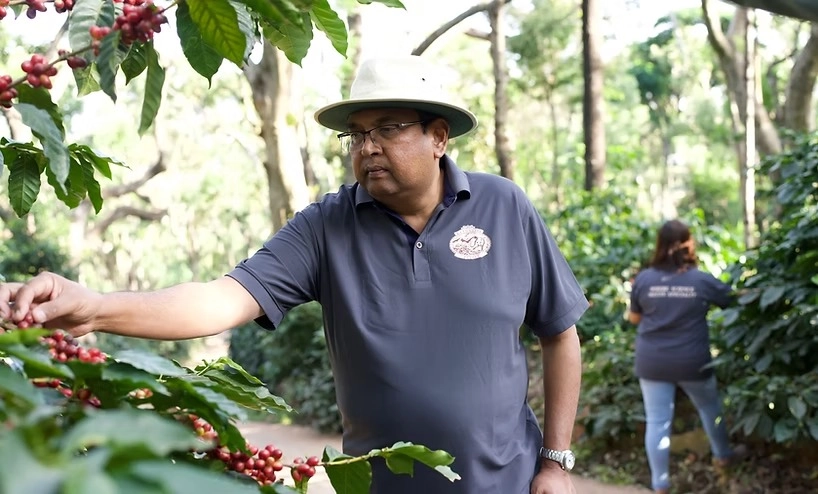


Microbial revolution in coffee processing
When measured solely by terroir or geographic reputation, Ratnagiri Estate may not carry the same immediate prestige as legendary origins in East Africa or Latin America. Yet, this apparent modesty is exactly what allows its brilliance in scientific and technological advancement to shine through. In the realm of biological precision and fermentation innovation, Ratnagiri stands among the most advanced producers in Asia today.
At Ratnagiri, coffee is not just a product of nature—it is the result of deliberate, controlled microbial action. From advanced bioreactors managing each stage of fermentation, to wild yeast inoculations, carbonic maceration techniques, and data-driven process optimization, every step is powered by science. Technologies like optical color sorting and vacuum-sealed Ecotact packaging further enhance consistency and freshness.
As one industry expert noted, “Ratnagiri may not rival others in terroir alone, but when it comes to microbial science, fermentation design, and post-harvest engineering—they are without question a top-tier producer in Asia.”
With this level of innovation, XLIII Coffee sees Ratnagiri not simply as a supplier—but as a gateway to the next generation of coffee production: one rooted in data, natural biodiversity, and microbiological intelligence. Ratnagiri helps us push beyond origin narratives and step into an era where coffee quality is not just discovered—it is designed.
DISTINCTIVENESS OF RATNAGIRI COFFEE
The harvesting and processing system at Ratnagiri is a model of traceability and control. Ripe red cherries are carefully handpicked and delivered to the estate’s on-site wet mill. Each lot is kept separate and labeled with a unique code that includes the plot name, date of harvest, and processing method.
Upon intake, cherries are pulped using an Ecopulper, which has reduced water usage by up to 65% compared to traditional methods. The parchment is then fermented for 12 hours in tiled tanks, washed in clean water, and transferred to parabolic solar dryers, where it is turned regularly for uniform drying. The drying phase lasts approximately 22 days, after which parchment is hulled on-site at Ratnagiri’s own dry mill facility—ensuring quality control from tree to export-ready bean.


By embracing wild microbial ecosystems and harnessing precision fermentation, Ratnagiri has redefined how specialty coffee can be processed, especially in Asia. Rather than imitating traditional flavor profiles, they pursue scientifically guided, terroir-responsive innovation, crafting coffees that are not only unique, but replicable across harvests.
Commitment to sustainability and environmental protection
In addition to his relentless pursuit of cup quality, Ashok Patre places equal emphasis on protecting the environment that sustains the estate. Coffee trees at Ratnagiri are grown under 50% shade cover, a level Ashok believes is optimal for reducing the risk of fungal infections while enhancing bean density and flavor development. Fertilization is done exclusively with organic compost and natural inputs, reinforcing the farm’s commitment to regenerative agriculture.
The estate is nourished by two freshwater streams that run through the property. To safeguard these water sources, Ratnagiri has implemented a strict wastewater treatment protocol, ensuring that all effluent from processing is filtered and treated before being returned to the environment.
WHY WE CHOOSE RATNAGIRI ESTATE
At XLIII Coffee, our mission is rooted in delivering originality, transparency, ethical sourcing, and long-term sustainability. Ratnagiri Estate embodies these values—demonstrating that cutting-edge coffee production can still honor legacy, environment, and community.
We were particularly drawn to Ratnagiri’s scientific integrity and transparency. Their willingness to share data, processes, and traceability aligns seamlessly with our pursuit of full-spectrum transparency across the supply chain. This is not just about information—it’s about empowering producers, informing consumers, and building trust through clarity.
Moreover, Ratnagiri’s emphasis on ethical practices, environmental stewardship, and continuous research mirrors our own commitment to socially responsible sourcing. Their methods reflect accountability—not only to the soil and ecosystem—but to the people and stories behind every harvest.
By including Ratnagiri Estate in our portfolio, we extend our reach into the cutting edge of fermentation-led processing, while continuing to uphold the original ideals that shaped XLIII Coffee’s journey. Their presence in our lineup represents more than a new flavor—it marks the beginning of a deeper exploration into science-based coffee craftsmanship that respects both nature and nuance.


Chandragiri LMF-01
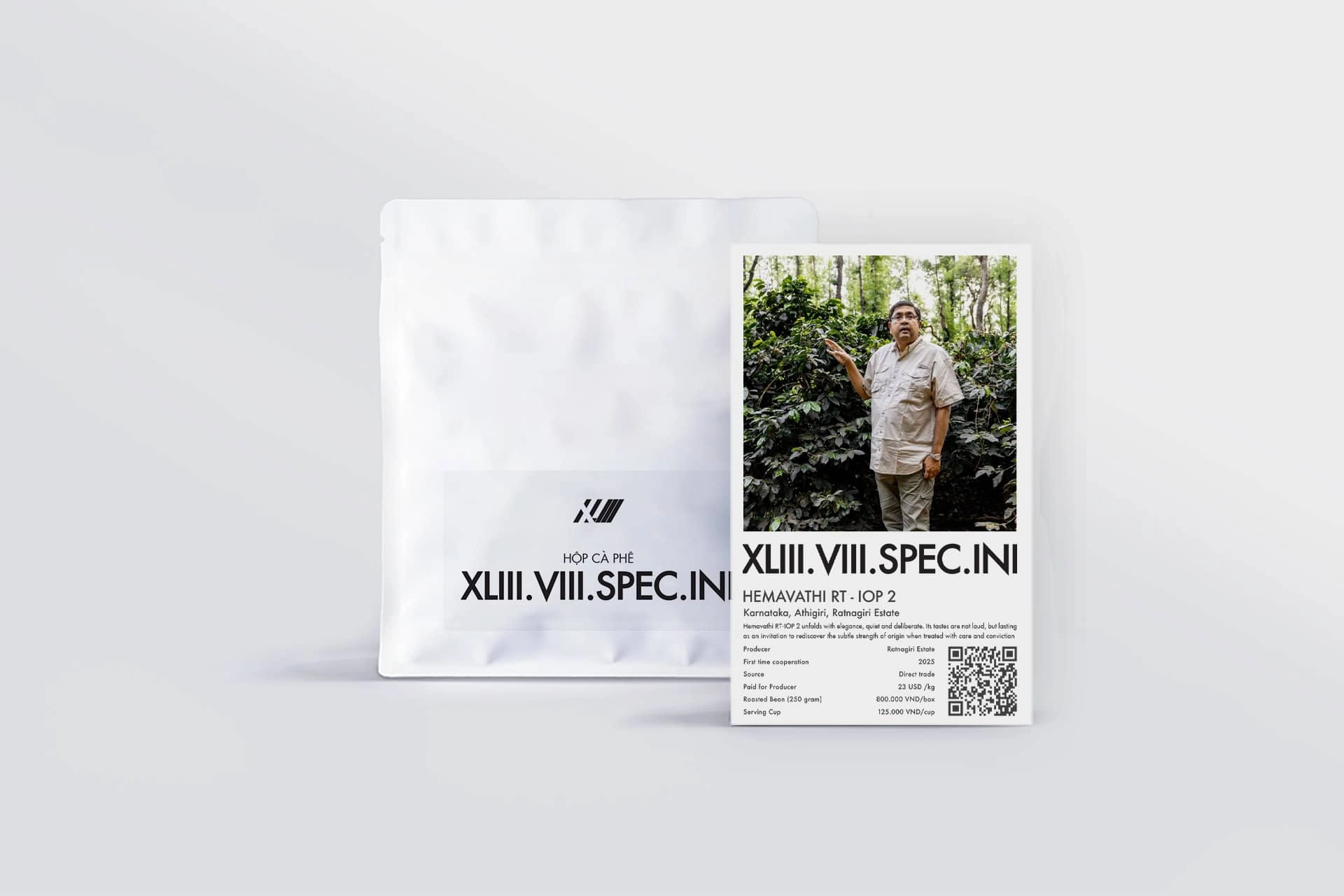
Hemavathi RT-IOP 2

Ratnagiri SLN9 RT-YB

Ratnagiri Catuai RT-YC


