
Direct Trade Coffee – The Piece Completing Specialty Coffee
Is the journey of coffee beans from farm to cup truly fair and transparent? In the past, coffee passed through one or two intermediaries before reaching roasters, making it difficult for farmers to get fair prices and control over their product’s origin. However, with the rise of the specialty coffee movement, a new trade model has emerged—direct trade coffee. How does this model differ, and why is it essential for the future of sustainable coffee? Let XLIII Coffee guide you through this journey.
I. What is Direct Trade Coffee?
Although it has gained popularity in the specialty coffee industry in recent decades, direct trade coffee still lacks a formal definition. According to industry experts Garrett Odell of Cirque Coffee Roasters and Patrick Murray of Finca Mahajua, direct trade coffee is a coffee trading model without intermediary interference. It establishes a direct trade channel between producers and roasters. Moreover, the relationship between roasters and producers is built to ensure long-term collaboration based on mutual agreement on issues like quality, price, and fairness.

Direct trade coffee is a model of coffee trading that eliminates intermediaries.
II. Drawbacks of the Traditional Coffee Trade Model
The traditional trade model, with multiple intermediaries, raises concerns about traceability, quality, fairness, and ethics.
Coffee Pricing Issues
The traditional coffee supply chain involves many players. While farmers create the initial value, numerous intermediaries—buyers, regional agents, exporters, importers, and distributors—stand between them and the end consumer. As coffee passes through these intermediaries, the price is often inflated, disconnecting the value from the actual worth.
Erosion of Transparency
With many intermediaries involved, there is a lack of clarity in the coffee’s journey. Each player may alter processes such as storage, mixing, or processing, making it harder to ensure clear traceability. This undermines trust and quality, as consumers are unsure of what they are drinking, and farmers receive little feedback on their product quality.
Economic Vulnerability for Farmers
A report from the International Coffee Organization (ICO) highlighted that in complex supply chains, farmers are often the most economically vulnerable. Their lack of power to negotiate leaves them at the mercy of intermediaries, who leverage their market knowledge to manipulate prices. This leads to unfair compensation for farmers, while intermediaries profit from the knowledge gap.
Quality Instability
Multiple intermediaries dilute the commitment to quality. As intermediaries are not directly linked to the coffee’s quality, the product’s value often decreases. This discrepancy results in an inflated price for consumers, while farmers lack the resources to invest in quality improvements.

Directly imported coffee can enhance traceability, transparency, and quality.
III. How Direct Trade Coffee Addresses These Issues
Direct trade coffee has emerged as a comprehensive solution to the issues present in traditional trade models.
Transparency in the Supply Chain
Direct trade coffee is a holistic solution to address the lack of transparency that is often eroded in traditional trade systems. In traditional trade, farmers often lose contact with the end consumer, making it difficult to track the quality and origin of the product. Direct trade establishes a closer connection between producers and roasters, cutting out intermediaries. This not only helps trace coffee from cultivation to consumption but also provides buyers with detailed information on farming practices, processing methods, and the product’s environmental impact.
Through this system, both producers and consumers gain a clearer understanding of the product, building trust through transparency. This transparency adds value to the product by increasing consumer confidence.
Price Negotiation Power and Economic Fairness
One of the key advantages of direct trade coffee is that it empowers farmers to negotiate prices directly. In traditional models, farmers are often underpaid due to a lack of direct negotiation with buyers, relying instead on intermediaries who exploit information gaps for profit.
In direct trade, farmers and roasters can negotiate prices without intermediaries. This protects farmers’ economic rights, ensuring they receive a price that reflects the effort, production costs, and quality of their coffee. According to a survey by Fair Trade USA, direct trade has helped increase farmers’ incomes by up to 25% compared to traditional models, which is particularly significant for small-scale farmers.
The ability to negotiate prices directly supports farmers in improving their financial situation, encouraging them to invest more in their production processes and, in turn, enhance the quality of their coffee. When price is tied directly to quality, farmers are motivated to refine their cultivation, processing, and storage techniques.
Reducing Dependence on Global Markets
A significant issue with traditional trade models is that farmers are subject to global market price fluctuations, which they have no control over. Factors such as global coffee market volatility, exchange rates, and shipping costs all impact the final price farmers receive.
In contrast, direct trade helps reduce dependence on these fluctuations. Instead of relying on daily market prices from global exchanges, direct trade agreements are often based on long-term contracts, with prices determined by fixed factors such as production costs and product quality. This brings economic stability to farmers and allows them to plan for the long term.

Buying and selling specialty coffee directly can ensure sustainability.
Encouraging Sustainable Development and Quality Improvement
In the direct trade model, farmers benefit not only economically but also gain opportunities for sustainable development. Many roasters involved in this model encourage or require farmers to adopt environmentally friendly farming practices, such as organic farming, reducing chemical use, and protecting biodiversity. This not only helps protect the environment but also supports sustainable farming and results in higher-value products.
Moreover, direct trade fosters collaboration between farmers and roasters in developing specialty coffee or premium products based on specific demands. When farmers clearly understand the quality requirements of roasters, they can focus on improving cultivation and processing techniques to produce better products, increasing both value and profits.
Direct Feedback and Long-Term Partnerships
Another important aspect of the direct trade model is the creation of long-term partnerships between farmers and roasters. These relationships go beyond simple transactions to form sustainable cooperation. Roasters often provide direct feedback on product quality, helping farmers gain insights to improve their farming and processing methods. Conversely, roasters gain a deeper understanding of the challenges farmers face, fostering a sustainable partnership and mutual growth.
Environmental Protection
Direct trade also contributes to creating an eco-friendly coffee supply chain with lower carbon emissions. Farmers are encouraged to adopt sustainable farming methods that protect the environment and preserve biodiversity. By reducing intermediaries, the transportation and distribution processes become more efficient, minimizing greenhouse gas emissions. Thus, the benefits of direct trade extend beyond economic gains, contributing to the global reduction of environmental harm.
Community Development
By emphasizing fairness and shared benefits, direct trade can improve farmers’ incomes, enabling them to invest in their farms and communities, enhancing infrastructure, education, and healthcare. Farmers can enjoy better living conditions and greater economic stability in rural areas. This model also promotes collaboration and knowledge-sharing among farmers and international partners, helping rural communities develop more sustainably. The direct relationship between farmers and roasters creates a mutually beneficial value chain, strengthening trust and supporting long-term development.
IV. Challenges of the Direct Trade Coffee Model
While the benefits of direct trade are numerous, the model also faces challenges.
Capital and Market Access Barriers
Small farmers and businesses may struggle to raise the capital needed to expand or access international markets due to high transportation costs and trade barriers.
Risk of Informal Agreements
Without formal contracts, there is a risk of disputes over quality and price, as negotiations are often based on trust rather than written agreements.
Quality and Production Risks
Harsh weather conditions, such as droughts or floods, can reduce both coffee quality and yield, making it difficult for small farmers to maintain consistent product quality.

Directly imported coffee may encounter issues related to bureaucracy and paperwork
V. XLIII Coffee’s Commitment to Direct Trade
As a business committed to sustainability, XLIII Coffee has made significant efforts to adopt direct trade coffee across its entire operation. We recognize that implementing direct trade in sourcing green coffee beans is a powerful tool to enhance product quality while ensuring the sustainability of our supply chain. Through long-term collaboration and consistent, direct commitments, we are taking steady steps to build a sustainable foundation in managing supply chains, fostering fair relationships, traceability, and transparency in all operational processes. This contributes to the sustainable development of the global coffee industry.
XLIII Coffee continuously improves its operational processes, exploring every option, experimenting, and doing everything possible to directly connect with our production partners. We do not shy away from the significant risks associated with this model. XLIII Coffee understands that all sustainable partnerships must be built on strong commitments, responsibility, and transparency, whether the transactions are direct or indirect. Thus, with each partner, we give special attention, care, and clarity to contract agreements regarding quality standards and sustainability, while offering support to achieve the best outcomes.
Conclusion
Direct trade coffee not only solves the shortcomings of the traditional model but is also key to the sustainable development of the specialty coffee industry. With its focus on fairness, transparency, and superior quality, direct trade enhances the value of specialty coffee on the global market. Through direct trade, XLIII Coffee seeks to provide customers with a product that embodies sustainability, ethics, and exceptional quality.
XLIII Coffee’s specialty coffee batches are imported through direct trade.
VI. FAQs
Q1: What is Direct Trade Coffee?
Direct trade coffee is a business model in which coffee producers and roasters trade directly with each other, eliminating intermediaries. This model ensures greater transparency, clear traceability, and fair prices for farmers.
Q2: Why does the traditional trade model disadvantage farmers?
The traditional model involves numerous intermediaries, making it difficult to trace coffee and maintain consistent quality. Farmers are often underpaid, while the intermediaries take the majority of the profits, leaving farmers with little return for their hard work.
Q3: How does direct trade address issues in the supply chain?
Direct trade ensures transparency and traceability, allowing farmers to negotiate fair prices directly with roasters. This guarantees that farmers receive appropriate compensation and are incentivized to maintain high standards in coffee production.
Q4: What are the benefits of the direct trade coffee model?
The direct trade model offers higher product quality, fosters sustainability, and promotes transparency throughout the supply chain. It also supports community development by improving income for farmers, which enables them to invest in infrastructure, education, and healthcare.
Q5: What challenges does direct trade coffee face?
Direct trade coffee can encounter challenges like limited access to capital, market entry barriers, risks from informal agreements, and unpredictable production quality due to weather conditions.
These FAQs help clarify the benefits and challenges of direct trade coffee, and how it contributes to a more sustainable and equitable coffee industry.

Bài viết mới

- Find the Origin
Mandela coffee variety – A convergence of generations from a masterpiece breeding strategy
Amidst the constant fluctuations of the era, Mandela emerges as a gentle yet resilient response from the soil. Instead of attempting to alter or impose upon nature, this breeding strategy is, in essence, a profound act of listening. Each Mandela coffee bean carries the bloodline of multiple generations, possessing both the serene, steadfast nature of native trees and the sparkling elegance of premium varieties. It is a sacred continuation, where the flow of generations ultimate honors the original value of the species, imparting an intact and sustainable vitality into every cup.


- Taste the Origin
Nigussie Nare – Murago Outgrowers #03028: Cultivated from the Values of Sustainable Reciprocity
Nestled beneath the shade trees of Sidama, Bensa, the Nigussie Nare – Murago Outgrowers #03028 coffee lot serves as a living testament to the values of sustainable reciprocity. This symbiosis begins with the intimate bond between a rich indigenous ecosystem and the smallholder farmers of the Murago region. Each harvested bean is the culmination of a virtuous cycle: a stable environment produces exceptional bean quality, and sustainable economic growth, in turn, continues to protect the verdant canopy of the great forest.

- Taste the Origin
Rift Valley Coffee Caucus #03757 – A Testament to Western Kenya’s Collective Spirit
Turning our gaze to the Great Rift Valley of East Africa, the fertile volcanic landscapes are witnessing an inspiring transformation. Moving away from fierce, survival-driven competition, smallholder farmers in Western Kenya have chosen to join forces, forging a resilient and unified network. The Rift Valley Coffee Caucus #03757 lot stands as the ultimate testament to this remarkable collective synergy.

- Breaking News
Airworks Coffee & XLIII Coffee – A “handshake” that brings original flavors across borders
XLIII Coffee, alongside our key wholesale partner Airworks Coffee, officially announces the latest release of specialty coffee lots for the North American market. This event reaffirms our commitment to bringing original flavors across all geographical barriers to coffee enthusiasts.
Early access (for Subscribers of Airworks): 10:00 AM (PST) | Wednesday, April 29, 2026
General access: 10:00 AM (PST) | Friday, May 1, 2026
We invite our Customers and Partners to visit (airworkscoffee.com) for detailed information and to prepare for this special release!
- Taste the Origin
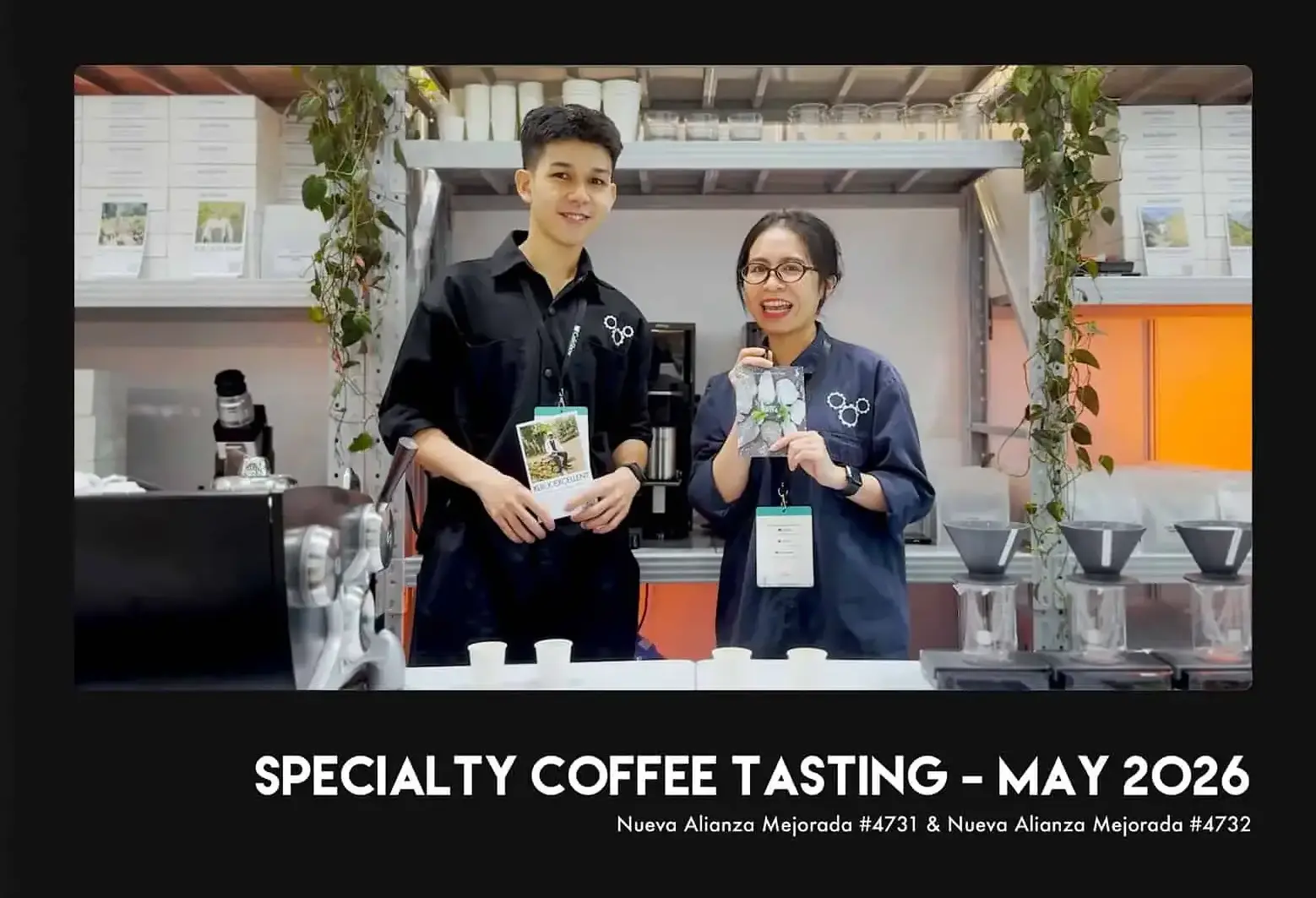
Unveiling May Discovery Subscription: Nueva Alianza Mejorada #4731 & Nueva Alianza Mejorada #4732
The Discovery Subscription is a silent dialogue, a place where the soul of the connoisseur finds a harmonious beat with distant lands. Like a transparent lens, we become storytellers, meticulously peeling back layers of cultural sediment, the breath of the soil, and the human philosophies hidden within every coffee bean.
May arrives with brilliant streaks of golden sunlight, a time when we long to hide beneath the lush, dew-drenched canopies of Santa Teresa. Amidst the silence of the Andes, when compassion touches Mother Earth, what will we hear? Perhaps it is a sweet response that nature reserves solely for souls who know how to wait patiently.

Specialty Coffee in Vietnam
BRAND VALUE
YOU SHOULD HAVE KNOWN
XLIII Coffee has been aiming to become a big, impactful company with social responsibilities,
have access to high-quality raw materials and convey the complete original values of coffee to our customer
