
El Salvador’s Specialty Coffee Region: Home of volcanic beans
El Salvador’s Specialty Coffee Region is renowned for its diverse coffee varieties grown on dormant volcanoes. Each area offers unique flavors, creating exceptional coffee experiences. Discover the allure of El Salvadoran specialty coffee!
Table of Contents
I. Introduction to El Salvadoran Specialty Coffee
Despite its small size, El Salvador is a prominent player in the global specialty coffee industry.
El Salvador’s position in the global coffee industry
Located in Central America and bordered by the Pacific Ocean, El Salvador is one of Central America’s leading coffee producers, known for its specialty-grade coffee products favored on the international market. The country mainly produces Arabica coffee, celebrated for its rich and complex flavors. Although El Salvador accounts for only about 1-2% of global coffee production, it is renowned in the specialty coffee sector. Intense competition and a focus on quality have helped El Salvador build a strong reputation in the international coffee market.
The importance of coffee to El Salvador’s economy
Coffee plays a crucial role in El Salvador’s economy, serving as the primary source of income for many farming families and one of the nation’s key export commodities. The coffee industry also generates employment and contributes to community development, especially in rural areas. Coffee accounts for approximately 3-4% of GDP and creates thousands of jobs. Additionally, around 100,000 families in El Salvador rely on coffee production for their livelihood.

El Salvador is located in Central America, bordered by the Pacific Ocean, and is one of Central America’s leading producers of specialty coffee products.
II. History of El Salvadoran Specialty Coffee
El Salvador’s coffee industry has experienced many ups and downs, from periods of prosperity and decline during war to recovery efforts.
The introduction of Coffee to El Salvador
Coffee was introduced to El Salvador in the early 19th century when the first coffee plants were cultivated in the northwest region. Initially grown as ornamental plants, coffee quickly became an important commercial crop.
Key milestones in El Salvador’s coffee history
– 19th Century: Coffee began to be widely cultivated and became the main export by the century’s end. By 1880, coffee accounted for 50% of El Salvador’s total export value.
– Early 20th Century: El Salvador’s coffee industry boomed, with production and exports soaring. The country became one of the world’s largest coffee exporters, reaching a peak production of about 1 million bags (60 kg/bag) in 1929.
– 1970s-1980s: Civil war and political instability significantly reduced coffee production. Many plantations were abandoned or destroyed, causing production to drop from 3.5 million bags in 1979 to 1.5 million in 1985.
– Post-civil war: Efforts to rebuild the coffee industry focused on quality and sustainable production. Certification programs like Rainforest Alliance and Fair Trade became widespread. Coffee production gradually recovered, reaching around 2.3 million bags by the decade’s end.
Today, El Salvador is actively rebuilding its coffee industry with support from international organizations and farmer training programs. Initiatives like coffee certification programs and international cooperation have helped El Salvador regain its position in the specialty coffee market.

Coffee was introduced to El Salvador in the early 19th century, with the first coffee plants cultivated in the northwest region.
III. Specialty Coffee regions in El Salvador
El Salvador’s unique geography, with high mountains, volcanic soil, and favorable climate, creates ideal conditions for specialty coffee cultivation in regions like Ahuachapán, Chalatenango, La Libertad, Santa Ana, San Salvador, and Morazán.
Ahuachapán
– Geography and terrain: Located in western El Salvador in the Apaneca-Ilamatepec region, one of the country’s most famous volcanic ranges. Coffee is grown at altitudes ranging from 500 to 2,365 meters above sea level (masl), ideal for high-quality varieties.
– Climate: Ahuachapán has a stable climate with distinct rainy and dry seasons and mild temperatures year-round.
– Flavor profile: Coffee from Ahuachapán features diverse flavors, from nutty and chocolate notes to floral and fruity hints. It is balanced and sweet.
Chalatenango

El Salvador’s unique geography, with high mountains, volcanic soil, and favorable climate, enables the creation of specialty coffee-growing regions.
– Geography and terrain: Situated in northern El Salvador near the Honduran border, Chalatenango consists of high mountains and valleys, with coffee grown at altitudes of 1,200 to 1,600 masl.
– Climate: The climate is cool and humid, perfect for coffee cultivation.
– Flavor profile: Chalatenango coffee is known for its complex flavors, combining jasmine, fruit, and chocolate notes for a rich and unique experience.
La Libertad
– Geography and terrain: Located in western El Salvador in the Balsamo-Quetzaltepec region, one of the oldest coffee-growing areas, with altitudes from 500 to 1,800 masl.
– Climate: The climate is relatively stable, with mild temperatures and consistent rainfall.
– Flavor profile: Coffee from La Libertad is rich, with chocolate and caramel notes, balanced acidity, and a sweet aftertaste.
Santa Ana
– Geography and terrain: Also part of the Apaneca-Ilamatepec region in northwestern El Salvador, Santa Ana has active volcanoes and fertile soil.
– Climate: Santa Ana has a cool climate and abundant rainfall, ideal for coffee growing.
– Flavor profile: Santa Ana coffee offers complex flavors, including tropical fruit, floral, and chocolate notes, providing a unique coffee experience.
San Salvador
– Geography and terrain: The capital city, located in central El Salvador, with coffee growing on the San Salvador volcano.
– Climate: San Salvador has a cool, stable climate with consistent rainfall.
– Flavor profile: San Salvador coffee has complex flavors, with fruity and chocolate notes, balanced acidity, and a sweet aftertaste.
Morazán
– Geography and terrain: Located in eastern El Salvador, with altitudes ranging from 800 to 1,400 masl.
– Climate: The climate is cool and humid, well-suited for coffee cultivation.
– Flavor profile: Morazán coffee offers complex flavors, with floral, fruit, and caramel notes, providing a rich and diverse coffee experience.

El Salvador’s mountainous terrain and fertile soil provide ideal conditions for cultivating high-quality coffee varieties.
IV. Main coffee varieties of El Salvador
The specialty coffee regions of El Salvador focus on cultivating Arabica coffee varieties, including:
Bourbon
– Biological characteristics: Bourbon is one of the oldest and most commonly grown Arabica varieties in El Salvador. Introduced in the 19th century, it quickly became a high-quality coffee at high altitudes.
– Flavor profile: Bourbon coffee from El Salvador is known for its rich and complex flavors, with notes of red fruits like cherry, natural sweetness, and mild acidity. The smooth and lingering aftertaste creates a unique and refined coffee experience.
– Biological characteristics: Pacamara is a hybrid of Pacas and Maragogipe, developed by the Salvadoran Coffee Institute (ISIC). It is one of El Salvador’s most famous varieties, characterized by large beans and high yields.
– Flavor profile: Pacamara coffee is known for its bold and complex flavors, often featuring tropical fruit, floral, and caramel notes. Its acidity ranges from mild to medium, and it has a smooth and sweet aftertaste.
Pacas
– Biological characteristics: Pacas is a natural mutation of Bourbon, discovered in El Salvador in 1949. This variety is disease-resistant and well-adapted to El Salvador’s climate and terrain.
– Flavor profile: Pacas coffee offers diverse flavors, including chocolate, caramel, and fruit notes. It is well-balanced and complex, with mild acidity and a sweet aftertaste, making it one of the popular varieties in El Salvador.

El Salvador’s Specialty Coffee Region is dedicated to growing Arabica coffee.
V. Coffee production and processing
Focusing on advanced cultivation techniques and diverse processing methods is key for farmers producing specialty coffee in El Salvador to enhance product quality.
Cultivation techniques
Farmers in El Salvador prioritize sustainable farming, using environmentally friendly methods like organic fertilizers and biodiversity protection. Coffee plants are often intercropped with shade trees, maintaining moisture and reducing soil erosion. Many farms practice organic agriculture, avoiding chemicals and pesticides.
Harvesting methods
Coffee in El Salvador is hand-picked to ensure only ripe cherries are harvested, optimizing flavor and quality. Although labor-intensive, manual harvesting is more effective than mechanized methods, preventing damage and preserving freshness.
Processing methods
Three main processing methods are used in El Salvador:
– Washed (Wet) Processing: This method involves fermenting and washing coffee beans to remove the mucilage, resulting in clean flavors, high acidity, and floral notes.
– Natural (Dry) Processing: Cherries are sun-dried without removing the outer skin, producing bold, sweet coffee with dried fruit notes.
– Honey Processing: A combination of washed and natural methods, where mucilage is partially retained during drying. Honey-processed coffee offers complex, sweet flavors with medium acidity.
Innovations in coffee production
Recently, Salvadoran coffee producers have adopted new techniques, such as advanced drying and fermentation technologies, to improve coffee quality. Experiments with dry, anaerobic fermentation, and other variations are creating unique and appealing flavors.

Recently, coffee producers in El Salvador have adopted advanced drying and fermentation technologies to enhance coffee bean quality.
VI. Quality and classification
In El Salvador, standards and certifications are used to determine coffee quality, ensuring only the best beans are classified as specialty.
Coffee classification system in El Salvador
El Salvador uses international standards to classify specialty coffee, considering factors like growing altitude, flavor, cleanliness, and bean uniformity. Flavor evaluation is conducted by experts through cupping sessions. Uniformity in bean size and color is crucial for even roasting and optimal flavor.
Certifications and labels
Many farms in El Salvador have achieved international certifications like Rainforest Alliance, Organic, and Fair Trade. These certifications ensure coffee is produced sustainably and fairly, contributing to environmental protection and farmer welfare.
– Rainforest Alliance: This certification ensures coffee is produced following environmental protection standards, including forest and wildlife conservation.
– Organic: Organic certification confirms coffee is grown without chemicals or pesticides, ensuring sustainability and consumer safety.
– Fair Trade: Fair Trade ensures farmers receive fair prices for their products, improving living and working conditions for them and their families.

El Salvador applies international standards to classify specialty coffee, considering factors such as growing altitude, flavor, cleanliness, and bean uniformity.
VII. Challenges and prospects
The coffee industry in El Salvador faces challenges such as climate change, pests and diseases, price volatility, and competition in the global market.
– Climate change: Climate change can alter climatic and soil conditions, affecting coffee yield and quality. According to World Coffee Research, rising temperatures could reduce El Salvador’s coffee-growing area by 50% to 70% by 2050.
– Pests and diseases: Diseases like Roya (coffee leaf rust) have caused significant damage in recent years. The International Coffee Organization reports that Roya reduced El Salvador’s coffee production by about 50% in 2013.
– Price volatility: International coffee prices often fluctuate, impacting farmer income. Factors like changes in supply and demand, trade policies, and global economic shifts can cause price volatility. According to the International Coffee Organization (ICO), coffee prices have experienced significant fluctuations over the past decade, making farmer incomes unstable.
– Competitive pressure: Competition from other coffee-producing countries like Brazil, Colombia, and Vietnam poses a significant challenge to El Salvador. These countries have larger production scales and lower costs, making El Salvadoran coffee less competitive in price. Moreover, the rise of artificial coffee and alternative beverages challenges the traditional coffee industry.

Climate change can alter climatic and soil conditions, impacting coffee yield and quality.
Responses to Challenges in the El Salvadoran Coffee Industry
Through innovation and efforts by farmers and producers, El Salvador’s coffee industry has promising prospects and continues to maintain its position in the global specialty coffee market. Initiatives like cultivating disease-resistant and drought-tolerant coffee varieties and improving product quality are helping El Salvador’s coffee industry overcome challenges and develop sustainably.
– Disease-resistant, drought-tolerant varieties: Initiatives to plant drought-resistant and disease-tolerant coffee varieties are widely implemented. Varieties like Pacamara and Bourbon are bred for better Roya resistance and drought tolerance. These varieties not only increase yields but also improve bean quality.
– Improving quality: Enhancing product quality through advanced cultivation and processing methods is helping El Salvador’s coffee industry overcome challenges and develop sustainably. Farmers are adopting sustainable farming techniques, using organic fertilizers, protecting the environment, and improving processing methods to enhance coffee flavor and quality.
– International certifications: Certifications like Rainforest Alliance, Organic, and Fair Trade are helping El Salvadoran coffee build credibility in the global market. These certifications ensure product quality and help farmers access premium markets and receive fairer prices for their products.
– Collaboration and innovation: Collaboration among farmers, producers, and international organizations promotes innovation and sustainable development in the coffee industry. Training programs and technical support help farmers improve skills and productivity, fostering community development in El Salvador.

El Salvadoran farmers and producers are working to develop drought-resistant and disease-resistant coffee varieties to improve their competitive position.
Conclusion
El Salvador’s Specialty Coffee Region is celebrated for its unique flavors and quality. It provides vital income and represents national pride. The industry supports conservation and local livelihoods, contributing to sustainable development.
Related questions
Question 1: What are the main specialty coffee-growing regions in El Salvador?
El Salvador has several renowned coffee-growing regions, including Ahuachapán, Chalatenango, La Libertad, Santa Ana, San Salvador, and Morazán.
Question 2: What is the importance of coffee to El Salvador’s economy?
Coffee is vital to El Salvador’s economy, accounting for about 3-4% of GDP and creating thousands of jobs. Around 100,000 families rely on coffee production, making it a primary income source and key export commodity.
Question 3: What are the flavor characteristics of coffee from famous regions in El Salvador?
– Ahuachapán: Balanced and sweet flavors with nutty, chocolate, floral, and fruity notes.
– Chalatenango: Complex flavors, combining jasmine, fruit, and chocolate notes.
– La Libertad: Rich flavors with chocolate and caramel notes, balanced acidity, and a sweet aftertaste.
– Santa Ana: Complex flavors, including tropical fruit, floral, and chocolate notes.
– San Salvador: Complex flavors with fruit and chocolate notes, balanced acidity, and a sweet aftertaste.
– Morazán: Complex flavors with floral, fruit, and caramel notes.
Question 4: What are the biggest challenges facing the El Salvadoran coffee industry?
The El Salvadoran coffee industry faces challenges such as climate change, pests and diseases, price volatility, and competitive pressure from other specialty coffee-producing countries.
Question 5: What are the popular specialty coffee varieties in El Salvador?
Popular specialty coffee varieties in El Salvador include:
– Bourbon: Known for rich, complex flavors with red fruit and cherry notes, and a smooth aftertaste.
– Pacamara: Recognized for bold, complex flavors, including tropical fruit, floral, and caramel notes.
– Pacas: Balanced flavors with chocolate, caramel, and fruit notes, mild acidity, and a sweet aftertaste.

Bài viết mới
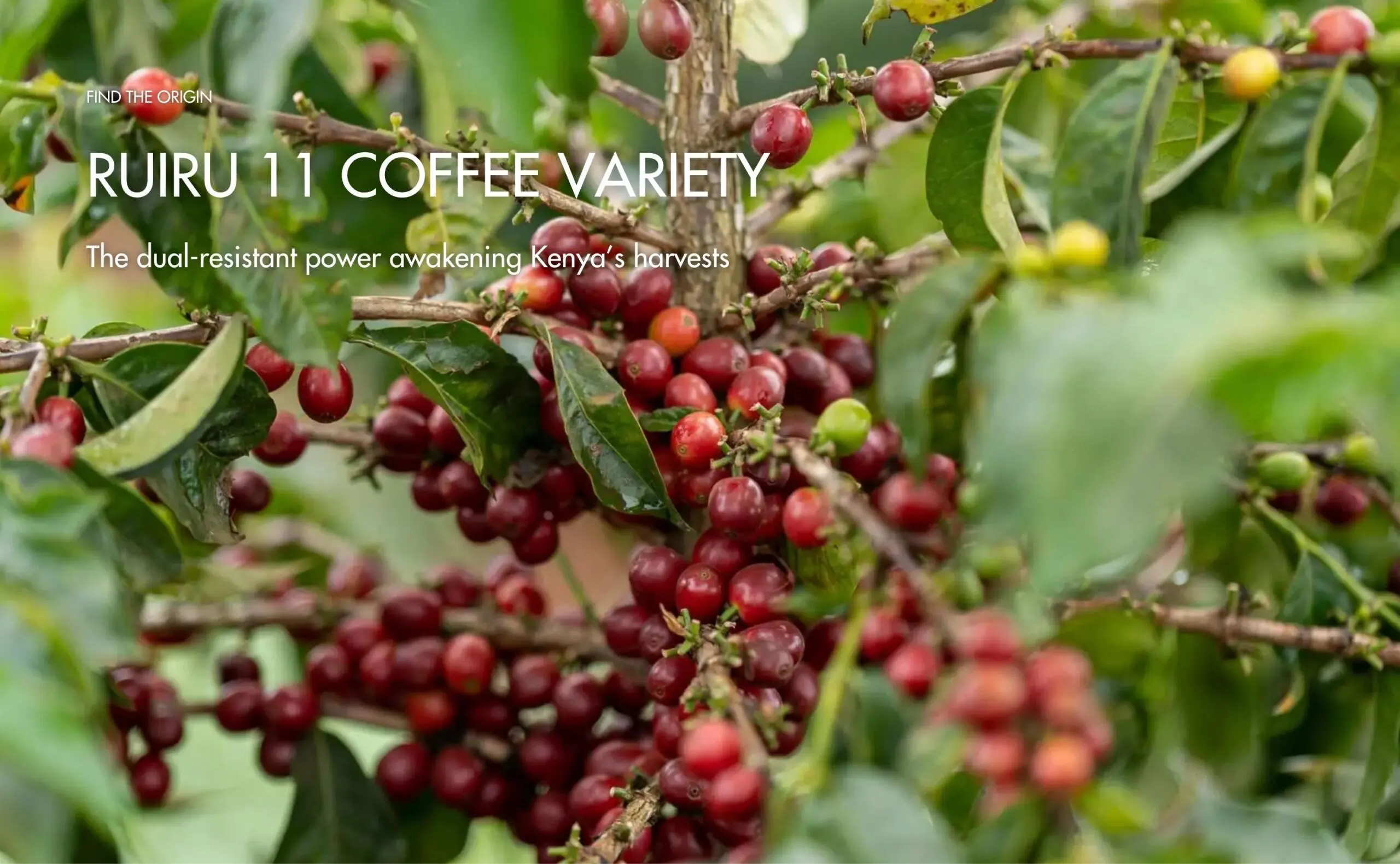
- Find the Origin
Ruiru 11 coffee variety – The dual-resistant power awakening Kenya’s harvests
Born from the ashes of a devastating pandemic, Ruiru 11 is a resilient response of indigenous wisdom to the trials of nature. Carrying a complex genetic code from 66 sibling isolines, this humbly statured coffee variety possesses superb “dual-resistance” against the twin shadows of Coffee Berry Disease and Coffee Leaf Rust. Overcoming early prejudices and the paradox of trade-offs between yield and flavor, Ruiru 11 has been weaving through nurseries, awakening dormant harvests across highland hillsides, and igniting a proud flame of self-reliance for Kenyan coffee.

- Taste the Origin
Sudan Rume #00313 by CGLE – The origin legend beneath the Eucalyptus canopy
From a wild coffee lineage discovered in the Rume Mountains in the 1940s to the enduring conservation efforts of Café Granja La Esperanza, Sudan Rume #00313 by CGLE invites drinkers on a sensory pilgrimage to the birthplace of the Arabica world. It is a rare biological legacy preserved through unwavering dedication, integrity, and deep reverence for history.
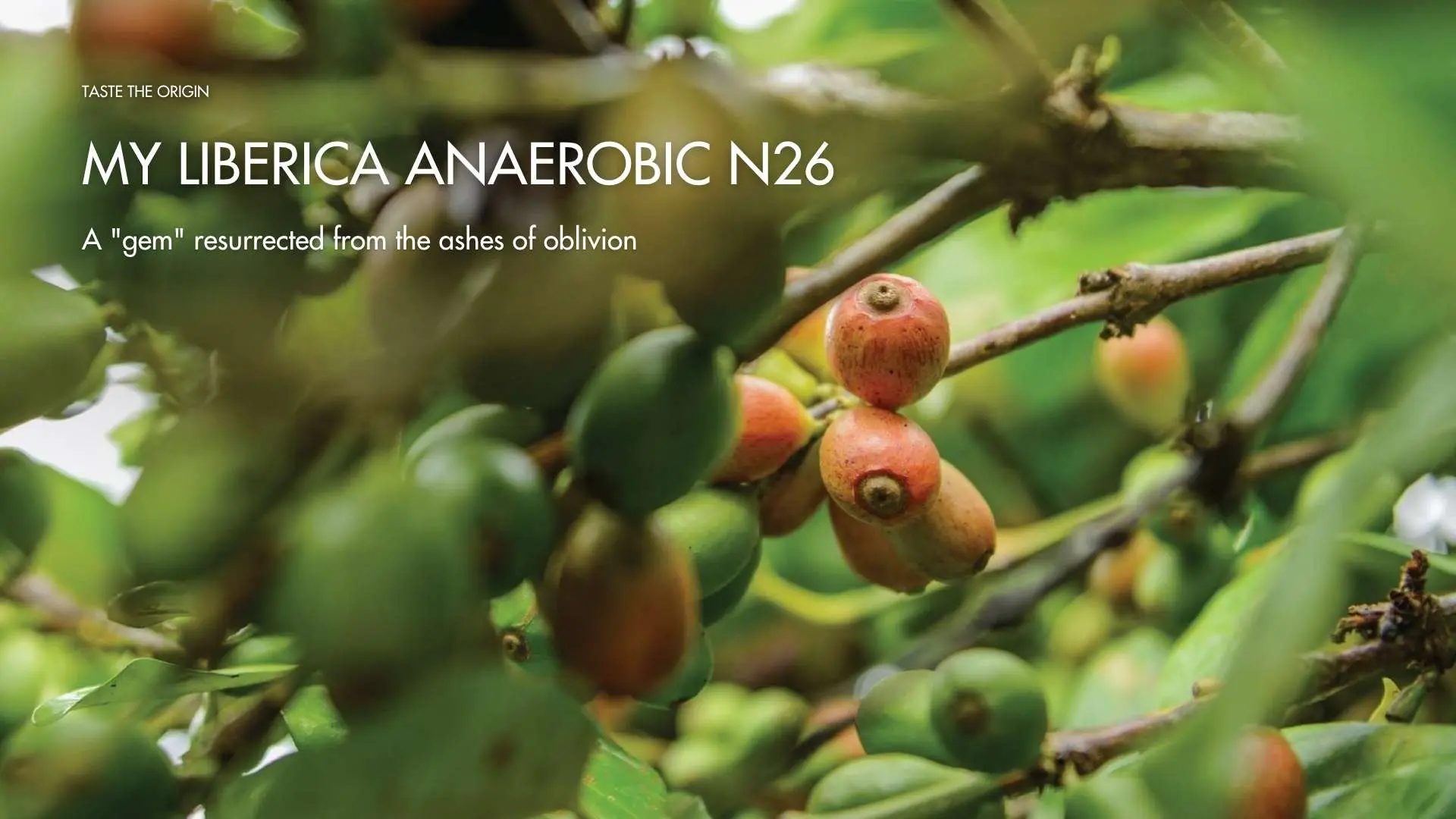
- Taste the Origin
My Liberica Anaerobic N26 – A “gem” resurrected from the ashes of oblivion
The journey of My Liberica Anaerobic N26 is the triumph of a forgotten species, awakened by the depth of understanding, patience, and faith in its original essence. From the heavy clay layers of Kulai to 26 days of transformation in absolute darkness, each step contributes to unlocking layers of flavor that the world once thought could not exist in Liberica. More than just a cup of coffee, My Liberica Anaerobic N26 is a powerful declaration that all great values begin with the courage to delve into their essence, and then rise to a unique voice that resonates throughout the world.


- Taste the Origin
Finca Soledad Mejorado Tyoxy & Fincas Putushio Mejorado – The red thread of the Jijón family
The simultaneous arrival of Finca Soledad Mejorado Tyoxy and Fincas Putushio Mejorado at XLIII Coffee paints a remarkable portrait of the adaptability of the Mejorado variety within Ecuador’s specialty coffee landscape. Nurtured by a shared family philosophy and a commitment to principled cultivation, these two processed lots represent both a breakthrough in microbial innovation and the remarkable return of an exceptional flavor profile.

- Taste the Origin
Finca La Palestina Gesha #5482 – A new chapter in the legend from Cajamarca
From the renowned Cajamarca region, Finca La Palestina Gesha #5482 returns after a period of absence with a proud and fresh appearance. Nurtured in ideal altitude conditions and the cool climate characteristic of the Andes, each coffee bean slowly accumulates subtle flavor nuances before being perfected using the Washed method to maximize the purity of the Gesha variety. Under a carefully refined extremely-light roast profile, this batch of coffee reveals layers of white jasmine, ripe citrus, and sweet golden apricot aromas, interwoven in an elegant and rich flavor structure.

Specialty Coffee in Vietnam
BRAND VALUE
YOU SHOULD HAVE KNOWN
XLIII Coffee has been aiming to become a big, impactful company with social responsibilities,
have access to high-quality raw materials and convey the complete original values of coffee to our customer
