
Ethical Specialty Coffee – Definition, standards, importance
Ethical specialty coffee is more than just a delicious cup of coffee with exceptional flavor; it embodies a deeper narrative of social and environmental responsibility. In a global coffee industry facing challenges from fair trade to climate change, ethical specialty coffee has emerged as a solution that balances outstanding quality with ethical considerations. From ensuring farmers’ rights to adopting environmentally friendly farming methods, this concept has redefined how we view coffee. So, what makes it so special and important?
I. What is Specialty Coffee?
Specialty coffee first appeared in the late 20th century, as consumers began to pay more attention to the quality and origin of coffee beans. Since then, the specialty coffee movement has spread, transforming the way coffee is appreciated worldwide. No longer just a daily drink, specialty coffee is prized for its refined flavor and meticulous production process.
The Specialty Coffee Association (SCA) defines specialty coffee with strict standards on SCA scores, quality, and attributes. Specialty coffee stands out for its diverse flavors, clear origins, and sustainable farming practices. Each type of coffee offers unique characteristics in sweetness, acidity, aroma, and aftertaste, all coming together to create a unique experience for coffee lovers.
II. Ethics in Specialty Coffee
Ethics play a vital role in shaping the core values of specialty coffee. It’s not just about delivering a high-quality cup of coffee, but also about taking responsibility for people and the environment. The combination of specialty coffee and ethics has created a new standard in the industry, where the value of taste and social responsibility are tightly intertwined.
The Meaning of Ethics in Specialty Coffee
Producing specialty coffee with ethical standards not only benefits the producers directly involved but also helps create a more sustainable ecosystem.
- Ethical Responsibility Towards Farmers
– Social Fairness:
Many coffee farmers, especially in developing countries, often face low pay and unfair working conditions. Ethical coffee certifications such as Fair Trade ensure that farmers receive fair prices, enabling them to sustain their livelihoods and invest in improving the quality of their products.
– Improving Working Conditions:
Ethical specialty coffee also focuses on improving the working conditions for those involved in the supply chain. These standards help reduce labor exploitation, ensuring that all workers operate in safe environments with basic rights, including health insurance and paid leave.
For instance, in ethical farming regions of Colombia, workers are provided with adequate housing and healthcare during the harvest season. This not only ensures worker satisfaction but also contributes to creating a stable and long-term production environment.

The concept of ethics plays a vital role in shaping the core values of specialty coffee, including delivering a high-quality cup of coffee and taking responsibility for people and the environment.
- Ethical Coffee Farming
In an industry heavily impacted by climate change, ethically produced coffee helps reduce negative environmental impacts through sustainable farming methods. Ethical coffee farms often use shade-growing techniques, limit the use of pesticides and chemical fertilizers, and conserve biodiversity in their farming areas.
These methods not only protect the ecosystem but also improve coffee quality, as fertile soil and surrounding plant life provide ideal growing conditions for coffee plants.
- Ethics in Coffee Business
Ethical business practices in the specialty coffee industry refer to the principles and standards that businesses and producers must follow to ensure fairness, transparency, and responsibility in all activities related to coffee production, processing, and distribution.
– Transparency:
All stakeholders, from coffee growers to consumers, should be able to trace the origin and production process of the product.
– Social Responsibility:
Businesses must engage in socially responsible activities, from supporting local communities to implementing sustainable development programs.
– Compliance with Ethical Standards:
International ethical standards must be adhered to, including protecting labor rights, preventing child labor, and ensuring fair working conditions.
- Gender Equality
Women play a crucial role in the coffee industry, from cultivation to processing and distribution, but they often face unequal opportunities and working conditions. Ensuring gender equality is key to the sustainable development of the specialty coffee industry. Producers and related organizations strive to address the gender gap by participating in certifications like Fair Trade, which promotes gender equality and empowers women.
Key Factors that Create Ethical Specialty Coffee
Ethical specialty coffee is built on three main pillars: fair trade, sustainable farming, and supply chain transparency.
- Fair Trade:
This is a core element of ethical specialty coffee, ensuring that farmers and workers involved in production are fairly compensated. Fair trade standards ensure that profits from coffee are not solely concentrated with large producers but are also distributed fairly to workers at the lowest levels of the supply chain.
- Sustainable Farming:
Ethical specialty coffee requires environmentally responsible farming practices. This includes minimizing the use of pesticides and chemical fertilizers, maintaining biodiversity, and conserving natural resources. For example, in Peru, many specialty coffee farms have shifted to organic farming models to protect soil and water resources. This approach ensures that coffee not only holds high value in terms of flavor but also contributes to environmental conservation.
- Supply Chain Transparency:
Transparency is a key factor in ethical specialty coffee. It builds trust and fosters strong connections between consumers and producers. With the help of blockchain technology, everyone involved in the coffee supply chain can track and control information and product quality in a clear and simple way.
The Connection Between Specialty Coffee and Ethical Coffee
Specialty coffee and ethical coffee are closely linked, as both focus on delivering high-quality products with social and environmental responsibility. However, specialty coffee goes beyond flavor, requiring strict ethical standards throughout the production process. This means that while a coffee product may meet specialty standards, if it doesn’t ensure ethical practices in the supply chain, it will not be considered ethical specialty coffee.
- Quality and Ethical Standards
Specialty coffee demands both high product quality and adherence to certain ethical standards, including ensuring that coffee is produced under fair and sustainable conditions. Many specialty coffee brands also commit to ethical standards, reflecting the combination of quality and social responsibility.
- Origin and Transparency
Transparency is a fundamental requirement in specialty coffee, helping consumers know where and how the coffee is produced. Many specialty coffee producers choose to work with farmers who follow ethical standards, creating a more transparent and fairer model within the supply chain. A prime example is XLIII Coffee – a reputable specialty coffee brand known for its high-quality coffee batches. On their journey to selecting partners, XLIII Coffee emphasizes three core values: the coffee beans, the environment, and the people.
- Responsibility
Specialty coffee is often produced on farms that adopt sustainable and eco-friendly practices, which also support ethical standards.
- Supporting Communities
Specialty coffee producers also commit to investing in community development projects and sustainable programs. These initiatives not only improve the quality of life for farmers but also lead to higher-quality coffee products.
III. The Benefits of Ethical Specialty Coffee Business

Ethical specialty coffee business encourages producers to adopt sustainable and environmentally friendly farming methods, thereby protecting soil and water resources and minimizing negative environmental impacts.
For Consumers:
- High-Quality Products: Ethical specialty coffee typically offers superior quality due to strict production standards, allowing consumers to enjoy coffee with rich and refined flavors.
- Transparency and Trust: Choosing ethical specialty coffee gives consumers confidence that the products they consume are not only high-quality but also produced fairly and sustainably.
- Positive Impact: Consumers increasingly care about choosing products that positively impact communities and the environment. By choosing ethical specialty coffee, they contribute to supporting fair and sustainable standards, creating a positive influence on the coffee industry.
For Producers:
- Improved Living and Working Conditions: Ethical specialty coffee producers benefit from fair policies and better working conditions. Programs like Fair Trade and other ethical certifications ensure that farmers are fairly compensated and work in safe environments.
- Increased Market Access: Ethical specialty coffee is often favored in international markets, opening opportunities for small producers to access premium and potential markets. Certifications like Rainforest Alliance not only enhance product reputation but also expand global market reach.
- Encouraging Sustainable Practices: The ethical specialty coffee business encourages producers to adopt sustainable and environmentally friendly farming methods, protecting land and water resources and minimizing negative environmental impacts.
IV. Challenges and Solutions in Developing Ethical Specialty Coffee
The development of ethical specialty coffee comes with many challenges, from maintaining quality standards to ensuring social fairness and managing the supply chain. However, with commitment and feasible solutions, companies and organizations can overcome these challenges and continue to grow ethical specialty coffee sustainably.
- Maintaining Quality Standards:
– Challenges: Ethical specialty coffee requires a combination of high product quality and ethical standards. Maintaining consistent quality while ensuring ethical standards can be difficult as the industry faces quality variations due to environmental, climate, or processing factors.
– Solutions: Establish strict quality control processes and collaborate with trusted partners to ensure consistent quality and ethical standards.

The development of ethical specialty coffee comes with many challenges, from maintaining quality standards to ensuring social fairness and managing the supply chain.
- Ensuring Social Fairness:
– Challenges: Income inequality and living conditions can persist if ethical standards are not uniformly and effectively enforced.
Solutions: Apply certifications like Fair Trade to ensure that social fairness standards are implemented.
- Expanding Market Awareness:
– Challenges: Many consumers are still unaware of the benefits and value of ethical specialty coffee, making market expansion challenging.
– Solutions: Increase communication efforts through events, fairs, and educational campaigns to raise awareness about ethical specialty coffee.
V. XLIII Coffee's Efforts to Build Ethical Coffee in Vietnam
On its journey to build and develop ethical coffee in Vietnam, XLIII Coffee has made important contributions by establishing ethical specialty coffee business processes.
- Sourcing Ethical Coffee:
XLIII Coffee focuses on both product quality and ethical considerations in the selection and sourcing of coffee, with the aim of creating a sustainable supply chain.
- Quality Paired with Ethical Responsibility:
Coffee quality must meet high standards, with unique and distinctive flavor profiles, ensuring that farmers receive fair benefits and that production remains eco-friendly.
- Respect for Human Value:
XLIII Coffee partners with farms that provide safe working conditions and ensure basic worker rights.
- Ensuring Consumer Rights:
XLIII Coffee carefully curates its coffee to be delivered to consumers in its most pristine and perfect form.
- Raising Consumer Awareness about Ethical Specialty Coffee:
XLIII Coffee offers an “ethical” cup of coffee that reflects both environmental care and human value.
Conclusion
Ethical specialty coffee is not only a product of combining refined flavors and high standards but also a symbol of social and environmental responsibility in the coffee industry. As consumers become increasingly concerned about the origin and value of the products they consume, ethical specialty coffee plays a crucial role in creating a fair and sustainable coffee industry. The development of ethical specialty coffee is a testament to the ongoing efforts of farmers, producers, and consumers, working towards a future of fair, sustainable, and high-quality coffee.

XLIII Coffee carefully refines each coffee bean to deliver it to consumers in its most perfect and elevated form.
VI. Related questions
Question 1: What is ethical specialty coffee?
Ethical specialty coffee not only meets high-quality standards but also focuses on ensuring fair rights for farmers, protecting the environment, and upholding ethical values throughout the production process.
Question 2: Why is ethical specialty coffee important?
Ethical specialty coffee improves the livelihoods of farmers, protects the environment, and ensures the production of high-quality coffee. Additionally, it brings sustainable value to communities and the economy.
Question 3: What are the long-term benefits of developing ethical specialty coffee?
The long-term benefits of developing ethical specialty coffee include improving farmers’ living conditions, promoting sustainable environmental conservation, creating a responsible coffee ecosystem, and generating lasting economic and social value.
Question 4: What efforts has XLIII Coffee made in developing ethical specialty coffee?
XLIII Coffee focuses on collaborating with farms that produce high-quality and ethically sourced coffee, offering technical support, research, and development while ensuring that farmers are fairly compensated.
Question 5: What distinguishes XLIII Coffee’s ethical specialty coffee from other coffees on the market?
XLIII Coffee stands out not only for its superior flavor quality but also for its ethical values, with a commitment to supporting farmers and protecting the environment, resulting in a product that offers comprehensive value.

Bài viết mới

- Taste the Origin
Finca Soledad Mejorado Tyoxy & Fincas Putushio Mejorado – The red thread of the Jijón family
The simultaneous arrival of Finca Soledad Mejorado Tyoxy and Fincas Putushio Mejorado at XLIII Coffee paints a remarkable portrait of the adaptability of the Mejorado variety within Ecuador’s specialty coffee landscape. Nurtured by a shared family philosophy and a commitment to principled cultivation, these two processed lots represent both a breakthrough in microbial innovation and the remarkable return of an exceptional flavor profile.

Finca La Palestina Gesha #5482 – A new chapter in the legend from Cajamarca
From the renowned Cajamarca region, Finca La Palestina Gesha #5482 returns after a period of absence with a proud and fresh appearance. Nurtured in ideal altitude conditions and the cool climate characteristic of the Andes, each coffee bean slowly accumulates subtle flavor nuances before being perfected using the Washed method to maximize the purity of the Gesha variety. Under a carefully refined extremely-light roast profile, this batch of coffee reveals layers of white jasmine, ripe citrus, and sweet golden apricot aromas, interwoven in an elegant and rich flavor structure.

- Taste the Origin
Finca La Palestina Red Bourbon #5487 – A blossoming legacy in the highlands of Cajamarca
Amidst the ethereal clouds of Cajamarca, where the deep forest, Mother Earth, and time harmonize, Finca La Palestina Red Bourbon #5487 is born as a proud epic of heritage. It bears witness to the story of three generations of the Alarcón Coronel family, to their respect for nature, and to their Cup of Excellence achievements. Each layer of fragrance is a journey for all the senses, leading the connoisseur into subtle and captivating depths.

- Breaking News
Royal Botanic Gardens, Kew announces new hybrid coffee named Libex
As the global coffee industry faces unprecedented challenges from climate change, the Royal Botanic Gardens, Kew (UK) has brought a ray of hope by formally announcing a natural hybrid coffee named Libex. Identified after intensive genetic research across three continents, Libex represents a perfect intersection between the resilient heat tolerance of Liberica and the robust agronomic vigor of Excelsa.

- Find the Origin
Mejorado Coffee Variety – The Perfect Blend of Bourbon & SLN Hybrid Lineage
Originating from the windswept hillsides of the South American highlands, the Mejorado coffee variety tells the story of a genetic masterpiece that is redefining the boundaries of the contemporary Specialty Coffee world. Behind a easily misunderstood name lies a completely distinct alter ego, where the sweet heritage of the Bourbon variety intertwines with the resilient vitality of the SLN hybrid lineage. Thanks to a profound slow-ripening process in the chill of extreme altitudes, this seed nurtures a magnificent flavor profile with ethereal floral and fruit notes, stepping onto the altars of global competitions to assert its status as a future icon, ready to stir the most discerning senses.
- Taste the Origin
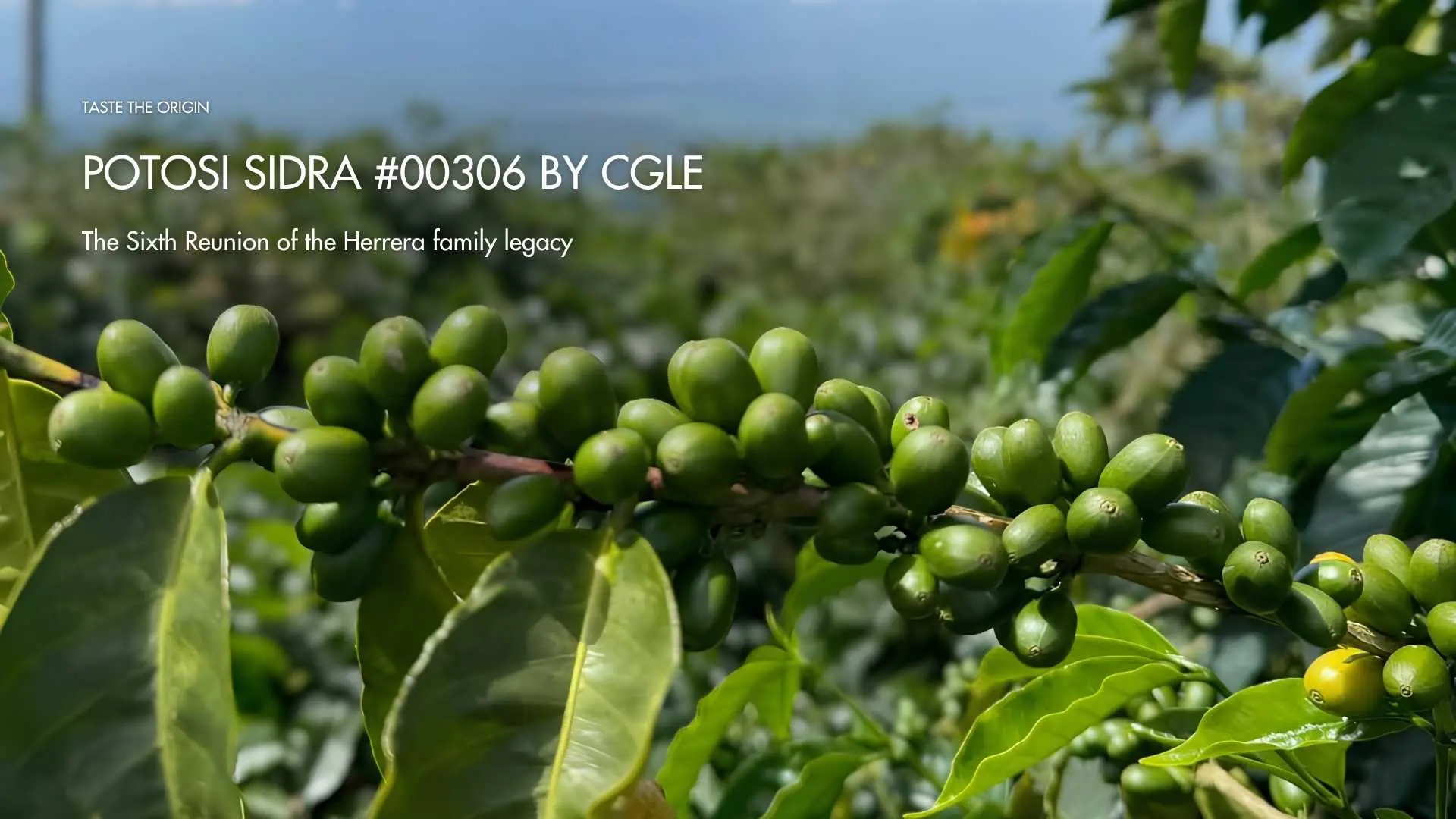
Potosi Sidra #00306 – The sixth reunion of the Herrera family legacy
The sixth harvest marks the return of Potosi Sidra #00306 by CGLE, carrying the presence of a family patriarch entrusted with more than eighty years of heritage from the Herrera family. Cultivated in the founding valley of Potosi since 1945 in Caicedonia, this genetic treasure born from the union of Bourbon and Typica presents a remarkably evolved sensory profile. Through its Extremely Light Roast philosophy and the financial transparency of the Paid for Producer model, XLIII Coffee chooses to preserve the authentic voice of terroir and the coffee’s original flavor structure.

Specialty Coffee in Vietnam
BRAND VALUE
YOU SHOULD HAVE KNOWN
XLIII Coffee has been aiming to become a big, impactful company with social responsibilities,
have access to high-quality raw materials and convey the complete original values of coffee to our customer
