
COLOMBIA’S SPECIALTY COFFEE REGIONS: Excellence in Colombian Specialty Coffee
Colombia is the third-largest coffee producer in the world and the second-largest producer of Arabica coffee. Thanks to its nearly perfect climate, Colombia’s specialty coffee regions produce high-quality beans with unique flavors, earning a significant place in the global coffee industry.
Table of Contents
- I. Introduction to Colombia's coffee industry
- II. History of Colombian coffee
- III. Colombia's Specialty coffee regions
- IV. Coffee production and processing in Colombia
- V. Quality and classification of Colombian coffee
- VI. Challenges and prospects for Colombia's coffee industry
- VII. Socio-economic impact of the coffee industry
- VIII. Related questions
I. Introduction to Colombia's coffee industry
Colombia’s coffee industry impresses experts with its abundant production and exceptional quality. The introduction of coffee has shaped the country’s land, population, economy, and culture.
Colombia’s position in the global coffee industry
For many years, Colombia was the second-largest coffee producer globally, following Brazil. However, by 2000, Vietnam surpassed Colombia, and the coffee leaf rust disease in 2008 further impacted its position. Despite these challenges, Colombia remains in the top five coffee producers, with around 10 million bags per year and annual exports of 11 to 13 million bags. In 2020, Colombia produced nearly 14 million 60kg bags, accounting for about 10% of global coffee production.
Colombia leads in specialty coffee, known for its superior quality and high market value. This is evidenced by winning awards at the prestigious Cup of Excellence competitions in 2018, 2019, 2020, and beyond.
The importance of coffee to Colombia’s economy
About 600,000 people are involved in Colombia’s coffee industry, relying on it as their primary source of income, underscoring its economic significance.
– Job creation and income: Coffee is one of Colombia’s most important agricultural exports, generating significant revenue and creating jobs for hundreds of thousands, including farmers, harvest workers, processing plant employees, and those in transportation and export.
– National branding: The Colombian coffee brand, particularly Juan Valdez, has become a global symbol of high quality and refinement, boosting coffee exports and enhancing Colombia’s international image.
– Tourism development: Coffee is integral to Colombia’s culture, and coffee tours have become a vital part of the tourism industry, attracting visitors to coffee farms to learn about production processes and enjoy high-quality coffee.

Coffee is one of Colombia’s most important export agricultural products, bringing significant revenue to the economy with millions of bags exported each year.
II. History of Colombian coffee
Colombia’s coffee industry has a rich history, making it one of the top three coffee-producing countries in the world.
Introduction of coffee to Colombia
Coffee was first introduced to Colombia in the early 17th century by Jesuit priests and Spanish settlers. The first crops were harvested in northeastern Colombia, and coffee quickly spread to small family farms, known as Fincas, across the country.
Key milestones in Colombian coffee history
– Early 18th Century: The first commercial export of Colombian coffee marked the beginning of a major industry and economic opportunity.
– 1900s: During the “Thousand Days’ War” (1899-1902), the developing coffee industry faced challenges due to stagnant international coffee prices. Many plantation owners had to distribute land to workers, allowing them to own local Fincas independently.
– Early 19th Century: A peaceful Colombia developed a logistics system enabling rural farmers to export coffee efficiently, leading to a new growth period and solidifying Colombia as a leading coffee exporter.
– 1927: The establishment of the Federacion Nacional de Cafeteros de Colombia (FNC) by prominent coffee producers from Zona Cafetera to represent farmers and negotiate fair global coffee prices marked a crucial step in strengthening Colombia’s coffee market position.
– 1930s: During the Great Depression, many large coffee estates went bankrupt. The government intervened by buying and subdividing these estates, selling them to workers who diversified crops alongside coffee, stabilizing the industry.
– 1972 to Present: FNC expanded to represent a large segment of Colombian coffee growers. Effective marketing campaigns and economic stability helped Colombia become the world’s third-largest coffee exporter. Today, Colombian coffee accounts for about 12% of the world’s coffee supply, affirming its global industry potential.

The Colombian coffee industry maintains its position with a production that accounts for about 12% of the world’s coffee supply.
III. Colombia's Specialty coffee regions
Coffee is grown in 20 to 33 provinces in Colombia, including Cauca, Caldas, Risaralda, Sierra Nevada, and others. The combination of high altitude, moderate rainfall, and the coverage of clouds, lush rainforests, mountains, and humidity makes Colombia an ideal place for growing high-quality Arabica coffee.
Specialty coffee regions in Colombia typically consist of small plots or family-run farms passed down through generations. These smaller farms allow farmers to focus on details, ensuring each batch of coffee is perfect.
– Cauca
+ Geographic Location: Located in southwestern Colombia, Cauca is notable for the Cauca River flowing between two larger Andes mountain ranges. The area has been a focal point of Colombia’s armed conflict.
+ Elevation: 1,450-2,000m (4,750-6,600 ft)
+ Harvest:
Main crop: September-December
Secondary crop (mitaca): March-June
+ Varieties: 16% Typica, 62% Caturra, 22% Castillo
+ Flavor: Cauca coffee often has bright acidity and fresh fruit flavors like orange, lemon, and green apple, with berry notes such as strawberry, cherry, and raspberry, and tropical fruit hints like mango, papaya, and citrus.
– Tolima

Coffee is produced in 20 to 33 provinces in Colombia, including Cauca, Caldas, Risaralda, Sierra Nevada, and others.
+ Geographic Location: Located in west-central Colombia, Tolima features diverse terrain and favorable conditions for high-quality coffee cultivation.
+ Elevation: 1,200-1,900m (3,900-6,200 ft)
+ Harvest:
Main crop: March-June
Secondary crop (mitaca): October-December
+ Varieties: 9% Typica, 74% Caturra, 17% Castillo
+ Flavor: Tolima coffee offers fresh fruit flavors like orange, lemon, and green apple, providing a refreshing and harmonious experience.
– Huila
+ Geographic Location: Situated in southwestern Colombia, Huila is known for its diverse landscapes and favorable natural conditions.
+ Elevation: 1,250-2,000m (4,100-6,600 ft)
+ Harvest:
Main crop: September-December
Secondary crop (mitaca): April-May
+ Varieties: 11% Typica, 75% Caturra, 14% Castillo
+ Flavor: Huila coffee combines bright fruit flavors like orange, lemon, and red berries with distinctive cacao and chocolate notes, creating an irresistible appeal.
– Quindio
+ Geographic Location: A small region in central Colombia, west of Bogota. Coffee is vital to Quindio’s economy, which faces high unemployment. It houses the National Coffee Park, a theme park centered around coffee production.
+ Elevation: 1,400-2,000m (4,600-6,600 ft)
+ Harvest:
Main crop: September-December
Secondary crop (mitaca): April-May
+ Varieties: 14% Typica, 54% Caturra, 32% Castillo
+ Flavor: Quindio coffee blends bright citrus and berry flavors with rich cacao and chocolate notes.
– Risaralda
+ Geographic Location: A province in the Cafetera region, renowned for high-quality coffee production.
+ Elevation: 1,300-1,650m (4,300-5,400 ft)
+ Harvest:
Main crop: September-December
Secondary crop (mitaca): April-May
+ Varieties: 6% Typica, 59% Caturra, 35% Castillo
+ Flavor: Risaralda coffee features rich fruit flavors like orange, lemon, red berries, and tropical fruits, complemented by floral notes such as jasmine, orange blossom, and violet.
– Narino
+ Geographic Location: Narino is in southwestern Colombia, bordering Ecuador to the south. Its proximity to the equator provides a suitable climate for coffee cultivation.
+ Elevation: 1,500-2,300m (4,900-7,500 ft)
+ Harvest: April-June
+ Varieties: 54% Typica, 29% Caturra, 17% Castillo
+ Flavor: Narino coffee often has natural sweetness with brown sugar or caramel notes and a perfect balance of flavor, aroma, and aftertaste.
– Antioquia
+ Geographic Location: This region is the birthplace of Colombian coffee and the FNC. Antioquia is in northwestern Colombia, bordered by the Caribbean coast, Cordoba, Bolívar, Chocó, and Cauca.
+ Elevation: 1,300-2,200m (4,300-7,200 ft)
+ Harvest:
Main crop: September-December
Secondary crop (mitaca): April-May
+ Varieties: 6% Typica, 59% Caturra, 35% Castillo
+ Flavor: Antioquia coffee has a rich, balanced flavor with mild bitterness and natural sweetness.

The scale of coffee production in Colombia typically consists of small plots or small farms passed down through generations within families.
– Impact of natural conditions on Colombian coffee quality
Colombian coffee beans benefit from favorable natural conditions, creating exceptional quality and unique, irresistible flavor profiles.
+ Elevation: Coffee in Colombia is typically grown at high altitudes of 1,200 meters and above, providing ample sunlight and cool temperatures, ideal for slow coffee bean development and rich flavor.
+ Climate: This tropical country, located on the equator, features diverse geography and climate variations by region, with stable year-round temperatures, low temperature fluctuations, and distinct wet.

Colombian coffee is often grown in high mountain regions, from 1200 meters and above, creating ideal conditions for coffee plants to grow slowly and develop rich flavors.
IV. Coffee production and processing in Colombia
Most coffee producers in Colombia own small plots of land, often family-owned. These farms are typically represented and supported by the Federación Nacional de Cafeteros de Colombia (FNC).
Cultivation techniques
Located near the equator, with diverse soils, Colombia provides optimal growth conditions. Farmers in the country’s main coffee regions benefit from a temperate climate and high elevations, with some mountain ranges exceeding 2,000 meters above sea level. As a result, most Colombian coffee is shade-grown, cultivated under the canopy of larger trees, often using organic farming techniques.
Harvesting methods
Coffee is harvested year-round in Colombia due to its widespread production areas. The main harvest season runs from October to February, peaking in November and December. A secondary harvest, known as Mitaca, occurs about six months after the main season.
Most coffee harvesting in Colombia is done manually. Farmers handpick the cherries, meticulously selecting only the ripe ones while discarding unripe or rotten ones. The selected cherries are collected in baskets worn around the waist or hips.
Processing methods
Washed processing is the traditional and most common method in Colombia, practiced by over 500,000 family farms. This method is favored due to its minimal labor and supervision requirements and the abundant, stable rainfall year-round in Colombian coffee-growing regions.
Natural and semi-washed processing methods are also present but primarily used by larger farms. With increasing global market competition, many producers experiment with new, proprietary processing methods, such as the X.O. process by Café Granja La Esperanza.

Washed processing is the traditional and most popular method in Colombia, with more than 500,000 farms.
Drying methods
Coffee in Colombia can be dried using various methods:
– Roof drying (Elvas): Small-scale farmers often dry parchment on the flat roofs of their houses to utilize sunlight.
– Polytunnels and parabolic beds: In high-altitude farms with cooler climates, polytunnels and parabolic beds protect coffee from rain and fog, preventing condensation.
– Drying drawers: In Antioquia, movable drying drawers are placed under houses or sheds and can be pulled out or stored to protect cherries from changing weather.
Despite favorable geography and natural conditions, Colombian producers continually strive to improve coffee quality. Local companies and international traders support the FNC’s industry protection model through various initiatives:
+ Educating producers: Emphasizing sustainable agricultural practices, many Colombian farmers adopt organic and shade-grown methods, creating healthy environments with fewer pests and preserving biodiversity.
+ Producer welfare: Providing agricultural subsidies, improving access to formal education for children, and healthcare services for coffee-growing communities.
+ Purchase assurance: Ensuring farmers that the FNC will buy their coffee.
+ Price regulation: Setting local minimum prices based on stock exchange floor prices.

Despite having favorable geographical and natural conditions, Colombian producers continually strive to enhance the quality of national coffee.
V. Quality and classification of Colombian coffee
Each country may have different criteria for assessing coffee quality and facilitating trade.
Colombia’s coffee classification system
Colombia’s classification system sorts beans by size for consistent roasting and quality. The FNC’s classification standards differ from those of the Specialty Coffee Association (SCA) or Coffee Quality Institute (CQI). Colombia’s special classifications are Supremo and Excelso.
– Supremo: Bean sizes range from screen 17 to 20, with hole diameters of 6.75 to 8 millimeters, similar to Kenya’s AA or A grades.
– Excelso: Bean sizes range from screen 14 to 16, with hole diameters of 5.5 to 6.5 millimeters, similar to Kenya’s B or C grades.
Certifications and labels
Colombian coffee has earned several important certifications for environmental and sustainable agriculture practices:
– UTZ/Rainforest Alliance: Certified coffee must comply with water management, biodiversity protection, and labor condition regulations. Certified regions include Antioquia, Huila, and Tolima.
– Fair Trade: Ensures farmers receive fair prices and support to improve living conditions. Certified regions include Sierra Nevada, Cauca, and Huila.
– Organic: Requires that coffee is grown without harmful chemicals. Certified regions include Quindio, Tolima, and Sierra Nevada.
– 4C Certification: Focuses on environmental protection, improving farmers’ living conditions, and sustainable coffee production management. Certified regions include Antioquia, Cauca, and Huila.

Supremo and Excelso are two special classification terms for Colombian coffee.
VI. Challenges and prospects for Colombia's coffee industry
Most of Colombia’s coffee is Arabica, a variety sensitive to climate changes, posing challenges in maintaining quality.
Impact of climate change on coffee production
Climate change makes it difficult for farmers to predict weather patterns. Rising temperatures and unpredictable rainfall increase the vulnerability of coffee to pests and diseases, and excessive pesticide use exacerbates soil and water pollution.
– Coffee leaf rust: High humidity and rainfall create ideal conditions for this disease, causing leaf drop and reduced crop yields. Infected trees cannot nourish their cherries properly, significantly reducing harvest quality and quantity.
– Declining quality: Higher temperatures disrupt growing conditions, causing cherries to ripen prematurely before accumulating necessary nutrients.
– Reduced arable land: Flooding and heavy rains cause soil erosion, reducing the area available for coffee cultivation.
Competition from other coffee-producing nations
Colombia faces significant competition in the global coffee industry.
– Quality and flavor: Known for its rich, nuanced flavors and pleasant aroma, especially in Arabica, Colombia competes with Ethiopia, renowned for its complex, diverse heirloom varieties.
– Production volume: As top global producers, Brazil and Colombia are key competitors. While Colombia specializes in Arabica, Brazil produces both Arabica and Robusta, a crucial ingredient for instant coffee.

The Colombian coffee industry faces many challenges from climate change, diseases, and competition from other producing countries.
Sustainable development in Colombian coffee
With over half of Colombia’s cities producing coffee, its sustainability is vital for land, communities, and producers. Colombia aims for sustainable coffee production by 2027.
According to the FNC, at least 42% of Colombian farms are certified or practice sustainability to some extent. The country’s sustainability goals are built on three pillars: environmental, social, and economic development. Colombia’s code of conduct for these pillars includes:
– Economic: Income, productivity, and production cost management.
– Social: Social investment, rural education, and health insurance.
– Environmental: Natural resource management and sustainable agricultural practices.
Additionally, Colombian producers emphasize institutional factors, meaning all coffee producers work towards a common goal. FNC members believe that collaborating institutionally leads to transparent transactions, better service evaluation, and democratic values.

Sustainability in the coffee industry is very important for the land, for the community, and for Colombian coffee producers.
VII. Socio-economic impact of the coffee industry
Coffee is crucial to Colombia’s socio-economic landscape, accounting for about 15% of agricultural GDP and supporting over 500,000 families.
Contribution to GDP and exports
Colombia is a leading global producer of high-quality Arabica coffee. The coffee industry significantly contributes to Colombia’s GDP and agricultural exports. According to the FNC, the coffee sector contributed about 7% of national GDP in 2023. Additionally, Colombian coffee accounts for nearly 12% of the country’s total agricultural export value, with export earnings around $2.6 billion in 2022, making it a key export commodity.
Job creation and rural development
The coffee industry provides jobs for millions of Colombians, particularly in rural areas suited for coffee cultivation. Currently, about 500,000 households grow coffee in Colombia, employing over 2 million people. This helps reduce unemployment and improve incomes for rural families. In coffee-growing regions like Huila, Antioquia, and Caldas, the coffee industry’s growth has spurred infrastructure development. Roads, schools, and healthcare services are improved, enhancing local community living standards.
Support programs for coffee farmers

The Colombian government, NGOs, and large enterprises have implemented many support programs to improve coffee productivity and quality, as well as improve living conditions for coffee farmers.
The Colombian government and NGOs, such as the FNC, have implemented various programs to enhance productivity, quality, and living conditions for coffee farmers.
– Programa de renovación y reconversión de cafetales: Supports the renovation and restructuring of coffee plantations, boosting productivity and quality.
– Escuela y café: Provides technical and agricultural management training, promoting sustainable farming practices, environmental protection, and modern harvesting techniques.
– Café de Colombia: Encourages environmentally friendly farming methods, protecting water sources and soil, and reducing negative ecological impacts.
Conclusion
The future of Colombia’s coffee industry is promising, with a strong focus on quality and sustainability. Despite challenges posed by climate change, Colombian coffee growers remain resilient and innovative, exploring new cultivation techniques and coffee varieties to adapt to changing conditions. Enjoying a cup of Colombian coffee means partaking in a rich tradition refined over centuries.
VIII. Related questions
Question 1: What are the key milestones in the development of Colombia’s coffee industry?
– First commercial export in the 18th century.
– Restructuring during the ‘Thousand Days’ War (1899-1902).
– Developing logistics in the early 19th century.
– Establishing the Federación Nacional de Cafeteros de Colombia (FNC) in 1927.
– Crisis and recovery in the 1930s.
– Expansion and development from 1972 to the present, making Colombia the third-largest coffee exporter globally.
Question 2: What are the main coffee-growing regions in Colombia, and their characteristics?
– Cauca: Bright acidity, fresh fruit flavors.
– Tolima: Fresh fruit flavors, refreshing experience.
– Huila: Bright fruit flavors, cacao and chocolate notes.
– Quindio: Citrus and berry flavors with cacao and chocolate.
– Risaralda: Rich fruit and floral notes.
– Narino: Natural sweetness, balanced flavors.
– Antioquia: Rich, balanced flavor with mild bitterness and sweetness.
Question 3: What are the popular coffee varieties grown in Colombia?
Castillo, Caturra, Maragogipe, Tabi, Typica, Bourbon, and Colombia.
Question 4: What processing methods are commonly used in Colombian coffee farms?
Wet processing is the most common due to abundant, stable rainfall and minimal labor requirements.
Question 5: How is Colombia’s coffee classification system organized?
– Supremo: Screen sizes 17 to 20, similar to Kenya’s AA or A grades.
– Excelso: Screen sizes 14 to 16, similar to Kenya’s B or C grades.

Bài viết mới

- Taste the Origin
Finca La Palestina Red Bourbon #5487 – A blossoming legacy in the highlands of Cajamarca
Amidst the ethereal clouds of Cajamarca, where the deep forest, Mother Earth, and time harmonize, Finca La Palestina Red Bourbon #5487 is born as a proud epic of heritage. It bears witness to the story of three generations of the Alarcón Coronel family, to their respect for nature, and to their Cup of Excellence achievements. Each layer of fragrance is a journey for all the senses, leading the connoisseur into subtle and captivating depths.

- Breaking News
Royal Botanic Gardens, Kew announces new hybrid coffee named Libex
As the global coffee industry faces unprecedented challenges from climate change, the Royal Botanic Gardens, Kew (UK) has brought a ray of hope by formally announcing a natural hybrid coffee named Libex. Identified after intensive genetic research across three continents, Libex represents a perfect intersection between the resilient heat tolerance of Liberica and the robust agronomic vigor of Excelsa.

- Find the Origin
Mejorado Coffee Variety – The Perfect Blend of Bourbon & SLN Hybrid Lineage
Originating from the windswept hillsides of the South American highlands, the Mejorado coffee variety tells the story of a genetic masterpiece that is redefining the boundaries of the contemporary Specialty Coffee world. Behind a easily misunderstood name lies a completely distinct alter ego, where the sweet heritage of the Bourbon variety intertwines with the resilient vitality of the SLN hybrid lineage. Thanks to a profound slow-ripening process in the chill of extreme altitudes, this seed nurtures a magnificent flavor profile with ethereal floral and fruit notes, stepping onto the altars of global competitions to assert its status as a future icon, ready to stir the most discerning senses.
- Taste the Origin
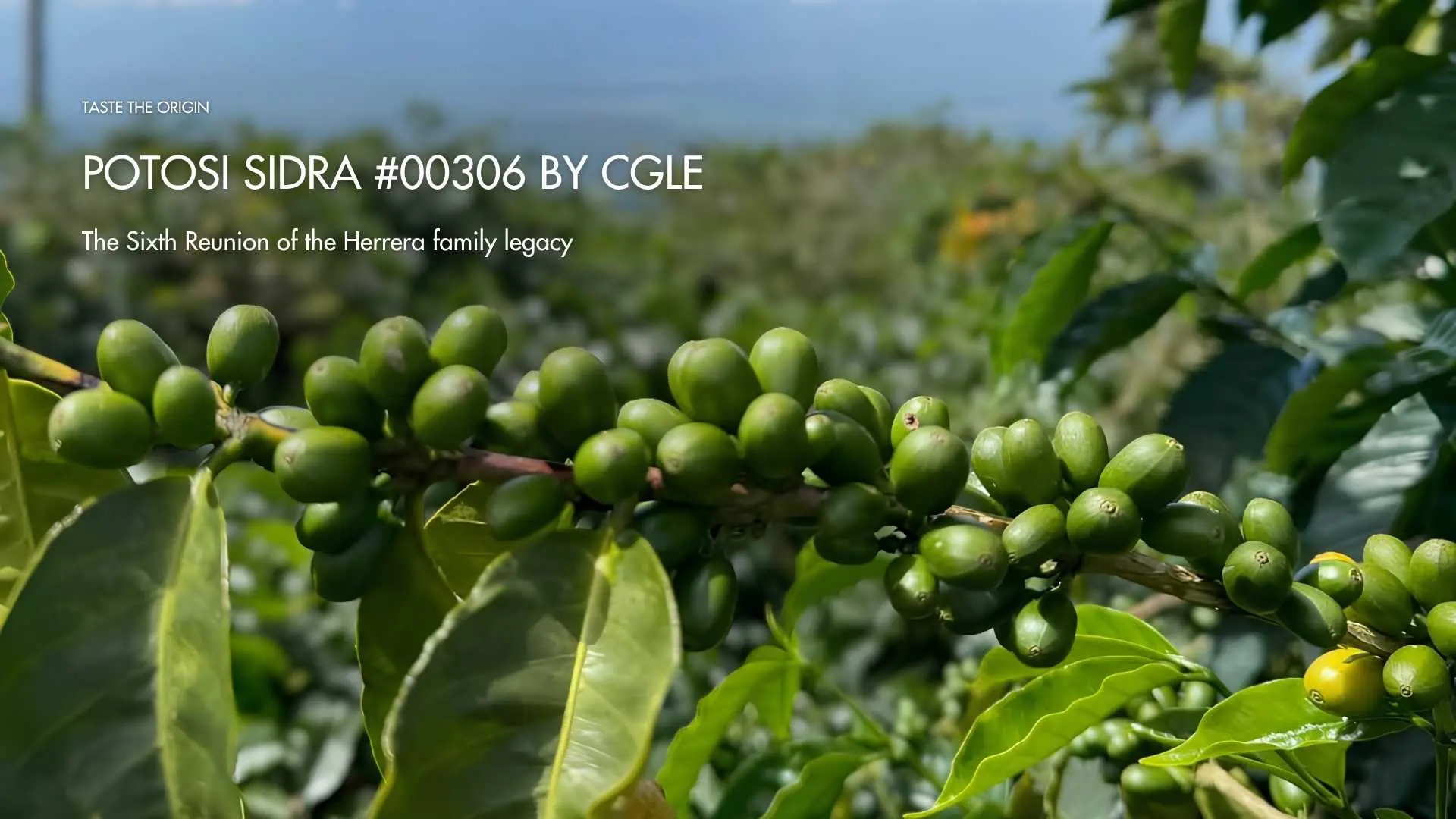
Potosi Sidra #00306 – The sixth reunion of the Herrera family legacy
The sixth harvest marks the return of Potosi Sidra #00306 by CGLE, carrying the presence of a family patriarch entrusted with more than eighty years of heritage from the Herrera family. Cultivated in the founding valley of Potosi since 1945 in Caicedonia, this genetic treasure born from the union of Bourbon and Typica presents a remarkably evolved sensory profile. Through its Extremely Light Roast philosophy and the financial transparency of the Paid for Producer model, XLIII Coffee chooses to preserve the authentic voice of terroir and the coffee’s original flavor structure.
- Taste the Origin
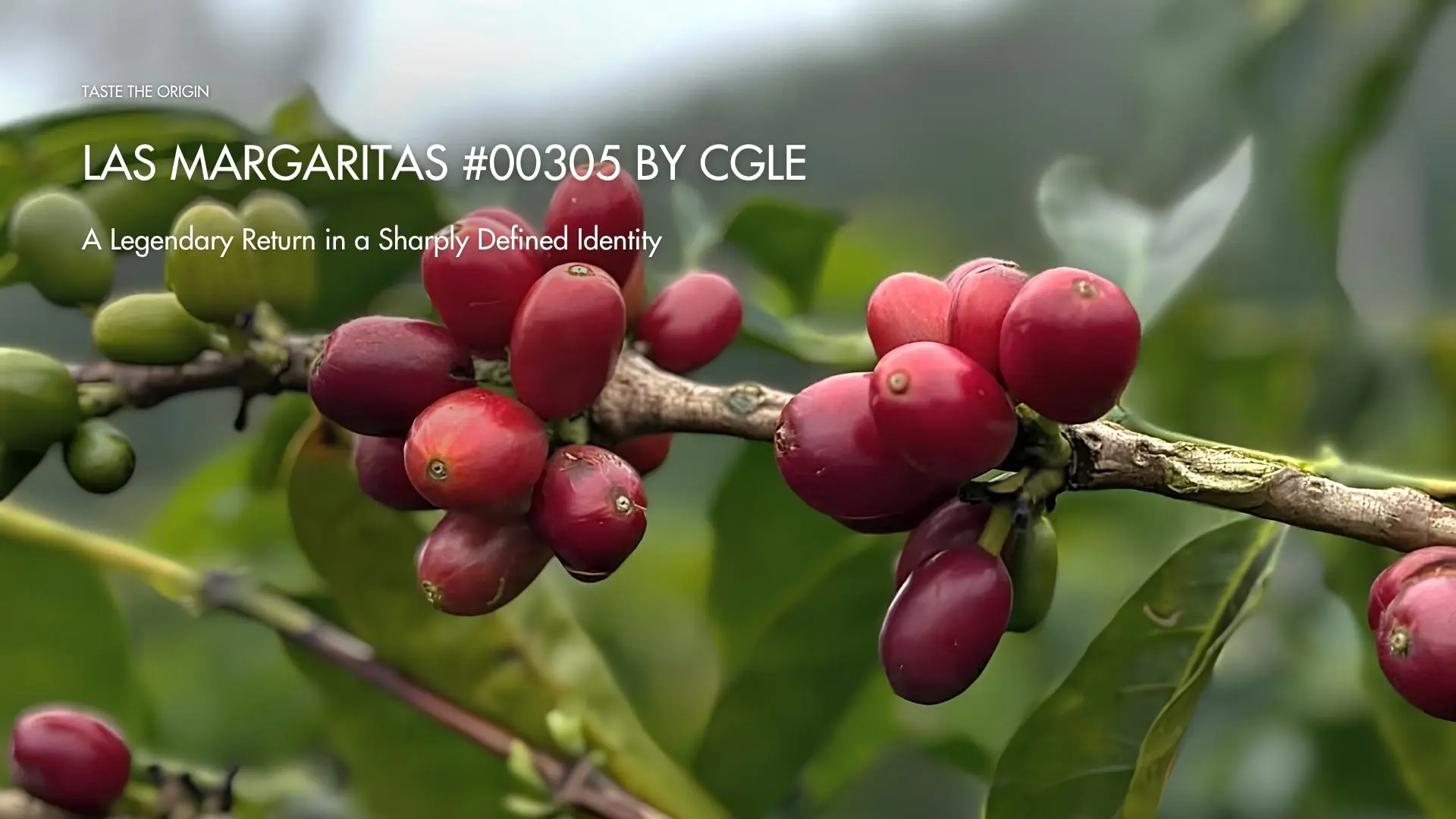
Las Margaritas #00305 by CGLE – A Legend Reunited in a Sharper Identity
Las Margaritas #00305 by CGLE returns to XLIII Coffee as a Gesha masterpiece reborn from the renowned Valle del Cauca region. Infused with the exquisite craftsmanship of Café Granja La Esperanza, this rare batch of coffee embarks on an enchanting flavor journey with vibrant citrus notes, delicate jasmine, and an elegant, lingering Earl Grey finish. Each drop is a crystallization of fertile volcanic soil and the sustainable farming philosophy that CGLE has persistently pursued for decades, creating a full-bodied, sharp flavor profile while retaining the pristine beauty characteristic of the royal Gesha variety.

- Find the Origin
Mandela coffee variety – A convergence of generations from a masterpiece breeding strategy
Amidst the constant fluctuations of the era, Mandela emerges as a gentle yet resilient response from the soil. Instead of attempting to alter or impose upon nature, this breeding strategy is, in essence, a profound act of listening. Each Mandela coffee bean carries the bloodline of multiple generations, possessing both the serene, steadfast nature of native trees and the sparkling elegance of premium varieties. It is a sacred continuation, where the flow of generations ultimate honors the original value of the species, imparting an intact and sustainable vitality into every cup.

Specialty Coffee in Vietnam
BRAND VALUE
YOU SHOULD HAVE KNOWN
XLIII Coffee has been aiming to become a big, impactful company with social responsibilities,
have access to high-quality raw materials and convey the complete original values of coffee to our customer
