
How do farmers deal with the rust disease on coffee leaves?
Rust disease is considered one of the most terrifying threats to coffee farmers. An outbreak of this disease could devastate thousands of hectares of plantations, plunging already vulnerable workers into poverty. According to a report from World Coffee Research, an epidemic in the 2011/2012 harvest season affected 70% of crops in Central America, causing losses of more than $3 billion.So, how can farmers effectively manage coffee leaf rust? Explore with XLIII Coffee!
Table of Contents
Rust disease is the farmer's nightmare
Rust disease is also known as la roya (in Spanish). This is a parasitic fungus that infects coffee. Scientists believe that rust may have originated in coffee’s homeland, Ethiopia, and then spread to other regions such as Central America.
Infected plants often develop yellow spots on the underside of the leaves, which then develop into orange-yellow powdery dust. This causes the tree to lose its leaves and lose the ability to photosynthesize and grow fruit, affecting productivity. Additionally, rust is a highly contagious disease. Because its spores are very light and powdery, they are easily dispersed by wind and rain.

Plants infected with rust often have yellow spots on the underside of the leaves
If not treated promptly, the disease can spread throughout the farm and surrounding areas. For example, in the late 19th century, Sri Lanka was one of the world’s largest coffee producers, exporting more than 100 million pounds a year. But in 1892, a leaf rust epidemic wiped out almost all coffee trees on the island nation, causing producers to switch to growing tea. According to World Coffee Research, more than 1.7 million coffee workers have lost their jobs due to rust disease. It also caused $3.2 billion in damages and lost income during an epidemic that began in 2011.

Rust is very contagious and causes damage to a large area
Measures to deal with rust disease
A Doctor of Plant Pathology at Cornell University mentioned that eliminating rust disease in coffee leaves is challenging. The disease situation and the effectiveness of treatment methods also depend on the weather and many other factors. Therefore, farmers must be very careful in implementing disease prevention and control measures. One of the prevention measures applied by many farmers is to use disease-resistant varieties such as Castillo and Caturra. However, some farmers still decide to use rare varieties with weaker pest resistance because of the flavor quality and uniqueness of the product.

Many farmers use disease-resistant varieties to prevent rust
In parallel, coffee farms carefully monitor crops, pruning when appropriate and treating infected trees with fungicides before rust has a chance to spread. Soil and plants are always kept in a healthy state by fertilizing and controlling pests on a schedule. Many farmers keep records of rust outbreaks and weather conditions at the time. This will help them identify patterns and better prepare for future waves of infection.

Farmers need to carefully monitor crops and prune growing areas regularly
It can be seen that making a quality cup of coffee is not simple. Farmers need to put in a lot of effort during the process of selecting varieties, planting, and producing. However, if there is a disease outbreak, it can cause the growing area to lose everything. So, they can get a price worth the effort. If you want to support, please visit and choose specialty coffee beans from famous growing regions around the world at XLIII Coffee!
Articles you may be interested in
– How do coffee farmers respond to erratic weather changes?
– PhilCAFE Project – The first step for the development of the Philippine coffee industry
– Da Nang roasted coffee beans retain their original characteristics

Bài viết mới

- Find the Origin
Mandela coffee variety – A convergence of generations from a masterpiece breeding strategy
Amidst the constant fluctuations of the era, Mandela emerges as a gentle yet resilient response from the soil. Instead of attempting to alter or impose upon nature, this breeding strategy is, in essence, a profound act of listening. Each Mandela coffee bean carries the bloodline of multiple generations, possessing both the serene, steadfast nature of native trees and the sparkling elegance of premium varieties. It is a sacred continuation, where the flow of generations ultimate honors the original value of the species, imparting an intact and sustainable vitality into every cup.


- Taste the Origin
Nigussie Nare – Murago Outgrowers #03028: Cultivated from the Values of Sustainable Reciprocity
Nestled beneath the shade trees of Sidama, Bensa, the Nigussie Nare – Murago Outgrowers #03028 coffee lot serves as a living testament to the values of sustainable reciprocity. This symbiosis begins with the intimate bond between a rich indigenous ecosystem and the smallholder farmers of the Murago region. Each harvested bean is the culmination of a virtuous cycle: a stable environment produces exceptional bean quality, and sustainable economic growth, in turn, continues to protect the verdant canopy of the great forest.

- Taste the Origin
Rift Valley Coffee Caucus #03757 – A Testament to Western Kenya’s Collective Spirit
Turning our gaze to the Great Rift Valley of East Africa, the fertile volcanic landscapes are witnessing an inspiring transformation. Moving away from fierce, survival-driven competition, smallholder farmers in Western Kenya have chosen to join forces, forging a resilient and unified network. The Rift Valley Coffee Caucus #03757 lot stands as the ultimate testament to this remarkable collective synergy.

- Breaking News
Airworks Coffee & XLIII Coffee – A “handshake” that brings original flavors across borders
XLIII Coffee, alongside our key wholesale partner Airworks Coffee, officially announces the latest release of specialty coffee lots for the North American market. This event reaffirms our commitment to bringing original flavors across all geographical barriers to coffee enthusiasts.
Early access (for Subscribers of Airworks): 10:00 AM (PST) | Wednesday, April 29, 2026
General access: 10:00 AM (PST) | Friday, May 1, 2026
We invite our Customers and Partners to visit (airworkscoffee.com) for detailed information and to prepare for this special release!
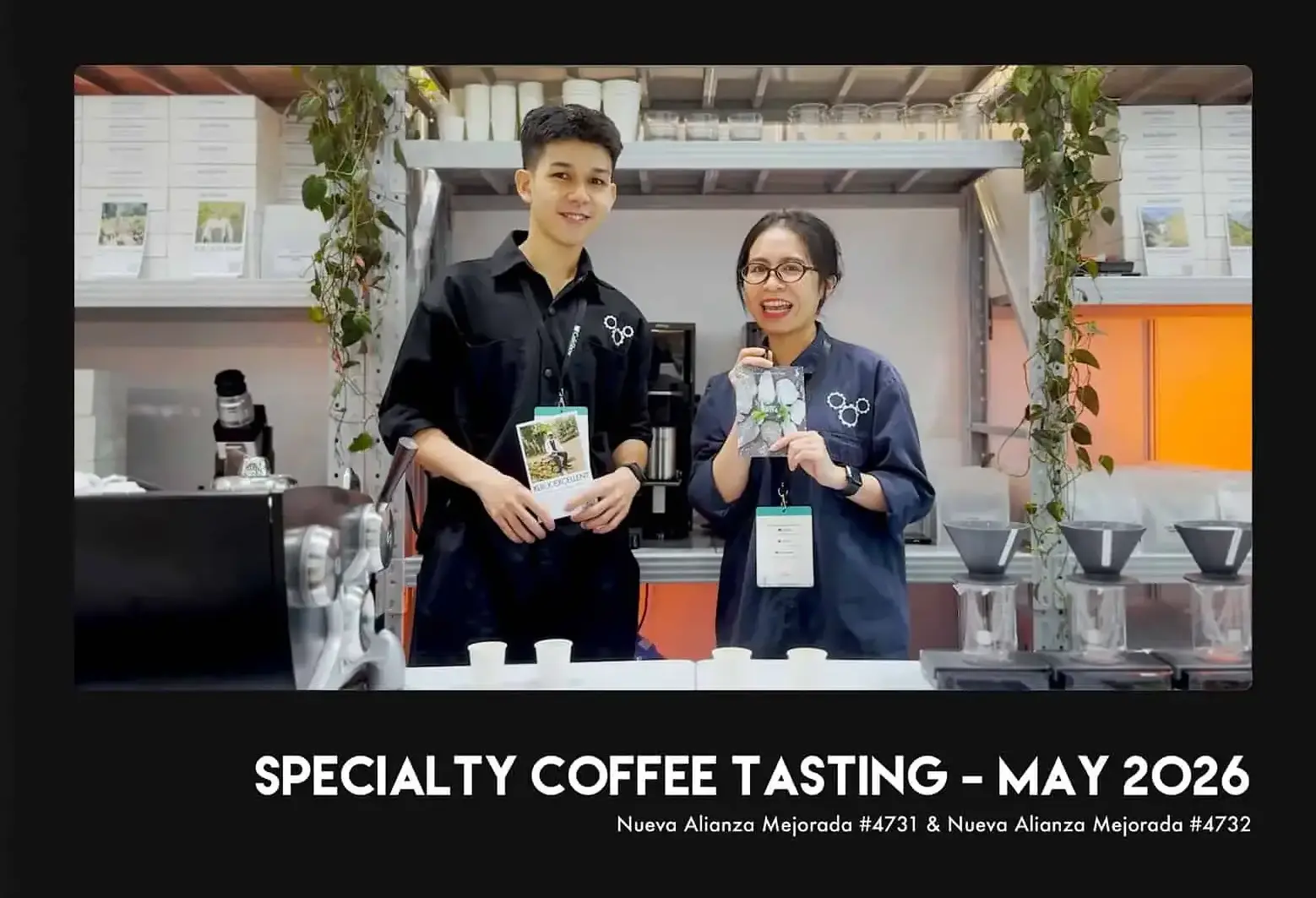
- Taste the Origin
Unveiling May Discovery Subscription: Nueva Alianza Mejorada #4731 & Nueva Alianza Mejorada #4732
The Discovery Subscription is a silent dialogue, a place where the soul of the connoisseur finds a harmonious beat with distant lands. Like a transparent lens, we become storytellers, meticulously peeling back layers of cultural sediment, the breath of the soil, and the human philosophies hidden within every coffee bean.
May arrives with brilliant streaks of golden sunlight, a time when we long to hide beneath the lush, dew-drenched canopies of Santa Teresa. Amidst the silence of the Andes, when compassion touches Mother Earth, what will we hear? Perhaps it is a sweet response that nature reserves solely for souls who know how to wait patiently.

Specialty Coffee in Vietnam
BRAND VALUE
YOU SHOULD HAVE KNOWN
XLIII Coffee has been aiming to become a big, impactful company with social responsibilities,
have access to high-quality raw materials and convey the complete original values of coffee to our customer
