
What is F1 Hybrid Coffee? Advantages and Drawbacks to Know
F1 Hybrid coffee varieties are gaining increasing attention due to their unique combination of high productivity, strong disease resistance, and promising cup quality. However, alongside these remarkable benefits, F1 varieties also present certain challenges that growers must consider. So, what exactly is F1 Hybrid coffee? Why is it attracting the interest of producers and researchers alike? Let’s explore.
I. Understanding F1 Hybrids and F1 Hybrid Coffee
F1 Hybrid is a term in genetics and breeding, short for Filial 1, meaning the first generation of offspring. F1 individuals result from the controlled cross of two genetically distinct parent plants. The purpose of this hybridization is to combine the best traits of both parents to create a superior next generation in terms of vigor, yield, disease resistance, or adaptability. This phenomenon is known as heterosis, or hybrid vigor.

For instance, when a high-yielding plant is crossed with one that is highly disease-resistant, the resulting F1 hybrid can potentially offer both high productivity and resilience against pests and diseases—traits not fully achieved by either parent alone.
So, what is F1 Hybrid coffee? It refers to first-generation hybrid coffee plants created by crossing two coffee lines with different genetic backgrounds—often combining traditional high-quality Arabica varieties with disease-resistant lines such as Timor Hybrid or Catimor. This results in F1 Hybrid plants that inherit the best traits from both parents. However, F1 Hybrid coffee should not be propagated by seed, as the next generation (F2) often shows trait segregation and a loss of consistency. Instead, F1s are cloned through vegetative methods such as cutting or tissue culture.
II. Key Advantages of F1 Hybrid Coffee
F1 Hybrid coffee varieties are the result of controlled crosses between two genetically distinct parent lines. Thanks to hybrid vigor, F1 hybrids often outperform both parents in growth, productivity, disease resistance, and quality. According to leading coffee researchers, F1 Hybrids offer several outstanding benefits:
1. Strong Vigor and High Productivity
One of the most notable features of F1 Hybrids is their vigorous growth, rapid development, and higher yield compared to traditional varieties. Their combined genetic structure allows F1 hybrids to maximize biological potential, resulting in consistently higher yields under comparable growing conditions.
A typical example is the Centroamericano H1 variety, a hybrid between Rume Sudan (known for exceptional cup quality) and T5296 (known for strong disease resistance). According to World Coffee Research data, Centroamericano yields 22% to 47% more than conventional varieties grown in the same conditions.
2. High Resistance to Diseases and Pests
F1 Hybrids are developed to tackle one of the biggest challenges in coffee cultivation: leaf rust (Hemileia vastatrix) and common pests. Resistance traits are inherited from one or both parents, especially when one parent is a natural hybrid with C. canephora (Robusta), resulting in F1 varieties with better resilience to pathogens.
Varieties such as Mundo Maya, Evaluna, and Starmaya have demonstrated high rust resistance, reducing the need for chemical pesticides, lowering production costs, and promoting sustainable agriculture.

3. High Uniformity in Cultivation
Thanks to controlled breeding, F1 Hybrid coffee plants exhibit high uniformity in morphology, growth, and ripening time. This uniformity simplifies farm management, allows for better harvest planning, and improves efficiency in post-harvest processes.
Starmaya, for example—the first F1 Hybrid coffee that can be propagated by seed—has shown remarkable consistency in plant size, fruit uniformity, and synchronized ripening, all of which contribute to more stable processing quality.
4. Better Adaptation to Climate Change
Climate change poses one of the most pressing threats to coffee production. F1 Hybrids have been proven to adapt better to diverse environmental conditions, including higher temperatures, lower rainfall, and nutrient-poor soils.
According to research by CIRAD, many F1 varieties like Centroamericano and H3 thrive not only in traditional highland areas but also in marginal regions that were previously unsuitable for Arabica cultivation—significantly expanding the potential area for coffee production.
5. No Trade-off Between Yield and Quality
A major limitation of traditional disease-resistant coffee varieties has been the sacrifice of cup quality for agronomic resilience. However, modern F1 Hybrids demonstrate that high cup quality and strong resistance can coexist.
For instance, Centroamericano not only offers high yields and robust disease resistance but also scored 91.25 points in the Cup of Excellence competition in Nicaragua. Similarly, varieties such as H3, Ruiru 11, and Starmaya have received excellent scores in professional cuppings when grown and processed under proper conditions.

III. Limitations and Risks to Consider When Cultivating F1 Hybrid Coffee
Although F1 hybrid coffee varieties offer exceptional advantages in terms of productivity, adaptability, and cup quality, their development and application in real-world production still face several challenges. Understanding these limitations and risks is essential for farmers, roasters, and other stakeholders in the coffee value chain to make informed and sustainable decisions.
1. High Production Costs
One of the major barriers to adopting F1 hybrids is the high cost of producing and propagating these varieties. As they are created through controlled crosses between elite parental lines, maintaining pure breeding lines and producing F1 offspring requires advanced infrastructure, skilled labor, and strict protocols. This leads to significantly higher seed prices compared to conventional varieties.
Additionally, most F1 hybrids are still propagated through somatic embryogenesis or grafting, which are more time-consuming and expensive than traditional seed propagation. Although some hybrids like Starmaya can be propagated by seed, such varieties remain limited.
2. Limitations in Self-Propagation
Unlike traditional varieties, the second generation (F2) of F1 hybrids does not retain the superior traits of the first generation due to genetic segregation. This means that farmers cannot save seeds from one harvest to plant for the next season as they would with conventional varieties. Instead, they must purchase new seeds from breeders or certified producers every cycle.

This dependency creates a major barrier, especially for smallholder farmers in economically constrained regions, where reinvestment in replanting and purchasing new seeds each year can be difficult.
3. Higher Technical Requirements
F1 hybrids, despite their superior potential, require a deeper understanding of cultivation techniques, post-harvest processing, and farm management to fully realize their qualities. Without proper care, even F1 hybrids can fail or underperform.
For instance, a certain F1 hybrid may be capable of scoring over 90 in sensory evaluations if grown at the right altitude and processed meticulously. However, if grown in unsuitable conditions or poorly processed, its flavor profile may not surpass that of traditional varieties.
4. Limited Access to Information and Planting Material
To date, reliable scientific information about the characteristics and optimal growing conditions for each F1 hybrid is not widely accessible in many coffee-producing countries. Moreover, the number of qualified nurseries capable of producing F1 hybrids at scale remains limited, resulting in unequal access to these varieties, especially in remote regions.
Some farmers also express concerns about transparency and intellectual property rights—important issues in the context of increasing debates over plant variety ownership.
IV. Why F1 Hybrid Coffee Varieties Are Essential for the Future
Coffee is a perennial crop with a long growth cycle, often taking two to three years before the first harvest. Traditional breeding methods are slow, typically requiring 25 to 30 years to bring a new variety to market. Meanwhile, the coffee industry faces mounting challenges: climate change, the spread of pests and diseases, declining yields, and shrinking Arabica-growing areas. These realities demand faster, more effective solutions—and F1 hybrid coffee varieties are emerging as one of the most strategic options.

F1 hybrids possess exceptional genetic potential: they are high-yielding, adaptable to diverse environments, disease-resistant, and capable of producing high cup quality. While their initial cost may be higher—e.g., $0.75 per F1 seedling compared to $0.25 for a traditional one—the economic benefits can outweigh the investment. They often begin producing a year earlier, yield up to 50% more depending on the variety and farming practices, and reduce losses due to disease. Furthermore, many F1 hybrids have scored over 90 in sensory evaluations and earned top rankings in competitions like the Cup of Excellence—for example, in 2018, 9 out of the top 20 winning lots in Nicaragua were F1 hybrids.
Thus, F1 hybrids are not just a short-term solution for regions under ecological pressure—they represent a long-term step toward a more sustainable coffee industry, where farmers can balance investment costs with climate adaptability and cup quality value.

Conclusion
Despite remaining barriers, F1 hybrid coffee varieties are opening a promising path for the global coffee industry, offering outstanding performance, resilience, and quality. In a world increasingly shaped by climate change and market fluctuations, investing in F1 hybrids is a strategic decision—and with the right support, it could be a sustainable leap forward for the future of coffee.
V. FAQs
1. What is F1 Hybrid coffee?
F1 Hybrid coffee is not a single variety, but a group of cultivars created by crossing two genetically distant parent plants and using the first-generation offspring (F1) for cultivation.
2. Why are F1 Hybrids superior to traditional varieties?
Thanks to hybrid vigor, F1 hybrids generally offer higher yields, stronger disease resistance, and greater adaptability to various environments. Some F1s are even resistant to coffee leaf rust and can score over 90 in cup quality evaluations.
3. What is the biggest drawback of F1 Hybrids?
F1 Hybrids are difficult and expensive to mass-propagate. Farmers cannot use F2 seeds for future planting due to genetic segregation. The most common propagation method currently is tissue culture in laboratories.
4. Are F1 Hybrids worth the higher cost?
With up to 50% higher yields, earlier harvests, and better disease resistance, F1 hybrids can bring significant economic benefits if managed properly, even with a higher initial investment.
5. What F1 Hybrid varieties are currently being cultivated?
Some F1 hybrids in use include Centroamericano (H1), Casiopea, Milenio, Mundo Maya, Starmaya, and Ruiru 11. These varieties have achieved top rankings in global Cup of Excellence competitions.

Bài viết mới

- Taste the Origin
Nigussie Nare – Murago Outgrowers #03028: Cultivated from the Values of Sustainable Reciprocity
Nestled beneath the shade trees of Sidama, Bensa, the Nigussie Nare – Murago Outgrowers #03028 coffee lot serves as a living testament to the values of sustainable reciprocity. This symbiosis begins with the intimate bond between a rich indigenous ecosystem and the smallholder farmers of the Murago region. Each harvested bean is the culmination of a virtuous cycle: a stable environment produces exceptional bean quality, and sustainable economic growth, in turn, continues to protect the verdant canopy of the great forest.

- Taste the Origin
Rift Valley Coffee Caucus #03757 – A Testament to Western Kenya’s Collective Spirit
Turning our gaze to the Great Rift Valley of East Africa, the fertile volcanic landscapes are witnessing an inspiring transformation. Moving away from fierce, survival-driven competition, smallholder farmers in Western Kenya have chosen to join forces, forging a resilient and unified network. The Rift Valley Coffee Caucus #03757 lot stands as the ultimate testament to this remarkable collective synergy.

- Breaking News
Airworks Coffee & XLIII Coffee – A “handshake” that brings original flavors across borders
XLIII Coffee, alongside our key wholesale partner Airworks Coffee, officially announces the latest release of specialty coffee lots for the North American market. This event reaffirms our commitment to bringing original flavors across all geographical barriers to coffee enthusiasts.
Early access (for Subscribers of Airworks): 10:00 AM (PST) | Wednesday, April 29, 2026
General access: 10:00 AM (PST) | Friday, May 1, 2026
We invite our Customers and Partners to visit (airworkscoffee.com) for detailed information and to prepare for this special release!
- Taste the Origin
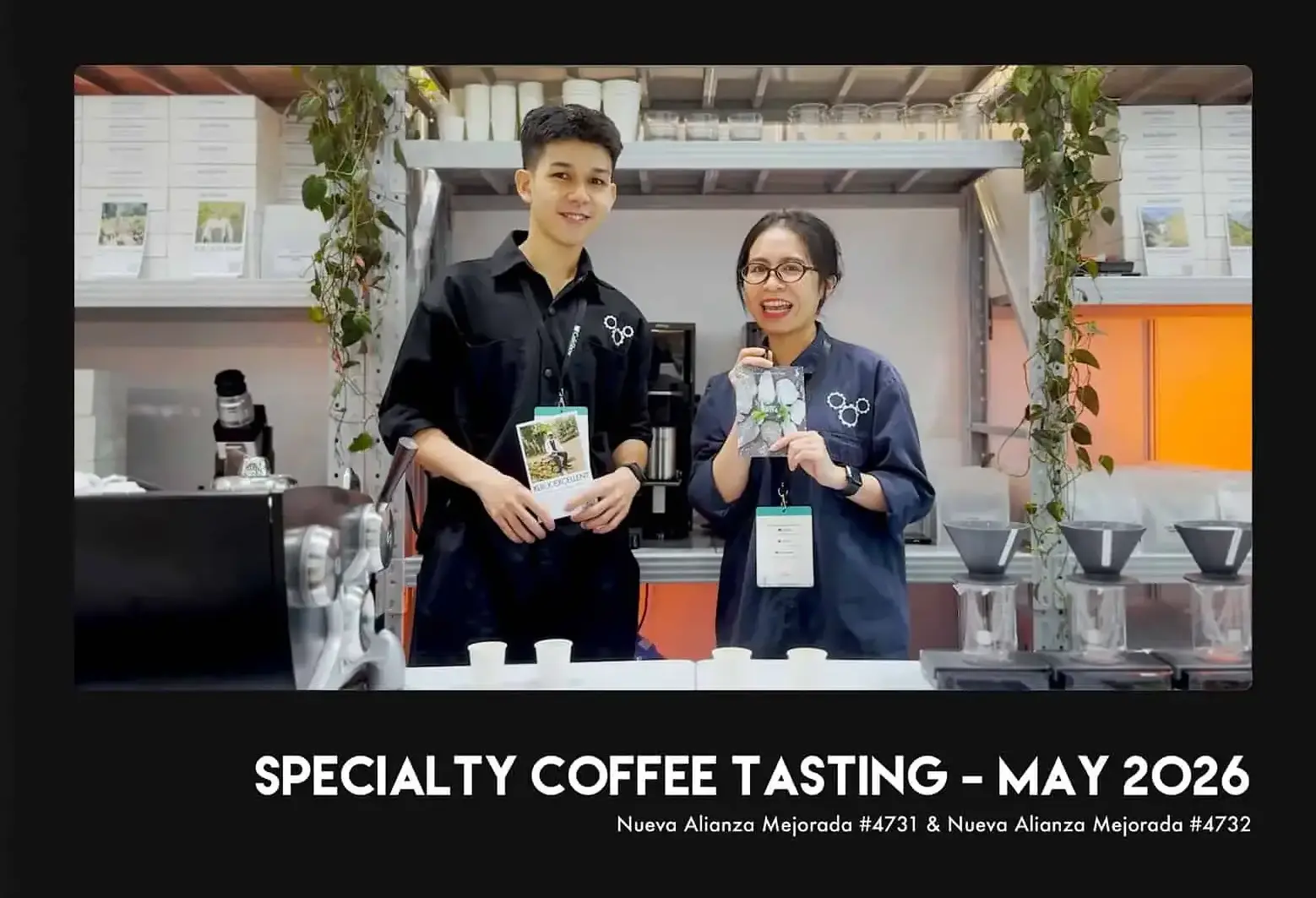
Unveiling May Discovery Subscription: Nueva Alianza Mejorada #4731 & Nueva Alianza Mejorada #4732
The Discovery Subscription is a silent dialogue, a place where the soul of the connoisseur finds a harmonious beat with distant lands. Like a transparent lens, we become storytellers, meticulously peeling back layers of cultural sediment, the breath of the soil, and the human philosophies hidden within every coffee bean.
May arrives with brilliant streaks of golden sunlight, a time when we long to hide beneath the lush, dew-drenched canopies of Santa Teresa. Amidst the silence of the Andes, when compassion touches Mother Earth, what will we hear? Perhaps it is a sweet response that nature reserves solely for souls who know how to wait patiently.

- Taste the Origin
Nueva Alianza Pacamara #4733 – The essence of Cusco with elegant jasmine notes
Nueva Alianza Pacamara #4733 is a testament to the miraculous terroir and dedicated cultivation of the renowned Cusco region. The combination of the characteristic Pacamara bean size and ideal altitude has forged a flavor profile of immense sophistication and depth. From the very first moment, this lot captivates with its elegant jasmine notes, radiating a gentle, pure fragrance akin to a flower blooming in the morning dew.

- Taste the Origin
Nueva Alianza Orange Gesha #4737 – An expedition of recessive genetic traits into the sensory realm
In a world of authenticity, Nueva Alianza Orange Gesha #4737 represents the proud emergence of rare biological traits often obscured by nature’s universality. Carrying a recessive genetic code, Lot #4737 embarks on an “expedition” into the connoisseur’s mind, where record-breaking fructose concentrations are released to perfectly fill every sensory gap with absolute smoothness and purity.
Through washed processing and extremely-light roasting, vibrant citrus nuances and ethereal floral notes, once hidden deep within the genetic structure, now manifest with power, transforming the tasting experience into a journey of ontological completion, where the rarity of recessive genes finally reigns supreme in flavor.

Specialty Coffee in Vietnam
BRAND VALUE
YOU SHOULD HAVE KNOWN
XLIII Coffee has been aiming to become a big, impactful company with social responsibilities,
have access to high-quality raw materials and convey the complete original values of coffee to our customer
