Gisheke Washing Station
- First time cooperation: 2023
- Cooperation model: Indirect Trade
About
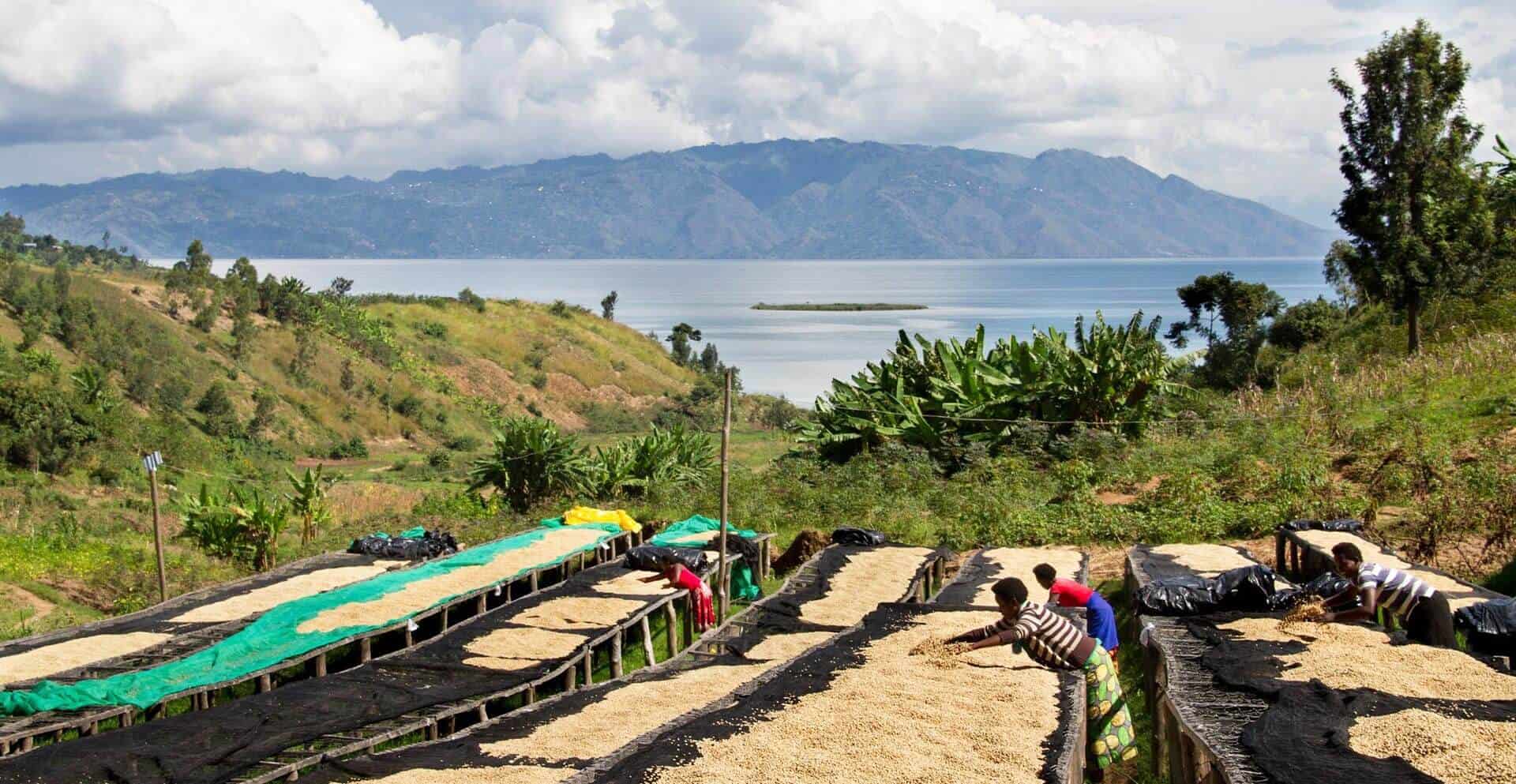
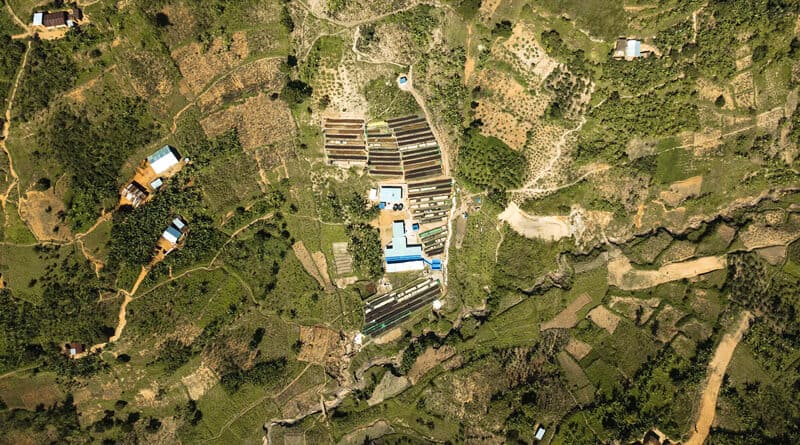
Gisheke Washing Station (CWS) is a hidden gem of Rwanda, located in Nyamasheke district, purchased in September 2017. Gisheke underwent 2 months of renovation and makeovers from February to April of this year to become beautiful. 2018 this washing station has been famous for its idyllic beauty and quality assurance for processing the world’s top specialty coffees.
Gisheke is owned by Zoe Trading Ltd. and run by the Muraho Trading Co. Muraho Trading Co’s production team oversees operations at Gisheke to ensure quality consistent with MTCo’s stations.
Gisheke is unique because it sits between two steep hills facing Lake Kivu, beautiful Idjwi Island. The western front edge of the Democratic Republic of the Congo (DRC) is the second-largest inland island in Africa. This geographical feature helps Gisheke have the ideal airflow through the station, facilitating the processing and drying of the best quality natural coffee.
Gisheke Washing Station rises strongly
The only way to get to Gisheke is by boat across Lake Kivu
Because it is located between two hills overlooking Lake Kivu, this has become the only way for people to visit the idyllic but quality washing station. You can sail and surf the lake, this relaxing cruise will take you past Mushungwe Island and its two “sister” islands. More than 200 Rwandan families on Mushungwe Island grow coffee and contribute to Gisheke.
When you see the famous Kivu Lake cows swimming across the lake in search of food, you have reached your destination.

Gisheke is quickly known for quality
Although it has only been in operation since 2018, the new face in the “village” of the washing station has shown great progress. This is possible thanks to successful cooperation with Muraho Trading Company; they have drawn on the knowledge and experience from many other processing stations to create a process suitable for specialty coffee.
Josue – the manager focuses on improving every aspect to have the most complete impact on the processing of the coffee beans, ensuring they are clean and sweet.
Rwanda overcomes a difficult history of growing coffee
In 1994, Rwanda experienced a genocide that killed nearly 1 million people. But this small nation has amazed the world by rising from the darkest abyss to become one of Africa’s safest and most prosperous nations.
Currently, the coffee industry in Rwanda is at its peak, producing exceptional coffee. They have laid a solid foundation for this far-fetched success through the leadership of a committed government, educational projects, and strategic planning.
Currently, about 420,000 are involved in the coffee industry indirectly and directly. Compared to the price of commercial coffee, the price of quality coffee is much more stable. This has improved the quality of life of many households and coffee growers.
Not only in terms of benefits, coffee also contributes to the reconciliation of the main ethnic groups: Hutus and Tutsis. They have put aside differences to produce quality batches of coffee together.


Natural coffee at Gisheke is fermented without purpose
40% of the coffee at the washing station comes from the island of Mushungwe. The coffee beans here always bring a different feeling with the acidity, sweetness and cleanness characterized by the processing process. Natural coffee does not undergo intentional fermentation but is floated to remove any substandard coffee cherries.
After being taken to the washing station, the coffee cherries are first visually inspected and then sorted by gravity. People use buckets or containers filled with water, remove floating fruit, keep mature, firm fruit. After that, the quality-guaranteed coffee beans will go through a mechanical grinder. After pulverizing, they will be classified by density into two or three types, each of which will go to a different fermentation tank.
After grinding, the coffee is dry fermented for 12-24 hours and then washed and reclassified by gravity using washing channels (heavier beans will sink). After sorting, they undergo wet fermentation in clean water tanks or tanks for another 24-48 hours.
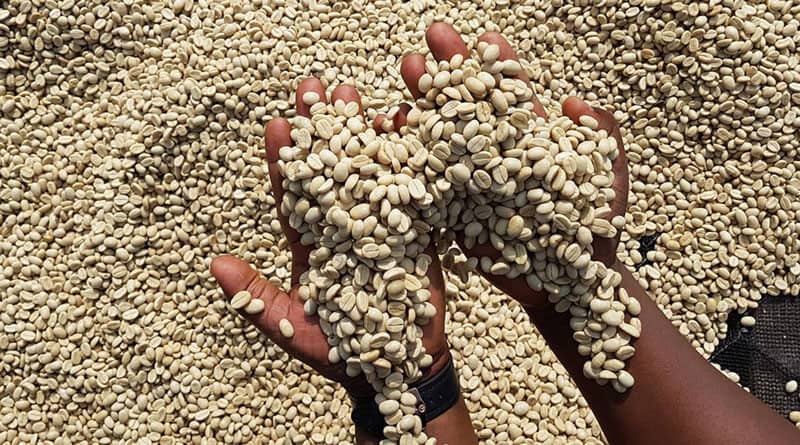
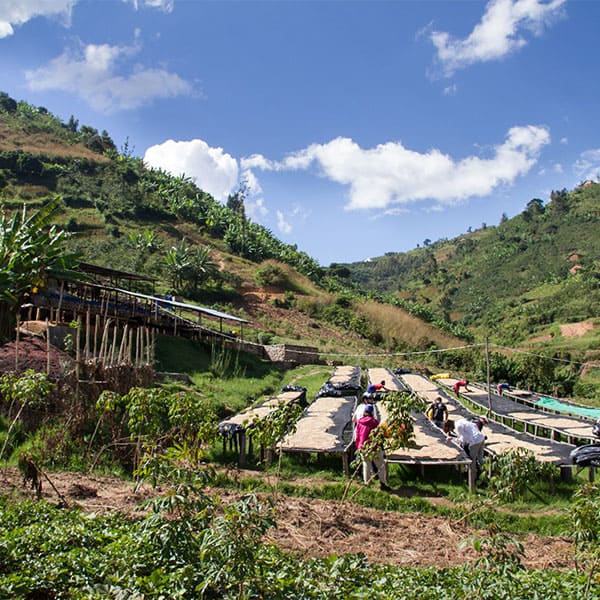
The coffee will be delivered to shaded African beds, where the farmers (usually women) will carefully remove the damaged, defective cherries by hand while the parchment is still wet. As a result, it is easier for people to find the failing particles and start the drying phase slowly and gently.
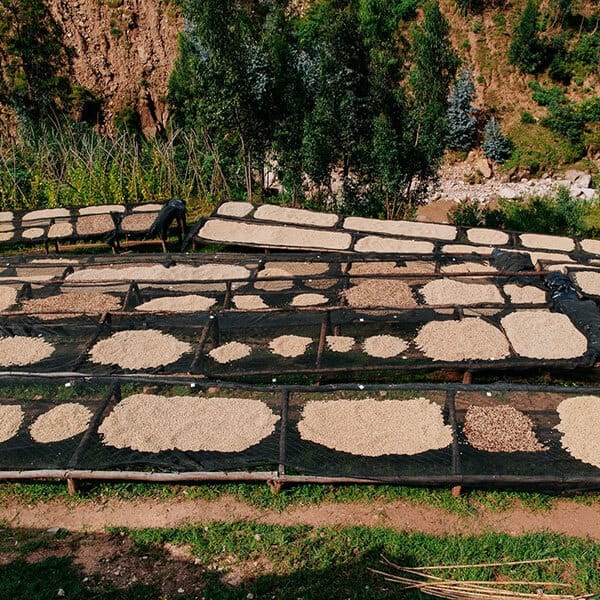
Discarding the unfinished pods, the parchment is transferred to raised beds under the African sun for about two to three weeks. During this time, the parchment is moved several times a day to ensure even drying.
Finally, when the coffee reaches 11% moisture, it will be stored in a parchment bag, separated and carefully labeled. When ready for export, the parchment is shipped to Kigali for milling, packing and container loading.