
Coffee farming under solar systems: dual benefits and risks to know
Wired Magazine recently published an article highlighting a fresh perspective on agriculture and renewable energy. The article showcases that various crops, including beans, tomatoes, and lavender, have been successfully grown under solar panel systems (“agrivoltaics”). This model not only optimizes land use but also increases crop yields due to a cooler, shaded environment and reduced water evaporation. But what about growing coffee under solar panels?

Is It Possible to Grow Coffee Under Solar Panels?
Coffee is a promising crop for solar farming systems due to its biological characteristics. As a shade-loving plant, coffee requires indirect light for optimal growth, and excessive sunlight can cause leaf wilting and reduce yield and quality. Solar panels provide shade similar to natural tree canopies, protecting coffee plants from high temperatures and intense sunlight – factors increasingly exacerbated by climate change.
The research mentioned in the Wired article shows that other crops such as blueberries, kale, and alfalfa perform better under solar panel systems due to the improved microclimate and optimized water use. This sets a foundation to expect coffee to thrive in similar systems. Additionally, with its suitability for sloped lands and diverse ecosystems, integrating solar panels with coffee farming could easily be incorporated into existing farming areas without major changes to terrain or infrastructure.
Dual Benefits of Growing Coffee Under Solar Panels
Placing solar panels over coffee farms brings two distinct benefits. First, solar panels harness renewable energy, significantly reducing reliance on fossil fuels, and thus cutting greenhouse gas emissions. This contributes to the development of a green farming model, in line with global sustainability trends.
Second, the solar panels provide shade, an ideal condition for coffee, which thrives in diffused light and stable temperatures. The shade from the panels not only reduces heat stress on crops but also helps maintain soil moisture, lowers irrigation needs, and protects the ecosystem in the farming area. This solution is crucial in the face of climate change, which raises temperatures and makes water resources scarce.
Additionally, income from selling solar power opens up opportunities for economic diversification for farmers. When coffee prices fluctuate, stable income from solar energy helps farmers maintain financial sustainability and reduce economic risks. This combination not only protects livelihoods but also encourages coffee farmers to invest in sustainable production models, enhancing both economic and environmental value.
Risks of Coffee Farming Under Solar Panels
While farming coffee under solar panels offers numerous benefits, it also presents challenges. One of the biggest concerns is the high initial investment cost. Installing solar panel systems requires significant capital, which can be a major obstacle for small-scale farmers.
Furthermore, applying this technology demands careful research and testing. Scientists, such as Mark Uchanski from Colorado State University, have pointed out that the shade from solar panels may affect coffee yields. Specifically, if the panels are installed in areas with less sunlight, productivity could be significantly reduced.
Additionally, solar panel systems require advanced technical maintenance to ensure effective operation. This requires both financial investment and a deep understanding of the technology. Lastly, the installation of solar panels must also consider the impact on the farmland, ensuring that it does not degrade the land’s ecological quality or disturb the natural balance of the agricultural ecosystem.
However, with government support and private-sector investment, these challenges can be overcome. Combining solar energy and coffee farming presents clear prospects for sustainable agriculture. It not only improves land use efficiency but also provides a diversified income source, helping mitigate the negative impacts of climate change. I believe that in the future, research and pilot projects may open new doors for the coffee industry, enhancing competitiveness and contributing to global sustainability goals.

Bài viết mới

- Find the Origin
Mandela coffee variety – A convergence of generations from a masterpiece breeding strategy
Amidst the constant fluctuations of the era, Mandela emerges as a gentle yet resilient response from the soil. Instead of attempting to alter or impose upon nature, this breeding strategy is, in essence, a profound act of listening. Each Mandela coffee bean carries the bloodline of multiple generations, possessing both the serene, steadfast nature of native trees and the sparkling elegance of premium varieties. It is a sacred continuation, where the flow of generations ultimate honors the original value of the species, imparting an intact and sustainable vitality into every cup.


- Taste the Origin
Nigussie Nare – Murago Outgrowers #03028: Cultivated from the Values of Sustainable Reciprocity
Nestled beneath the shade trees of Sidama, Bensa, the Nigussie Nare – Murago Outgrowers #03028 coffee lot serves as a living testament to the values of sustainable reciprocity. This symbiosis begins with the intimate bond between a rich indigenous ecosystem and the smallholder farmers of the Murago region. Each harvested bean is the culmination of a virtuous cycle: a stable environment produces exceptional bean quality, and sustainable economic growth, in turn, continues to protect the verdant canopy of the great forest.

- Taste the Origin
Rift Valley Coffee Caucus #03757 – A Testament to Western Kenya’s Collective Spirit
Turning our gaze to the Great Rift Valley of East Africa, the fertile volcanic landscapes are witnessing an inspiring transformation. Moving away from fierce, survival-driven competition, smallholder farmers in Western Kenya have chosen to join forces, forging a resilient and unified network. The Rift Valley Coffee Caucus #03757 lot stands as the ultimate testament to this remarkable collective synergy.

- Breaking News
Airworks Coffee & XLIII Coffee – A “handshake” that brings original flavors across borders
XLIII Coffee, alongside our key wholesale partner Airworks Coffee, officially announces the latest release of specialty coffee lots for the North American market. This event reaffirms our commitment to bringing original flavors across all geographical barriers to coffee enthusiasts.
Early access (for Subscribers of Airworks): 10:00 AM (PST) | Wednesday, April 29, 2026
General access: 10:00 AM (PST) | Friday, May 1, 2026
We invite our Customers and Partners to visit (airworkscoffee.com) for detailed information and to prepare for this special release!
- Taste the Origin
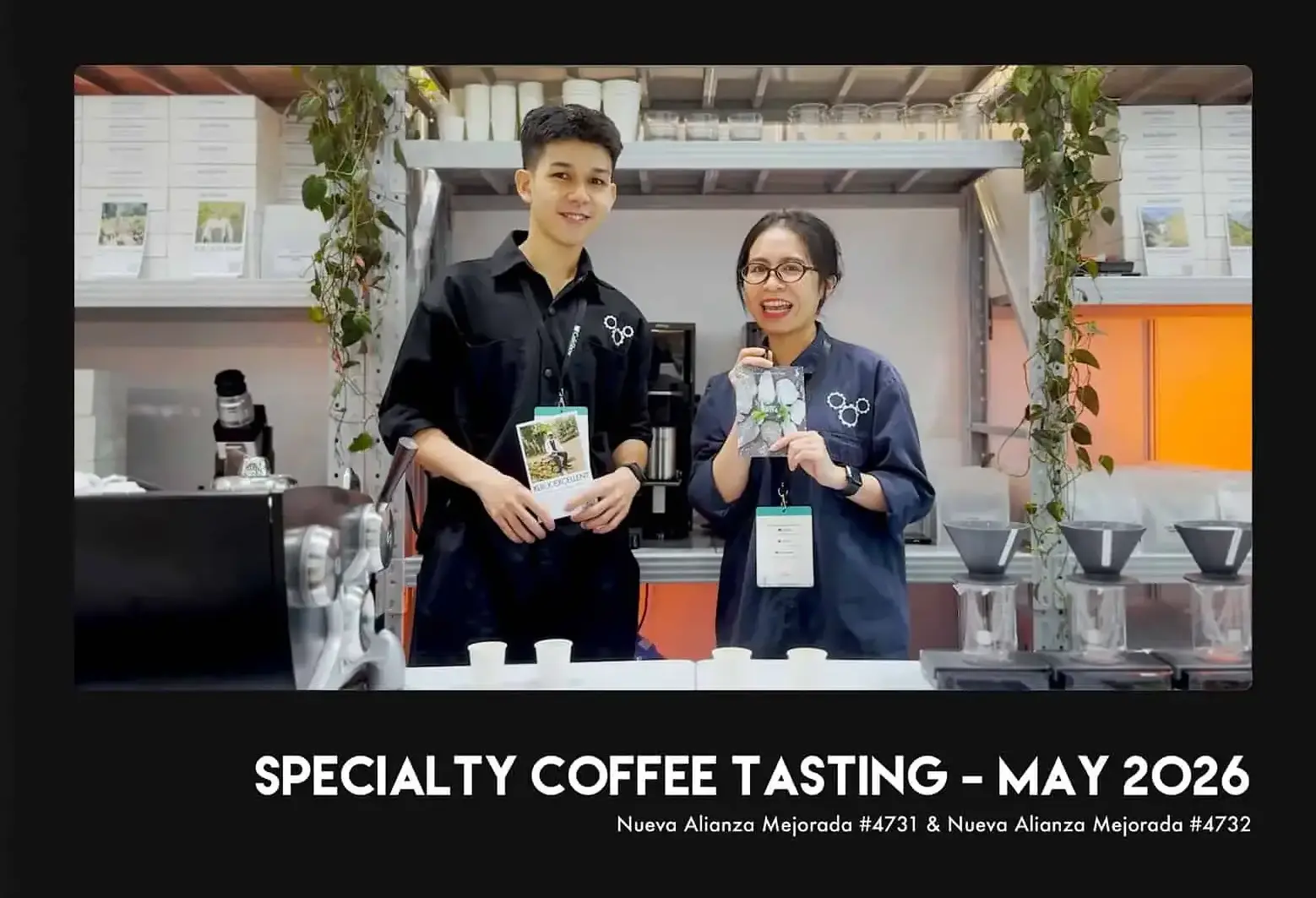
Unveiling May Discovery Subscription: Nueva Alianza Mejorada #4731 & Nueva Alianza Mejorada #4732
The Discovery Subscription is a silent dialogue, a place where the soul of the connoisseur finds a harmonious beat with distant lands. Like a transparent lens, we become storytellers, meticulously peeling back layers of cultural sediment, the breath of the soil, and the human philosophies hidden within every coffee bean.
May arrives with brilliant streaks of golden sunlight, a time when we long to hide beneath the lush, dew-drenched canopies of Santa Teresa. Amidst the silence of the Andes, when compassion touches Mother Earth, what will we hear? Perhaps it is a sweet response that nature reserves solely for souls who know how to wait patiently.

Specialty Coffee in Vietnam
BRAND VALUE
YOU SHOULD HAVE KNOWN
XLIII Coffee has been aiming to become a big, impactful company with social responsibilities,
have access to high-quality raw materials and convey the complete original values of coffee to our customer
