
The Influence of Terroir, Climate, and Soil on the Flavor of Specialty Coffee
Specialty coffee is highly prized not only for its captivating aroma but also for the distinct flavor notes that make each batch unique. The more rare and layered these flavors are, the more valuable and sought-after the coffee becomes. To create the perfect flavor profile, producers must first grasp how terroir, climate, and soil influence the final product.
1. The Power of Altitude
Altitude plays a crucial role in shaping the taste and quality of specialty coffee.
Altitude’s Secrets Revealed
In the specialty coffee world, altitude is measured in meters above sea level (masl). This information, often found on coffee packaging, provides clues about bean quality. Generally, higher altitudes offer better growing conditions and superior coffee.
Coffee professionals classify bean density based on growing altitude:
– Soft Bean (SB) & Strictly Soft Bean (SSB): <1,200 masl
– Hard Bean (HB) or High Grown (HG): 1,200–1,370 masl
– Strictly Hard Bean (SHB) or Strictly High Grown (SHG): >1,370 masl

Altitude is an essential factor for plant growth, contributing to coffee flavor through profound effects on the acidity, sweetness and overall flavor of the bean
Altitude’s Impact on Taste
The Coffee Research Institute suggests the optimal altitude for growing coffee is 550–1,100 masl in subtropical regions and 1,000–2,000 masl near the equator.
Altitude shapes coffee’s flavor journey by influencing key aspects:
– Acidity: High altitudes’ cool temperatures and low oxygen slow plant growth, allowing coffee to develop a vibrant array of acids.
– Sweetness: Slower growth at higher elevations helps coffee store more sugars. Experts note a 10% increase in sucrose per 300 m rise in altitude.
– Overall Flavor: High-altitude coffees boast intriguing complexity, with fruit and spice notes born from the perfect balance of acidity and sweetness. Lower elevation offerings tend to be smooth yet less dynamic.
Flavor Notes by Elevation
Higher growing regions typically yield brighter, fruitier coffees:
– <762 m: Simple, light flavors
– ~914 m: Sweet, smooth, low-acid profiles
– ~1,200 m: Citrus, vanilla, chocolate, nutty notes
– 1,500 m: Floral & fruit tones, color depth
Remember, latitude also affects temperature at a given altitude. Cooler temperatures help high-altitude Hawaiian coffee achieve a brighter, more complex profile than Colombian coffee grown at similar heights.

The higher the growing area, the brighter and more diverse the fruit flavor of Specialty coffee beans will be
2. Soil: A Flavor Foundation
Soil is the lifeblood of specialty coffee, with its composition playing a pivotal role in plant growth and bean quality.
Essential Soil Elements
– Nutrients & Minerals: Nitrogen, phosphorus, potassium, and other minerals nourish the plant and contribute to aroma and sweetness. Magnesium enhances sweetness; iron intensifies overall flavor.
– pH: Coffee thrives in mildly acidic soil (pH 4.9–5.6), which optimizes nutrient absorption, fruit production, and plant health. High acidity yields bright citrus notes; alkaline soils may dull flavors.
– Water Retention & Drainage: Well-draining soil with moderate water retention allows roots to absorb nutrients and develop nuanced flavors without risking root rot or disease.
– Fertility: Nutrient-rich, fertile soil offers prime growing conditions for healthy, productive plants and flavorful beans.
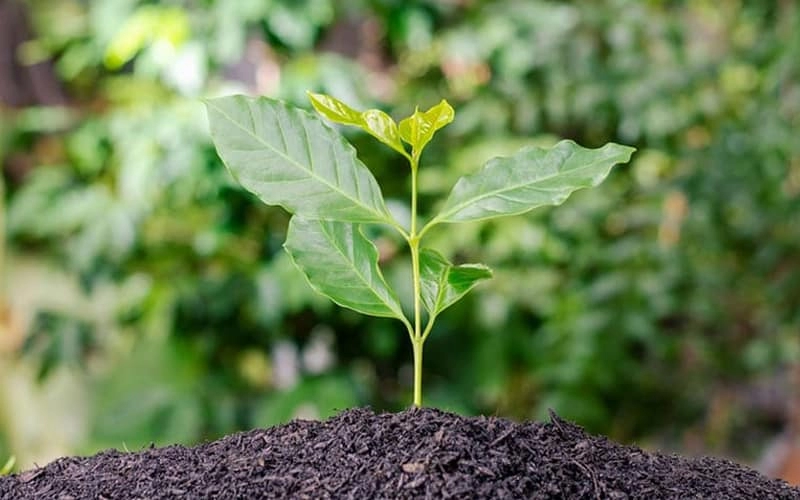
Soil is the place that nourishes and also contains the conditions for Specialt coffee trees to grow and develop
Nutrient Needs Across Life Stages
Coffee requires specific nutrients at each growth phase:
– Seedlings need abundant phosphorus for strong roots.
– Maturing plants require diverse nutrients for foliage, flowers, fruit, and stress resilience.
– Fruiting trees demand minerals for bean nourishment and flavor development, customized to variety and desired profile.
Prime Coffee Soils
Volcanic Soil: Mineral-rich, well-draining, and nutrient-dense, volcanic soil is a coffee oasis. Its unique makeup and superb structure help plants develop bright, intricate flavors with fruit, chocolate, and caramel notes.

Volcanic soil is often rich in specific minerals, has the ability to drain quickly and is rich in nutrients, making it a paradise for Specialty coffee trees
Red Soil: Prevalent in high-altitude, humid locales like Jamaica and Ethiopia, iron-rich red soil fosters chocolatey, caramel undertones, and a velvety mouthfeel when meticulously cultivated.

Red soil is rich in iron and several minerals that promote the chocolate and caramel flavors and richness of Specialty coffee beans
3. Climate's Crucial Role
Climate variables like temperature, humidity, and rainfall heavily influence specialty coffee quality.
Humidity & Rainfall
Specialty coffee flourishes in high-humidity regions with 1,500–2,000 L/m2 of steady rainfall, providing plants with plentiful water for flowering and fruit growth.
Insufficient rain stresses trees, causing branch die-off, leaf loss, and small, damaged beans (DaMatta et al., 2018). Excessive harvest-time rain can trigger over-fermentation, mold, and pests (Taniwaki et al., 2014).
New studies connect low late-season rainfall (<1600 mm) to undersized beans and high harvest rainfall (>750 mm) plus warm minimum temperatures (>22°C) to elevated defect rates from mold and pests.

Specialty coffee trees often grow well in areas with high humidity and steady rainfall (about 1,500 – 2,000 liters/m2)
Temperature’s Impact
Arabica coffee favors average temperatures of 15–24°C, which curb pests and diseases while permitting a prolonged ripening period. This extra time allows coffee to develop rich nutrients and flavor complexity.
Extreme cold can harm plants through frost, while heat above 30°C hinders growth, discolors leaves and beans, and hastens ripening before peak flavor (Craparo et al., 2015). High temperatures with unfavorable rain and humidity can also foster mold, rust, and pests.

Arabica varieties. They often prefer growing areas with temperatures ranging from 15 – 24 degrees Celsius
4. Regional Flavor Profiles
Specialty coffees from different origins exhibit distinct flavor profiles shaped by each area’s unique geographical attributes.
|
Region |
Signature Flavors |
Notable Countries |
|
Central America |
Fruity, spicy, light, smooth |
Panama, Costa Rica, El Salvador, Guatemala |
|
South America |
Sweet (caramel/raw sugar), nutty |
Peru, Ecuador, Colombia |
|
East Africa |
Fruity, bright, sharp, fragrant |
Ethiopia, Kenya, Rwanda |
|
Asia |
Rich, chocolatey, smoky, low-acid |
Yemen, Indonesia, Thái Lan, Ấn Độ |
Even within regions, local variations in altitude, climate, soil, and tradition create nuanced flavor differences. For instance, Kenyan coffees are often clean and tart, while Ethiopian lots may be floral and fruity.

Specialty coffee flavors are rich with each coffee from large regions as well as micro regions showing off different nuances
5. The Importance of Terroir in Specialty Coffee
What is Terroir?
In specialty coffee, terroir refers to the unique set of environmental factors that influence the crop, including soil, climate, elevation, and local agricultural practices. Essentially, it encompasses the entire growing environment and the people who cultivate the land.
The Role of Terroir in Coffee Flavor
Each coffee-growing region has its own distinct terroir, which plays a crucial role in shaping the final flavor profile of the beans. Factors such as soil composition, temperature, rainfall, and altitude interact with the coffee plant, affecting its growth and the development of flavors. This means that the same coffee variety grown in different regions can have unique taste profiles.

Terroir is like the DNA of coffee beans, creating differences between coffee of growing regions
Recognizing and Respecting Terroir
Although terroir is not the sole determinant of coffee flavor, it creates distinctive flavor notes and contributes to the overall sensory experience. By understanding and researching terroir, producers can optimize growing conditions to enhance the coffee’s inherent qualities.
Terroir helps producers:
- Identify suitable growing areas for each coffee variety
- Ensure the coffee plants thrive in optimal conditions
- Develop desired flavor profiles by leveraging the land’s unique characteristics
Respecting terroir also means valuing the efforts of the farmers and the land itself. Producing high-quality, flavorful specialty coffee is a complex process that requires a harmonious relationship between nature and human intervention.

Each type of specialty coffee will shine brightly when grown in suitable conditions that can meet its picky needs
Every delicious cup of specialty coffee is the result of a long, intricate process that involves a delicate balance between nature and human intervention. Even the slightest changes in the growing environment or production process can have a significant impact on the overall quality and flavor of the coffee, leading to an incredible diversity of taste profiles. As we gain a deeper understanding of the complexity involved in producing high-quality specialty coffee, our appreciation for the farmers and producers who dedicate themselves to this craft only grows.
Photo sources are provided and collected by XLIII Coffee’s partners
6. FAQs
Question 1: What factors influence the taste and quality of coffee?
Several factors can impact coffee flavor and quality:
Natural conditions:
– Altitude: The elevation at which coffee is grown significantly affects the acidity, sweetness, and overall flavor of the beans.
– Soil: The composition of the soil, including nutrients, minerals, pH, water retention capacity, and fertility, can influence how the coffee plant absorbs nutrients and develops aromatic compounds.
– Climate: Rainfall and temperature play crucial roles in coffee growth and quality.
+ Rainfall: Coffee plants thrive in areas with high humidity and regular rainfall (approximately 1,500-2,000 liters/m2).
+ Temperature: The optimal temperature range for cultivating Arabica coffee and enhancing its acidity is between 15-24°C (59-75°F).
Question 2: What is terroir in specialty coffee? What role does terroir play in shaping coffee flavor?
Terroir in specialty coffee refers to the unique environmental factors, such as soil, climate, and local practices, that influence the crop. Each growing region has its own distinct terroir, which plays a crucial role in shaping the final flavor profile of the coffee. By leveraging the specific terroir of an area, producers can create exceptional, distinctive flavors that reflect the story of the land and people behind the cup.
Question 3: Why do coffees from different regions taste different, even when they are the same variety?
Even when comparing the same coffee variety grown in different locations, the resulting flavor profiles can vary significantly. This is due to the unique environmental conditions of each area, such as soil composition, climate, and altitude, which influence the development and expression of flavors in the coffee. These factors contribute to the final sensory qualities of the bean, including acidity, sweetness, and aromatic compounds, resulting in each region having its own signature terroir.
Question 4: What types of soil are best suited for growing coffee?
The structure and composition of the soil directly impact the growth and quality of the coffee tree. The best soils for coffee cultivation are:
- Volcanic soil: Rich in minerals, well-draining, and abundant in essential nutrients, volcanic soils contribute to the brightness and complexity of the coffee.
- Red soil: High in iron and certain minerals that promote chocolate and caramel notes, red soil can produce coffee with a rich flavor profile when properly managed.
Question 5: How does the flavor of specialty coffee change with the altitude of the growing region?
The altitude at which coffee is grown significantly impacts the final flavor profile:
– Low altitudes (<762 masl): Coffee tends to have a simple, earthy, or bitter taste.
– Medium altitudes (910-1.200 masl): Coffee develops sweet, mellow, citrus, chocolate, and vanilla notes.
– High altitudes (>1.200 masl): Coffee exhibits a rich, fruity, and floral flavor profile.
Articles you may be interested in
– The relationship between fermentation and fruity notes in coffee
– Identifying Unique Specialty Coffee Growing Regions Around the World
– Direct trade coffee in East Africa is constrained – challenges and opportunities for growth

Bài viết mới


- Taste the Origin
Finca Soledad Mejorado Tyoxy & Fincas Putushio Mejorado – The red thread of the Jijón family
The simultaneous arrival of Finca Soledad Mejorado Tyoxy and Fincas Putushio Mejorado at XLIII Coffee paints a remarkable portrait of the adaptability of the Mejorado variety within Ecuador’s specialty coffee landscape. Nurtured by a shared family philosophy and a commitment to principled cultivation, these two processed lots represent both a breakthrough in microbial innovation and the remarkable return of an exceptional flavor profile.

Finca La Palestina Gesha #5482 – A new chapter in the legend from Cajamarca
From the renowned Cajamarca region, Finca La Palestina Gesha #5482 returns after a period of absence with a proud and fresh appearance. Nurtured in ideal altitude conditions and the cool climate characteristic of the Andes, each coffee bean slowly accumulates subtle flavor nuances before being perfected using the Washed method to maximize the purity of the Gesha variety. Under a carefully refined extremely-light roast profile, this batch of coffee reveals layers of white jasmine, ripe citrus, and sweet golden apricot aromas, interwoven in an elegant and rich flavor structure.

- Taste the Origin
Finca La Palestina ‘Gesha Inca’ #5485 – A masterpiece carved from an ancient civilization
From the mist-covered hills of San José del Alto, Finca La Palestina ‘Gesha Inca’ #5485 emerges as a proud declaration of the convergence between more than seventy years of agricultural heritage and the resilient biological code of an ancient civilization. Through the clarity of meticulously executed Washed Processing, this coffee unveils a magnificent sensory progression across temperature ranges while extending a chain of integrity through the Direct Trade model.

- Taste the Origin
Finca La Palestina Red Bourbon #5487 – A blossoming legacy in the highlands of Cajamarca
Amidst the ethereal clouds of Cajamarca, where the deep forest, Mother Earth, and time harmonize, Finca La Palestina Red Bourbon #5487 is born as a proud epic of heritage. It bears witness to the story of three generations of the Alarcón Coronel family, to their respect for nature, and to their Cup of Excellence achievements. Each layer of fragrance is a journey for all the senses, leading the connoisseur into subtle and captivating depths.

- Breaking News
Royal Botanic Gardens, Kew announces new hybrid coffee named Libex
As the global coffee industry faces unprecedented challenges from climate change, the Royal Botanic Gardens, Kew (UK) has brought a ray of hope by formally announcing a natural hybrid coffee named Libex. Identified after intensive genetic research across three continents, Libex represents a perfect intersection between the resilient heat tolerance of Liberica and the robust agronomic vigor of Excelsa.

Specialty Coffee in Vietnam
BRAND VALUE
YOU SHOULD HAVE KNOWN
XLIII Coffee has been aiming to become a big, impactful company with social responsibilities,
have access to high-quality raw materials and convey the complete original values of coffee to our customer
