
Gesha Village Estates Farm – Where Gesha varieties confidently exude flavor
Gesha is a coffee variety that has an undeniable attraction to those who are passionate about discovering each original note inside the specialty coffee bean. This haughty coffee lady will take you from fresh to hearty, and seductive in just a click as the temperature changes over time. Each type of Gesha will have its own points in flavor, attracting users in different ways. Gesha Village Estates is a paradise for Gesha varieties (Gesha 1931, Gori Gesha) together to bear fruit and develop into Ethiopia’s leading brand.
I. Gesha Village Estates was born late but is extremely developed
Compared to other farms with decades of history in the coffee industry, Gesha Village Estates is a “child” born in 2011 in Bench Maji, southwestern Ethiopia. But that does not mean that this farm becomes weaker in the whole industry. It has a large area (471 ha, coffee growing area is 320 ha), is an integrated area of 8 coffee farms: Bangi, Dimma, Gaylee, Omar, Narsha, Surma, Shewa – Jibabu, Shaya. Each farm has its own natural conditions, creating a type of eggplant with a unique aroma. It is a flower garden with the scent of jasmine, rose with a little sourness of apricots and tangerines inside Gesha 1931 from Oma or the sweet scent of dark chocolate mixed with ripe peaches, papaya,… by Gori Gesha from Shewa – Jibabu. With the advantage of soil including primeval forest, fertile, shady, red-brown forest land with an altitude of 1909 – 2069 m above sea level, the coffee beans here are well nourished, full of flavor and preserved. high scores on the SCA scale, hence high prices in auctions.

Not stopping there, coffee production at Gesha Village Estates also aims for sustainable development when creating fairness, providing many benefits to the parties involved in the production; protecting the natural environment when greening damaged lands, prioritizing the reuse of materials, using organic fertilizer products, etc.; and above all, the quality of the coffee beans is recognized by the suppliers.
II. Varieties of coffee varieties at Gesha Village Estates
With 8 farm blocks Gesha Village Estates has the necessary conditions to enrich the coffee bean flavor profile. The farm is currently cultivating 3 names that guarantee quality and taste: Gesha 1931, Gori Gesha, Illubabor Forest.
Below is the distribution of coffee varieties at 8 farm blocks.
|
Farm |
Flavor |
||
|
Bangi |
1,911- 2,001m |
Gori Gesha |
Honeysuckle flowers, spices. Rich flavors of dark chocolate and spice blend with black tea, molasses and black currant |
|
Dimma |
1,966- 2,019m |
Illubabor Forest |
Vibrant flavors of coffee flowers, nuts, pronounced acidity and refreshing citrus aftertaste |
|
Gaylee |
1,916- 1,982m |
Illubabor Forest |
Blending flavors of fruit and spices, the rich sweetness of marzipan, lemongrass, and hibiscus is permeated with floral notes of jasmine and sweet nut flavors. |
|
ô-ma |
1,931- 2,040m |
Gesha 1931 |
The scent of rose tea combines with the deep aroma of jasmine. Subtle flavors of peach, apricot, candied fruit, melon, satsuma mandarin are supported by the sweetness of honey. |
|
Narsha |
1,963-1,977m |
Gesha 1931 |
Honeysuckle, lemon, dark chocolate, peach, apricot, rose, with pure acidity and lingering aftertaste of bergamot |
|
Surma |
1,909- 2,063m |
Gesha 1931 |
The softness of jasmine, Damascus rose, strawberry, ripe watermelon, red apple and delicate spices |
|
Shewa- Jibabu |
1,973- 2,069m |
Gori Gesha |
Flavors of spices, strawberry, ripe peach, papaya, floral, dark chocolate, tamarind, orange and bergamot |
|
Shaya |
1,926- 2,069m |
Gori Gesha |
Delicate aromas of jasmine, bergamot and orange. Rich flavors of dark chocolate, tangerine juice, Bing cherries, molasses, Meyer lemons, berries, with the sweetness of red appleCó thể thấy tuy cùng một giống nhưng điều kiện tự nhiên, vùng trồng khác nhau có thể tạo nên những hồ sơ hương vị riêng. |
III. The preferred processing method at Gesha Village Estates
In order to optimize and protect the taste of green coffee beans, farmers had to meticulously and carefully observe each stage to promptly remove substandard beans.
Washed processing
Washed processing uses a mechanical demulsifier to remove the mucus from the coffee cherries. The coffee then undergoes a complete wet fermentation, is soaked for 12 to 36 hours and then rinsed. After that, the coffee is dried in the shade for two to three days until it reaches 30% moisture and then sun-dried to 11% humidity. Coffee undergoes a total of 12 to 19 days of drying in this process.
Natural processing
Coffee is divided into thin layers to dry in the sun. At night, the farmer uses a parabolic plastic lid to increase the airflow for the coffee. This process takes 18-30 days to complete.

Honey processing
Fresh coffee bean pods are physically removed with a pulverizer without the addition of water. After grinding, the coffee bypasses the demulsifier to retain its mucilage and is dried until it reaches 11% moisture.
Special fermentation
Gesha Village Estates Farm uses proprietary processing methods to add depth to the coffee beans. This is what makes a difference for products from Gesha village.
Coffee beans at Gesha Village Estates are nurtured and nurtured by the favor of nature for the farm combined with the dedication of people, love and responsibility to the whole industry. With expertise and enthusiasm, Gesha Village Estates conquers suppliers, users and professionals at professional coffee competitions.
Come to XLIII Coffee to enjoy good candidates at this ethical farm! Save more with the Hunter Subscription!
IV. FAQs
1. When was Gesha Village Estates founded and where is it located?
Gesha Village Estates was founded in 2011 and is located in Bench Maji, southwestern Ethiopia. Despite being relatively new, the farm covers a large area of 471 hectares and is recognized for its high-quality coffee production.
2. What makes Gesha Village Estates coffee beans unique?
Gesha Village Estates benefits from diverse natural conditions across eight farm blocks, allowing the coffee beans to develop unique flavor profiles. The beans are known for their distinct aromas like jasmine, rose, dark chocolate, and fruits such as peach, apricot, and papaya.
3. What varieties of coffee are cultivated at Gesha Village Estates?
Gesha Village Estates grows three main coffee varieties: Gesha 1931, Gori Gesha, and Illubabor Forest. Each variety is cultivated in different altitudes and environments, leading to a wide range of flavor profiles, from floral and fruity notes to rich chocolate and spice undertones.
4. How does the farm ensure the sustainability of its coffee production?
Gesha Village Estates promotes sustainable practices by focusing on environmental protection, fair trade, and using organic fertilizers. They also prioritize reusing materials and greening damaged lands, making their coffee production eco-friendly.
5. What processing methods are used at Gesha Village Estates?
The farm uses various processing methods, including washed, natural, and honey processes, to enhance the flavor of the coffee beans. Special fermentation techniques are also employed, adding depth to the coffee’s taste and helping distinguish Gesha Village’s products from others.

Bài viết mới
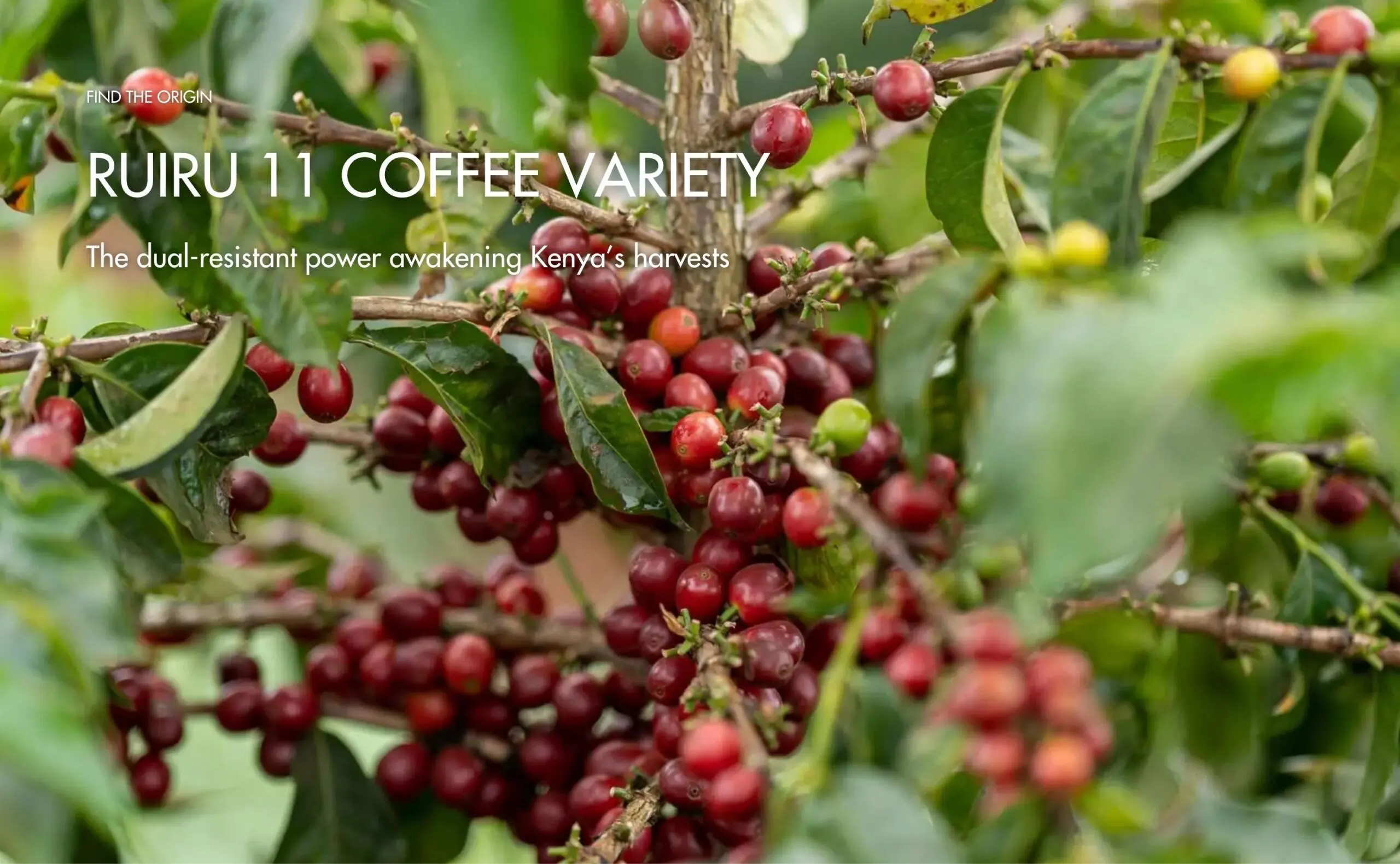
- Find the Origin
Ruiru 11 coffee variety – The dual-resistant power awakening Kenya’s harvests
Born from the ashes of a devastating pandemic, Ruiru 11 is a resilient response of indigenous wisdom to the trials of nature. Carrying a complex genetic code from 66 sibling isolines, this humbly statured coffee variety possesses superb “dual-resistance” against the twin shadows of Coffee Berry Disease and Coffee Leaf Rust. Overcoming early prejudices and the paradox of trade-offs between yield and flavor, Ruiru 11 has been weaving through nurseries, awakening dormant harvests across highland hillsides, and igniting a proud flame of self-reliance for Kenyan coffee.

- Taste the Origin
Sudan Rume #00313 by CGLE – The origin legend beneath the Eucalyptus canopy
From a wild coffee lineage discovered in the Rume Mountains in the 1940s to the enduring conservation efforts of Café Granja La Esperanza, Sudan Rume #00313 by CGLE invites drinkers on a sensory pilgrimage to the birthplace of the Arabica world. It is a rare biological legacy preserved through unwavering dedication, integrity, and deep reverence for history.
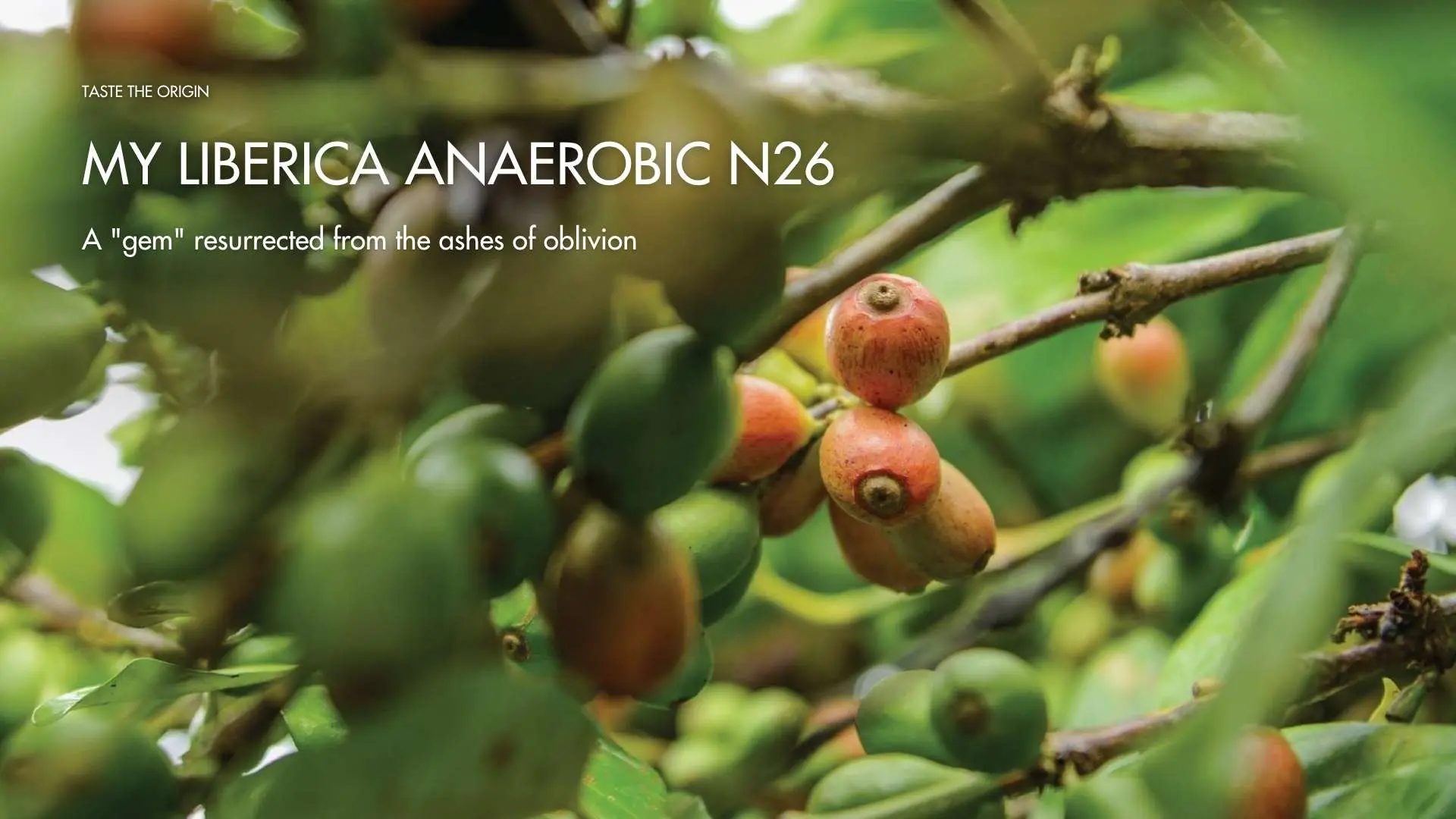
- Taste the Origin
My Liberica Anaerobic N26 – A “gem” resurrected from the ashes of oblivion
The journey of My Liberica Anaerobic N26 is the triumph of a forgotten species, awakened by the depth of understanding, patience, and faith in its original essence. From the heavy clay layers of Kulai to 26 days of transformation in absolute darkness, each step contributes to unlocking layers of flavor that the world once thought could not exist in Liberica. More than just a cup of coffee, My Liberica Anaerobic N26 is a powerful declaration that all great values begin with the courage to delve into their essence, and then rise to a unique voice that resonates throughout the world.


- Taste the Origin
Finca Soledad Mejorado Tyoxy & Fincas Putushio Mejorado – The red thread of the Jijón family
The simultaneous arrival of Finca Soledad Mejorado Tyoxy and Fincas Putushio Mejorado at XLIII Coffee paints a remarkable portrait of the adaptability of the Mejorado variety within Ecuador’s specialty coffee landscape. Nurtured by a shared family philosophy and a commitment to principled cultivation, these two processed lots represent both a breakthrough in microbial innovation and the remarkable return of an exceptional flavor profile.

- Taste the Origin
Finca La Palestina Gesha #5482 – A new chapter in the legend from Cajamarca
From the renowned Cajamarca region, Finca La Palestina Gesha #5482 returns after a period of absence with a proud and fresh appearance. Nurtured in ideal altitude conditions and the cool climate characteristic of the Andes, each coffee bean slowly accumulates subtle flavor nuances before being perfected using the Washed method to maximize the purity of the Gesha variety. Under a carefully refined extremely-light roast profile, this batch of coffee reveals layers of white jasmine, ripe citrus, and sweet golden apricot aromas, interwoven in an elegant and rich flavor structure.

Specialty Coffee in Vietnam
BRAND VALUE
YOU SHOULD HAVE KNOWN
XLIII Coffee has been aiming to become a big, impactful company with social responsibilities,
have access to high-quality raw materials and convey the complete original values of coffee to our customer
