
How do coffee farmers save water in production?
Water is an important element in the coffee production process, from cultivation, harvesting, preliminary processing to roasting. However, water resources are being degraded due to climate change and inefficient use. So what can coffee farmers do to save water in production? Let’s find out with XLIII Coffee!
Water scarcity threatens sustainable coffee production
Coffee is one of the crops with the largest water footprint (a measure of freshwater consumption and pollution) compared to other crops such as wheat, corn, soybeans, sugarcane and cotton. According to Water Footprint Network data, to produce one kilogram of coffee, about 18,900 liters of water are needed, of which 95% is water for watering plants, 4% is preliminary water and 1% is roasted and ground water. This is a very large number compared to other crops, such as rice (1,400 liters/kg), corn (900 liters/kg) or potatoes (290 liters/kg).
In addition, experts from the CGIAR Research program say that the long-term sustainability of coffee production is seriously threatened by the depletion of groundwater resources. Many producers in some areas are building wells to supplement or replace traditional shallow wells that are easily depleted. This has high costs and risks, due to the variable depth and yield of basalt aquifers. In addition, Dr. CT Hoanh from the International Water Management Institute (IWMI) said, the level of groundwater extraction is reaching the limit, so it is necessary to improve the use of water in agriculture to achieve sustainable management. sustainability of the entire industry.

Coffee farmers how to save water in production
Many coffee-growing regions in the world such as East Africa, Latin America, and Asia are facing drought, water shortages and reduced yields. This not only affects the income of farmers, but also threatens the sustainability of the coffee industry in the future. Therefore, many experts have delved into research and come up with a number of measures to help farmers effectively manage and save water in the coffee growing stages and ensure the maintenance of productivity and quality, such as:
– Before starting to build a farm, farmers need to research and carefully choose the location to grow coffee. Places with hard, sloping, flood-prone soil should be avoided and preferable sites with soft, well-drained soil and natural vegetation to save watering and protect soil from erosion.
Besides choosing the ideal planting area, farmers need to pay attention to maintaining the fertility of the soil. Nutrient-rich soil will help coffee plants absorb water and oxygen better, thereby minimizing the amount of water needed and increasing quality and yield. However, do not fertilize too much as this will stimulate the coffee plant to consume more water.
– Planting cover crops around the coffee growing area, intercropping to take advantage of the natural harmony. Cover crops will reduce solar radiation, lower temperatures, and increase soil moisture to help plants retain water longer.
– Plant coffee in horizontal rows along the incline to slow the flow of groundwater and help prevent erosion.
– Use a ground cover such as straw, hay or shrubs, to protect the soil from evaporation and excessive drainage. This mulch also improves soil structure and adds organic matter to the soil, improving soil nutrition after flooding in the rainy season or aridity in the dry season.
– Regularly inspect the farm for signs of hydraulic stress, such as wilting leaves at the hottest part of the day during the dry season, to replenish water in a timely manner. A prolonged lack of water can hinder the growth of sugars in cherries, making the tree more susceptible to disease.
– Monitor relevant data such as humidity, temperature, precipitation,…. Marcelo – The director at Ecoagrícola recommends checking with local experts about groundwater levels in your area, as well as Daily climate indicators to plan the correct watering, avoid wasting water.
– Invest in irrigation technology such as drip irrigation, mist irrigation or automatic pipe irrigation to closely control the volume of water used and increase irrigation efficiency.

By implementing the above solutions, coffee production can reduce dependence on water sources and contribute to environmental protection. This is essential to ensure the sustainability of the coffee industry amid growing challenges. However, fully solving this problem, it requires cooperation between stakeholders, including government, businesses, NGOs, farmers and consumers. Let’s explore with XLIII Coffee through the next articles!
Source: perfectdailygrind
Articles you may be interested in
– How to sourcing sustainable coffee for the long term?
– Shaya #056 coffee beans – a precious gift from the people who protect Gesha Ethiopia

Bài viết mới

- Taste the Origin
Nigussie Nare – Murago Outgrowers #03028: Cultivated from the Values of Sustainable Reciprocity
Nestled beneath the shade trees of Sidama, Bensa, the Nigussie Nare – Murago Outgrowers #03028 coffee lot serves as a living testament to the values of sustainable reciprocity. This symbiosis begins with the intimate bond between a rich indigenous ecosystem and the smallholder farmers of the Murago region. Each harvested bean is the culmination of a virtuous cycle: a stable environment produces exceptional bean quality, and sustainable economic growth, in turn, continues to protect the verdant canopy of the great forest.

- Taste the Origin
Rift Valley Coffee Caucus #03757 – A Testament to Western Kenya’s Collective Spirit
Turning our gaze to the Great Rift Valley of East Africa, the fertile volcanic landscapes are witnessing an inspiring transformation. Moving away from fierce, survival-driven competition, smallholder farmers in Western Kenya have chosen to join forces, forging a resilient and unified network. The Rift Valley Coffee Caucus #03757 lot stands as the ultimate testament to this remarkable collective synergy.

- Breaking News
Airworks Coffee & XLIII Coffee – A “handshake” that brings original flavors across borders
XLIII Coffee, alongside our key wholesale partner Airworks Coffee, officially announces the latest release of specialty coffee lots for the North American market. This event reaffirms our commitment to bringing original flavors across all geographical barriers to coffee enthusiasts.
Early access (for Subscribers of Airworks): 10:00 AM (PST) | Wednesday, April 29, 2026
General access: 10:00 AM (PST) | Friday, May 1, 2026
We invite our Customers and Partners to visit (airworkscoffee.com) for detailed information and to prepare for this special release!
- Taste the Origin
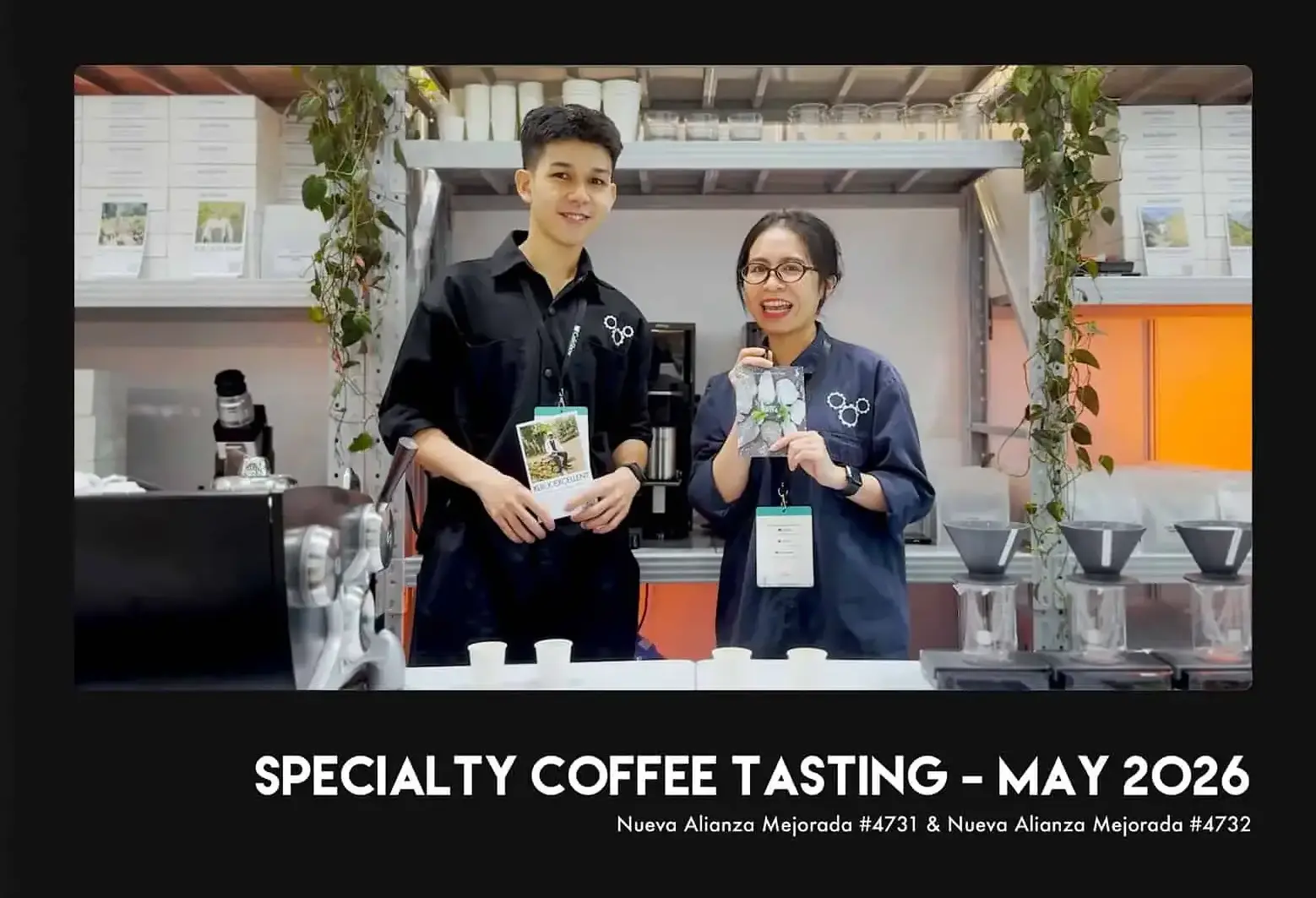
Unveiling May Discovery Subscription: Nueva Alianza Mejorada #4731 & Nueva Alianza Mejorada #4732
The Discovery Subscription is a silent dialogue, a place where the soul of the connoisseur finds a harmonious beat with distant lands. Like a transparent lens, we become storytellers, meticulously peeling back layers of cultural sediment, the breath of the soil, and the human philosophies hidden within every coffee bean.
May arrives with brilliant streaks of golden sunlight, a time when we long to hide beneath the lush, dew-drenched canopies of Santa Teresa. Amidst the silence of the Andes, when compassion touches Mother Earth, what will we hear? Perhaps it is a sweet response that nature reserves solely for souls who know how to wait patiently.

- Taste the Origin
Nueva Alianza Pacamara #4733 – The essence of Cusco with elegant jasmine notes
Nueva Alianza Pacamara #4733 is a testament to the miraculous terroir and dedicated cultivation of the renowned Cusco region. The combination of the characteristic Pacamara bean size and ideal altitude has forged a flavor profile of immense sophistication and depth. From the very first moment, this lot captivates with its elegant jasmine notes, radiating a gentle, pure fragrance akin to a flower blooming in the morning dew.

- Taste the Origin
Nueva Alianza Orange Gesha #4737 – An expedition of recessive genetic traits into the sensory realm
In a world of authenticity, Nueva Alianza Orange Gesha #4737 represents the proud emergence of rare biological traits often obscured by nature’s universality. Carrying a recessive genetic code, Lot #4737 embarks on an “expedition” into the connoisseur’s mind, where record-breaking fructose concentrations are released to perfectly fill every sensory gap with absolute smoothness and purity.
Through washed processing and extremely-light roasting, vibrant citrus nuances and ethereal floral notes, once hidden deep within the genetic structure, now manifest with power, transforming the tasting experience into a journey of ontological completion, where the rarity of recessive genes finally reigns supreme in flavor.

Specialty Coffee in Vietnam
BRAND VALUE
YOU SHOULD HAVE KNOWN
XLIII Coffee has been aiming to become a big, impactful company with social responsibilities,
have access to high-quality raw materials and convey the complete original values of coffee to our customer
