
How does technology impact the specialty coffee industry?
The third wave of coffee – Specialty Coffee emerged, making consumers more focused on the origin and production techniques. Therefore, technology plays an important role in traceability so that customers can understand more about the type of coffee they drink and is an indispensable factor contributing to improving the efficiency and quality of the production industry coffee
Table of Contents
I. New technology increases traceability from farm to cup of coffee
If you notice, technology has made it so much easier to safely and securely store a wide variety of information from across the supply chain. One of the new and cutting-edge inventions in improving transparency and traceability in the coffee industry is blockchain technology. This is a decentralized network where stakeholders in the supply chain from farmers to suppliers, roasters can securely store and share data. The system can store almost all information such as farm prices, production history, certifications and locations of farms. Especially this platform allows anyone to have access and view this data, but cannot change or delete it.
Collins Mugabi – Director of Sustainability Business Analytics for Sucafina and Kihara Victor as System Administrator of RWACOF (Sucafina Rwanda) believe that blockchain technology is an important tool for the development of the coffee industry. Therefore, global coffee company Sucafina has applied a blockchain technology product – Cropin software to improve the traceability of coffee. Sucafina uses Cropin software to collect information about farmers and their coffee farms into the system. Cropin records detailed information about farms, including crop type, location, certification, and production history. When Sucafina buys coffee from farmers, Cropin also records transaction data, such as the volume, price and lot number of the coffee. As a result, Sucafina can track the origin and journey of each batch of coffee from the farm to the cup of coffee in the hands of the end user.
In addition, this technology not only helps increase transparency but also helps farmers control and improve their financial situation. As with the Cropin system, it is possible to create an automatic record of the financial history of the farmers. This makes it easier for financial institutions to assess and provide farmers with better pre-season loans based on their expected annual yield.

II. Technological breakthroughs improve the coffee production process
For decades, Coffee Farmers have relied on technology to support coffee production. Notable examples include the mechanical harvesters that helped producers harvest coffee cherries in Brazil in the 1960s. The remarkable development of mobile applications also provided new technologies. Useful digital tool for coffee farming. Platforms like Yara’s Coffee Club can track a number of variables such as nutrient levels in the soil and the amount of fertilizer applied, helping farmers to track details and understand the stages of irrigation and fertilization. manure to improve coffee quality.
Moreover, breakthroughs in AI technology allow producers to understand more about the quality of coffee beans or problems in the production process to make timely improvements. For example, ProfilePrint – is an artificial intelligence-based platform that can analyze green coffee characteristics such as taste, moisture and density. Through just a few simple steps, users can understand detailed information about the properties, profiles as well as quality scores of seeds. From there, the producer easily evaluates and improves the consistency and yield of each batch of coffee.

III. Save on coffee shipping costs thanks to a new technology platform
Trade and export of coffee are facing many difficulties due to a lack of containers and high transportation costs. To solve this problem, Sucafina – an international coffee trading company tested new technologies to improve efficiency and transparency in the supply chain. One of them is Internet of Things (IoT) technology, a system that allows us to accurately track the location and status of shipments. As a result, employees can control the route and promptly handle incidents that may affect coffee quality.
In addition, Sucafina uses Cargoo – an online communication platform between the parties involved in a particular shipment. Cargoo simplifies paperwork and communication processes, reducing staff time and effort. Carolina Guerra – North American Enforcement Specialist Sucafina shares the Cargoo platform that helps the company centralize all shipment information in one place and reduce the number of emails. It also makes the communication process from exporter to customer easier. By adopting these new technologies, coffee producers and suppliers can significantly save time, and labor costs as well as reduce the burden of transportation costs.

IV. Technology - Solutions to maintain sustainability for the coffee industry
Climate change is having serious effects on the coffee industry. According to a new study, about half of the current coffee land in the world’s top coffee-producing countries could be lost within the next 30 years due to climate change. Therefore, the coffee industry needs to find solutions to reduce carbon emissions and adapt to changes in the environment. One of the proposed solutions is to grow coffee in the laboratory. Kristine Breminer Isgren, quality control manager for Complete Coffee Limited, says that coffee grown in a laboratory can have a more consistent quality than coffee grown in the wild because of the growing conditions of the coffee plant. coffee can be tailored to your liking using new technologies such as Molecular methods (using different ingredients (e.g. date seeds) to create flavor compounds similar to those found in coffee); Microbial method (using genetically modified bacteria to produce flavor compounds); Cell method (using coffee cells grown in bioreactors to create a powder that can be roasted and ground like regular coffee). Coffee grown in the laboratory is not only beneficial to coffee quality, but also contributes to forest protection, water saving and carbon emission reduction. However, Kristine Breminer Isgren also stressed that more research is needed to test and evaluate the economic feasibility of this technology.
As such, the application of technology such as automation, AI, etc. can help stakeholders across the coffee industry maximize coffee quality, do their job easily and promote a more sustainable future. However, some technologies still need time to prove their value and feasibility. Follow XLIII Coffee to update new information
V. FAQs
1. Blockchain technology helps improve traceability in what way?
Blockchain technology enhances traceability by securely storing data throughout the coffee supply chain, from farmers to roasters. This system ensures transparency as information, like farm prices and production history, is accessible to all but cannot be altered or deleted.
2. How does technology like Cropin benefit coffee farmers?
Cropin collects and records detailed farm information, including production history and transaction data. This helps farmers track their finances and secure better loans, improving their financial stability and overall farm operations.
3. What role does AI technology play in coffee production?
AI platforms like ProfilePrint analyze green coffee beans to assess characteristics such as taste and moisture. This allows producers to evaluate the quality and consistency of their beans, making improvements to increase yield.
4. How does IoT technology impact coffee shipping?
IoT technology allows coffee producers and suppliers to track shipments in real time, ensuring better route management and timely responses to potential issues. This helps maintain coffee quality and reduces shipping costs.
5. How might lab-grown coffee benefit the industry?
Lab-grown coffee offers more consistent quality and reduces environmental impact by using fewer natural resources and lowering carbon emissions. However, more research is needed to confirm the economic feasibility of this technology.

Bài viết mới

- Taste the Origin
Finca La Palestina Red Bourbon #5487 – A blossoming legacy in the highlands of Cajamarca
Amidst the ethereal clouds of Cajamarca, where the deep forest, Mother Earth, and time harmonize, Finca La Palestina Red Bourbon #5487 is born as a proud epic of heritage. It bears witness to the story of three generations of the Alarcón Coronel family, to their respect for nature, and to their Cup of Excellence achievements. Each layer of fragrance is a journey for all the senses, leading the connoisseur into subtle and captivating depths.

- Breaking News
Royal Botanic Gardens, Kew announces new hybrid coffee named Libex
As the global coffee industry faces unprecedented challenges from climate change, the Royal Botanic Gardens, Kew (UK) has brought a ray of hope by formally announcing a natural hybrid coffee named Libex. Identified after intensive genetic research across three continents, Libex represents a perfect intersection between the resilient heat tolerance of Liberica and the robust agronomic vigor of Excelsa.

- Find the Origin
Mejorado Coffee Variety – The Perfect Blend of Bourbon & SLN Hybrid Lineage
Originating from the windswept hillsides of the South American highlands, the Mejorado coffee variety tells the story of a genetic masterpiece that is redefining the boundaries of the contemporary Specialty Coffee world. Behind a easily misunderstood name lies a completely distinct alter ego, where the sweet heritage of the Bourbon variety intertwines with the resilient vitality of the SLN hybrid lineage. Thanks to a profound slow-ripening process in the chill of extreme altitudes, this seed nurtures a magnificent flavor profile with ethereal floral and fruit notes, stepping onto the altars of global competitions to assert its status as a future icon, ready to stir the most discerning senses.
- Taste the Origin
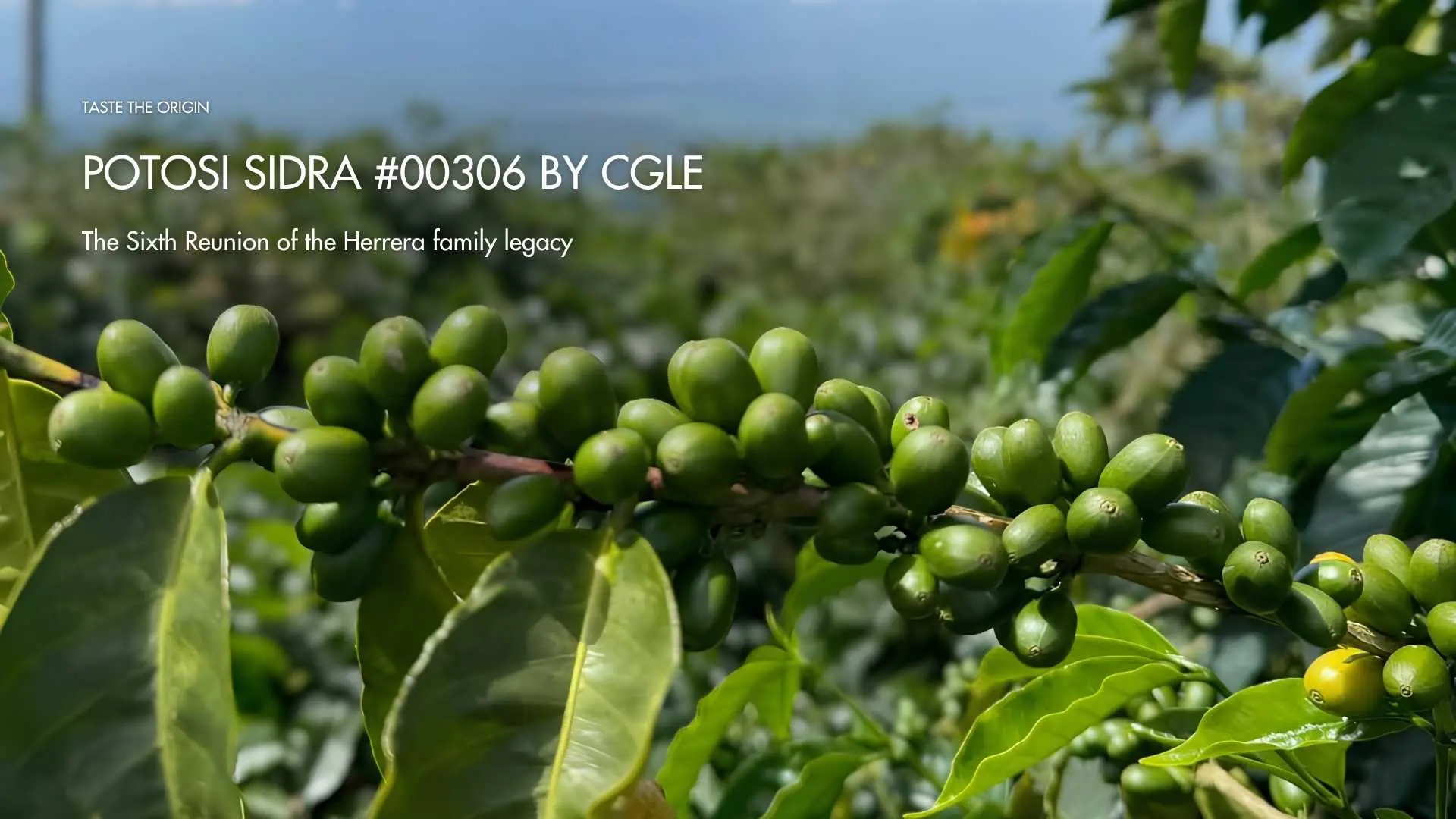
Potosi Sidra #00306 – The sixth reunion of the Herrera family legacy
The sixth harvest marks the return of Potosi Sidra #00306 by CGLE, carrying the presence of a family patriarch entrusted with more than eighty years of heritage from the Herrera family. Cultivated in the founding valley of Potosi since 1945 in Caicedonia, this genetic treasure born from the union of Bourbon and Typica presents a remarkably evolved sensory profile. Through its Extremely Light Roast philosophy and the financial transparency of the Paid for Producer model, XLIII Coffee chooses to preserve the authentic voice of terroir and the coffee’s original flavor structure.
- Taste the Origin
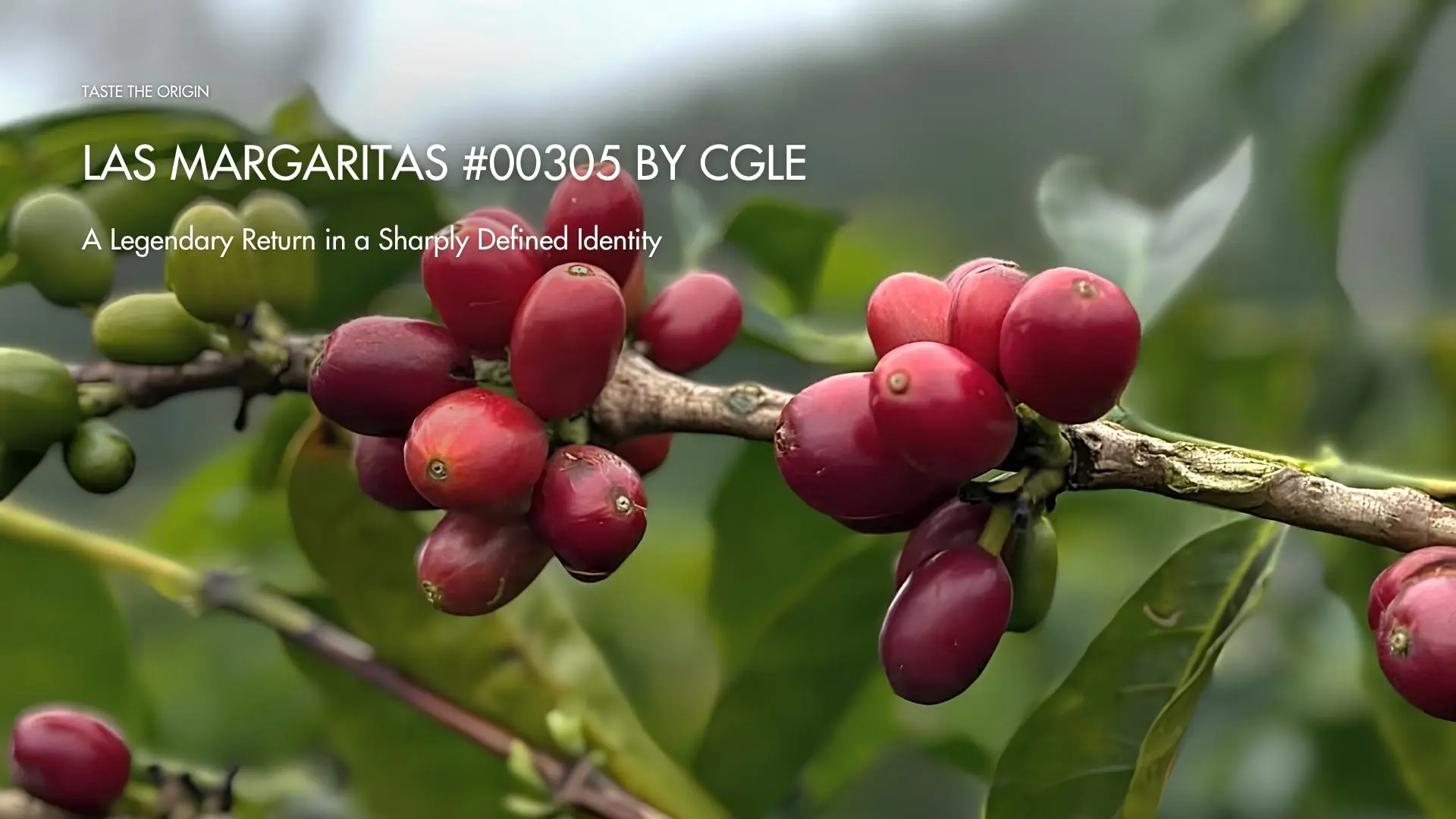
Las Margaritas #00305 by CGLE – A Legend Reunited in a Sharper Identity
Las Margaritas #00305 by CGLE returns to XLIII Coffee as a Gesha masterpiece reborn from the renowned Valle del Cauca region. Infused with the exquisite craftsmanship of Café Granja La Esperanza, this rare batch of coffee embarks on an enchanting flavor journey with vibrant citrus notes, delicate jasmine, and an elegant, lingering Earl Grey finish. Each drop is a crystallization of fertile volcanic soil and the sustainable farming philosophy that CGLE has persistently pursued for decades, creating a full-bodied, sharp flavor profile while retaining the pristine beauty characteristic of the royal Gesha variety.

- Taste the Origin
Finca Rosenheim Typica & Caturra – The Crossroads of Cultural Currents
Across the tides of world history, Finca Rosenheim Typica & Caturra emerges as a living testament hidden within the vast wilderness of Villa Rica. Here, the ancient lineage of the legendary Typica variety converges with the purity of the Washed process and the artistry of shade grown cultivation, weaving together delicate layers of Milk Chocolate, Nougat, and Purple Floral. Together, they create a profound resonance between resilient European heritage and the soul of the native Andes.

Specialty Coffee in Vietnam
BRAND VALUE
YOU SHOULD HAVE KNOWN
XLIII Coffee has been aiming to become a big, impactful company with social responsibilities,
have access to high-quality raw materials and convey the complete original values of coffee to our customer
