
Nueva Alianza ‘Inca Gesha’ #4734 – An indigenous heritage hidden in flavor note
Nueva Alianza ‘Inca Gesha’ #4734 is the culmination of the indigenous land of Cusco, where nature, people, and time come together to create a rare flavor heritage. Hidden within each delicate flavor note is the story of the Inca Gesha variety, cultivated in highland conditions through long-standing indigenous agricultural knowledge and profound respect for nature.
I. An overview of Nueva Alianza ‘Inca Gesha’ #4734
Nueva Alianza ‘Inca Gesha’ #4734 is the result of a unique intersection between an indigenous coffee variety and a producing community deeply connected to the land where it is grown. This lot not only represents the quality of a rare Gesha variety, but also reflects the philosophy of cultivation, preservation, and sustainable development practiced by farmers within the context of the global Specialty Coffee movement.
Inca Gesha – A variety rich in cultural identity
When speaking of Inca Gesha, it is impossible to separate this coffee variety from the cultural and historical context of the Inca civilization – one of the most remarkable indigenous civilizations in South America. Stretching across the Andes, the Inca people, centuries ago, developed sustainable agricultural systems, mastering hillside cultivation, water management, and respect for the natural cycles of the land. This mindset continues to influence how farmers care for coffee plants today, especially indigenous varieties such as Inca Gesha.
Inca Gesha is not merely a variant of Ethiopian Gesha grown in Santa Teresa, Cusco, but rather the result of a long process of adaptation between the coffee variety and indigenous natural conditions. Through generations of cultivation, farmers have naturally selected plants suited to mineral-rich soils, high altitudes, and the cool climate of the Andes. This process clearly reflects the traditional Inca agricultural philosophy: working with nature rather than imposing upon it.


What makes Inca Gesha particularly intriguing lies in the uncertainty surrounding its genetic origin. In various studies and field observations, this variety has been suggested to share close connections with SL-09 – a coffee variety with a complex breeding history in Africa. However, to this day, the precise origin of Inca Gesha has not been definitively identified. This ambiguity does not diminish its value; rather, it adds a layer of depth, positioning Inca Gesha as a variety understood not solely through genetic lineage, but through its flavor expression and resilient adaptation to its indigenous environment.
From a cultural heritage perspective, Inca Gesha embodies the spirit of patience and harmony – core values of indigenous life. Coffee trees are grown intercropped with native vegetation, develop slowly, and are tended by hand, much like how the Inca once cultivated potatoes, corn, and cacao on ancient agricultural terraces. This slow growth allows coffee cherries to accumulate higher sugar content and aromatic compounds, resulting in a flavor structure that is refined, balanced, and deeply layered.
Nueva Alianza – The Indigenous Community Behind the Coffee Quality
Alongside the varietal itself, Nueva Alianza represents the human element behind the quality of Inca Gesha #4734. Nueva Alianza is an indigenous farming community in the Cusco region, formed through a spirit of cooperation and shared agricultural knowledge. Rather than mass production, the community focuses on quality control at every stage from farm management and selective hand-picking to careful post-harvest processing. Every decision in the production process aims to preserve the natural characteristics of the coffee variety and the local ecosystem.


Nueva Alianza’s philosophy does not seek to maximize yield, but instead prioritizes the long-term stability of the land, the ecosystem, and farmers’ livelihoods. This approach allows Inca Gesha to fully express its inherent potential while producing lots with a strong sense of origin. As such, Nueva Alianza Inca Gesha #4734 represents a convergence of indigenous knowledge, agricultural science, and deep respect for nature.
The combination of the Inca Gesha variety and the Nueva Alianza producer community establishes a solid foundation for both the quality and the narrative of this coffee lot. From this foundation, drinkers are guided into a deeper exploration of processing methods and flavor profiles – layers of value that will gradually unfold in the following sections.
II. Processing method and the formation of flavor structure
Once the variety and the people have established the identity of Nueva Alianza ‘Inca Gesha’ #4734, processing becomes the next decisive step in determining how these potentials are expressed in the cup. Processing does not create flavor from nothing; rather, it acts as a refined filter that clarifies, organizes, and connects the natural compounds developed during the coffee’s growth.
Washed processing unlocking multi-layered flavors

Nueva Alianza ‘Inca Gesha’ #4734 is processed using the Washed method, in which the fruit pulp is removed immediately after harvest, followed by a controlled fermentation process and thorough washing. This approach limits prolonged fermentation influence while highlighting cleanliness and flavor transparency. For Inca Gesha, washed processing is particularly suitable for preserving delicate floral aromas, bright acidity, and a clearly defined flavor structure.
From a scientific perspective, washed processing allows farmers to closely control mucilage breakdown, keeping aromatic compounds in balance. As a result, the cup profile shows stability, minimal variation, and strong traceability – clearly reflecting the relationship between coffee variety, growing region, and Nueva Alianza’s farming practices.
Flavor development through temperature
The flavor structure of Nueva Alianza Inca Gesha #4734 is built in layers and evolves coherently as temperature changes. From the initial aroma, the cup suggests red apple and strawberry, interwoven with elegant jasmine, creating a bright and approachable impression.
When enjoyed hot, jasmine and rose notes become more prominent, accompanied by lime that brings clarity and freshness. At this stage, the flavor structure feels clean and refined, characteristic of meticulously washed coffees. As the temperature cools slightly, strawberry and red apple emerge more clearly, joined by orange to create a rounder, gently sweet profile. This is when the cup achieves a clear balance between acidity and natural sweetness.

At cooler temperatures, the flavor shifts toward a lighter, more transparent expression, reminiscent of jasmine tea combined with lime and orange, delivering a clean and refreshing sensation. At this point, the flavors become more restrained yet persistent, allowing drinkers to perceive the depth and stability of the overall structure.
Overall, the acidity of this lot is crisp and vibrant, similar to orange and strawberry, supporting the entire flavor framework. Sweetness is high and deep, recalling red apple and rose, spreading evenly and lingering. The mouthfeel is soft, smooth, and silky – comparable to jasmine tea and orange candy contributing to a long, clean, and pleasant finish.
III. The first journey of Nueva Alianza ‘Inca Gesha’ #4734 at XLIII Coffee
The first appearance of Nueva Alianza ‘Inca Gesha’ #4734 at XLIII Coffee carries a broader significance in how coffee is perceived as a cultural value. This marks the first time XLIII Coffee has selected an Inca Gesha lot that strongly embodies the indigenous identity of the Cusco region. In a context where coffee is increasingly consumed quickly and often reduced to simplified flavor descriptions, this lot offers a slower perspective – one in which each cup becomes a medium for telling a story of origin and identity.
The journey of this coffee at XLIII Coffee is built upon a direct and long-term relationship with the Nueva Alianza farm. Rather than working through multiple layers of intermediaries, XLIII Coffee chose to connect directly with the producer to ensure transparency across the value chain, while also allowing the voices of farmers to be more fully heard.

A tangible demonstration of this commitment lies in the price of USD 3,042.21 per 69 kg bag paid directly by XLIII Coffee to Nueva Alianza. This figure reflects XLIII Coffee’s approach to valuing coffee not merely as a commodity, but as the result of labor, indigenous knowledge, and the producer’s responsibility in preserving the ecosystem. Paying at this level helps enable the farming community to continue investing in quality, maintain sustainable cultivation practices, and preserve indigenous coffee varieties such as Inca Gesha.
When the coffee arrives at XLIII Coffee, the philosophy of respecting raw materials continues to be clearly expressed through an extremely-light roast profile. This deliberate choice minimizes intervention during roasting, allowing the natural flavor structure of Nueva Alianza Inca Gesha #4734 to be fully revealed.
Taken as a whole,
Nueva Alianza ‘Inca Gesha’ #4734 not only marks the first appearance of the Inca Gesha variety at XLIII Coffee, but also represents the direction the brand pursues: honoring coffee as a cultural value, building direct and fair relationships with producers, and allowing original flavors to speak in their most honest form.
Images are owned by Nueva Alianza & XLIII Coffee and have been collected from various sources.
IV. FAQs
1. Is the origin of Inca Gesha related to the SL-09 variety?
At present, the exact genetic origin of Inca Gesha remains unresolved, and there have been observations suggesting confusion or possible links with the SL-09 variety. However, no scientific conclusion has confirmed this relationship. Today, Inca Gesha is primarily identified through its indigenous adaptability and distinctive flavor profile in the Cusco region.
2. How does washed processing affect the flavor of Nueva Alianza Inca Gesha #4734?
The washed processing method clarifies the coffee’s natural flavor structure by minimizing the influence of fermentation. As a result, Nueva Alianza Inca Gesha #4734 expresses clean floral and fruit notes, accompanied by bright acidity and a transparent finish.
3. How does the flavor of Nueva Alianza Inca Gesha #4734 change with temperature?
At higher temperatures, the cup highlights floral notes and the bright freshness of citrus. As it cools, ripe fruit notes and natural sweetness become more pronounced, before transitioning into a light, clean, and tea-like floral character at lower temperatures.
4. Why did XLIII Coffee choose an extremely-light roast for Nueva Alianza Inca Gesha #4734?
Extremely-light roasting minimizes intervention during the roasting process, preserving the natural characteristics of the Inca Gesha variety and the washed processing method. This approach allows floral aromas, acidity, and flavor structure to be expressed more clearly and authentically.
5. How should light-roasted coffee beans be stored to maintain optimal flavor?
Light-roasted coffee beans should be stored in an airtight bag or container with a one-way valve, kept in a cool, dry place away from direct light. Prolonged exposure to air, humidity, and heat should be avoided, and beans should not be stored in a refrigerator to prevent moisture condensation that may negatively affect flavor.

Bài viết mới
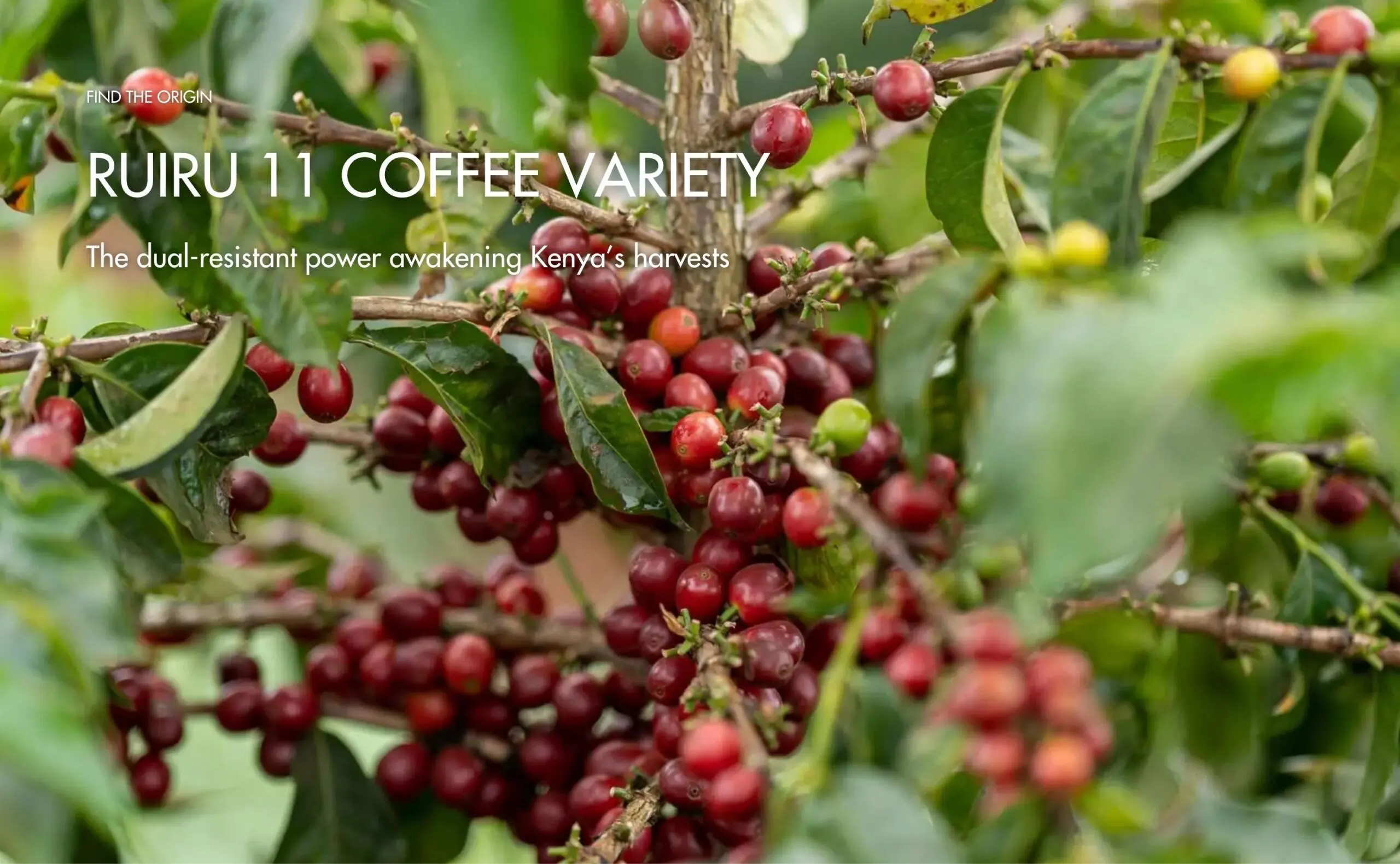
- Find the Origin
Ruiru 11 coffee variety – The dual-resistant power awakening Kenya’s harvests
Born from the ashes of a devastating pandemic, Ruiru 11 is a resilient response of indigenous wisdom to the trials of nature. Carrying a complex genetic code from 66 sibling isolines, this humbly statured coffee variety possesses superb “dual-resistance” against the twin shadows of Coffee Berry Disease and Coffee Leaf Rust. Overcoming early prejudices and the paradox of trade-offs between yield and flavor, Ruiru 11 has been weaving through nurseries, awakening dormant harvests across highland hillsides, and igniting a proud flame of self-reliance for Kenyan coffee.

- Taste the Origin
Sudan Rume #00313 by CGLE – The origin legend beneath the Eucalyptus canopy
From a wild coffee lineage discovered in the Rume Mountains in the 1940s to the enduring conservation efforts of Café Granja La Esperanza, Sudan Rume #00313 by CGLE invites drinkers on a sensory pilgrimage to the birthplace of the Arabica world. It is a rare biological legacy preserved through unwavering dedication, integrity, and deep reverence for history.
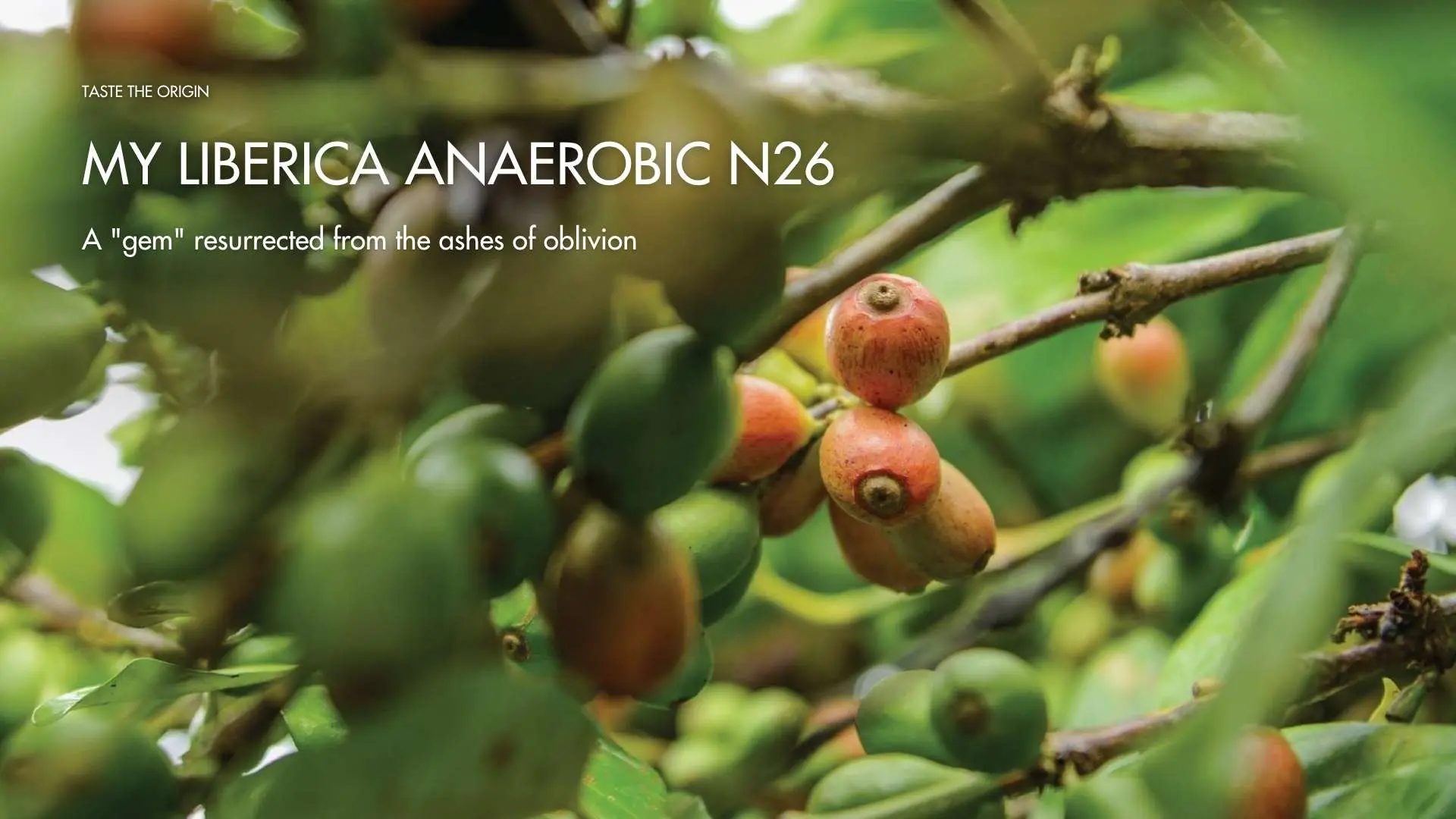
- Taste the Origin
My Liberica Anaerobic N26 – A “gem” resurrected from the ashes of oblivion
The journey of My Liberica Anaerobic N26 is the triumph of a forgotten species, awakened by the depth of understanding, patience, and faith in its original essence. From the heavy clay layers of Kulai to 26 days of transformation in absolute darkness, each step contributes to unlocking layers of flavor that the world once thought could not exist in Liberica. More than just a cup of coffee, My Liberica Anaerobic N26 is a powerful declaration that all great values begin with the courage to delve into their essence, and then rise to a unique voice that resonates throughout the world.


- Taste the Origin
Finca Soledad Mejorado Tyoxy & Fincas Putushio Mejorado – The red thread of the Jijón family
The simultaneous arrival of Finca Soledad Mejorado Tyoxy and Fincas Putushio Mejorado at XLIII Coffee paints a remarkable portrait of the adaptability of the Mejorado variety within Ecuador’s specialty coffee landscape. Nurtured by a shared family philosophy and a commitment to principled cultivation, these two processed lots represent both a breakthrough in microbial innovation and the remarkable return of an exceptional flavor profile.

- Taste the Origin
Finca La Palestina Gesha #5482 – A new chapter in the legend from Cajamarca
From the renowned Cajamarca region, Finca La Palestina Gesha #5482 returns after a period of absence with a proud and fresh appearance. Nurtured in ideal altitude conditions and the cool climate characteristic of the Andes, each coffee bean slowly accumulates subtle flavor nuances before being perfected using the Washed method to maximize the purity of the Gesha variety. Under a carefully refined extremely-light roast profile, this batch of coffee reveals layers of white jasmine, ripe citrus, and sweet golden apricot aromas, interwoven in an elegant and rich flavor structure.

Specialty Coffee in Vietnam
BRAND VALUE
YOU SHOULD HAVE KNOWN
XLIII Coffee has been aiming to become a big, impactful company with social responsibilities,
have access to high-quality raw materials and convey the complete original values of coffee to our customer
