
Pacamara Coffee: The Superior Result of 30 Years of Breeding Innovation
Pacamara coffee is the outcome of over three decades of research and development in El Salvador. As a hybrid of two iconic coffee varieties, Pacas and Maragogipe, what unique potential does this extraordinary variety offer? Let’s dive in and discover its story!
I. The Origin and Creation of Pacamara Coffee
Pacamara coffee emerged from a meticulous crossbreeding process between Maragogipe and Pacas. Maragogipe, a natural mutation of Typica, is renowned for its exceptionally large beans but is hampered by low yields and susceptibility to disease. Pacas, a mutation of Bourbon, is prized for its high productivity and disease resistance, making it a popular choice in coffee-growing regions.
In 1958, scientists at the Salvadoran Institute of Coffee Research (ISIC) began experiments to combine the best traits of Maragogipe and Pacas. After more than 30 years of testing, Pacamara was officially recognized in 1980 as a promising coffee variety.

The Pacamara coffee variety was born from the combination of two coffee varieties Maragogipe and Pacas in 1958 by scientists at the Salvadoran Coffee Institute (ISIC)
II. Pacamara: Inheriting the Strengths of Typica and Bourbon
Pacamara coffee carries unique genetics from the Bourbon-Typica lineage, combining standout traits from its parent varieties. The plants are compact with dense foliage and large leaves, providing natural shade and retaining essential moisture. Thanks to Maragogipe’s influence, Pacamara beans are remarkably large, rich in oils, and packed with aromatic compounds, offering immense flavor potential.
The coffee cherries ripen uniformly, with medium fruit development. Red Pacamara shows higher yield potential, while Yellow Pacamara generally produces lower yields. To achieve optimal productivity, a planting density of around 5,000-6,000 trees per hectare is recommended, along with proper care and protection practices.

Coffee berries have uniform ripening and average fruit development but have high yield potential
However, despite its advantages, Pacamara has its challenges. The plants are vulnerable to diseases such as coffee leaf rust, nematodes, and cherry disease. Additionally, the variety has variability issues and instability across generations, necessitating precise cultivation techniques and ideal conditions, such as high altitudes and suitable climates for optimal quality.
III. Two Variations of Red Pacamara and Yellow Pacamara
One of the fascinating aspects of the Pacamara variety is that, in addition to its large bean size and complex flavor profile, it also exists in two distinctive ripened cherry variations: Red Pacamara and Yellow Pacamara. Each variation differs not only in the color of the ripe fruit but also offers unique flavor experiences, adding diversity and richness for coffee enthusiasts.
|
Characteristic |
Red Pacamara |
Yellow Pacamara |
|
Origin |
A hybrid between Pacas and Maragogipe |
Natural mutation from Red Pacamara |
|
Color |
Ruby red |
Golden yellow |
|
Popularity |
Widely known and cultivated |
Rare and less commonly found |
|
Aroma |
Prominent notes of red fruits (plum, cherry, strawberry), with subtle floral hints |
Tropical fruit notes (mango, pineapple, orange), along with honey-like sweetness |
|
Acidity |
Bright, pronounced acidity, leaning toward red berries |
Gentle, citrus-like acidity |
|
Sweetness |
Intense sweetness, long-lasting finish |
Clean, smooth, and balanced sweetness |
|
Mouthfeel |
Full-bodied, slightly syrupy |
Medium-bodied, smooth and silky |
|
Aftertaste |
Rich, with lingering red fruit notes |
Gentle, with honey and citrus notes that linger |
|
Yield |
Stable and often higher than Yellow Pacamara when managed with proper cultivation practices |
Tends to be lower than Red Pacamara, with moderate yield but outstanding cup quality |
|
Disease resistance |
Moderate; requires proper management to limit leaf rust and fungal diseases |
Slightly more susceptible to pests and diseases; requires preventive care, but when grown at high altitudes, it can deliver exceptional quality |
Both Red Pacamara and Yellow Pacamara showcase the remarkable potential of this unique variety. While Red Pacamara offers higher yield and a bold, fruit-forward cup, Yellow Pacamara enchants with its rarity and delicate, tropical sweetness. Together, they represent not only diversity in cultivation but also a rich spectrum of flavors for coffee lovers and producers alike.
IV. The Flavor Potential of Pacamara Coffee
Pacamara stands out not only for its large beans but also for its diverse and complex flavor profile, making it a frequent winner at Cup of Excellence competitions.
Key characteristics include delicate, enchanting floral aromas reminiscent of jasmine and orange blossoms, offering a soothing experience from the very first sip. Tropical fruit notes, with a perfect balance of sweetness and acidity, evoke hints of pineapple, berries, and green apples.

The main characteristic of Pacamara is its light and seductive floral scent, often compared to jasmine and orange, which brings a feeling of relaxation
Coffee experts praise Pacamara for its long, smooth finish with lingering chocolate or caramel undertones, delivering a sweet and captivating conclusion. This intricate flavor complexity is unlocked through ideal cultivation conditions and precise processing methods. When grown at high altitudes, Pacamara produces a harmonious, refined, and irresistibly captivating cup.
V. Where Does Pacamara Coffee Thrive?
Pacamara thrives in El Salvador, Guatemala, Peru, and other Central American countries. It flourishes in cool climates, at altitudes above 1,200 meters, and in nutrient-rich soils.
El Salvador, the birthplace of Pacamara, is home to regions like Apaneca-Ilamatepec, where cool weather and mineral-rich soils produce Pacamara coffee with elegant flavors, highlighted by fruit and floral notes. Guatemala and Peru also shine as exceptional Pacamara-growing regions, thanks to their volcanic soils and ideal climates.

Pacamara coffee variety grows strongly in El Salvador, Guatemala, Peru and several other Central American countries
Notably, Nueva Alianza Pacamara #4040, cultivated in Santa Teresa, La Convención, Cusco, Peru, exemplifies the variety’s potential. Grown at an altitude of 1,800 meters, this coffee delivers clean, vibrant flavors. Fully washed processing preserves its floral, berry, and mild apple acidity, offering a delightful and unexpected tasting experience.
Conclusion
After more than 30 years of testing and refinement, Pacamara has proven itself as a superior coffee variety, excelling not only in productivity but also in exceptional flavor quality. By blending the strengths of Maragogipe and Pacas, Pacamara offers a rich, complex, and balanced flavor profile, satisfying specialty coffee lovers worldwide.
Visit XLIII Coffee to explore the exquisite flavors of Pacamara through the specialty lot Nueva Alianza Pacamara #4040!
Image collected by XLIII Coffee
VI. FAQs
1. How was Pacamara created?
Pacamara is the result of crossbreeding Maragogipe, a Typica mutation, and Pacas, a Bourbon mutation. The process began in 1958 at the Salvadoran Institute of Coffee Research (ISIC) and spanned over 30 years to combine the best traits of both varieties.
2. Why is Pacamara prominent in the coffee world?
Pacamara is celebrated for its complex flavor profile, large bean size that retains more oils and aromatic compounds, and robust productivity. These attributes make it a popular choice for specialty coffee enthusiasts.
3. What sets Pacamara apart from other coffee varieties?
Its standout feature is its large bean size, allowing for a richer, more intricate cup. Additionally, Pacamara adapts well to diverse climates and soils, further solidifying its global appeal.
4. What does Pacamara coffee taste like?
Pacamara offers a rich and harmonious flavor profile, with floral notes such as jasmine and orange blossoms, tropical fruit hints like pineapple and berries, and a smooth finish with chocolate or caramel undertones.
5. Which regions produce the best Pacamara coffee?
The variety thrives in cool climates above 1,200 meters, with prominent regions including El Salvador (e.g., Apaneca-Ilamatepec), Guatemala, and Peru. Nueva Alianza Pacamara #4040 from Cusco, Peru, is a prime example of its exceptional quality, offering clean and vibrant flavors.

Bài viết mới

- Breaking News
Royal Botanic Gardens, Kew announces new hybrid coffee named Libex
As the global coffee industry faces unprecedented challenges from climate change, the Royal Botanic Gardens, Kew (UK) has brought a ray of hope by formally announcing a natural hybrid coffee named Libex. Identified after intensive genetic research across three continents, Libex represents a perfect intersection between the resilient heat tolerance of Liberica and the robust agronomic vigor of Excelsa.

- Find the Origin
Mejorado Coffee Variety – The Perfect Blend of Bourbon & SLN Hybrid Lineage
Originating from the windswept hillsides of the South American highlands, the Mejorado coffee variety tells the story of a genetic masterpiece that is redefining the boundaries of the contemporary Specialty Coffee world. Behind a easily misunderstood name lies a completely distinct alter ego, where the sweet heritage of the Bourbon variety intertwines with the resilient vitality of the SLN hybrid lineage. Thanks to a profound slow-ripening process in the chill of extreme altitudes, this seed nurtures a magnificent flavor profile with ethereal floral and fruit notes, stepping onto the altars of global competitions to assert its status as a future icon, ready to stir the most discerning senses.
- Taste the Origin
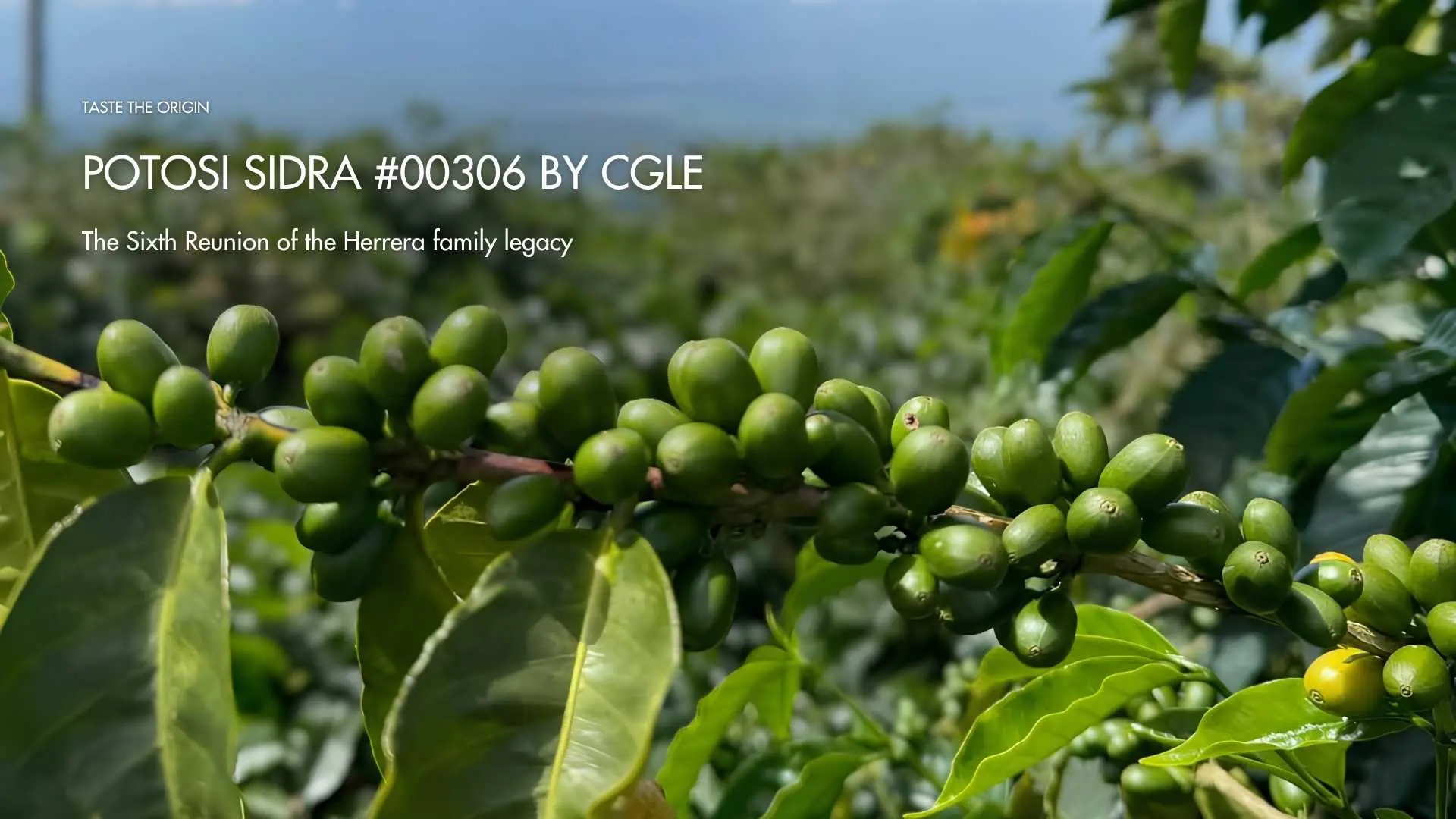
Potosi Sidra #00306 – The sixth reunion of the Herrera family legacy
The sixth harvest marks the return of Potosi Sidra #00306 by CGLE, carrying the presence of a family patriarch entrusted with more than eighty years of heritage from the Herrera family. Cultivated in the founding valley of Potosi since 1945 in Caicedonia, this genetic treasure born from the union of Bourbon and Typica presents a remarkably evolved sensory profile. Through its Extremely Light Roast philosophy and the financial transparency of the Paid for Producer model, XLIII Coffee chooses to preserve the authentic voice of terroir and the coffee’s original flavor structure.
- Taste the Origin
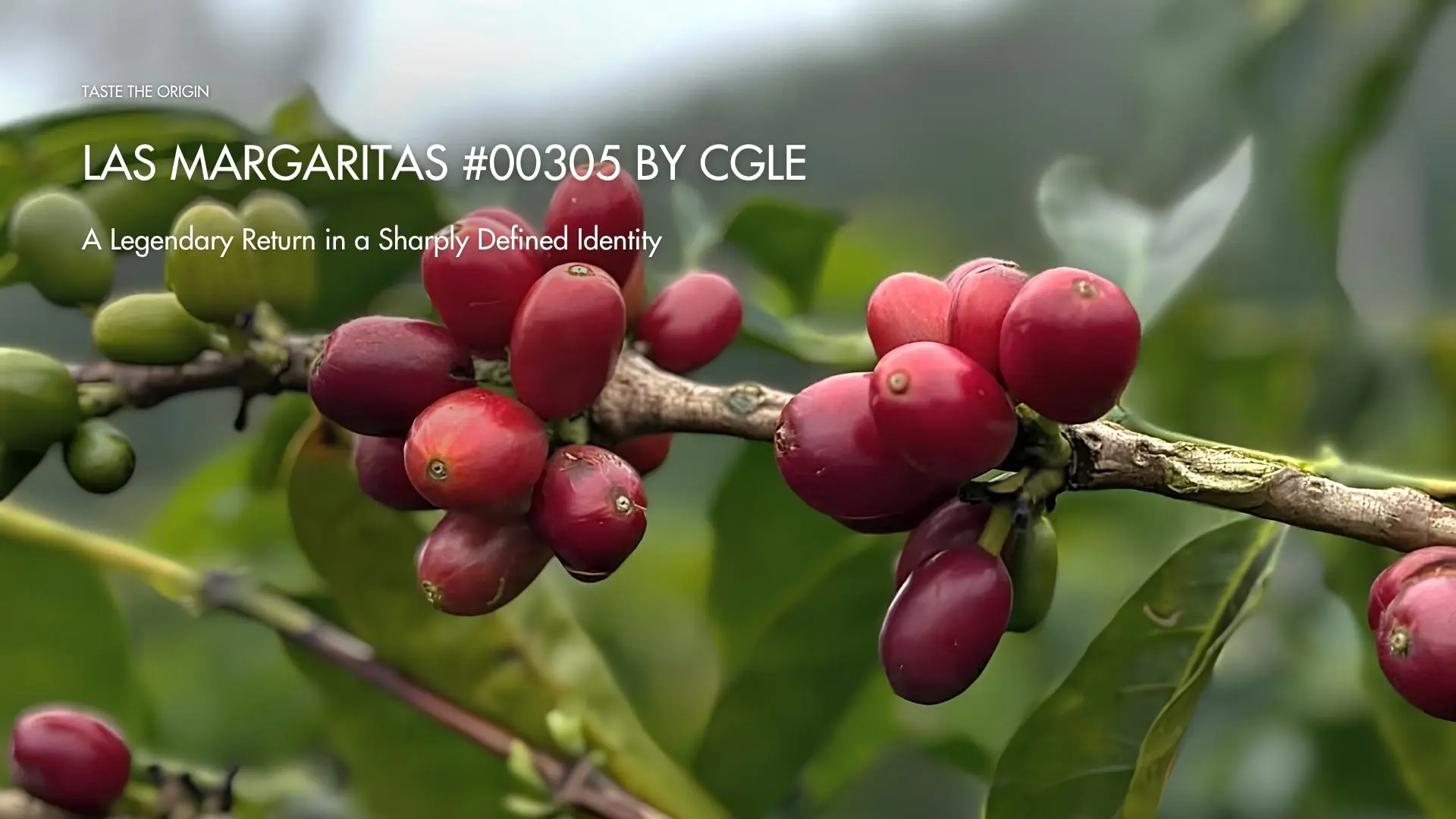
Las Margaritas #00305 by CGLE – A Legend Reunited in a Sharper Identity
Las Margaritas #00305 by CGLE returns to XLIII Coffee as a Gesha masterpiece reborn from the renowned Valle del Cauca region. Infused with the exquisite craftsmanship of Café Granja La Esperanza, this rare batch of coffee embarks on an enchanting flavor journey with vibrant citrus notes, delicate jasmine, and an elegant, lingering Earl Grey finish. Each drop is a crystallization of fertile volcanic soil and the sustainable farming philosophy that CGLE has persistently pursued for decades, creating a full-bodied, sharp flavor profile while retaining the pristine beauty characteristic of the royal Gesha variety.

- Find the Origin
Mandela coffee variety – A convergence of generations from a masterpiece breeding strategy
Amidst the constant fluctuations of the era, Mandela emerges as a gentle yet resilient response from the soil. Instead of attempting to alter or impose upon nature, this breeding strategy is, in essence, a profound act of listening. Each Mandela coffee bean carries the bloodline of multiple generations, possessing both the serene, steadfast nature of native trees and the sparkling elegance of premium varieties. It is a sacred continuation, where the flow of generations ultimate honors the original value of the species, imparting an intact and sustainable vitality into every cup.


Specialty Coffee in Vietnam
BRAND VALUE
YOU SHOULD HAVE KNOWN
XLIII Coffee has been aiming to become a big, impactful company with social responsibilities,
have access to high-quality raw materials and convey the complete original values of coffee to our customer
