
Ross Droplet – Tips to upgrade your espresso cup
Created by machine, espresso requires control of variables including dosage, yield, extraction time, and temperature to create a satisfactory finished product. Not only that, baristas also have tricks to help coffee beans easily sublimate in the machine. Ross Droplet (or RDT) is one of the techniques used by coffee professionals and enthusiasts to improve espresso extraction. Specifically, let’s find out with XLIII Coffee.
What is Ross Droplet?
Essentially, the Ross Droplet technique (or RDT) involves adding water to coffee beans before grinding during the espresso brewing process with the aim of reducing electrostatic charge. According to industry sources, RDT was first developed by coffee expert David Ross in 2005. The traditional trick is as simple as placing the handle of a spoon (or similar tool) under running water. and then use it to stir the roasted coffee beans so that the water is evenly distributed on the surface of the beans. Nowadays, some people use spray bottles to spray water on the seeds more quickly.

Ross Droplet technique improves espresso extraction
If you regularly make espresso and pay close attention, you will notice some ground coffee stuck to the grinder trough or dispenser. According to research by an Associate Professor at the University of Oregon, this is the result of the electrical phenomenon of coffee due to the large friction between surfaces in the machine. However, by adding enough water to the beans, the static charge will be reduced making the grinding process more efficient. Almost all of the fine powder will fall down, limiting clumping particles and minimizing clogging when grinding and extracting.

Additionally, a recent study published in the journal Matter found that adding water by spraying wet coffee beans before grinding can help extract more flavor. When enough water is added, the fine powder almost completely falls out of the blender. The particle size distribution is better, thereby affecting the flow rate uniformly and comprehensively. Furthermore, the amount of water added to the beans beforehand can also solve the problems of clumping, channeling and poor extraction while also assisting in achieving the best espresso.

Ross Droplet - apply accordingly
According to data, very few cafes use Ross Droplet when mixing. This technique seems to be popular only with home brewers. Hoffmann tested RDT using different blenders with about four water sprays per dose (about 18g). But the results are that there are significant differences between brands and models. This shows that the results may not always be consistent. Additionally, spraying or adding water before blending each brew can take too much time.

As can be seen, the Ross Droplet technique can help baristas and home brewers extract the perfect cup of espresso. However, there are more important variables to consider as well as more overall impacts to adjust for. You can experiment with making coffee at home by changing the ratios, temperatures, types of beans, and techniques and feel the difference in your own way.

If you need quality coffee beans, choose XLIII Coffee’s specialty coffee beans!
Articles you may be interested in:
– Discover new research from Australian scientists: Coffee Character Wheel
– Accelerating climate change – Is the coffee belt getting worse?

Bài viết mới


- Taste the Origin
Nigussie Nare – Murago Outgrowers #03028: Cultivated from the Values of Sustainable Reciprocity
Nestled beneath the shade trees of Sidama, Bensa, the Nigussie Nare – Murago Outgrowers #03028 coffee lot serves as a living testament to the values of sustainable reciprocity. This symbiosis begins with the intimate bond between a rich indigenous ecosystem and the smallholder farmers of the Murago region. Each harvested bean is the culmination of a virtuous cycle: a stable environment produces exceptional bean quality, and sustainable economic growth, in turn, continues to protect the verdant canopy of the great forest.

- Taste the Origin
Rift Valley Coffee Caucus #03757 – A Testament to Western Kenya’s Collective Spirit
Turning our gaze to the Great Rift Valley of East Africa, the fertile volcanic landscapes are witnessing an inspiring transformation. Moving away from fierce, survival-driven competition, smallholder farmers in Western Kenya have chosen to join forces, forging a resilient and unified network. The Rift Valley Coffee Caucus #03757 lot stands as the ultimate testament to this remarkable collective synergy.

- Breaking News
Airworks Coffee & XLIII Coffee – A “handshake” that brings original flavors across borders
XLIII Coffee, alongside our key wholesale partner Airworks Coffee, officially announces the latest release of specialty coffee lots for the North American market. This event reaffirms our commitment to bringing original flavors across all geographical barriers to coffee enthusiasts.
Early access (for Subscribers of Airworks): 10:00 AM (PST) | Wednesday, April 29, 2026
General access: 10:00 AM (PST) | Friday, May 1, 2026
We invite our Customers and Partners to visit (airworkscoffee.com) for detailed information and to prepare for this special release!
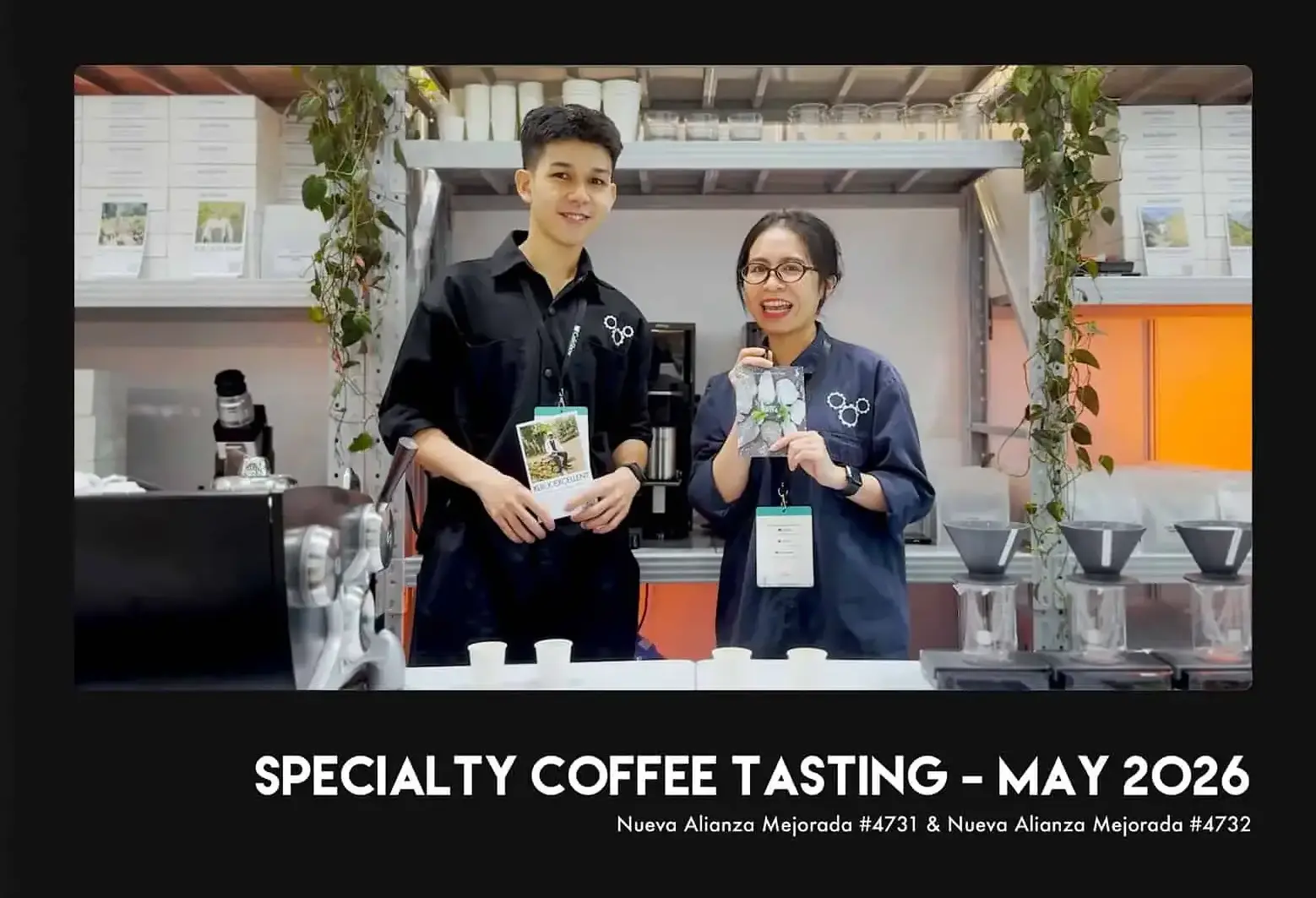
- Taste the Origin
Unveiling May Discovery Subscription: Nueva Alianza Mejorada #4731 & Nueva Alianza Mejorada #4732
The Discovery Subscription is a silent dialogue, a place where the soul of the connoisseur finds a harmonious beat with distant lands. Like a transparent lens, we become storytellers, meticulously peeling back layers of cultural sediment, the breath of the soil, and the human philosophies hidden within every coffee bean.
May arrives with brilliant streaks of golden sunlight, a time when we long to hide beneath the lush, dew-drenched canopies of Santa Teresa. Amidst the silence of the Andes, when compassion touches Mother Earth, what will we hear? Perhaps it is a sweet response that nature reserves solely for souls who know how to wait patiently.

- Taste the Origin
Nueva Alianza Pacamara #4733 – The essence of Cusco with elegant jasmine notes
Nueva Alianza Pacamara #4733 is a testament to the miraculous terroir and dedicated cultivation of the renowned Cusco region. The combination of the characteristic Pacamara bean size and ideal altitude has forged a flavor profile of immense sophistication and depth. From the very first moment, this lot captivates with its elegant jasmine notes, radiating a gentle, pure fragrance akin to a flower blooming in the morning dew.

Specialty Coffee in Vietnam
BRAND VALUE
YOU SHOULD HAVE KNOWN
XLIII Coffee has been aiming to become a big, impactful company with social responsibilities,
have access to high-quality raw materials and convey the complete original values of coffee to our customer
