
What does the CoE’s new code mean for specialty coffee producers?
The Cup of Excellence (CoE) is arguably the competition with the greatest coverage and influence in the specialty coffee world. It is designed to recognize exceptional coffees and promote more transparent pricing. Since 1999, CoE competitions and auctions have played an important part in shaping what specialty coffee is today. Just recently, on 23 October 2023, the CoE updated the rules for the first time to now include three distinct categories: dry process, wet process and 24-year testing. Join XLIII Coffee to explore the impact of the CoE’s new rules on specialty coffee producers!
Operational institutions of the Cup of Excellence (CoE)
Since the first competition took place in Brazil in 1999, the Cup of Excellence has operated under the following regulations:
– Each farm, estate or cooperative in a participating country can submit one sample free of charge;
– Evaluation begins with the pre-qualification phase. In it, the national jury will separate all the samples. All samples scoring 86 points or more are moved to the next stage (consisting of no more than 150 samples);
– Two rounds of cupping presided over by a national jury, with the number of coffees scoring 86 points or more being selected down to 40 samples;
– Three rounds of challenges by an international jury:
- In the first round, the judges evaluated all 40 samples;
- Up to 30 samples scoring over 87 points will be re-evaluated in round 2 to award the Excellence Cup;
- The international jury will then divide the top ten samples with the highest score one last time to determine the final ranking.

All tests follow strict principles, judges are blinded to information about the test sample to ensure fairness and objectivity. Approximately six weeks after the judging and scoring process by an international jury, the top 30 coffees will be sold via online auction on the Alliance for Coffee Excellence website. The three coffees with the highest scores will be divided into two lots if they reach 90 points or more. The winning farmers were also honored at an awards ceremony, where producers who submitted coffee scoring over 90 points were awarded a “Presidential Award” in recognition of their hard work and dedication.

New set of CoE rules
On 23 October 2023, the CoE published a new set of regulations. In particular, each participating country can choose to submit three coffee samples to compete in the competition and auction. Types of coffee include:
– Dry processing process (natural processing method);
– Wet processing process (including washed, honey, pulped natural, semi-washed processing methods);
– Testing (including wet and dry processing with special treatments, provided the manufacturer does not use any additives other than water).
Under this new format, all coffee will be divided into the above three categories and can be cupped and scored separately. Therefore, the Cup of Excellence will not only have one championship trophy but can have three groups of winners corresponding to each coffee category.
According to some manufacturers, the diversity of this new category reflects the continuous development in coffee processing. In addition, separating plots with specific characteristics will provide better opportunities for both farmers and consumers who love a diverse experience.

How does the CoE's new code impact specialty coffee producers?
The new Cup of Excellence rule change marks a significant development in the coffee industry aimed at promoting culture and innovation in coffee production. This innovation has also changed the game in the specialty coffee world. In particular, it poses opportunities and challenges for the younger, less experienced generation of manufacturers; At the same time, increasing competition for traditional manufacturers. From there, this can stimulate manufacturers to make efforts to improve their qualifications and techniques, creating development and diversity for the industry. Opening up and allowing other processing methods to participate in evaluation helps bridge the gap between tradition and innovation in the ever-evolving coffee landscape.

However, in a competitive environment, separating different types of processed coffee together is not necessarily an easy task. In terms of quality assessment, comparing the cleaner, brighter flavors of wet-processed coffee with the more complex flavors of anaerobic fermentation batches is difficult even for coffee experts. experienced. Furthermore, judges may also exhibit unconscious bias towards honey washing and processing methods. Because these techniques tend to create a sweeter flavor, more expressive of the soil of the growing area. That’s why these coffees tend to be favored in certain CoE competitions.

Furthermore, in the category of experimentally processed coffees it is difficult to achieve fairness. The results of opening up competition to attract more attention to different treatment methods could go in many directions for better or worse. Because each manufacturer has its own limit of resources and finances. Processing methods may contain additives and proprietary ingredients of the manufacturer. According to the new CoE standard, coffee must not include any “additives other than water,” which clearly rules out certain methods.

Basically, the new set of CoE rules may open up a new, more comprehensive trend for the coffee industry. In the future, whether changing CoE rules will have a positive or negative impact depends on the views and actions of manufacturers and related parties. The Ecuadorian and Indonesian CoE competitions are coming up and new rules will apply. Follow XLIII Coffee’s Journal channel and wait for developments on these new institutions.
If you like specialty coffee beans, visit XLIII Coffee to enjoy and feel.
Articles you may be interested in:
– How does foreign exchange affect coffee prices?
– The coffee industry will face losses due to insect decline
– Is Nepal specialty coffee developing as prominently as expected?

Bài viết mới
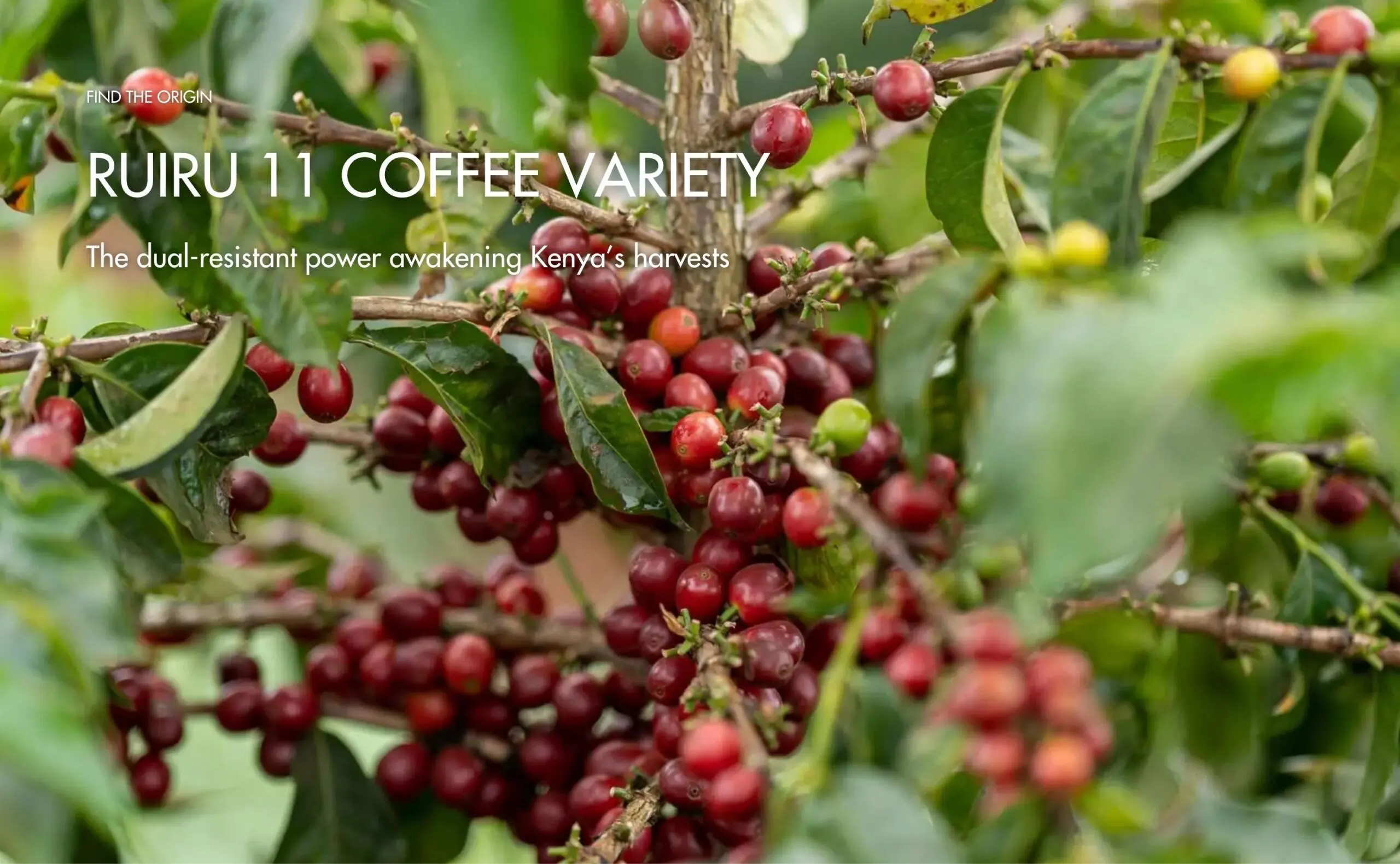
- Find the Origin
Ruiru 11 coffee variety – The dual-resistant power awakening Kenya’s harvests
Born from the ashes of a devastating pandemic, Ruiru 11 is a resilient response of indigenous wisdom to the trials of nature. Carrying a complex genetic code from 66 sibling isolines, this humbly statured coffee variety possesses superb “dual-resistance” against the twin shadows of Coffee Berry Disease and Coffee Leaf Rust. Overcoming early prejudices and the paradox of trade-offs between yield and flavor, Ruiru 11 has been weaving through nurseries, awakening dormant harvests across highland hillsides, and igniting a proud flame of self-reliance for Kenyan coffee.

- Taste the Origin
Sudan Rume #00313 by CGLE – The origin legend beneath the Eucalyptus canopy
From a wild coffee lineage discovered in the Rume Mountains in the 1940s to the enduring conservation efforts of Café Granja La Esperanza, Sudan Rume #00313 by CGLE invites drinkers on a sensory pilgrimage to the birthplace of the Arabica world. It is a rare biological legacy preserved through unwavering dedication, integrity, and deep reverence for history.
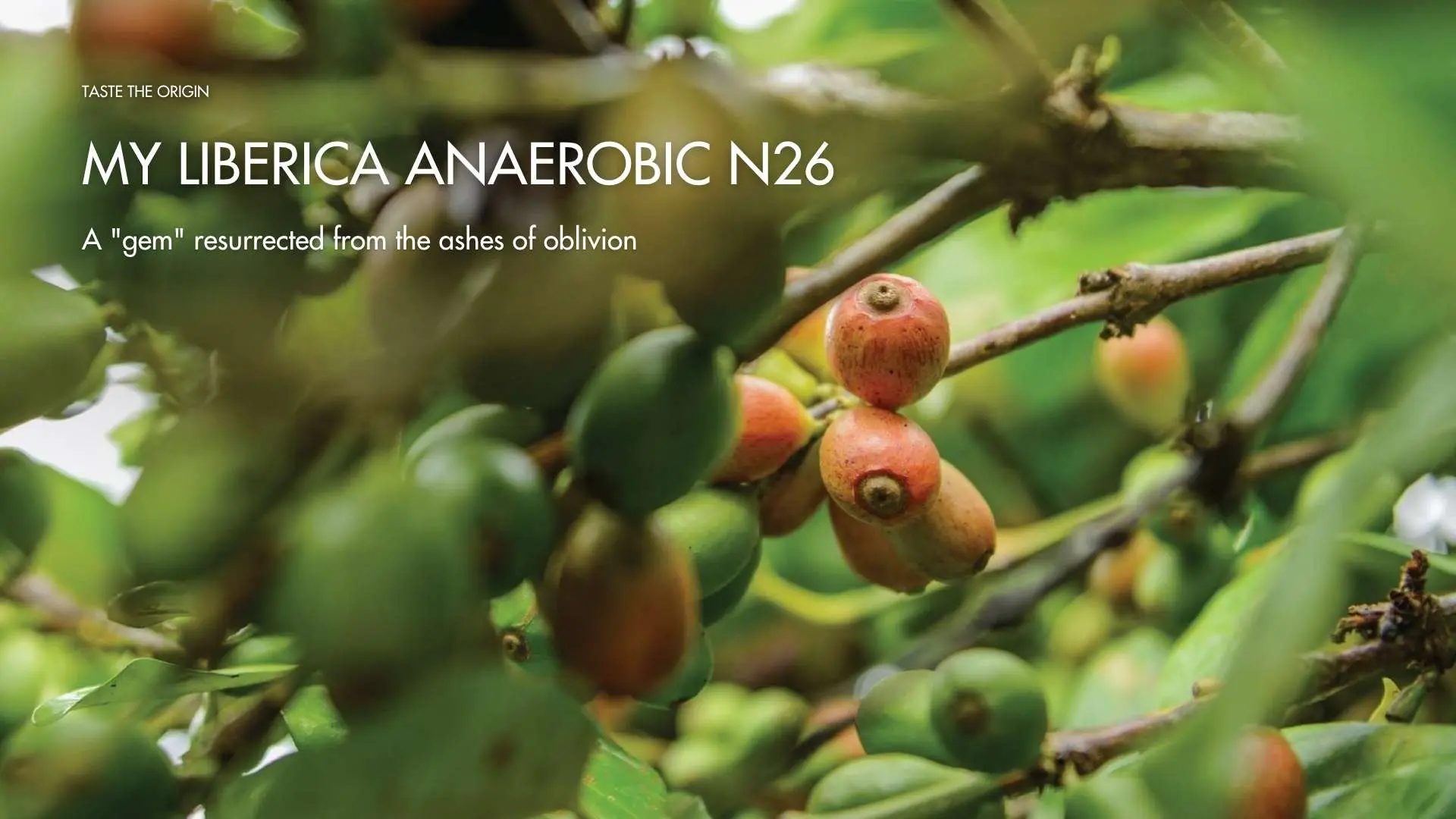
- Taste the Origin
My Liberica Anaerobic N26 – A “gem” resurrected from the ashes of oblivion
The journey of My Liberica Anaerobic N26 is the triumph of a forgotten species, awakened by the depth of understanding, patience, and faith in its original essence. From the heavy clay layers of Kulai to 26 days of transformation in absolute darkness, each step contributes to unlocking layers of flavor that the world once thought could not exist in Liberica. More than just a cup of coffee, My Liberica Anaerobic N26 is a powerful declaration that all great values begin with the courage to delve into their essence, and then rise to a unique voice that resonates throughout the world.


- Taste the Origin
Finca Soledad Mejorado Tyoxy & Fincas Putushio Mejorado – The red thread of the Jijón family
The simultaneous arrival of Finca Soledad Mejorado Tyoxy and Fincas Putushio Mejorado at XLIII Coffee paints a remarkable portrait of the adaptability of the Mejorado variety within Ecuador’s specialty coffee landscape. Nurtured by a shared family philosophy and a commitment to principled cultivation, these two processed lots represent both a breakthrough in microbial innovation and the remarkable return of an exceptional flavor profile.

- Taste the Origin
Finca La Palestina Gesha #5482 – A new chapter in the legend from Cajamarca
From the renowned Cajamarca region, Finca La Palestina Gesha #5482 returns after a period of absence with a proud and fresh appearance. Nurtured in ideal altitude conditions and the cool climate characteristic of the Andes, each coffee bean slowly accumulates subtle flavor nuances before being perfected using the Washed method to maximize the purity of the Gesha variety. Under a carefully refined extremely-light roast profile, this batch of coffee reveals layers of white jasmine, ripe citrus, and sweet golden apricot aromas, interwoven in an elegant and rich flavor structure.

Specialty Coffee in Vietnam
BRAND VALUE
YOU SHOULD HAVE KNOWN
XLIII Coffee has been aiming to become a big, impactful company with social responsibilities,
have access to high-quality raw materials and convey the complete original values of coffee to our customer
