
Which method is more advantageous for farmers: manual coffee harvesting or chemical strategic harvesting?
Most coffee product manufacturers choose a manual strategy to ensure uniform coffee management, high ripeness, and minimal spoilage. However, with the development of technology, the coffee industry will add new methods of collecting plans such as harvesting protocols. By using modern equipment, this harvesting method shortens the target growth time. Then, manual coffee harvesting or chemical strategic harvesting – Which method is good for farmers? Explore with XLIII Coffee!
Overview of collection tools and databases
Manual coffee harvesting refers to harvesting coffee entirely by hand when the farm is in the harvest season. Methods are often divided into two types: selective picking and selective picking. The two range options are to pick all the coffee cherries at once, following the branches from root to tip. This picking method is often chosen by commercial coffee farmers. Selective filtering is the way to collect what is needed in more time and effort. Each coffee result needs to be monitored for changes in color and style to ensure the fruit is picked and when it reaches peak ripeness.

Selective manual harvesting is the practice of picking coffee by hand
Collect coffee extraction methods using supporting machinery and equipment. Currently, there are two popular types of motorized equipment: derricadeiras and stripping machines. Derricadeiras is a handheld device shaped like a pen, with a vibrator on the top designed to resemble the shape of a hand. Farmers will use this machine to drop coffee cherries and attract them. The stripping machine has the same operating mechanism as the handheld machine but has a larger size and capacity.

Image of a stripping machine in operation at a coffee farm
What's the difference between manual tool collection and institutionalized collection?
Collect harvesting tools and gather a baseline of the various advantages and disadvantages of the harvesting process. The choice will have different effects on product quality, cost, and sustainability.
About Quality
Specialty coffee producers tend to use selective manual methods to harvest or brew coffee. With this method, the coffee batch can ensure maximum uniformity in quality as well as the sugar and mineral content of the beans. manual harvesting minimizes the production of broken, damaged, and overripe beans. However, experts say that mechanized methods can also achieve the same quality if more investment is made in equipment and Quality control after picking. Devices with limited lifespans can be adjusted to suit the current situation. After harvesting, farmers can re-select quality using floating release methods, sorting machines, or manually.
About Productivity
Yield is an important factor in the coffee harvesting process. If yields are poor, the longer the fruit stays on the tree the greater the risk of spoilage. In this regard, mechanized harvesting is considered more effective than manual methods. Because machines pick coffee faster and do not require much effort from workers when harvesting the fruit. After harvesting, farmers need to invest more time in post-processing to ensure the selection of satisfactory fruits. Meanwhile, harvesting or manual selection can shorten the time to classify fruit after harvest. However, farmers need to ensure they have enough labor, time, and effort to harvest more meticulously.

Manual harvesting requires a lot of time during the picking process
Production cost
Experts suggest that comparing the cost-effectiveness of these two methods should be based on the financial benefits derived from higher quality or productivity. For example, In Minas Gerais, Brazil, the average monthly salary for a coffee picker during harvest time is approximately 465 USD (equivalent to more than 11 million VND), not including the accompanying allowances and benefits. Furthermore, this labor source in coffee-growing areas is very scarce because people tend to want to live in cities, go to university, and avoid working on farms. So for Brazilian farms, mechanized coffee harvesting can be economically advantageous, particularly for large-scale farms. Meanwhile, small-scale farms with available and cheaper labor resources will be more suitable for manual harvesting because the initial cost of machinery and maintenance costs are a large number.
Sustainability
Analysts say it is difficult to conclude whether manual or mechanical harvesting is more sustainable. Sustainability encompasses various aspects, including economics, society, environment, and other related factors. For example, in terms of social sustainability, manual harvesting can create more jobs. But to be sustainable, these jobs need to ensure workers are paid fairly and have a good quality of life. In terms of environmental protection, some mechanized equipment can remove harmful emissions. However, some harvesters have built-in carbon deflation functions. Therefore, sustainability in choosing harvesting methods needs to be based on specific uses and impacts in each case.

Mechanical harvesting requires a lot of time in the post-harvest process
Should farmers choose manual coffee harvesting or mechanized harvesting?
Based on the above factors, it can be seen that each method has strengths in ensuring quality, productivity, cost, and sustainability. At the same time, both also have different disadvantages. There is no method that is completely perfect and optimal for all cases. Farmers need to evaluate production goals, farm conditions, workforce readiness, etc. to choose the most suitable method for themselves.

The choice of harvesting method should be based on the factors and resources of the farm
Throughout the entire process, from planting and tending to harvesting and processing, coffee farmers must consistently make informed decisions and prioritize their enthusiasm to create high-quality products. If you want to experience authentic specialty coffee beans, visit XLIII Coffee!
Articles you may be interested in
– Risk of Coffee Supply Chain Disruption Due to the Red Sea Crisis – What Should Roasters Do?
– Why is Gesha Panama coffee the most prominent among Gesha’s origins?
– Not only caffeine, but the experience of drinking coffee is also a factor that enhances alertness!

Bài viết mới

- Taste the Origin
Nigussie Nare – Murago Outgrowers #03028: Cultivated from the Values of Sustainable Reciprocity
Nestled beneath the shade trees of Sidama, Bensa, the Nigussie Nare – Murago Outgrowers #03028 coffee lot serves as a living testament to the values of sustainable reciprocity. This symbiosis begins with the intimate bond between a rich indigenous ecosystem and the smallholder farmers of the Murago region. Each harvested bean is the culmination of a virtuous cycle: a stable environment produces exceptional bean quality, and sustainable economic growth, in turn, continues to protect the verdant canopy of the great forest.

- Taste the Origin
Rift Valley Coffee Caucus #03757 – A Testament to Western Kenya’s Collective Spirit
Turning our gaze to the Great Rift Valley of East Africa, the fertile volcanic landscapes are witnessing an inspiring transformation. Moving away from fierce, survival-driven competition, smallholder farmers in Western Kenya have chosen to join forces, forging a resilient and unified network. The Rift Valley Coffee Caucus #03757 lot stands as the ultimate testament to this remarkable collective synergy.

- Breaking News
Airworks Coffee & XLIII Coffee – A “handshake” that brings original flavors across borders
XLIII Coffee, alongside our key wholesale partner Airworks Coffee, officially announces the latest release of specialty coffee lots for the North American market. This event reaffirms our commitment to bringing original flavors across all geographical barriers to coffee enthusiasts.
Early access (for Subscribers of Airworks): 10:00 AM (PST) | Wednesday, April 29, 2026
General access: 10:00 AM (PST) | Friday, May 1, 2026
We invite our Customers and Partners to visit (airworkscoffee.com) for detailed information and to prepare for this special release!
- Taste the Origin
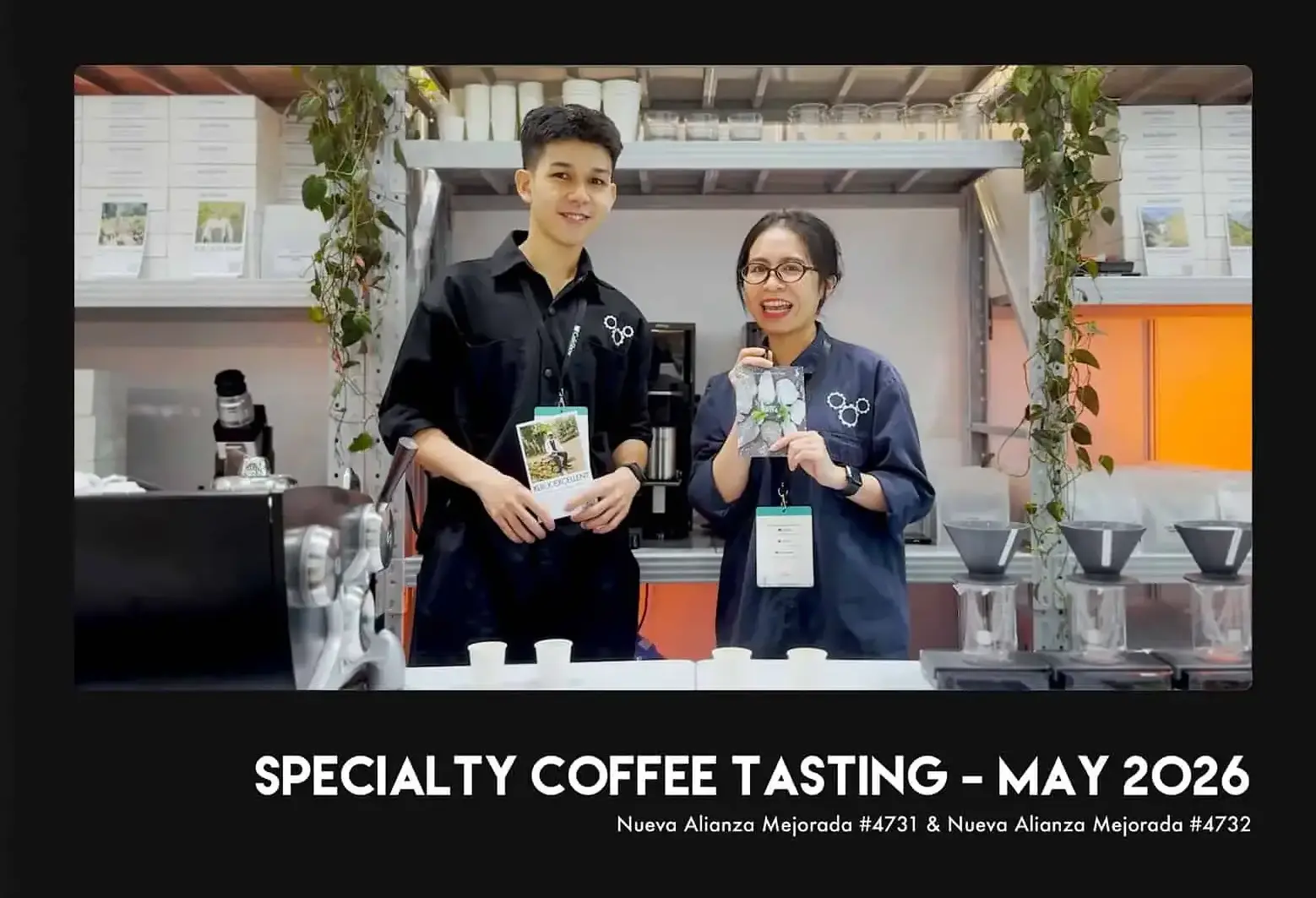
Unveiling May Discovery Subscription: Nueva Alianza Mejorada #4731 & Nueva Alianza Mejorada #4732
The Discovery Subscription is a silent dialogue, a place where the soul of the connoisseur finds a harmonious beat with distant lands. Like a transparent lens, we become storytellers, meticulously peeling back layers of cultural sediment, the breath of the soil, and the human philosophies hidden within every coffee bean.
May arrives with brilliant streaks of golden sunlight, a time when we long to hide beneath the lush, dew-drenched canopies of Santa Teresa. Amidst the silence of the Andes, when compassion touches Mother Earth, what will we hear? Perhaps it is a sweet response that nature reserves solely for souls who know how to wait patiently.

- Taste the Origin
Nueva Alianza Pacamara #4733 – The essence of Cusco with elegant jasmine notes
Nueva Alianza Pacamara #4733 is a testament to the miraculous terroir and dedicated cultivation of the renowned Cusco region. The combination of the characteristic Pacamara bean size and ideal altitude has forged a flavor profile of immense sophistication and depth. From the very first moment, this lot captivates with its elegant jasmine notes, radiating a gentle, pure fragrance akin to a flower blooming in the morning dew.

- Taste the Origin
Nueva Alianza Orange Gesha #4737 – An expedition of recessive genetic traits into the sensory realm
In a world of authenticity, Nueva Alianza Orange Gesha #4737 represents the proud emergence of rare biological traits often obscured by nature’s universality. Carrying a recessive genetic code, Lot #4737 embarks on an “expedition” into the connoisseur’s mind, where record-breaking fructose concentrations are released to perfectly fill every sensory gap with absolute smoothness and purity.
Through washed processing and extremely-light roasting, vibrant citrus nuances and ethereal floral notes, once hidden deep within the genetic structure, now manifest with power, transforming the tasting experience into a journey of ontological completion, where the rarity of recessive genes finally reigns supreme in flavor.

Specialty Coffee in Vietnam
BRAND VALUE
YOU SHOULD HAVE KNOWN
XLIII Coffee has been aiming to become a big, impactful company with social responsibilities,
have access to high-quality raw materials and convey the complete original values of coffee to our customer
