
Wush Wush Coffee Variety: An Ancient and Rare Gem on Par with Gesha
Wush Wush coffee variety – an ancient and rare variety admired by connoisseurs and ranked alongside Gesha. Originating from the legendary lands of Ethiopia, each Wush Wush bean carries an aroma as smooth as a melody, with an elegant sweetness interwoven with a complex harmony of flavors, much like a symphony in a cup.
I. The Origin Story of the Wush Wush Coffee Variety
Wush Wush is the name of an ancient Arabica coffee variety originating from the Wushwush area in the Kaffa/Keffa region of southwestern Ethiopia. Many coffee researchers note that this is a rare native variety, discovered and named after the very place called Wushwush.
What makes Wush Wush special is that it is not a hybrid or the result of modern breeding improvements, but rather a native heirloom variety that has existed for hundreds of years and has remained almost entirely free from crossbreeding. This allows Wush Wush to preserve its original genetic makeup, giving it a refined and complex flavor unmatched by most other varieties.

Initially, Wush Wush was only known within Ethiopia, cultivated on a small scale by local farming households. However, when international specialty coffee roasters and experts discovered it, they quickly recognized its potential to rival, and possibly even compete with, Gesha – the “star” of the specialty coffee world. From that point, Wush Wush began its journey onto the global stage, though production has remained extremely limited, making each bean as precious as a treasure.
Regarding its cultivation and processing history at home, the local farming community around the village of Wush Wush delivers fresh cherries to the Wush Wush washing station operated by Mr. Dinkalem Ademe. Each season, around 2,500 farmers participate, with lots being carefully selected and processed using various methods (washed, honey, limited oxygen, etc.). This has helped shape Wush Wush’s sensory profile, which is distinctly “Ethiopian” yet still unique to the Kaffa region.
In the modern specialty coffee wave, Wush Wush is mentioned as a “rare gem” thanks to its outstanding flavor, often carrying floral and tropical fruit notes with high sweetness. In recent years, the variety has been revived by many researchers and trial-planted in Latin America, especially in Colombia and Panama.
II. A Glimpse into Its Biological Traits and Flavor Profile

If the story of Wush Wush is a panoramic painting, then the “portrait” of this coffee variety is most vividly depicted through two aspects: its biological characteristics and its flavor profile.
On one side is the structure, appearance, and adaptability – the genetic factors that have allowed Wush Wush to survive and thrive for centuries. On the other side is the aromatic and taste world where Wush Wush fully expresses its personality and charm in every cup.
About biological traits,
Wush Wush is a wild Arabica variety originating from the Kaffa region of Ethiopia, considered the cradle of coffee.
The Wush Wush tree typically grows up to 6 meters tall, with a wide canopy and slender branches. Its cherries range from small to medium in size, oval or round in shape, and turn bright red when ripe. The beans inside are slightly elongated and gently curved.
Thanks to being formed and adapted in a wild environment, Wush Wush exhibits better tolerance to cold, drought, and harsh conditions than many domesticated Arabica varieties.
However, the lack of genetic selection means this variety has a high degree of variability: each tree or lot grown in different areas can produce cherries with distinctly different cup qualities, creating a significant challenge for quality control.


About flavor profile,
The flavor of Wush Wush is a delicate symphony, blending tropical fruit nuances with pure floral notes.
In lots processed naturally or with extended fermentation, drinkers may detect ripe strawberry, guava, passion fruit, mango, citrus, or pink grapefruit, interwoven with aromas of jasmine, violet, plum blossom, and a hint of herbal notes like sage or lemon verbena. Some versions carry a “winey” aftertaste reminiscent of light red wine, particularly when subjected to 96 hours or more of dry fermentation.
In terms of mouthfeel, Wush Wush stands out for its high natural sweetness, syrupy smooth body, bright and clean acidity, and a lingering finish that harmonizes fruitiness with gentle sweetness. Many experts and roasters have compared Wush Wush to Gesha in terms of refinement and complexity, though Wush Wush tends to lean more toward distinct fruit and floral expressions.
Descriptions from the international coffee community for this variety’s flavor are also diverse, ranging from “grape candy” to “tropical fruit caramel,” serving as evidence of the unpredictable yet captivating allure this coffee possesses.

III. The Lands that Nurture the Wush Wush Coffee Variety
Before delving into each specific growing region, it’s important to understand that Wush Wush is not only a rare coffee variety but also the “spiritual child” of lands blessed with exceptional natural conditions.
Every place where Wush Wush takes root possesses its own unique terroir – a delicate interplay of altitude, climate, soil, and human care. This distinctive combination gives rise to different flavor expressions, ranging from vibrant tropical fruit notes to pure floral aromas, or deep honey-like sweetness.
|
Growing Region |
Geographic Location |
Topography |
Climate |
Flavor Profile |
|
Wush Wush |
The Wushwush mountain area in Kaffa, Ginbo. |
A highland plateau in the clouds, with altitudes ranging from 1,850 to 1,950 meters above sea level. |
The climate is temperate, with evenly distributed rainfall and moderate temperatures. |
Tropical fruits such as passion fruit, mango, and yellow mango with a sweet, smooth taste. |
|
Tolima |
Highlands such as Ibagué in Tolima (Colombia), typically represented by Finca La Negrita farm. |
A valley topography surrounded by volcanic mountains, with altitudes up to 2,000 meters. |
The climate is influenced by direct sunlight through narrow valleys, afternoon rains, cool nights with mist, and cold winds from the Nevado del Ruiz volcano, creating high humidity. |
Complex flavors combining rockmelon, banana, and honey caramel. |
|
Quindío |
El Fénix farm in Quindío, Colombia. |
Located on the foothills of the Andes, where the terrain is rugged with steep slopes and deep ravines. Altitudes range from 1,450 to 2,000 meters above sea level. |
The climate is humid with cool temperatures, averaging 18°C–21°C. Annual rainfall averages 2,000–2,500 mm, especially concentrated in two rainy seasons alternating with dry seasons. |
Has vanilla notes, a sweet profile reminiscent of marshmallow and toffee, with fine, smooth acidity, a tea-like mouthfeel, and distinct floral and fruit notes. |
|
Huila |
Villa Betulia farm in Huila, Colombia. |
The terrain stretches from mountain slopes to the foothills, near the Nevado del Huila volcano. Common altitudes are 1,400-2,300 meters, with diverse slopes and fertile volcanic basalt soil. |
The climate is favorable, with relatively high rainfall, stable temperatures ranging from 17°C–23°C, high humidity, and cool winds from the mountains. |
Sweet, fruity flavors like dried cherry, sugar-soaked strawberries, peach, and red grapes. |
Exploring Wush Wush’s growing regions across the world is like embarking on a journey through multiple “concert halls,” where the same piece of music is performed with its own emotions, tempo, and tonal colors.
IV. A Promising Future & the Challenges Ahead
Wush Wush stands at the threshold of a future full of promise, yet fraught with challenges. On the opportunity side, this coffee variety holds precious genetic potential, making it an important resource for Arabica breeding programs aimed at combating the impacts of climate change.
Research institutes in Ethiopia, along with international organizations such as World Coffee Research, are harnessing Wush Wush’s genetic diversity to develop new varieties that are both disease-resistant and capable of preserving exceptional cup quality. At the same time, the booming global specialty coffee market offers a wide stage for Wush Wush to assert its position, as its flavor profile can captivate even the most discerning coffee lovers.

However, the road ahead is far from smooth. Climate change, coffee leaf rust, and berry borer beetles directly threaten both yield and quality.
Meanwhile, the primary forests of Kaffa, the birthplace of Wush Wush, are showing signs of shrinking, eroding the reservoir of valuable wild genetic stock. Moreover, low productivity and high variability in cup quality make growing Wush Wush something of a gamble for smallholder farmers, especially when the premium market’s returns do not yet fully match their effort. The lack of investment in research, technical support, and conservation policy further slows progress toward sustainable development.
For Wush Wush to become not just a “rare gem” but also a reliable supply source, a comprehensive strategy is needed, one that integrates forest conservation, farmer livelihood improvement, processing capacity enhancement, and stronger international cooperation in variety research. Only then can Wush Wush’s full potential be unlocked, paving the way for it to become a new icon in the world of specialty coffee.
In conclusion,
The value of Wush Wush lies not only in its rarity or refined flavors, but also in the heritage story tied to the ancient land of Kaffa. Every cup of Wush Wush is the crystallization of nature, time, and human craftsmanship, making it a coveted treasure among specialty coffee enthusiasts worldwide.
Images curated by XLIII Coffee.
V. FAQs
1. Why is Wush Wush considered an ancient and rare coffee variety?
Wush Wush is a wild Arabica variety from Kaffa, Ethiopia, widely regarded as the birthplace of coffee. With extremely limited production and no commercial hybridization, it retains its original biological traits and unique flavor profile, making it both rare and highly valuable.
2. What factors shape the distinctive flavor of Wush Wush coffee?
Wush Wush’s flavor stems from its genetic characteristics, its cultivation altitude of 1,800–2,200 meters, the cool climate of its growing regions, and processing methods such as natural drying or extended fermentation. These factors combine to create complex layers of flavor, from tropical fruits and jasmine flowers to a refined “winey” aftertaste.
3. How rare is Wush Wush compared to other specialty coffee varieties?
Compared to Bourbon, Typica, or even Gesha, Wush Wush is far rarer, grown only in select areas of Ethiopia, Colombia, and Panama. Its strict ecological requirements and the need for meticulous care make it difficult to expand cultivation areas.
4. Could Wush Wush become the next “legendary” coffee after Gesha?
Many experts believe Wush Wush has the potential to reach “legendary” status like Gesha, thanks to its distinctive flavor and captivating origin story. However, its success hinges on maintaining consistent quality across harvests and building global recognition within the specialty coffee community.
5. Where does Wush Wush’s value in the specialty coffee market come from?
Its value derives from three main factors: scarcity, flavor quality, and cultural & heritage storytelling. Low yields make it a “must-have” target for roasters; its refined, complex flavor helps it stand out in international coffee competitions; and its origin, rooted in Kaffa, a key part of humanity’s coffee heritage, turns each cup into a living piece of history.

Bài viết mới

- Find the Origin
Mandela coffee variety – A convergence of generations from a masterpiece breeding strategy
Amidst the constant fluctuations of the era, Mandela emerges as a gentle yet resilient response from the soil. Instead of attempting to alter or impose upon nature, this breeding strategy is, in essence, a profound act of listening. Each Mandela coffee bean carries the bloodline of multiple generations, possessing both the serene, steadfast nature of native trees and the sparkling elegance of premium varieties. It is a sacred continuation, where the flow of generations ultimate honors the original value of the species, imparting an intact and sustainable vitality into every cup.


- Taste the Origin
Nigussie Nare – Murago Outgrowers #03028: Cultivated from the Values of Sustainable Reciprocity
Nestled beneath the shade trees of Sidama, Bensa, the Nigussie Nare – Murago Outgrowers #03028 coffee lot serves as a living testament to the values of sustainable reciprocity. This symbiosis begins with the intimate bond between a rich indigenous ecosystem and the smallholder farmers of the Murago region. Each harvested bean is the culmination of a virtuous cycle: a stable environment produces exceptional bean quality, and sustainable economic growth, in turn, continues to protect the verdant canopy of the great forest.

- Taste the Origin
Rift Valley Coffee Caucus #03757 – A Testament to Western Kenya’s Collective Spirit
Turning our gaze to the Great Rift Valley of East Africa, the fertile volcanic landscapes are witnessing an inspiring transformation. Moving away from fierce, survival-driven competition, smallholder farmers in Western Kenya have chosen to join forces, forging a resilient and unified network. The Rift Valley Coffee Caucus #03757 lot stands as the ultimate testament to this remarkable collective synergy.

- Breaking News
Airworks Coffee & XLIII Coffee – A “handshake” that brings original flavors across borders
XLIII Coffee, alongside our key wholesale partner Airworks Coffee, officially announces the latest release of specialty coffee lots for the North American market. This event reaffirms our commitment to bringing original flavors across all geographical barriers to coffee enthusiasts.
Early access (for Subscribers of Airworks): 10:00 AM (PST) | Wednesday, April 29, 2026
General access: 10:00 AM (PST) | Friday, May 1, 2026
We invite our Customers and Partners to visit (airworkscoffee.com) for detailed information and to prepare for this special release!
- Taste the Origin
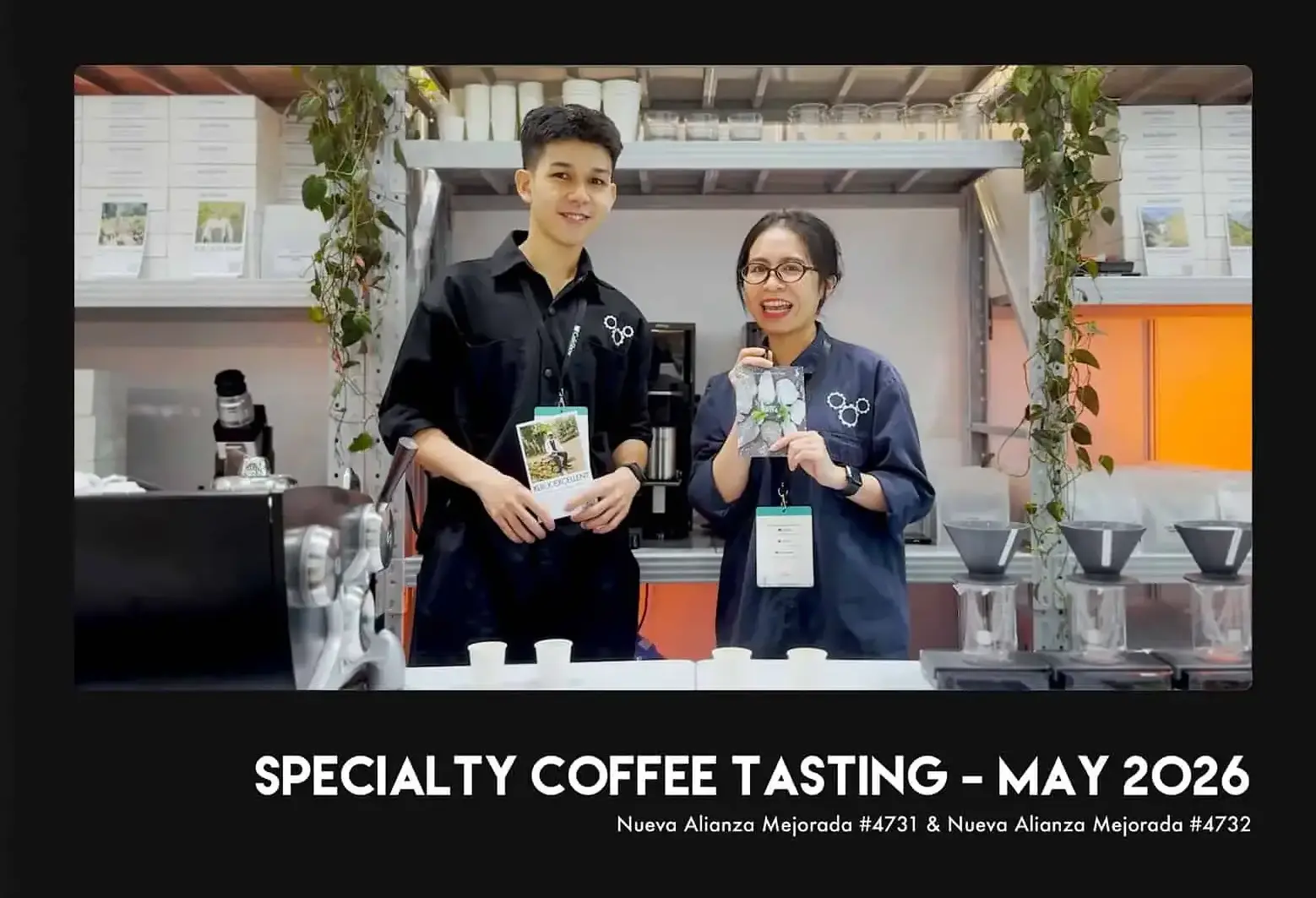
Unveiling May Discovery Subscription: Nueva Alianza Mejorada #4731 & Nueva Alianza Mejorada #4732
The Discovery Subscription is a silent dialogue, a place where the soul of the connoisseur finds a harmonious beat with distant lands. Like a transparent lens, we become storytellers, meticulously peeling back layers of cultural sediment, the breath of the soil, and the human philosophies hidden within every coffee bean.
May arrives with brilliant streaks of golden sunlight, a time when we long to hide beneath the lush, dew-drenched canopies of Santa Teresa. Amidst the silence of the Andes, when compassion touches Mother Earth, what will we hear? Perhaps it is a sweet response that nature reserves solely for souls who know how to wait patiently.

Specialty Coffee in Vietnam
BRAND VALUE
YOU SHOULD HAVE KNOWN
XLIII Coffee has been aiming to become a big, impactful company with social responsibilities,
have access to high-quality raw materials and convey the complete original values of coffee to our customer
