
Can Sri Lankan specialty coffee rise to the top of the world in the future?
Sri Lanka is an island country in South Asia, possessing unique tropical climatic conditions, ideal for producing high-quality coffee. The country was also one of the world’s largest coffee growers in the 1860s. However, due to the widespread devastation of the rust epidemic, the Sri Lankan coffee industry suffered losses. heavy for a long time. Over the past few decades, thanks to the efforts of the entire community and government, Sri Lanka has made great strides in both quality and productivity. But can this country exploit its full potential and bring the reputation of Sri Lankan specialty coffee to the top of the world? Explore with XLIII Coffee!
Sri Lankan coffee is gradually recovering and developing
In the early days, the Sri Lankan coffee industry under British colonial rule achieved proud achievements, with export output accounting for ⅓ of Europe’s total coffee imports in 1870 (total imported volume). exported more than 275,000 hectares of coffee). Then, the 1868 coffee leaf rust outbreak devastated Sri Lanka’s coffee industry. The epidemic caused many manufacturers heavy losses. The area under coffee cultivation declined rapidly from 275,000 acres in 1870 to 11,392 acres in the 1900s.
However, over the past few decades, Sri Lanka’s coffee industry has gradually recovered and developed. The government and supply chain stakeholders have established connections and provided resources and training support to manufacturers. Therefore, in the 1980s, coffee farmers made progress with the coffee growing area reaching 12,140 hectares, and the country’s export output reached a record of 3.3 million kg. Coffee exports increased by 84% in the period 2017-2019 (According to data from Sri Lanka Export Development Board).

Potential to become the specialty coffee land of Sri Lanka
Although a country directly affected by the epidemic outbreak, Sri Lanka still has the potential to become a leading supplier of specialty coffee thanks to its unique strengths. First of all, the growing area in Sri Lanka is mainly a highland plateau with unique tropical soil and climate that is very suitable for specialty coffee production. For example, coffee grown in the Bandarawela regions tends to have honey and fruit flavors. While coffee grown in Kotmale tends to have more citrus and floral flavors.

Sri Lanka also invests in high quality Arabica coffee varieties. In the 1980s, varieties like San Ramon were popularized and intercropped on tea hills. Next, Catimor and Lakparakum coffee varieties were put into production in the 1990s and 2000s, respectively, to increase variety and create a foundation for the development of Sri Lankan specialty coffee. In addition, farmers are also actively encouraged by the Sri Lankan Ministry of Agriculture Export to produce arabica coffee in the Central Highlands such as Nuwara Eliya, Badulla, Kandy and Matale, helping quality and output to increasingly improve.
Subraja Subramaniam – Member of the Research, Impact, Measurement and Inclusion (RIMI) team at the Market Development Facility said that most of Sri Lanka’s exported coffee is processed on farms and in factories. Manufacturers often use natural sun-dried processing techniques. The country’s centralized processing system also uses rinse processing methods, which tend to receive higher coke scores and better coke quality. In particular, with a focus on processing methods, the country also has great potential to develop centralized processing facilities. This could help the country’s coffee achieve better quality consistency and reduce waste. Therefore, it is clear that Sri Lanka is a country with extremely potential in producing specialty coffee.

Challenges on the journey of Sri Lankan specialty coffee
Like many other countries, Sri Lankan manufacturers face certain challenges in improving output and quality. Experts estimate that up to 80% of the island nation’s total coffee production comes from small farmers. If they want to pursue the specialty coffee path, all sectors and supply chains need to support these farmers to improve their access to financial resources, knowledge, and production techniques.
Additionally, women make up about 60% of the workforce. The Sri Lankan coffee industry must focus on ensuring the implementation of gender equality initiatives. This is especially important because it could increase global production by 4%, equivalent to about 30 billion additional cups of coffee annually.

Deshan Wickremasinghe – Business Advisor for the Coffee Department at MDF (A multinational initiative to promote sustainable economic development throughout the Pacific region) said the main barriers to the development of the Sri Lankan coffee industry are low productivity, inconsistent quality and limited producer knowledge. Large plantation companies in Sri Lanka mainly focus on tea and rubber production. However, they are actively diversifying their crops and are especially interested in coffee. Because converting to coffee growing can help increase production levels significantly.

With its own strengths in history, geographical location, and human resources, Sri Lanka has a lot of potential to continue developing higher-quality coffee. Furthermore, the future appears promising with improved access to resources and more formal training opportunities. However, for sustainable growth in production, the country’s coffee industry needs continuous support from the supply chain and efforts of indigenous communities. Therefore, join XLIII Coffee in using specialty coffee beans to support sustainable coffee farmers!
Don’t forget to follow the XLIII Coffee Journal channel to discover more information about the world of coffee
Related articles:
– Does increasing quality increase coffee farmers’ profits?
– Can a producer completely change the quality of coffee?
– Is it possible to increase coffee farm profits in a sustainable way?

Bài viết mới
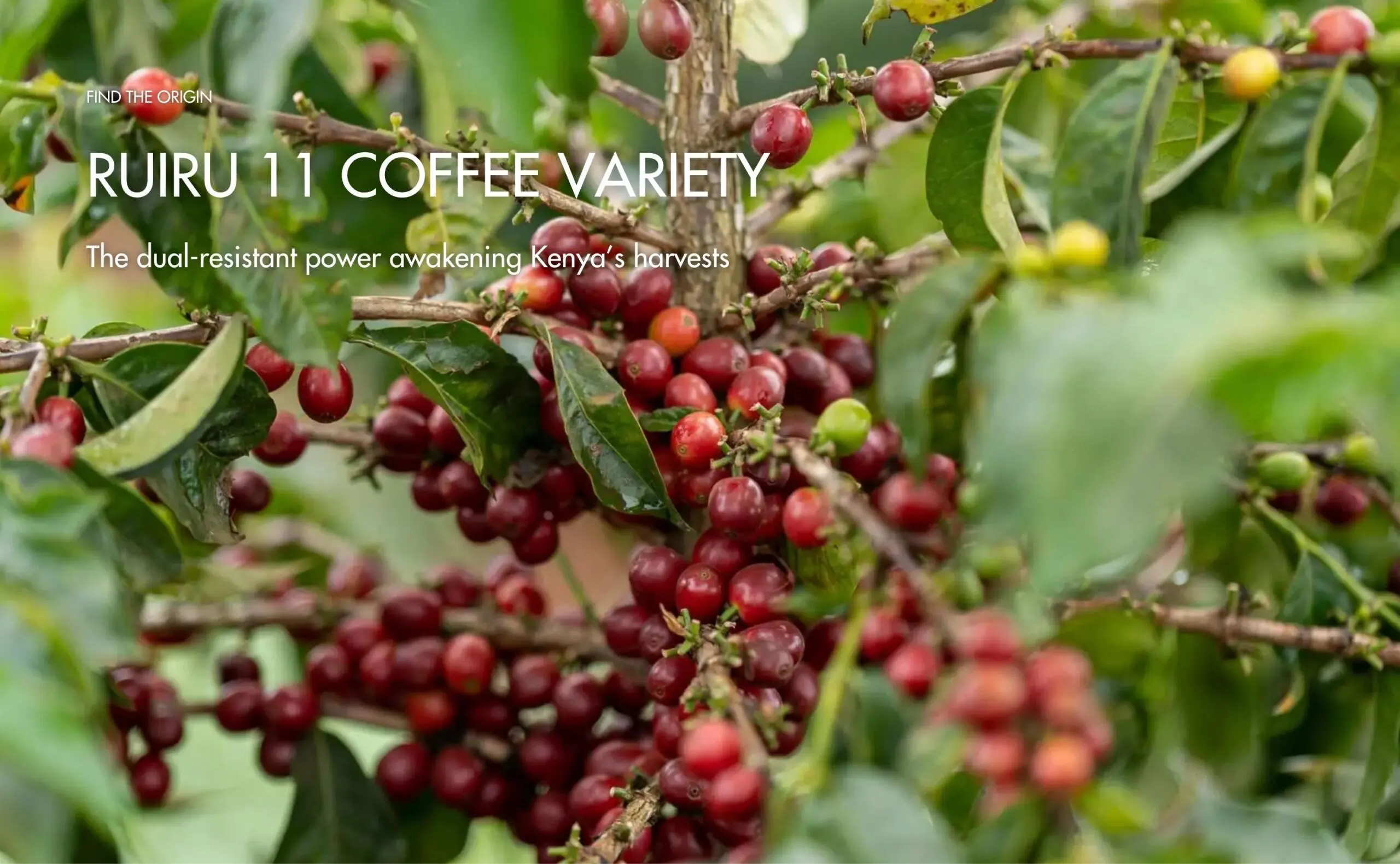
- Find the Origin
Ruiru 11 coffee variety – The dual-resistant power awakening Kenya’s harvests
Born from the ashes of a devastating pandemic, Ruiru 11 is a resilient response of indigenous wisdom to the trials of nature. Carrying a complex genetic code from 66 sibling isolines, this humbly statured coffee variety possesses superb “dual-resistance” against the twin shadows of Coffee Berry Disease and Coffee Leaf Rust. Overcoming early prejudices and the paradox of trade-offs between yield and flavor, Ruiru 11 has been weaving through nurseries, awakening dormant harvests across highland hillsides, and igniting a proud flame of self-reliance for Kenyan coffee.

- Taste the Origin
Sudan Rume #00313 by CGLE – The origin legend beneath the Eucalyptus canopy
From a wild coffee lineage discovered in the Rume Mountains in the 1940s to the enduring conservation efforts of Café Granja La Esperanza, Sudan Rume #00313 by CGLE invites drinkers on a sensory pilgrimage to the birthplace of the Arabica world. It is a rare biological legacy preserved through unwavering dedication, integrity, and deep reverence for history.
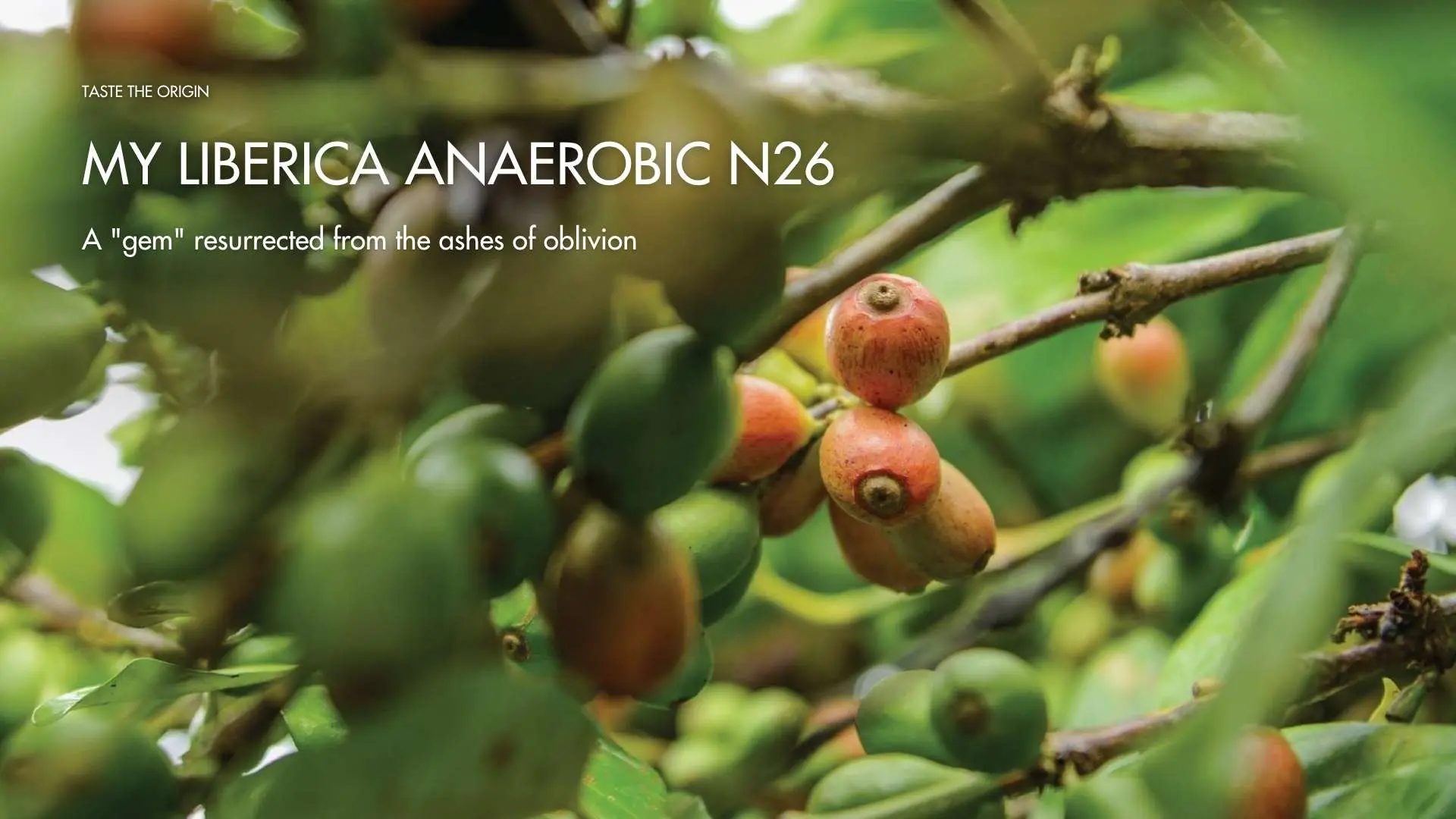
- Taste the Origin
My Liberica Anaerobic N26 – A “gem” resurrected from the ashes of oblivion
The journey of My Liberica Anaerobic N26 is the triumph of a forgotten species, awakened by the depth of understanding, patience, and faith in its original essence. From the heavy clay layers of Kulai to 26 days of transformation in absolute darkness, each step contributes to unlocking layers of flavor that the world once thought could not exist in Liberica. More than just a cup of coffee, My Liberica Anaerobic N26 is a powerful declaration that all great values begin with the courage to delve into their essence, and then rise to a unique voice that resonates throughout the world.


- Taste the Origin
Finca Soledad Mejorado Tyoxy & Fincas Putushio Mejorado – The red thread of the Jijón family
The simultaneous arrival of Finca Soledad Mejorado Tyoxy and Fincas Putushio Mejorado at XLIII Coffee paints a remarkable portrait of the adaptability of the Mejorado variety within Ecuador’s specialty coffee landscape. Nurtured by a shared family philosophy and a commitment to principled cultivation, these two processed lots represent both a breakthrough in microbial innovation and the remarkable return of an exceptional flavor profile.

- Taste the Origin
Finca La Palestina Gesha #5482 – A new chapter in the legend from Cajamarca
From the renowned Cajamarca region, Finca La Palestina Gesha #5482 returns after a period of absence with a proud and fresh appearance. Nurtured in ideal altitude conditions and the cool climate characteristic of the Andes, each coffee bean slowly accumulates subtle flavor nuances before being perfected using the Washed method to maximize the purity of the Gesha variety. Under a carefully refined extremely-light roast profile, this batch of coffee reveals layers of white jasmine, ripe citrus, and sweet golden apricot aromas, interwoven in an elegant and rich flavor structure.

Specialty Coffee in Vietnam
BRAND VALUE
YOU SHOULD HAVE KNOWN
XLIII Coffee has been aiming to become a big, impactful company with social responsibilities,
have access to high-quality raw materials and convey the complete original values of coffee to our customer
