
Carbon negative coffee production – The path to sustainable coffee industry development
With the trend of increasing interest in “green” products, coffee manufacturers and suppliers are focused on reducing carbon emissions in every process that creates a cup of coffee. Especially in recent years, some links in the whole industry have ambitions to produce carbon negative coffee. To find out more details, let’s explore with XLIII Coffee!
Understanding carbon negative coffee production
A company’s carbon footprint is usually measured in tons of CO2 equivalent, or CO2eq. In practice, it is difficult to calculate “real” carbon emissions, because there are so many data points. When a company’s carbon footprint reaches zero (often referred to as “net zero”), that brand is considered carbon neutral. But achieving net zero is no easy feat. Because for many businesses, the use of energy or fuel is an integral part of their operations. Simply eliminating emissions altogether is often not feasible.
As a result, some businesses have begun to help other companies “balance” their emissions. They operate environmental programs around the world (e.g. reforestation, green energy or renewable petroleum). Companies that want to reduce their carbon footprint can purchase “carbon credits” from these companies. They therefore fund a sustainability project elsewhere and thus indirectly balance their carbon footprint (the net amount of carbon dioxide a company is willing to release into the atmosphere). Buying carbon credits is just one of the ways that companies can reduce their carbon footprint. If they continue to absorb or remove carbon emissions to the point of removing more CO2 than they produce, they are considered carbon negative (no carbon).
From that, negative coffee production is a way of producing coffee so that the inner workings can absorb, sequester, CO2 to a level that can offset the emissions.

Urgency of Carbon Negative Coffee Production
According to National Geographic’s estimate in 2019, the allowable limit of carbon emissions in the world is only ⅕. When greenhouse gas emissions exceed this level, the layer of “barrier” that traps heat in the atmosphere gradually loses and causes global temperatures to rise. This will cause a range of devastating environmental impacts, threaten biodiversity and lead to more frequent extreme weather around the world.
An increase of 1.5°C would put 14% of the world’s population at risk of extreme heat waves at least once every 5 years. Furthermore, higher temperatures, increasing risk of drought and unpredictable rainfall and natural disasters have affected coffee production. In response, farmers are often forced to relocate to higher elevations in search of optimal growing conditions or to use more efficient but less sustainable farming practices. If this continues, farmers and their children will have no choice but to give up coffee production or take shortcuts (chemical abuse) that will destroy the land and water that they cannot afford. they use to grow crops, threatening the future of the coffee industry.
“Coffee-producing countries are increasingly facing extreme weather conditions that appear to be directly related to climate change,” said Cory Bush, Executive Director at Sucafina Specialty EMEA. Coffee farmers will suffer heavy consequences such as reduced production, quality and area of cultivated land when carbon emissions increase as rapidly as now.

Carbon negative coffee production restores balance to the coffee industry
Coffee-producing countries are among those most affected by the impacts of climate change. Increased risk of drought, extreme weather patterns and unpredictable rainfall all directly affect coffee producers. Most high-value coffee varieties grow best only at temperatures between 18 and 21°C with little variation. If the temperature in the coffee farm increases, the plants can be reduced in yield, quality or even exhausted due to lack of water. Moving towards carbon-negative coffee production could help us restore some balance in the natural environment, or at least slow the cycle of disasters that are worsening to help restore growth. for the coffee industry. Because negative coffee production measures all focus on the sustainability of the industry. In which, producing households will grow coffee in combination with intercropping and agroforestry to “recover” CO2. The stages of fertilizing, killing pests, and preliminary processing all use renewable resources to help reduce carbon emissions and be friendly to nature. Plants in that environment will be optimally grown thanks to natural energy and nutrients. Coffee beans will ensure virtual safety, natural flavor, good yield, high value and good income for farmers and suppliers. They can increase their annual income up to about US$150 to US$200 by improving farm productivity and quality. However, it is important that farmers are able to keep up with the changing requirements and standards for the farm.
Besides, carbon negative coffee production is also an opportunity for other stakeholders in the coffee industry. According to a survey, up to 75% of new generation consumers are willing to pay premium for sustainable products . As the low-carbon coffee market evolves, consumer preference for sustainable brands will give roasters access to the growing market. However, if businesses do not invest or provide financial support to farmers, growers who lack the ability to invest will not be able to comply with these new standards at risk of losing market access.

Carbon negative coffee is still a new phenomenon in this field. But it is easy to see that the production of carbon negative coffee has benefits for all stakeholders in the supply chain including producers, suppliers, roasters, coffee consumers. Every link in the coffee industry can do more to mitigate the effects of climate change. Producers can commit to sustainable farming, roasters can buy green coffee responsibly. Even home coffee consumers can shop for coffees that are grown and purchased in an eco-friendly manner.
If you want to support and use carbon negative coffee, choose XLIII Coffee!
Những bài viết bạn có thể quan tâm
– Decoding economic sustainability in the coffee industry
– Finca Soledad Mejorada – Coffee lot of Finca Soledad . cloud farm
– How to produce sustainable coffee while maintaining coffee quality

Bài viết mới

- Find the Origin
Mandela coffee variety – A convergence of generations from a masterpiece breeding strategy
Amidst the constant fluctuations of the era, Mandela emerges as a gentle yet resilient response from the soil. Instead of attempting to alter or impose upon nature, this breeding strategy is, in essence, a profound act of listening. Each Mandela coffee bean carries the bloodline of multiple generations, possessing both the serene, steadfast nature of native trees and the sparkling elegance of premium varieties. It is a sacred continuation, where the flow of generations ultimate honors the original value of the species, imparting an intact and sustainable vitality into every cup.


- Taste the Origin
Nigussie Nare – Murago Outgrowers #03028: Cultivated from the Values of Sustainable Reciprocity
Nestled beneath the shade trees of Sidama, Bensa, the Nigussie Nare – Murago Outgrowers #03028 coffee lot serves as a living testament to the values of sustainable reciprocity. This symbiosis begins with the intimate bond between a rich indigenous ecosystem and the smallholder farmers of the Murago region. Each harvested bean is the culmination of a virtuous cycle: a stable environment produces exceptional bean quality, and sustainable economic growth, in turn, continues to protect the verdant canopy of the great forest.

- Taste the Origin
Rift Valley Coffee Caucus #03757 – A Testament to Western Kenya’s Collective Spirit
Turning our gaze to the Great Rift Valley of East Africa, the fertile volcanic landscapes are witnessing an inspiring transformation. Moving away from fierce, survival-driven competition, smallholder farmers in Western Kenya have chosen to join forces, forging a resilient and unified network. The Rift Valley Coffee Caucus #03757 lot stands as the ultimate testament to this remarkable collective synergy.

- Breaking News
Airworks Coffee & XLIII Coffee – A “handshake” that brings original flavors across borders
XLIII Coffee, alongside our key wholesale partner Airworks Coffee, officially announces the latest release of specialty coffee lots for the North American market. This event reaffirms our commitment to bringing original flavors across all geographical barriers to coffee enthusiasts.
Early access (for Subscribers of Airworks): 10:00 AM (PST) | Wednesday, April 29, 2026
General access: 10:00 AM (PST) | Friday, May 1, 2026
We invite our Customers and Partners to visit (airworkscoffee.com) for detailed information and to prepare for this special release!
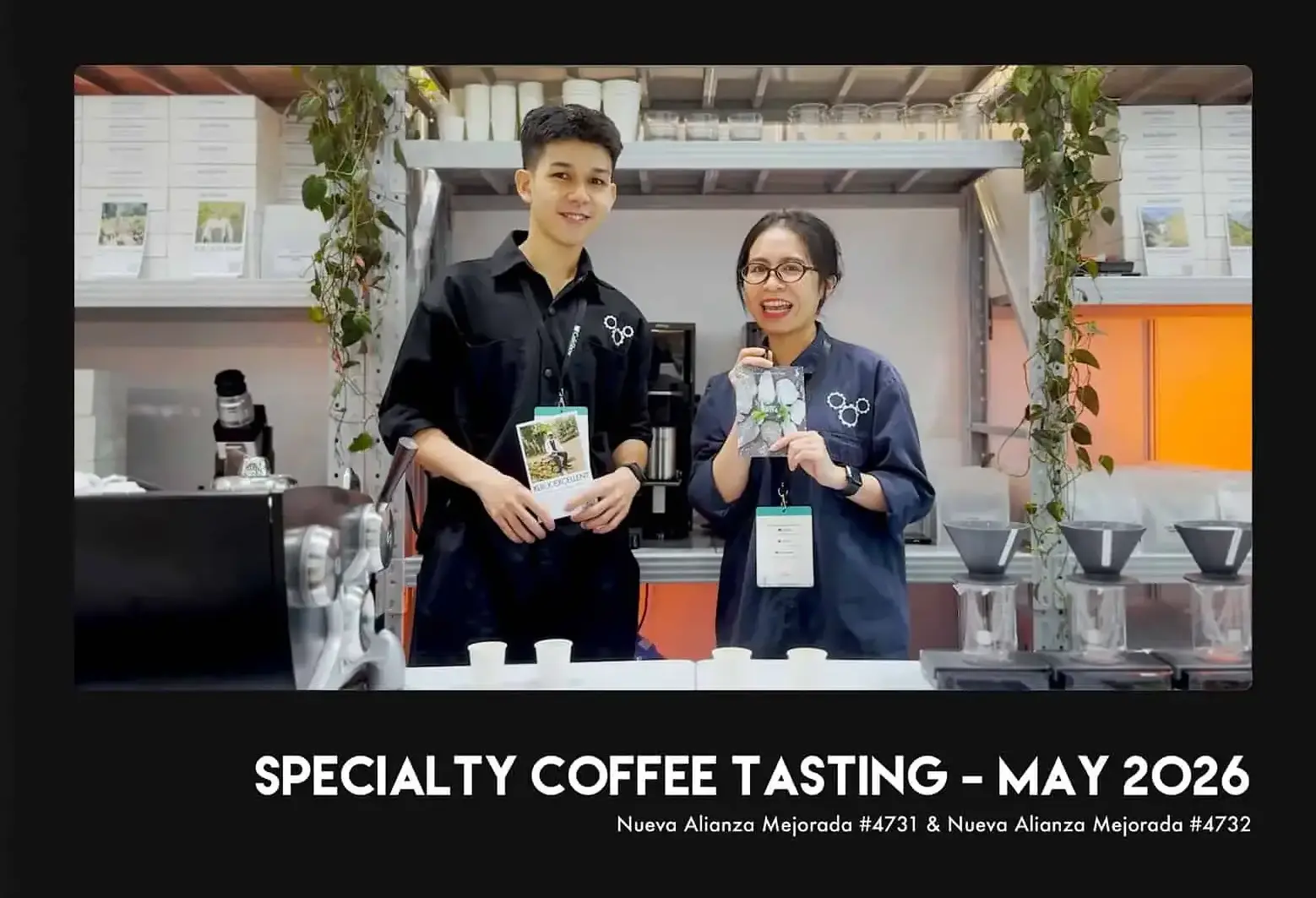
- Taste the Origin
Unveiling May Discovery Subscription: Nueva Alianza Mejorada #4731 & Nueva Alianza Mejorada #4732
The Discovery Subscription is a silent dialogue, a place where the soul of the connoisseur finds a harmonious beat with distant lands. Like a transparent lens, we become storytellers, meticulously peeling back layers of cultural sediment, the breath of the soil, and the human philosophies hidden within every coffee bean.
May arrives with brilliant streaks of golden sunlight, a time when we long to hide beneath the lush, dew-drenched canopies of Santa Teresa. Amidst the silence of the Andes, when compassion touches Mother Earth, what will we hear? Perhaps it is a sweet response that nature reserves solely for souls who know how to wait patiently.

Specialty Coffee in Vietnam
BRAND VALUE
YOU SHOULD HAVE KNOWN
XLIII Coffee has been aiming to become a big, impactful company with social responsibilities,
have access to high-quality raw materials and convey the complete original values of coffee to our customer
