
Coorg Coffee: India’s GI-Certified Gem
When talking about Indian coffee, the name Coorg stands as an icon. Located in Karnataka state within the Western Ghats—one of the world’s most biodiverse regions—Coorg is not only India’s largest coffee-producing district, but also home to a unique Arabica coffee that has earned a Geographical Indication (GI) certification for its distinctive identity and heritage value. So what exactly makes Coorg coffee special? Let’s find out.
I. What is Coorg Coffee and Why Is It GI-Certified?
Coorg coffee is the generic name for coffee grown and produced under special conditions in the Coorg region (commonly known as Kodagu), a province in the state of Karnataka, India. This area has a long-standing tradition of coffee cultivation, where both Arabica and Robusta varieties are grown under forest canopies in an agroforestry system.
Among them, Coorg Arabica coffee—Arabica beans grown specifically in this region—was granted Geographical Indication (GI) status by the Government of India in 2019. GI is a legal designation that protects products whose qualities and reputation are tied to a specific geographical origin. To qualify, Coorg Arabica must be cultivated and processed under distinct conditions that reflect traditional farming practices and the region’s recognized quality profile.

The GI certification for Coorg Arabica recognizes the region’s natural factors—such as elevation, climate, and soil—as well as traditional cultivation methods and indigenous cultural heritage. This recognition marks an important step for Indian coffee’s deeper integration into the global Specialty market while also safeguarding it from counterfeit practices.
II. The Uniqueness of Coorg’s Coffee-Growing Region and Production Methods
Natural ecosystem and shade-grown cultivation model
Situated at an elevation of 900–1,100 meters above sea level, Coorg lies among the rolling hills of the Western Ghats in Karnataka, India—an ecological core zone recognized by UNESCO as a World Heritage Site. The region features a tropical rainforest ecosystem, moderate year-round temperatures, abundant rainfall, and mineral-rich red laterite soil. These conditions provide an ideal environment for coffee cultivation with minimal chemical intervention.
Unlike many large-scale industrial coffee regions, Coorg adopts a sustainable, shade-grown farming model. Coffee is intercropped with rubber, pepper, spices, and native tree species such as jackfruit, wild mint, neem, and silver oak.
This shaded agroforestry system supports a stable micro-ecosystem, conserving soil moisture, reducing erosion, and attracting beneficial insects. Notably, Coorg is one of the coffee-producing regions with the highest diversity of resident birds and wildlife, contributing significantly to the area’s ecological sustainability.

Coffee varieties and processing methods
Coorg primarily grows both Arabica and Robusta coffee, with Robusta dominating in volume due to its adaptability to humid conditions. Common Arabica varieties include S795, Cauvery, and Kent—heritage cultivars with deep roots in Indian coffee history.
In terms of processing, Coorg farmers mainly rely on hand-picking, using the washed method for Arabica and natural processing for Robusta. However, these methods are often adapted based on the harvest season, farm size, and quality goals. At smallholder farms, traditional sun-drying practices on bamboo platforms or concrete patios are still maintained to preserve the authentic flavor of the coffee cherries.

III. What Makes the Flavor of Coorg Coffee Distinctive?
Coffee from Coorg carries a sensory profile that reflects its local ecosystem and natural cultivation practices. Coorg Arabica typically offers a balanced flavor with mild acidity, a sweet aftertaste, and a rich aromatic layer featuring notes of herbs, nuts, dark chocolate, and occasionally, spices—an influence of intercropping. In contrast, Coorg Robusta stands out with its full body, moderate bitterness, and cocoa-toned finish, making it ideal for espresso or blends.
The shade-grown cultivation method, combined with the region’s rich biodiversity, contributes to a naturally complex flavor profile. This helps Coorg coffee retain a distinctive character, even though the same coffee varieties are grown in other parts of the world.
IV. Coorg’s Position in the Specialty Coffee Movement
Coorg coffee is gradually establishing its place in the global Specialty coffee movement—not only due to its raw quality but also thanks to its harmonious blend of natural conditions, cultural heritage, and commitment to sustainable practices.
With a long history of sustainable coffee farming passed down through generations of the Kodava community, Coorg is seen as a cultural landscape where coffee is deeply intertwined with lifestyle, agriculture, and local customs. This close relationship results in a highly personalized coffee ecosystem—an aspect highly valued by the modern Specialty market.

Unlike regions that chase high volumes, Coorg focuses on quality, process control, and consistency—key elements for building a reputation in the Specialty sector. Moreover, Coorg’s GI certification provides legal recognition to its unique identity, enabling better traceability, protecting its reputation, and maximizing value on the international stage. In a country where coffee is still shade-grown, hand-picked, and sun-dried, GI status helps distinguish Coorg’s value from commodity-grade coffee.
This foundation supports further investment, improves production capabilities, and encourages sustainable innovations—leading to a more equitable value chain for farmers. Though its presence is still expanding, Coorg coffee has all the necessary elements to become a key player in Asia’s Specialty coffee ecosystem—a region known for sensory potential, deep cultural roots, and growth strategies aligned with modern consumer values.
The evolution of Coorg is not merely the result of favorable natural conditions but a testament to a model that harmonizes heritage, responsibility, and ambition.
Conclusion
From a traditionally commercial coffee region, Coorg is now emerging as a strong contender in the Specialty movement thanks to its ecological advantages, sustainable farming practices, and GI certification. These elements ensure not only the quality and traceability of the product but also pave the way for Coorg to grow in authenticity, distinction, and cultural richness—core values of modern Specialty coffee.
Have you tried Coorg coffee yet?
V. FAQs
1. What is Coorg Coffee?
Coorg coffee refers to coffee grown in the Coorg (Kodagu) district of Karnataka, India—one of the country’s oldest and largest coffee-growing regions. Known for its hilly terrain, subtropical climate, and shade-grown intercropping methods, Coorg has a long-standing coffee tradition.
2. What types of coffee are grown in Coorg?
Coorg produces both Arabica and Robusta varieties, with Robusta being more dominant due to its adaptability to humid conditions. However, in recent years, some farms have begun replanting high-quality Arabica varieties aimed at the Specialty market.
3. What is the typical flavor profile of Coorg coffee?
Coorg coffee often exhibits a full body, clear bitterness, chocolate aftertaste, and notes of wood or herbs. Arabica lots with special processing may reveal brighter flavors like citrus, floral, caramel, or dried fruits.
4. Is Coorg coffee considered Specialty coffee?
Not all Coorg coffee qualifies as Specialty. To be classified as Specialty, Coorg coffee must meet strict criteria such as scoring 80+ points on the SCA scale, undergoing controlled processing, having full traceability, and being sustainably grown. Some Coorg farms are pursuing these standards, but they do not yet represent the entire region.
5. Does Coorg coffee hold any special certifications?
Yes. Coorg Arabica coffee was awarded a Geographical Indication (GI) certification in 2019, affirming its reputation, quality, and exclusive geographic origin. Additionally, many farms are certified under UTZ, Rainforest Alliance, and Fairtrade standards.

Bài viết mới

- Taste the Origin
Nigussie Nare – Murago Outgrowers #03028: Cultivated from the Values of Sustainable Reciprocity
Nestled beneath the shade trees of Sidama, Bensa, the Nigussie Nare – Murago Outgrowers #03028 coffee lot serves as a living testament to the values of sustainable reciprocity. This symbiosis begins with the intimate bond between a rich indigenous ecosystem and the smallholder farmers of the Murago region. Each harvested bean is the culmination of a virtuous cycle: a stable environment produces exceptional bean quality, and sustainable economic growth, in turn, continues to protect the verdant canopy of the great forest.

- Taste the Origin
Rift Valley Coffee Caucus #03757 – A Testament to Western Kenya’s Collective Spirit
Turning our gaze to the Great Rift Valley of East Africa, the fertile volcanic landscapes are witnessing an inspiring transformation. Moving away from fierce, survival-driven competition, smallholder farmers in Western Kenya have chosen to join forces, forging a resilient and unified network. The Rift Valley Coffee Caucus #03757 lot stands as the ultimate testament to this remarkable collective synergy.

- Breaking News
Airworks Coffee & XLIII Coffee – A “handshake” that brings original flavors across borders
XLIII Coffee, alongside our key wholesale partner Airworks Coffee, officially announces the latest release of specialty coffee lots for the North American market. This event reaffirms our commitment to bringing original flavors across all geographical barriers to coffee enthusiasts.
Early access (for Subscribers of Airworks): 10:00 AM (PST) | Wednesday, April 29, 2026
General access: 10:00 AM (PST) | Friday, May 1, 2026
We invite our Customers and Partners to visit (airworkscoffee.com) for detailed information and to prepare for this special release!
- Taste the Origin
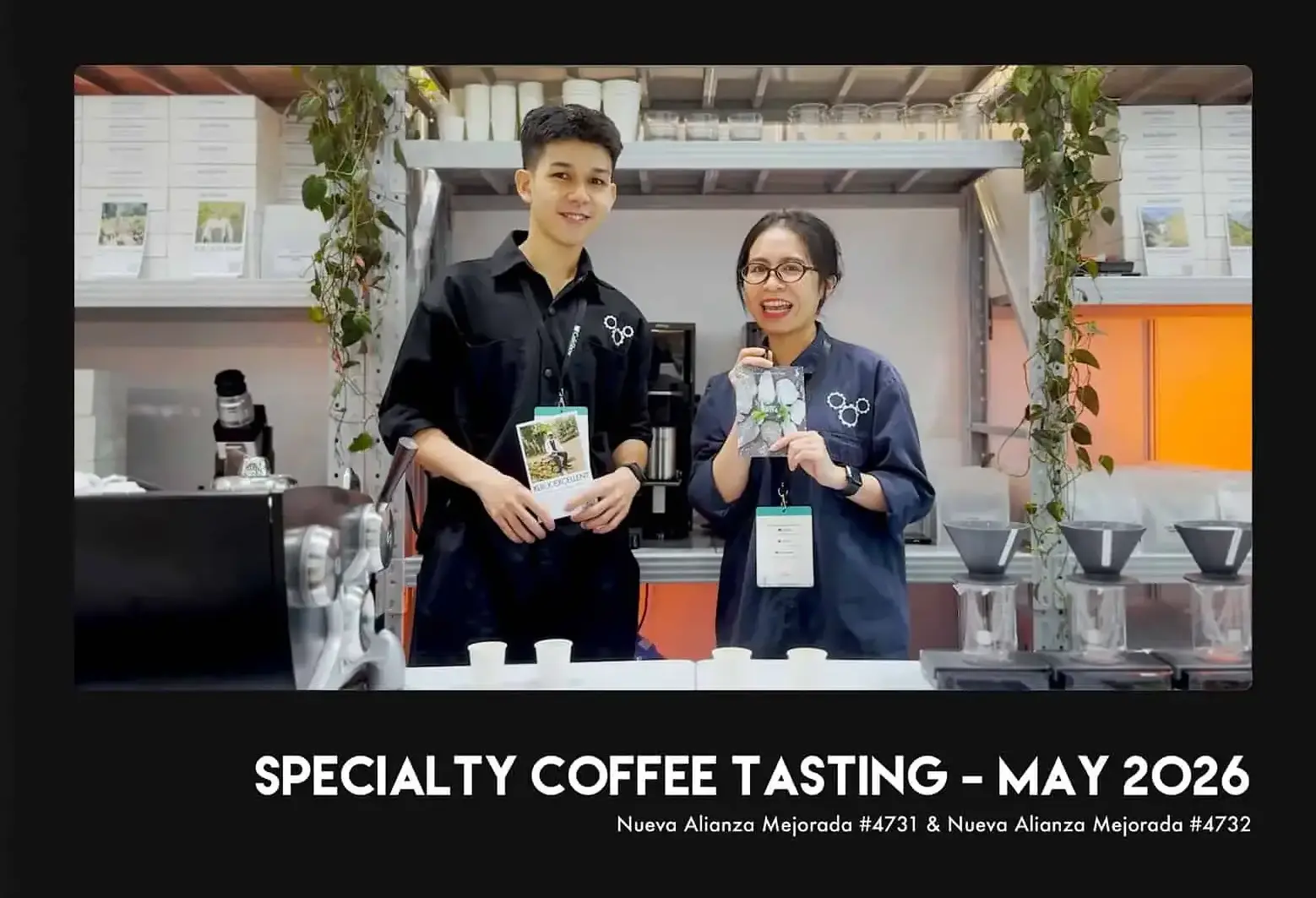
Unveiling May Discovery Subscription: Nueva Alianza Mejorada #4731 & Nueva Alianza Mejorada #4732
The Discovery Subscription is a silent dialogue, a place where the soul of the connoisseur finds a harmonious beat with distant lands. Like a transparent lens, we become storytellers, meticulously peeling back layers of cultural sediment, the breath of the soil, and the human philosophies hidden within every coffee bean.
May arrives with brilliant streaks of golden sunlight, a time when we long to hide beneath the lush, dew-drenched canopies of Santa Teresa. Amidst the silence of the Andes, when compassion touches Mother Earth, what will we hear? Perhaps it is a sweet response that nature reserves solely for souls who know how to wait patiently.

- Taste the Origin
Nueva Alianza Pacamara #4733 – The essence of Cusco with elegant jasmine notes
Nueva Alianza Pacamara #4733 is a testament to the miraculous terroir and dedicated cultivation of the renowned Cusco region. The combination of the characteristic Pacamara bean size and ideal altitude has forged a flavor profile of immense sophistication and depth. From the very first moment, this lot captivates with its elegant jasmine notes, radiating a gentle, pure fragrance akin to a flower blooming in the morning dew.

- Taste the Origin
Nueva Alianza Orange Gesha #4737 – An expedition of recessive genetic traits into the sensory realm
In a world of authenticity, Nueva Alianza Orange Gesha #4737 represents the proud emergence of rare biological traits often obscured by nature’s universality. Carrying a recessive genetic code, Lot #4737 embarks on an “expedition” into the connoisseur’s mind, where record-breaking fructose concentrations are released to perfectly fill every sensory gap with absolute smoothness and purity.
Through washed processing and extremely-light roasting, vibrant citrus nuances and ethereal floral notes, once hidden deep within the genetic structure, now manifest with power, transforming the tasting experience into a journey of ontological completion, where the rarity of recessive genes finally reigns supreme in flavor.

Specialty Coffee in Vietnam
BRAND VALUE
YOU SHOULD HAVE KNOWN
XLIII Coffee has been aiming to become a big, impactful company with social responsibilities,
have access to high-quality raw materials and convey the complete original values of coffee to our customer
