
EU Bans Single-Use Plastics: A Step Towards Sustainable Coffee
To reduce waste and mitigate the environmental impact of plastic usage, EU member states have unanimously endorsed a draft proposal to ban the use of single-use plastic packaging in cafes and restaurants – two major hubs for the use of single-use plastic products. This regulation marks a significant stride towards fostering sustainable and eco-friendly practices, particularly within the coffee industry.
Impact of plastic on the environment
Currently, the environment is severely damaged by human manufacturing activities. Parallel to the rapid development of the service industry, the amount of waste, especially plastic waste, is increasing rapidly.
Many restaurants and cafes have a habit of using single-use plastics (cups, plates, utensils, plastic containers, etc.). Single-use plastics are convenient, quick, neat, visually appealing, and inexpensive. However, this practice is putting pressure on nature, and even on health. Plastic waste contains many hazards to the environment and human health.
The impact of single-use plastics on the environment:
– Due to their non-biodegradable nature, even when collected and buried in the soil, they persist for hundreds of years, altering the physical properties of the soil and causing soil pollution. This leads to hindering plant growth and impacting agricultural yields, hindering the growth of crops.
– In particular, improper disposal methods, such as burning plastics that don’t meet standards, pose a risk of air pollution, and greenhouse gas emissions, and negatively affect human and animal life if not handled correctly.

Health impacts of plastic
– Plastic waste, when released into the environment or buried, breaks down over time into various-sized plastic particles such as microplastics, nanoparticles, picoparticles, etc. These plastic fragments infiltrate the soil, environment, and air, posing a threat to the health of marine life and humans who consume them.
– Incinerating certain types of plastic waste releases toxic gases, including dioxins and furans, which significantly affect endocrine glands, weaken the immune system, and can even lead to cancer.
– Some types of nylon bags may contain sulfur, pure petroleum, etc. When improperly burned, they produce sulfuric acid, contributing to acid rain, which is extremely hazardous to human health and wildlife.
– Currently, many low-quality plastic products are produced in large quantities, generating harmful substances like BPA. BPA is a toxic compound associated with various dangerous health conditions in humans, including infertility, diabetes, and even cancer.
EU is going to pass single-use plastic packaging ban
EU negotiators have reached a consensus on a draft proposal to ban single-use plastic in restaurants and cafes, aiming to reduce packaging waste by 5% by 2030, c10% by 2035, and 15% by 2040.
This law also applies to fresh fruits and vegetables, individual packaging of products like spices and sugar, as well as small personal hygiene items and plastic wraps for luggage at airports.
Frederique Ries, a legislator, calls on all industries, EU member states, and consumers to join the fight against excessive packaging. To achieve climate goals, beverage and food establishments are also required to “encourage” to provide 10% of products in reusable packaging by 2030 while allowing consumers to choose their containers.
Moreover, the EU has issued a ban on “persistent chemicals” in food-contact packaging to prevent various health risks, including different types of cancer. This significant agreement will become law after approval from EU member countries and the EU Parliament.
Businesses and service providers adhering to these regulations will be a victory for consumer health.
Application of GRAINPRO recyclable plastic bags for sustainable development

Although harmful to the environment, plastic is an efficient material for preserving coffee. Compared to jute or canvas, which have been used for centuries, plastic minimizes coffee bean exposure to air during transportation. This helps prolong the shelf life of coffee, preventing mold growth and preserving its inherent, enticing flavor. Even plastic packaging made from biodegradable materials is not environmentally friendly if used only once. The proposed solution to mitigate environmental impact while ensuring coffee quality involves using recycled plastic bags – specifically, GrainPro plastic bags. This eco-friendly recycling project is a collaboration between Neumann Gruppe USA and GrainPro.
Collection stations for used packaging will be established at Continental Terminals, allowing buyers of green coffee beans to easily bring their used packaging for recycling. Participants only need to send an email to sustainent@grainpro.com to inform and confirm their participation. Subsequently, they can bring the used plastic bags to Continental Terminals locations in Keasbey, NJ, or Alameda, California, either through shipping services or in person. The collected plastic bags will be sent to specialized processing facilities for recycling.
Embracing the ethos of sustainable development, XLIII Coffee has adopted GrainPro bags to preserve its coffee while avoiding the use of single-use plastic at any stage in the store.
Related articles:
– How to optimize the coffee body during roasting?
– The secret to choosing the right type of coffee to make cold brew at home
– Why is the ECF asking to delay the implementation of the EU’s Deforestation Law?

Bài viết mới

- Taste the Origin
Nigussie Nare – Murago Outgrowers #03028: Cultivated from the Values of Sustainable Reciprocity
Nestled beneath the shade trees of Sidama, Bensa, the Nigussie Nare – Murago Outgrowers #03028 coffee lot serves as a living testament to the values of sustainable reciprocity. This symbiosis begins with the intimate bond between a rich indigenous ecosystem and the smallholder farmers of the Murago region. Each harvested bean is the culmination of a virtuous cycle: a stable environment produces exceptional bean quality, and sustainable economic growth, in turn, continues to protect the verdant canopy of the great forest.

- Taste the Origin
Rift Valley Coffee Caucus #03757 – A Testament to Western Kenya’s Collective Spirit
Turning our gaze to the Great Rift Valley of East Africa, the fertile volcanic landscapes are witnessing an inspiring transformation. Moving away from fierce, survival-driven competition, smallholder farmers in Western Kenya have chosen to join forces, forging a resilient and unified network. The Rift Valley Coffee Caucus #03757 lot stands as the ultimate testament to this remarkable collective synergy.

- Breaking News
Airworks Coffee & XLIII Coffee – A “handshake” that brings original flavors across borders
XLIII Coffee, alongside our key wholesale partner Airworks Coffee, officially announces the latest release of specialty coffee lots for the North American market. This event reaffirms our commitment to bringing original flavors across all geographical barriers to coffee enthusiasts.
Early access (for Subscribers of Airworks): 10:00 AM (PST) | Wednesday, April 29, 2026
General access: 10:00 AM (PST) | Friday, May 1, 2026
We invite our Customers and Partners to visit (airworkscoffee.com) for detailed information and to prepare for this special release!
- Taste the Origin
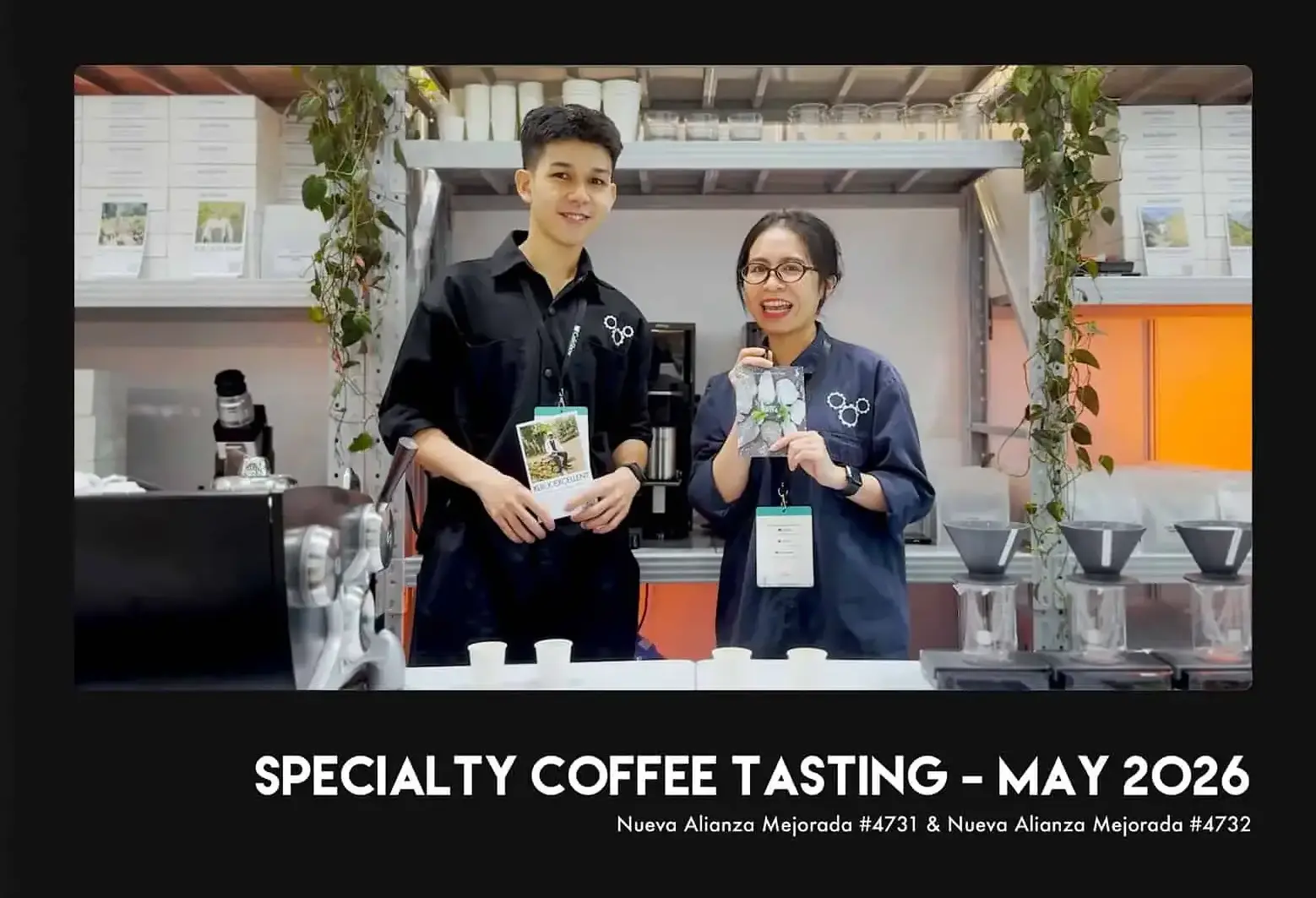
Unveiling May Discovery Subscription: Nueva Alianza Mejorada #4731 & Nueva Alianza Mejorada #4732
The Discovery Subscription is a silent dialogue, a place where the soul of the connoisseur finds a harmonious beat with distant lands. Like a transparent lens, we become storytellers, meticulously peeling back layers of cultural sediment, the breath of the soil, and the human philosophies hidden within every coffee bean.
May arrives with brilliant streaks of golden sunlight, a time when we long to hide beneath the lush, dew-drenched canopies of Santa Teresa. Amidst the silence of the Andes, when compassion touches Mother Earth, what will we hear? Perhaps it is a sweet response that nature reserves solely for souls who know how to wait patiently.

- Taste the Origin
Nueva Alianza Pacamara #4733 – The essence of Cusco with elegant jasmine notes
Nueva Alianza Pacamara #4733 is a testament to the miraculous terroir and dedicated cultivation of the renowned Cusco region. The combination of the characteristic Pacamara bean size and ideal altitude has forged a flavor profile of immense sophistication and depth. From the very first moment, this lot captivates with its elegant jasmine notes, radiating a gentle, pure fragrance akin to a flower blooming in the morning dew.

- Taste the Origin
Nueva Alianza Orange Gesha #4737 – An expedition of recessive genetic traits into the sensory realm
In a world of authenticity, Nueva Alianza Orange Gesha #4737 represents the proud emergence of rare biological traits often obscured by nature’s universality. Carrying a recessive genetic code, Lot #4737 embarks on an “expedition” into the connoisseur’s mind, where record-breaking fructose concentrations are released to perfectly fill every sensory gap with absolute smoothness and purity.
Through washed processing and extremely-light roasting, vibrant citrus nuances and ethereal floral notes, once hidden deep within the genetic structure, now manifest with power, transforming the tasting experience into a journey of ontological completion, where the rarity of recessive genes finally reigns supreme in flavor.

Specialty Coffee in Vietnam
BRAND VALUE
YOU SHOULD HAVE KNOWN
XLIII Coffee has been aiming to become a big, impactful company with social responsibilities,
have access to high-quality raw materials and convey the complete original values of coffee to our customer
