
French Patisserie & Specialty Coffee – The Art of Cultural Fusion at XLIII Coffee
In 1815, Marie-Antoine Carême – known as “The King of Chefs and Chef of Kings” – revolutionized French pastry-making by applying architectural principles to patisserie. At the same time, in a parallel world, the first coffee beans from Ethiopia were beginning their journey to conquer the globe.
Two centuries later, at XLIII Coffee, we witness the magical intersection of French patisserie and specialty coffee – a profound dialogue between two culinary art philosophies that share the same DNA: respect for origin, the science of transformation, and the art of patience.
The Philosophy of “Terroir” in Harmony
When land and climate determine flavor
In French culinary culture, terroir is a profound living philosophy, carrying the belief that land, climate, and people can infuse the soul into cuisine. Cistercian monks developed this concept in the 12th century when they realized that different regions of the world produced completely different wines, even when using the same grape varieties and techniques.
Terroir in French patisserie culture is therefore not just geography but also the memory of the land. Normandy butter’s exceptional flavor comes not only from its high fat content but from the coastal pastures where cows graze on grass naturally salted by sea spray. Madagascar vanilla develops its complex aroma thanks to volcanic soil and tropical climate, creating unique vanillin compounds. Guérande salt is not just salty but carries mineral notes from ancient seabeds. Similarly, Valrhona chocolate – an icon of luxury – bears the imprint of unique soil and climate from carefully selected cacao-growing regions, creating rich and complex flavors that cannot be replicated anywhere else.
Terroir Coffee – Each Bean Tells a Story of Its Origin
When the specialty coffee movement exploded in the 1980s, it borrowed directly from the wine industry’s concept of terroir. But with coffee, terroir is more complex because coffee cherries must undergo transformation before becoming a beverage. At XLIII Coffee, understanding terroir goes beyond simply labeling origins. We work directly with farmers to understand where coffee is grown and how the environment shapes flavor development:
“We believe that true value comes from respecting and preserving the characteristics of raw materials”
– Core philosophy at XLIII Coffee
At our partner Ratnagiri Estate in the Western Ghats, the monsoon pattern creates a fascinating paradox that supports controlled natural fermentation right on the tree. Native shade trees not only filter sunlight but also add tannins to the soil, affecting chlorophyll development and ultimately the mineral complexity in the coffee cup.


Or consider farms that have perfectly utilized volcanic advantages, creating natural drainage systems that prevent water stagnation – a crucial factor for coffee plant development. Elevation changes from 1,400 to 1,800 meters on the same farm create multiple microclimates, allowing farmers to selectively harvest coffee cherries from different flavor zones, producing caramel sweetness with bright citrus notes.
Ethiopia Yirgacheffe – coffee’s homeland with over 10,000 wild varieties – still maintains ancient stone washing stations and traditional processing methods spanning centuries. Forest coffee varieties grow wild under native shade, absorbing floral compounds from jasmine and gardenia flowers, creating unique terroir signatures that cannot be replicated anywhere else. The genetic diversity here is a living museum of coffee evolution, each variety carrying its own hereditary DNA story.
Terroir is not just about geography but also about time, people, and culture. When XLIII Coffee applies this principle to both coffee and pastries, we hope to create a new culinary language – one of cultural fusion that is global in scope yet retains local soul.
The Science of Fermentation
The art of controlled transformation
If terroir is the soul, then fermentation is the magical bridge between French patisserie and specialty coffee. Both arts rely on controlling biological transformation processes to create complex flavors.
At XLIII Coffee, we’ve chosen sourdough croissants as the soul representing a revolution in understanding fermentation.
Wild native yeast strains adapt to 80-85% humidity and 26-30°C temperatures, creating fermentation patterns that cannot be replicated in Paris or San Francisco. Workers at XLIII Coffee have developed stable microbial communities with characteristic lactobacillus strains, creating the distinctive aromatic complexity of tropical fermentation.
- Dry season (January-March): Slow fermentation, rich flavors
- Rainy season (April-October): Strong fermentation, bright acidity
- Cool season (November-December): Balanced activity, complex development
While nurturing starter cultures for pastries, XLIII Coffee simultaneously explores diversity in coffee fermentation through directly imported products – from traditional wet processing to advanced anaerobic fermentation at farms like Ratnagiri Estate. Both methods share the same philosophy: controlled transformation to unlock complexity while respecting original character.
Coffee Fermentation – From Washed to Natural
The coffee selected by XLIII Coffee has seen remarkable evolution in processing approaches. From focusing solely on wet processing to preserve purity, we’ve now opened up to more diverse processing methods.
- Natural fermentation: Allowing coffee cherries to ferment naturally on the tree
- Hybrid methods: Combining multiple processing techniques
- Scientific intervention: Like at Ratnagiri Estate with controlled fermentation environments


Fermentation is not coincidence or randomness, but an art of control. Both patisserie and specialty coffee demand deep understanding of microorganisms, temperature, time, and patience. This is the deepest intersection between these two arts – both believe that time is the most crucial factor.
Precision and Artistry
Where technique and emotion converge
The boundaries of art are truly created when technical mastery becomes the foundation for creative expression. Both patisserie and specialty coffee demand absolute precision, but the fascinating paradox is: only when we master the science can we transcend it to create art.
Temperature Control is the Invisible Orchestrating Hand
In chocolate tempering, a temperature difference of just 2-3°C can make or break a batch. Similarly, in espresso extraction at XLIII Coffee, a 1-2°C water temperature difference can completely change the flavor profile.
A perfect case study can be observed in the correlation between canelé and espresso shots. Both canelé and shots demand perfect timing:
- Canelé: Bake at 200°C for the first 15 minutes, then reduce to 180°C for another 45-60 minutes
- Shot: Pre-infusion for 4-6 seconds, extraction for 25-30 seconds at 9 bar pressure
Or consider the harmony between madeleines and single-origin coffee. These shell-shaped cakes with delicate texture and subtle lemon notes create perfect contrast with specialty coffee’s bright acidity layered with floral notes. What’s the science behind it?
- Madeleines are baked in preheated shell molds
- Specialty coffee beans are roasted extremely light to preserve characteristic flavors
- Serving temperature: warm madeleines (40-45°C), hot coffee (65-70°C)
Grind Size Parallels with Flour Sifting
In baking, sifting flour creates consistent texture and controls porosity. In coffee, grind size uniformity determines extraction evenness.
Espresso requires fine powder-like consistency – each particle must be uniform for water to pass through evenly during 25-30 second extraction. Pour-over needs medium fineness like table salt, allowing control of flow rate and uniform saturation. Cold brew uses coarse grinding like sea salt, preventing over-extraction during long steeping times. Regardless of the art, both understand that particle size distribution directly affects final flavor.

Precision is not creativity’s enemy but its foundation. When baristas understand extraction principles and bakers master control techniques, they can confidently experiment and innovate. This is why XLIII Coffee can confidently create unique combinations like sourdough croissants paired with true specialty coffee.
The Tasting Experience
The art of slow living for deep immersion
In the relentless pace of an ever-moving world, both French pastries and specialty coffee represent something precious: the art of slow living. XLIII Coffee therefore designs contemporary experience boundaries, helping guests reconnect with the present moment and appreciate beauty in daily life.
The Preparation Process as Ritual
Traditional French goûter is not just about tasting but taking time to feel handcrafted artistry. Similarly, at XLIII Coffee, watching workers measure, grind, and brew coffee becomes a meditative experience. Every movement has purpose, every step has its moment – from the first aroma of pure coffee grounds to the aesthetic beauty of art merging with fundamental technique.
This process extends to pastry preparation. Madeleines are baked in thoroughly preheated shell molds, creating the characteristic golden crust. Canelés are made in copper molds aged over years, each mold developing patina that contributes to caramel patterns. Cinnamon rolls with spiral structures require precise dough rolling and careful proofing. All have their own rhythm to achieve completion.
The Art of Refined Pairing
At XLIII Coffee, the combination of pastries and coffee can be seen as curated conversations. Each pastry harmonizes with all three brewing methods – espresso, filter, and milk-based – but with subtle shifts in flavor emphasis.
- Sourdough croissants with buttery richness and subtle sourness create perfect foundation for any brewing method. Paired with espresso, intensity cuts through butter layers. Brewed as filter highlights sourdough fermentation. Milk-based creates fluffy contrast with crispy layers.
- Brownies with intense chocolate density bring different conversations. Espresso pairing emphasizes dark chocolate notes. Filter method highlights subtle fruit notes in cacao. Milk-based softens intensity while maintaining chocolate depth.
- Canelés with caramel crust and custard center create a journey through layers of texture. Espresso creates bold contrast between bitter and sweet. Filter allows appreciation of vanilla complexity. Milk-based complements custard richness.


Temperature adds another dimensional interaction – warm pastries with hot coffee create aromatic diffusion, while cooler temperatures reveal different flavor notes.
Timing becomes a factor in experience creation. The first bite and first sip, the bloom in the middle palate, final notes lingering and inviting the next flavor. Each moment is designed to extend appreciation rather than hurried consumption.
Seasonal rhythms influence pairings. Morning light favors bright, lightly acidic combinations. Warm afternoons evoke richer, mellower pairings. Evenings need balanced, contemplative flavors.
True luxury in modern life is not expensive ingredients or elaborate presentation, but the final distillation. XLIII Coffee creates those moments – from patiently waiting for perfect extraction to slowly savoring handcrafted pastries – preserving the essential human ritual of appreciation.
When East Meets West, and Cultures Converge
XLIII Coffee has created a unique cultural bridge where Eastern and Western culinary traditions intersect through shared values of craftsmanship, authenticity, and responsible innovation.
From sourdough croissants with local natural starter to pure coffee from around the world, from traditional French techniques to modern coffee science – all connected by a common philosophy: respecting origin, mastering transformation, and the art of patient creation.
In an era where speed often overwhelms quality, XLIII Coffee represents a counter-movement – where people can slow down, appreciate subtlety, and reconnect with timeless values of authentic craftsmanship.
Come to XLIII Coffee to experience this magical intersection yourself. Each cup of coffee, each bite is not just flavor but understanding cultural heritage, appreciating human skill, and honoring the beauty of patience in a world that’s always rushing.

Bài viết mới
- Find the Origin
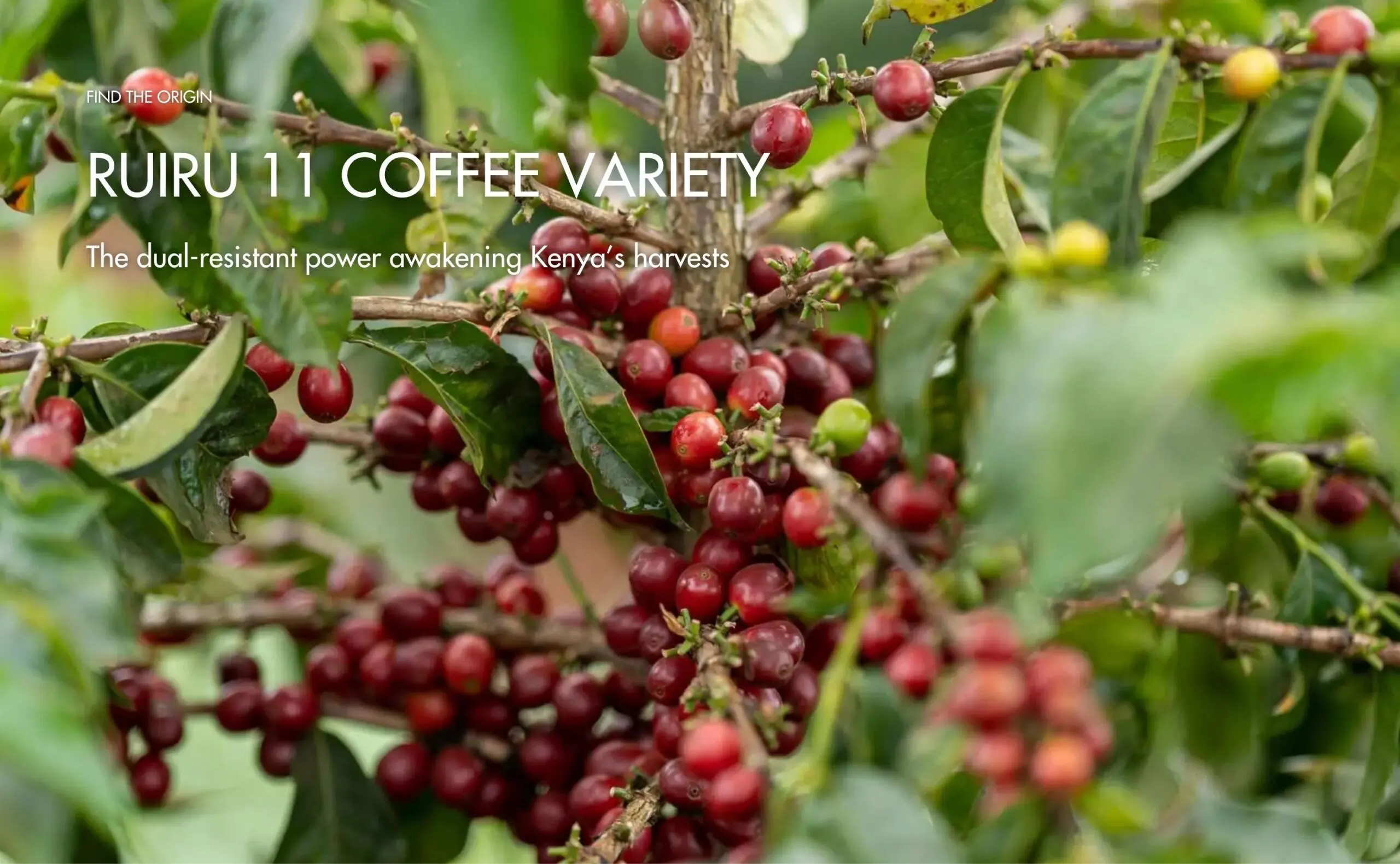
Ruiru 11 coffee variety – The dual-resistant power awakening Kenya’s harvests
Born from the ashes of a devastating pandemic, Ruiru 11 is a resilient response of indigenous wisdom to the trials of nature. Carrying a complex genetic code from 66 sibling isolines, this humbly statured coffee variety possesses superb “dual-resistance” against the twin shadows of Coffee Berry Disease and Coffee Leaf Rust. Overcoming early prejudices and the paradox of trade-offs between yield and flavor, Ruiru 11 has been weaving through nurseries, awakening dormant harvests across highland hillsides, and igniting a proud flame of self-reliance for Kenyan coffee.

- Taste the Origin
Sudan Rume #00313 by CGLE – The origin legend beneath the Eucalyptus canopy
From a wild coffee lineage discovered in the Rume Mountains in the 1940s to the enduring conservation efforts of Café Granja La Esperanza, Sudan Rume #00313 by CGLE invites drinkers on a sensory pilgrimage to the birthplace of the Arabica world. It is a rare biological legacy preserved through unwavering dedication, integrity, and deep reverence for history.
- Taste the Origin
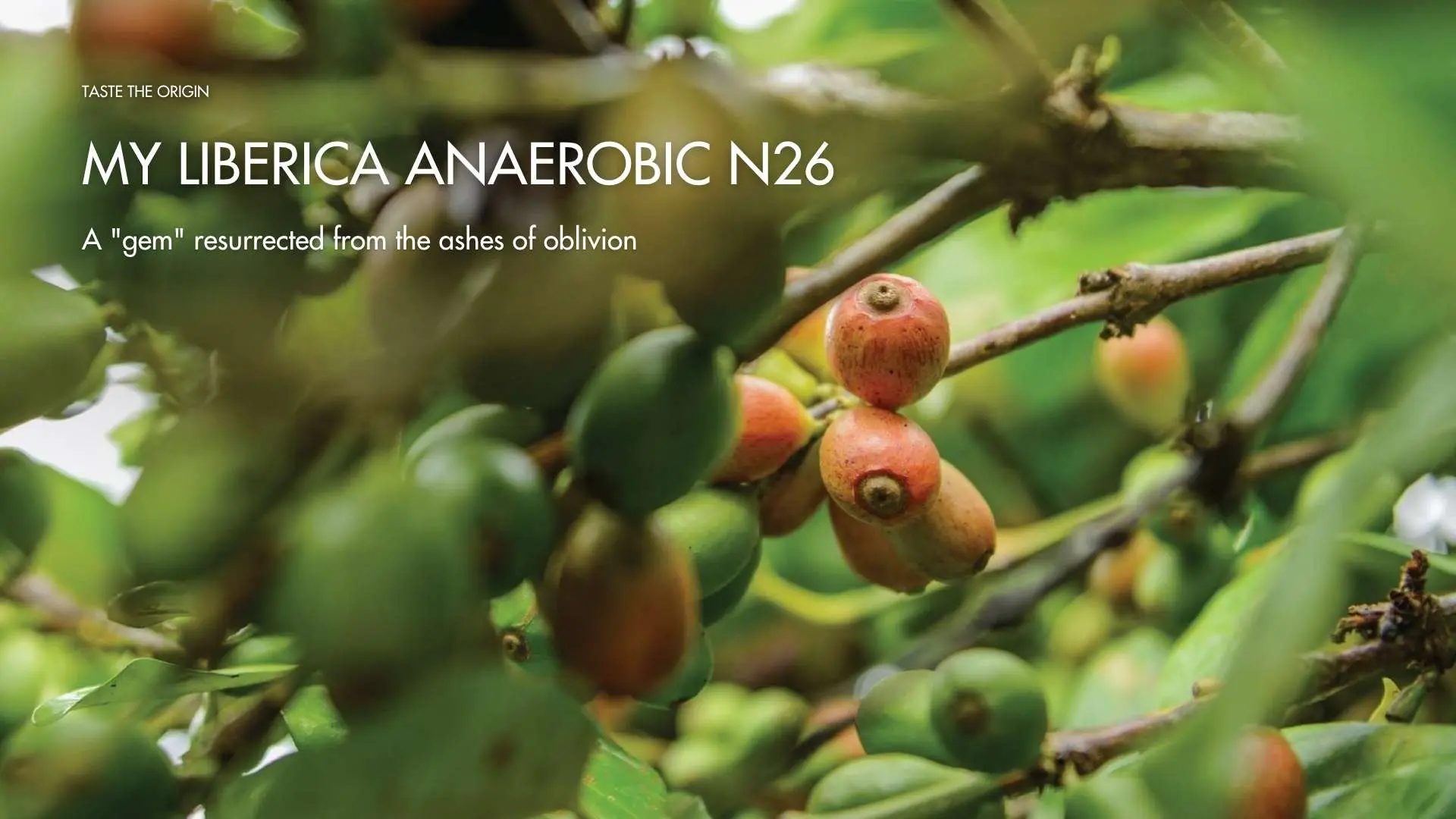
My Liberica Anaerobic N26 – A “gem” resurrected from the ashes of oblivion
The journey of My Liberica Anaerobic N26 is the triumph of a forgotten species, awakened by the depth of understanding, patience, and faith in its original essence. From the heavy clay layers of Kulai to 26 days of transformation in absolute darkness, each step contributes to unlocking layers of flavor that the world once thought could not exist in Liberica. More than just a cup of coffee, My Liberica Anaerobic N26 is a powerful declaration that all great values begin with the courage to delve into their essence, and then rise to a unique voice that resonates throughout the world.


- Taste the Origin
Finca Soledad Mejorado Tyoxy & Fincas Putushio Mejorado – The red thread of the Jijón family
The simultaneous arrival of Finca Soledad Mejorado Tyoxy and Fincas Putushio Mejorado at XLIII Coffee paints a remarkable portrait of the adaptability of the Mejorado variety within Ecuador’s specialty coffee landscape. Nurtured by a shared family philosophy and a commitment to principled cultivation, these two processed lots represent both a breakthrough in microbial innovation and the remarkable return of an exceptional flavor profile.

- Taste the Origin
Finca La Palestina Gesha #5482 – A new chapter in the legend from Cajamarca
From the renowned Cajamarca region, Finca La Palestina Gesha #5482 returns after a period of absence with a proud and fresh appearance. Nurtured in ideal altitude conditions and the cool climate characteristic of the Andes, each coffee bean slowly accumulates subtle flavor nuances before being perfected using the Washed method to maximize the purity of the Gesha variety. Under a carefully refined extremely-light roast profile, this batch of coffee reveals layers of white jasmine, ripe citrus, and sweet golden apricot aromas, interwoven in an elegant and rich flavor structure.

Specialty Coffee in Vietnam
BRAND VALUE
YOU SHOULD HAVE KNOWN
XLIII Coffee has been aiming to become a big, impactful company with social responsibilities,
have access to high-quality raw materials and convey the complete original values of coffee to our customer
