
Garnica Coffee Variety Balancing High Yield and Stable Quality
Garnica coffee variety is one of the rare Arabica varieties that achieves harmony between farming efficiency and sensory value. Bred from the renowned Mundo Novo and Caturra lines, Garnica inherits strong growth, good disease resistance, and stable production over multiple harvests. However, what makes Garnica a popular choice for many farms is not just its yield, but its consistent bean quality.
I. Introduction to the Garnica coffee variety
Garnica coffee variety embodies the story of systematic research efforts to improve coffee quality and productivity in Mexico during the mid-20th century. Bred from two well-known Arabica varieties – Mundo Novo (a natural hybrid of Bourbon and Typica) and Caturra, Garnica is the result of a breeding program initiated by the Mexican Coffee Institute (INMECAFE) in the 1950s and 1960s. Their goal was clear: to create a coffee variety with strong growth and high yield, while maintaining a stable, clean cup quality in the Mexican coffee style.

The journey of Garnica began in Jalapa, Veracruz, a region with a cool climate, high humidity, and mineral-rich volcanic soil – an ideal environment for hybridization experiments. It was here that the first generations of Garnica plants were selected and evaluated before being more widely planted in Veracruz and Chiapas. Despite emerging as a new variety in the improvement program, Garnica quickly demonstrated its potential: the plant is medium-sized, has a compact canopy, offers decent disease resistance, and is notably high-yielding – one of the reasons this variety accounted for about 5% of production in Veracruz during its peak development.
Interestingly, Garnica shares many similarities with Catuai, a variety also originating from a Caturra cross. This explains why Garnica typically offers stable cup quality with balanced, clean flavor profiles – a signature style of the dwarf Arabica varieties. In the field, Garnica trees usually produce sweet, ripe cherries with thick pulp and a dense bean structure, creating favorable conditions for precision-focused processing methods.
Image source: Le Piantagioni del Caffè.
II. Notable Characteristics of the Garnica Variety
Before understanding why Garnica is becoming a preferred choice in Arabica farms, it’s important to examine the core traits that define this coffee variety. Each coffee variety carries its own “signature,” and Garnica is no exception. Developed with the goal of ensuring both yield and consistent quality, Garnica combines traits that are valued by farmers, roasters, and researchers alike.
Morphological Features
In the field, Garnica is immediately recognizable for its morphology, a distinct mix of Mundo Novo and Caturra traits.
The tree is of moderate height, with a compact canopy and strong branching, creating an open structure that reduces pest pressure and optimizes photosynthesis. Garnica leaves are dark green, medium-sized, with slightly downward-curving veins – a sign of good adaptation to strong sunlight and variable climates.
Flowers bloom in dense clusters, producing a large number of cherries per branch. This balanced fruit density and uniform bean size are key reasons many farms consider Garnica an “easy-to-manage” Arabica variety.


Image source: Weathered Hands Coffee.
Yield and Disease Resistance
In terms of production, Garnica quickly proves why it was developed as a practical hybrid. Its most notable feature is impressive and stable yield over multiple years. While it may not reach the “peak” output of some newer varieties, Garnica has a clear advantage in maintaining production under less-than-ideal weather – a trait rare among traditional Arabicas.
The tree’s vigor, healthy root system, and recovery ability after harvest minimize fluctuations commonly seen on farms. Moreover, it shows good resistance to coffee leaf rust, a persistent threat in many growing regions. Thanks to this adaptability, farmers can plan harvests more accurately, reduce disease management costs, and gain confidence that each season’s yield won’t be a gamble.
Consistent Cup Quality
Perhaps the most interesting aspect of Garnica lies in its cup quality – a trait initially underestimated but increasingly recognized by the specialty coffee world. In cupping sessions, Garnica often shows a very “clean” character: round, delicate sweetness; gentle, non-sharp acidity; medium body; and a well-defined finish. These sensory attributes do not produce explosive flavors but establish a solid foundation ideal for experimentation.

Image source: Redber Coffee.
Due to its uniform and dense beans, modern processing methods such as extended fermentation, controlled honey, or slow natural processing yield consistent results. Garnica tends to “accommodate” the roaster or processor, allowing flavor expression to expand without losing balance – a quality experts refer to as “good varietal-process interaction,” essential for specialty coffee development.
III. Garnica’s Potential in the Specialty Coffee World
In recent years, Garnica has increasingly appeared in conversations among specialty coffee stakeholders from farms and roasters to quality control labs. Interestingly, its journey did not start with the ambition of being a “specialty star” but from a practical need: an Arabica variety that is both stable in yield and resilient against leaf rust, branch dieback, and climate change.
This stability opens opportunities for Garnica to go further. When farmers no longer have to choose between safe yields and bean quality, they can allocate more resources to experimenting with cultivation and processing – two factors that critically shape cup flavor.
What makes Garnica stand out is its excellent responsiveness to modern processing methods. Across farms in Mexico and Central America, it demonstrates a wide flavor spectrum when processed using honey, natural, dry fermentation, or controlled microbial techniques. Its dense beans, high sugar content, and consistent flavor make Garnica both manageable and capable of revealing complex layers compared to many commercial varieties. It may not be a “dramatic” coffee, but it provides a solid foundation for producers to innovate – a trait highly valued in specialty coffee.

Image source: Helene Coffee.
From a roasting perspective, Garnica offers significant potential. Its beans are uniform, thermally stable, and show little batch-to-batch variation, allowing roasters to replicate profiles reliably. With Garnica, they experience not only an “easy-to-work” variety but also an opportunity to develop balanced profiles: clean sweetness, gentle acidity, clear finish, and full-bodied flavor. These qualities make Garnica increasingly present in “daily specialty” products – refined enough to enjoy, yet consistent enough for year-round production.
Garnica’s potential lies not in showiness but in its dual ability: supporting farms under modern cultivation pressures while providing a reliable flavor foundation for roasters and consumers. In the increasingly diverse specialty coffee landscape, Garnica quietly proves that a coffee variety’s value sometimes lies in durability and versatility. This is likely why many producers choose Garnica not only for the present but also as a long-term strategy for future harvests.
IV. FAQs
1. What is Garnica coffee, and where does it come from?
Garnica is an Arabica hybrid of Mundo Novo and Caturra, developed in Mexico to create a variety with stable yields and good disease resistance. It is designed for efficient cultivation while meeting the quality demands of the specialty coffee market.
2. What advantages does Garnica have over other Arabica varieties?
Garnica stands out for its balance of vigor, stable yield, and superior resistance to leaf rust compared to many traditional varieties. Additionally, its uniform beans and compatibility with diverse processing methods make it a flexible choice for both farms and roasters.
3. What growing conditions are best for Garnica?
Garnica thrives at medium to high elevations with stable temperatures and moderate diurnal variation. Regions with distinct dry seasons, well-drained, fertile soils optimize its growth and productivity.
4. Is Garnica’s yield really stable across multiple harvests?
Yes. Garnica is known for maintaining stable yields even under variable weather or disease pressure, helping farmers reduce risk and plan long-term production strategies.
5. How does Garnica perform on the SCA cupping scale?
Garnica typically scores 82-84 SCA points in traditional cultivation, with clean, sweet, and balanced characteristics. With controlled processing techniques, scores can be higher, highlighting its potential in the specialty coffee segment.

Bài viết mới

- Taste the Origin
Nigussie Nare – Murago Outgrowers #03028: Cultivated from the Values of Sustainable Reciprocity
Nestled beneath the shade trees of Sidama, Bensa, the Nigussie Nare – Murago Outgrowers #03028 coffee lot serves as a living testament to the values of sustainable reciprocity. This symbiosis begins with the intimate bond between a rich indigenous ecosystem and the smallholder farmers of the Murago region. Each harvested bean is the culmination of a virtuous cycle: a stable environment produces exceptional bean quality, and sustainable economic growth, in turn, continues to protect the verdant canopy of the great forest.

- Taste the Origin
Rift Valley Coffee Caucus #03757 – A Testament to Western Kenya’s Collective Spirit
Turning our gaze to the Great Rift Valley of East Africa, the fertile volcanic landscapes are witnessing an inspiring transformation. Moving away from fierce, survival-driven competition, smallholder farmers in Western Kenya have chosen to join forces, forging a resilient and unified network. The Rift Valley Coffee Caucus #03757 lot stands as the ultimate testament to this remarkable collective synergy.

- Breaking News
Airworks Coffee & XLIII Coffee – A “handshake” that brings original flavors across borders
XLIII Coffee, alongside our key wholesale partner Airworks Coffee, officially announces the latest release of specialty coffee lots for the North American market. This event reaffirms our commitment to bringing original flavors across all geographical barriers to coffee enthusiasts.
Early access (for Subscribers of Airworks): 10:00 AM (PST) | Wednesday, April 29, 2026
General access: 10:00 AM (PST) | Friday, May 1, 2026
We invite our Customers and Partners to visit (airworkscoffee.com) for detailed information and to prepare for this special release!
- Taste the Origin
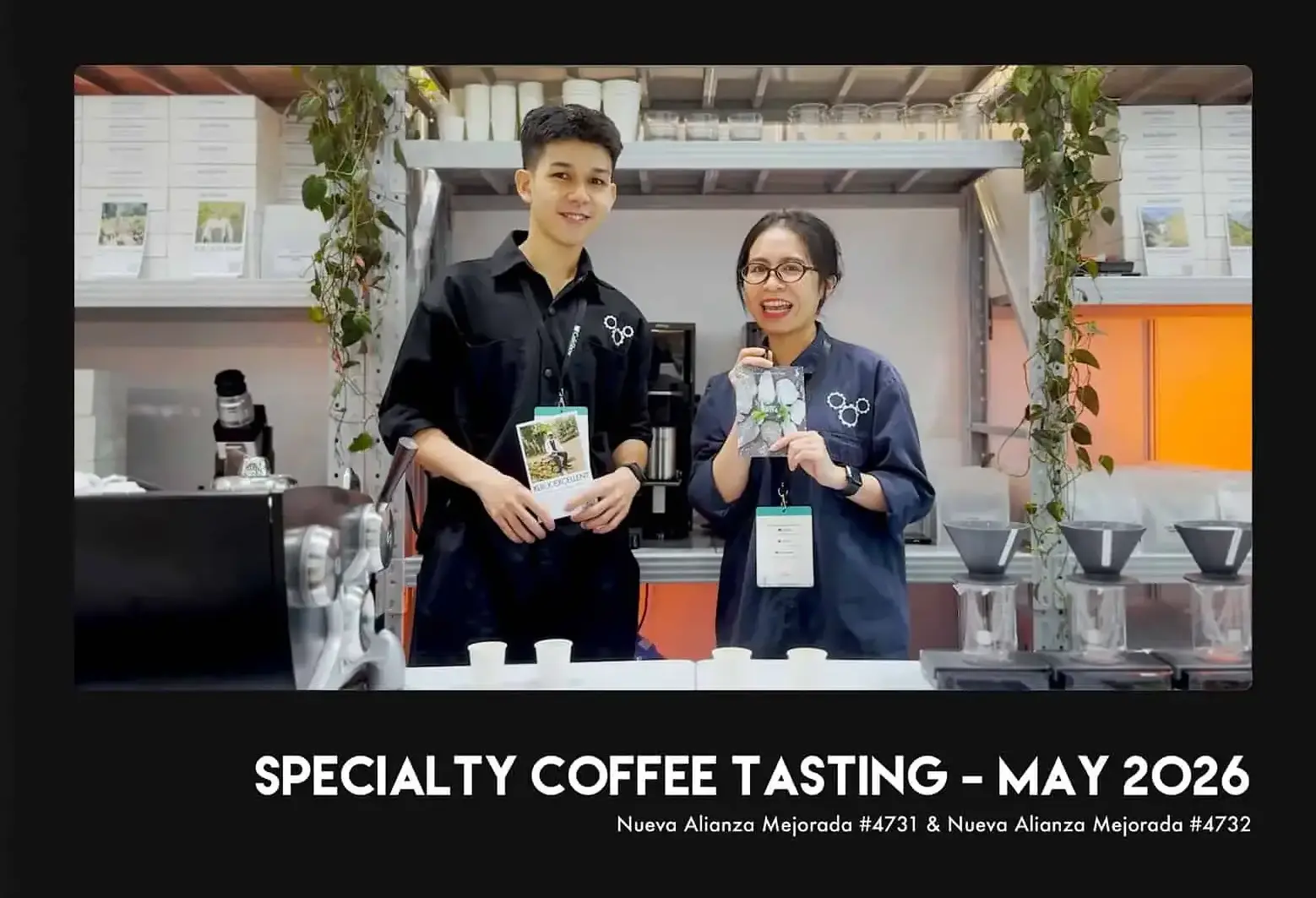
Unveiling May Discovery Subscription: Nueva Alianza Mejorada #4731 & Nueva Alianza Mejorada #4732
The Discovery Subscription is a silent dialogue, a place where the soul of the connoisseur finds a harmonious beat with distant lands. Like a transparent lens, we become storytellers, meticulously peeling back layers of cultural sediment, the breath of the soil, and the human philosophies hidden within every coffee bean.
May arrives with brilliant streaks of golden sunlight, a time when we long to hide beneath the lush, dew-drenched canopies of Santa Teresa. Amidst the silence of the Andes, when compassion touches Mother Earth, what will we hear? Perhaps it is a sweet response that nature reserves solely for souls who know how to wait patiently.

- Taste the Origin
Nueva Alianza Pacamara #4733 – The essence of Cusco with elegant jasmine notes
Nueva Alianza Pacamara #4733 is a testament to the miraculous terroir and dedicated cultivation of the renowned Cusco region. The combination of the characteristic Pacamara bean size and ideal altitude has forged a flavor profile of immense sophistication and depth. From the very first moment, this lot captivates with its elegant jasmine notes, radiating a gentle, pure fragrance akin to a flower blooming in the morning dew.

- Taste the Origin
Nueva Alianza Orange Gesha #4737 – An expedition of recessive genetic traits into the sensory realm
In a world of authenticity, Nueva Alianza Orange Gesha #4737 represents the proud emergence of rare biological traits often obscured by nature’s universality. Carrying a recessive genetic code, Lot #4737 embarks on an “expedition” into the connoisseur’s mind, where record-breaking fructose concentrations are released to perfectly fill every sensory gap with absolute smoothness and purity.
Through washed processing and extremely-light roasting, vibrant citrus nuances and ethereal floral notes, once hidden deep within the genetic structure, now manifest with power, transforming the tasting experience into a journey of ontological completion, where the rarity of recessive genes finally reigns supreme in flavor.

Specialty Coffee in Vietnam
BRAND VALUE
YOU SHOULD HAVE KNOWN
XLIII Coffee has been aiming to become a big, impactful company with social responsibilities,
have access to high-quality raw materials and convey the complete original values of coffee to our customer
