
Green Coffee’s Oxygen Dilemma: Friend or Foe?
Green coffee beans – alive and breathing? It’s true! Coffee also needs oxygen to breathe, to become plump and flavorful. However, the relationship between oxygen and green coffee does not stop there. Oxygen can also cause coffee beans to lose their appeal and become old, stale, and damaged. Why so? Did you know about Green Coffee’s Oxygen Dilemma? Explore with XLIII Coffee!
Green coffee beans need oxygen to live
Almost every organism on Earth requires oxygen to sustain life. The same goes for coffee. It needs oxygen to breathe, grow, and create coffee cherries. When removing branches and going through pulping and drying and drying steps, green coffee beans also need oxygen. According to Professor Borém at the Federal University of Lavras (UFLA), green coffee beans consist of plant cells and are 11% water. This causes anhydrobiosis, also known as suspended animation, to occur inside the seeds. To put it more simply, green coffee beans are still a living organism and they need oxygen to maintain metabolic activity and life.
Oxygen can affect the quality of green coffee beans
Oxygen helps coffee maintain life and keep the freshness of the beans. However, oxygen is also the cause of coffee losing its flavor and aroma. The reason may be that, during metabolism, oxygen promotes substances to grow and react with each other, changing the chemical composition of the grain. When cells breathe, they produce energy. They also cause nutrients (especially glucose molecules) to be broken down into water, producing carbon dioxide and ATP (the main molecule to store and transmit energy in cells). This can change the flavor and damage the coffee. You can see the deterioration if you leave green coffee beans outside for many days. The outer parts of coffee cells contain a lot of oil and the beans quickly develop a strange odor, become rancid, and decompose, reducing quality and value. For example, in Professor Borém’s research, oxygen caused green coffee beans stored in paper bags to lose 10 points in just 12 months.

Green coffee beans at XLIII Coffee
How to protect green coffee beans from oxygen?
To protect green coffee from oxidation, manufacturers need to choose appropriate packaging and storage methods, said Juan Vargas, Quality Manager at Fazendas Klem in Matas de Minas. The environment and storage conditions should be properly set up to limit the impact of oxygen on coffee. Storage facilities should be cleaned and humidity monitored regularly. Packaging also needs to choose materials with high durability, waterproofing, and moisture resistance. The coffee must be as isolated as possible from external factors.
XLIII Coffee green coffee beans are stored in GrainPro bags and in a suitable environment
Oxygen helps keep green coffee fresh and flavorful, but it is also the factor that causes it to lose its value. Therefore, for coffee to remain as fresh as when it was on the drying rack at the farm, manufacturers and roasters must make efforts to invest in preservation measures. At XLIII Coffee, coffee is always preserved in optimal conditions during transportation to the warehouse. The packaging also uses recyclable and biodegradable Grainpro bags to help keep the coffee at its highest quality while protecting the environment. If you want to experience specialty coffee beans, come visit XLIII Coffee!
Articles you may be interested in

Bài viết mới

- Taste the Origin
Nigussie Nare – Murago Outgrowers #03028: Cultivated from the Values of Sustainable Reciprocity
Nestled beneath the shade trees of Sidama, Bensa, the Nigussie Nare – Murago Outgrowers #03028 coffee lot serves as a living testament to the values of sustainable reciprocity. This symbiosis begins with the intimate bond between a rich indigenous ecosystem and the smallholder farmers of the Murago region. Each harvested bean is the culmination of a virtuous cycle: a stable environment produces exceptional bean quality, and sustainable economic growth, in turn, continues to protect the verdant canopy of the great forest.

- Taste the Origin
Rift Valley Coffee Caucus #03757 – A Testament to Western Kenya’s Collective Spirit
Turning our gaze to the Great Rift Valley of East Africa, the fertile volcanic landscapes are witnessing an inspiring transformation. Moving away from fierce, survival-driven competition, smallholder farmers in Western Kenya have chosen to join forces, forging a resilient and unified network. The Rift Valley Coffee Caucus #03757 lot stands as the ultimate testament to this remarkable collective synergy.

- Breaking News
Airworks Coffee & XLIII Coffee – A “handshake” that brings original flavors across borders
XLIII Coffee, alongside our key wholesale partner Airworks Coffee, officially announces the latest release of specialty coffee lots for the North American market. This event reaffirms our commitment to bringing original flavors across all geographical barriers to coffee enthusiasts.
Early access (for Subscribers of Airworks): 10:00 AM (PST) | Wednesday, April 29, 2026
General access: 10:00 AM (PST) | Friday, May 1, 2026
We invite our Customers and Partners to visit (airworkscoffee.com) for detailed information and to prepare for this special release!
- Taste the Origin
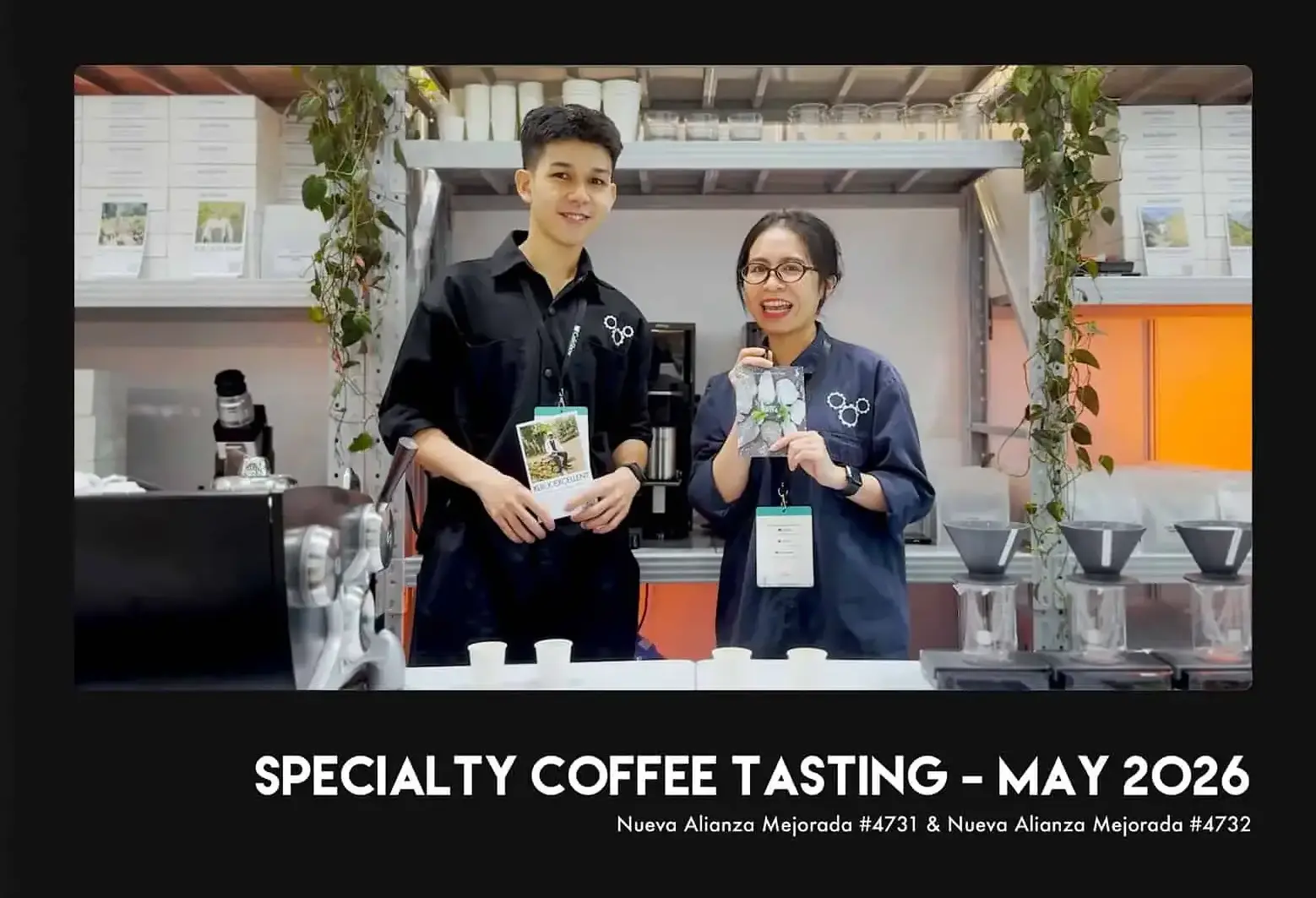
Unveiling May Discovery Subscription: Nueva Alianza Mejorada #4731 & Nueva Alianza Mejorada #4732
The Discovery Subscription is a silent dialogue, a place where the soul of the connoisseur finds a harmonious beat with distant lands. Like a transparent lens, we become storytellers, meticulously peeling back layers of cultural sediment, the breath of the soil, and the human philosophies hidden within every coffee bean.
May arrives with brilliant streaks of golden sunlight, a time when we long to hide beneath the lush, dew-drenched canopies of Santa Teresa. Amidst the silence of the Andes, when compassion touches Mother Earth, what will we hear? Perhaps it is a sweet response that nature reserves solely for souls who know how to wait patiently.

- Taste the Origin
Nueva Alianza Pacamara #4733 – The essence of Cusco with elegant jasmine notes
Nueva Alianza Pacamara #4733 is a testament to the miraculous terroir and dedicated cultivation of the renowned Cusco region. The combination of the characteristic Pacamara bean size and ideal altitude has forged a flavor profile of immense sophistication and depth. From the very first moment, this lot captivates with its elegant jasmine notes, radiating a gentle, pure fragrance akin to a flower blooming in the morning dew.

- Taste the Origin
Nueva Alianza Orange Gesha #4737 – An expedition of recessive genetic traits into the sensory realm
In a world of authenticity, Nueva Alianza Orange Gesha #4737 represents the proud emergence of rare biological traits often obscured by nature’s universality. Carrying a recessive genetic code, Lot #4737 embarks on an “expedition” into the connoisseur’s mind, where record-breaking fructose concentrations are released to perfectly fill every sensory gap with absolute smoothness and purity.
Through washed processing and extremely-light roasting, vibrant citrus nuances and ethereal floral notes, once hidden deep within the genetic structure, now manifest with power, transforming the tasting experience into a journey of ontological completion, where the rarity of recessive genes finally reigns supreme in flavor.

Specialty Coffee in Vietnam
BRAND VALUE
YOU SHOULD HAVE KNOWN
XLIII Coffee has been aiming to become a big, impactful company with social responsibilities,
have access to high-quality raw materials and convey the complete original values of coffee to our customer
