
How Is Arabica Coffee Priced, Where, and How Does It Work?
The price of Arabica coffee is primarily determined through the ICE Futures U.S. Exchange (New York), based on futures contracts. This price is influenced by global supply and demand, weather conditions in major growing regions (such as Brazil and Colombia), and macroeconomic factors like inflation, USD exchange rates, quality, and certifications. But how exactly is the Arabica coffee price calculated, and how does the system work? Let’s explore with XLIII Coffee!
I. Where Is the Arabica Coffee Price Determined?
The Arabica coffee market is currently divided into two main segments: commodity coffee and specialty coffee.
Specialty Coffee is a smaller but rapidly growing segment with higher value. Its pricing is determined through cupping evaluations and strict assessments by the Specialty Coffee Association (SCA). Specialty Arabica prices are often set through online auctions or direct trade with farmers.

Arabica coffee prices are determined primarily through the ICE Futures U.S. (New York) Exchange
Commodity Coffee, however, dominates the global market and is the main focus of this article. It accounts for 98% of the market and includes medium-quality coffees that are often blended and supplied to supermarkets, cafes, and industrial products.
The price of commercial Arabica coffee is primarily determined through international commodity exchanges, with ICE Futures U.S. (New York) playing the most crucial role. Like other commodities, this is done via stock exchanges where futures contracts are traded.
A futures contract for Arabica coffee is an agreement to buy or sell a specific quantity of coffee at a predetermined price on a future date. These contracts allow coffee producers and traders to hedge against price fluctuations, ensuring some level of economic stability.
The price on the exchange reflects global supply-demand dynamics and is affected by factors such as weather, harvest yields, currency exchange rates, and trade policies. Investors also use futures contracts to speculate on price movements in the coffee market.

Arabica futures contracts are agreements to buy or sell a specific amount of coffee at a predetermined price on a future date
II. Factors Affecting Arabica Coffee Prices
Similar to stocks, Arabica coffee prices on the exchange fluctuate on a chart, depending on various factors, including climate, consumer demand, economic changes, political events, and other complex situations.
Extreme weather events, such as prolonged droughts in Brazil or heavy rains in Colombia — the two largest Arabica producers — can significantly impact harvest yields, causing coffee shortages in the market. When supply drops, prices tend to rise, especially if global demand remains steady or increases.

Arabica coffee prices on the stock exchange fluctuate on the chart, depending on a variety of factors, and other complex events
Arabica prices are also driven by consumer demand. The growing number of coffee drinkers in emerging markets like China or India adds upward pressure on prices. Additionally, agricultural policies in producing countries, transportation costs, and supply chain disruptions can further increase production costs and coffee prices.
For example, the current blockade of ships in the Red Sea due to the Houthi insurgency may cause price volatility.
Financial speculation is another complex factor influencing the rise and fall of Arabica coffee prices. On exchanges, investors engage not only in buying and selling physical coffee but also in speculating on price movements through futures contracts. When the market expects a significant price increase or decrease, speculative activities can cause prices to fluctuate beyond actual supply-demand factors.

This makes coffee prices challenging to predict, impacting both growers and consumers
III. How Is the Price of 1kg of Arabica Coffee Calculated?
The international price of Arabica coffee is based on the “C price” on the ICE Futures U.S. Exchange, quoted in U.S. cents per pound (lb), equivalent to 453.59 grams. The minimum contract size on the exchange is 37,500 pounds (or 283.5 60kg bags).
Starting from this base price, coffees considered better in terms of selection, size, and flavor are traded at higher prices, while those considered lower quality than “C” (sometimes even for aesthetic reasons, such as very small beans) are sold at lower prices. These price differences are called “differentials”.

The price of Arabica coffee on the international market is determined based on the price of “grade C” (an ideal reference that can be considered as a “perfect average” coffee in terms of quality)
How to Calculate the Price of 1kg of Arabica Coffee?
To calculate the price of 1kg of Arabica, you need to convert the price from cents per pound to USD per kilogram.
For example, if the price on a given day is 240 cents/pound, you can divide that by the number of grams in a pound (453.59 grams) to get the price per gram, then multiply by 1,000 (grams in a kilogram):
Price per kg =(240 : 453.59) ×1,000 = 5.29 USD per kg. Price per kg (You can convert this into other currencies based on the current exchange rate.)
You can check the daily updated prices of Arabica coffee on XLIII Coffee’s news page. However, this price only reflects the price of unprocessed green coffee. When it reaches the roaster, the price will increase due to the cost of roasting, packaging, transportation and accompanying equipment such as coffee machines, grinders and cups. On average, the price of roasted coffee for consumers ranges from 13 – 30 euros/kg, depending on the quality and form of sale.

Once it reaches the roaster, the price will increase due to the cost of roasting, packaging, shipping, and accompanying equipment such as coffee makers, grinders, and cups
A cup of Arabica coffee at a shop is priced based on the cost of raw materials (about 8-10 grams of coffee per cup), plus operating costs, labor and profit. At 24 euros/kg, each cup of coffee has a raw material cost of about 0.24 euros, but the selling price can be up to 2 – 4 euros. This difference reflects the added value from the service and experience that customers receive at the shop.
Conclusion
The pricing of Arabica coffee on international exchanges is a complex process influenced by various factors, from market conditions and weather to global economic fluctuations. Understanding how prices are set through futures contracts, the “C price” benchmark, and differentials helps buyers, roasters, and cafés make more informed business decisions.
However, exchange prices represent only a part of the total costs, as roasting, distribution, and operational expenses also play critical roles. Gaining insight into how coffee pricing works not only helps us appreciate the value of each cup but also promotes transparency and fairness throughout the entire specialty coffee supply chain.
IV. FAQs
1. How Is the Price of Arabica Coffee Determined on the Exchange?
The price is set on the ICE Futures U.S. Exchange in New York through futures contracts, with the base price referred to as the “C price”.
2. What Is the “C Price” in Arabica Coffee Trading?
The “C price” is the benchmark for Arabica coffee prices in the international market. It represents medium-quality coffee in terms of bean size, flavor, and defects. Higher-quality coffees or those from famous growing regions like Colombia are traded at higher prices due to differentials.
3. How Is the Price of 1 Ton of Arabica Coffee Calculated?
Arabica coffee prices are quoted in U.S. cents per pound. A standard contract is 37,500 pounds, or over 17 tons. For example, if the price is 240 cents/pound, you divide it by the number of grams in a pound and multiply by 1,000 to get the price per kilogram, then multiply by 1,000 again for the price per ton.
As of April 2024, the average price for 1 ton of Arabica (C price) is around €4,900.
4. What Factors Affect Coffee Prices on the Exchange?
Coffee prices are influenced by weather conditions in producing countries, agricultural policies, currency fluctuations, global consumption trends, and market speculation. Transportation issues and political events can also cause price volatility.
5. Why is specialty coffee more expensive than the market price?
Specialty coffee is often more expensive due to factors such as bean quality, sustainable farming methods, elaborate processing and clear origin. These costs are not fully reflected in the listed price on the exchange, so specialty coffee is often traded through direct contracts between producers and roasters at a price higher than the market price of grade C.

Bài viết mới

- Taste the Origin
Nigussie Nare – Murago Outgrowers #03028: Cultivated from the Values of Sustainable Reciprocity
Nestled beneath the shade trees of Sidama, Bensa, the Nigussie Nare – Murago Outgrowers #03028 coffee lot serves as a living testament to the values of sustainable reciprocity. This symbiosis begins with the intimate bond between a rich indigenous ecosystem and the smallholder farmers of the Murago region. Each harvested bean is the culmination of a virtuous cycle: a stable environment produces exceptional bean quality, and sustainable economic growth, in turn, continues to protect the verdant canopy of the great forest.

- Taste the Origin
Rift Valley Coffee Caucus #03757 – A Testament to Western Kenya’s Collective Spirit
Turning our gaze to the Great Rift Valley of East Africa, the fertile volcanic landscapes are witnessing an inspiring transformation. Moving away from fierce, survival-driven competition, smallholder farmers in Western Kenya have chosen to join forces, forging a resilient and unified network. The Rift Valley Coffee Caucus #03757 lot stands as the ultimate testament to this remarkable collective synergy.

- Breaking News
Airworks Coffee & XLIII Coffee – A “handshake” that brings original flavors across borders
XLIII Coffee, alongside our key wholesale partner Airworks Coffee, officially announces the latest release of specialty coffee lots for the North American market. This event reaffirms our commitment to bringing original flavors across all geographical barriers to coffee enthusiasts.
Early access (for Subscribers of Airworks): 10:00 AM (PST) | Wednesday, April 29, 2026
General access: 10:00 AM (PST) | Friday, May 1, 2026
We invite our Customers and Partners to visit (airworkscoffee.com) for detailed information and to prepare for this special release!
- Taste the Origin
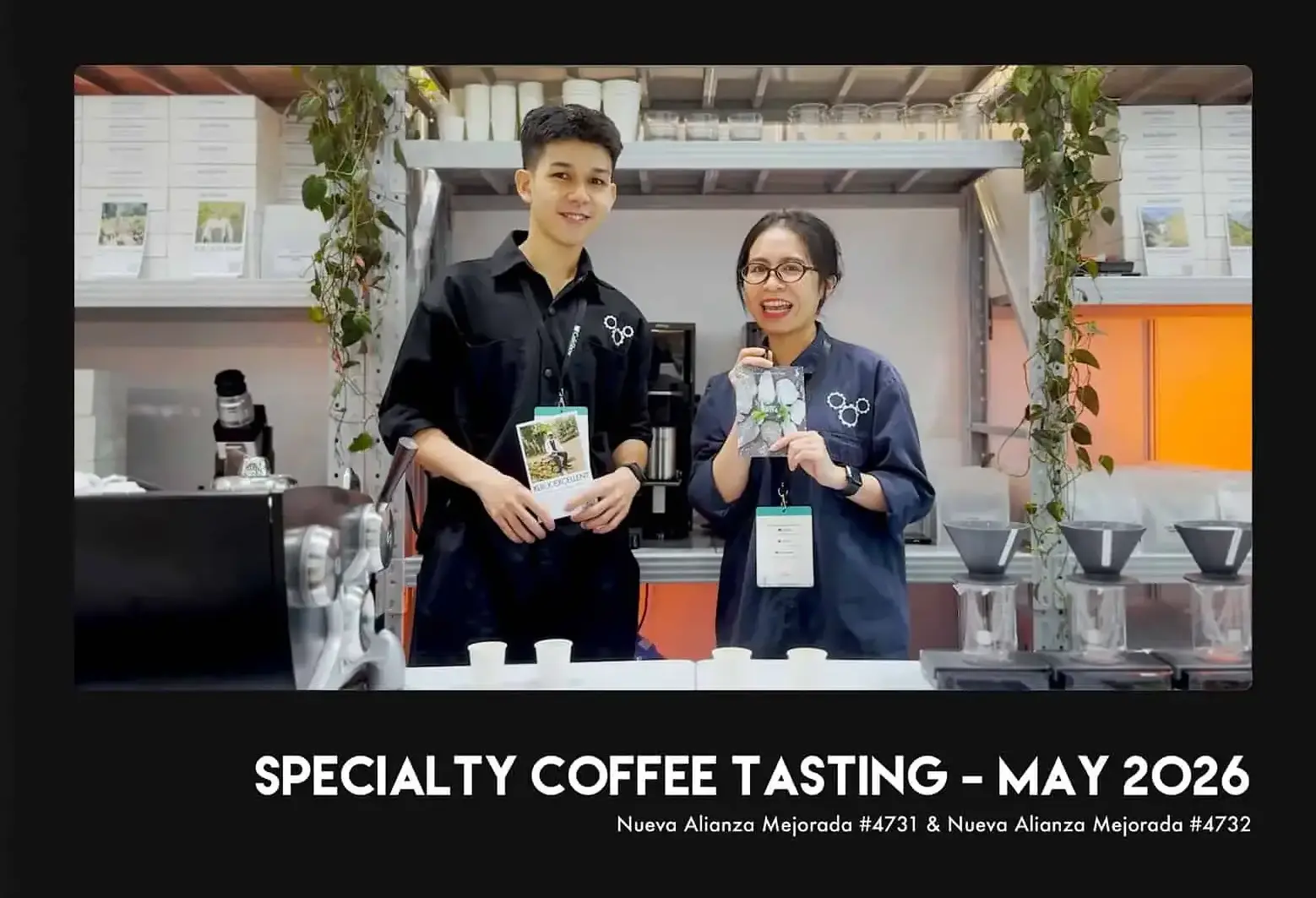
Unveiling May Discovery Subscription: Nueva Alianza Mejorada #4731 & Nueva Alianza Mejorada #4732
The Discovery Subscription is a silent dialogue, a place where the soul of the connoisseur finds a harmonious beat with distant lands. Like a transparent lens, we become storytellers, meticulously peeling back layers of cultural sediment, the breath of the soil, and the human philosophies hidden within every coffee bean.
May arrives with brilliant streaks of golden sunlight, a time when we long to hide beneath the lush, dew-drenched canopies of Santa Teresa. Amidst the silence of the Andes, when compassion touches Mother Earth, what will we hear? Perhaps it is a sweet response that nature reserves solely for souls who know how to wait patiently.

- Taste the Origin
Nueva Alianza Pacamara #4733 – The essence of Cusco with elegant jasmine notes
Nueva Alianza Pacamara #4733 is a testament to the miraculous terroir and dedicated cultivation of the renowned Cusco region. The combination of the characteristic Pacamara bean size and ideal altitude has forged a flavor profile of immense sophistication and depth. From the very first moment, this lot captivates with its elegant jasmine notes, radiating a gentle, pure fragrance akin to a flower blooming in the morning dew.

- Taste the Origin
Nueva Alianza Orange Gesha #4737 – An expedition of recessive genetic traits into the sensory realm
In a world of authenticity, Nueva Alianza Orange Gesha #4737 represents the proud emergence of rare biological traits often obscured by nature’s universality. Carrying a recessive genetic code, Lot #4737 embarks on an “expedition” into the connoisseur’s mind, where record-breaking fructose concentrations are released to perfectly fill every sensory gap with absolute smoothness and purity.
Through washed processing and extremely-light roasting, vibrant citrus nuances and ethereal floral notes, once hidden deep within the genetic structure, now manifest with power, transforming the tasting experience into a journey of ontological completion, where the rarity of recessive genes finally reigns supreme in flavor.

Specialty Coffee in Vietnam
BRAND VALUE
YOU SHOULD HAVE KNOWN
XLIII Coffee has been aiming to become a big, impactful company with social responsibilities,
have access to high-quality raw materials and convey the complete original values of coffee to our customer
