
How to control the quality of green coffee beans of the specialty roaster?
Perhaps any specialty roaster wants to own coffee that is always as fresh and quality as the first day. But in fact, this is unthinkable because coffee is easily affected by factors of the surrounding environment. Especially when many medium and large specialty coffee roasters often have to store large quantities, the coffee in the warehouse, if not stored properly, will quickly lose its quality. How can they control the quality of the green coffee beans in an optimal way? Let’s find out with XLIII Coffee!
Why should specialty roasters control the quality of green coffee beans?
The first important reason that can be mentioned is that roasters are responsible for following food safety regulations, so they must always ensure that the coffee is free of contaminants and of standard quality. Besides, many specialty roasters spend large capital on green coffee beans, so they need to maintain and preserve the quality of their products. That way, the end consumer will experience the full range of flavors and aromas of the coffee while building trust and taste in the brand.
In addition, quality control helps the coffee taste to maintain consistency, thereby enhancing its competitive position in the hearts of consumers. For example, you order a Cerro Azul #350 coffee bag from XLIII Coffee’s latest Specialty Coffee collection. After the experience you fall in love with its tropical fruit and apple cider flavor and when you run out you order the same coffee. Then you would naturally expect this coffee bag to taste similar to the original bag. Failure to control the quality will cause the coffee taste to drop, disappointing customers. Therefore, effective inventory management and storage of coffee is extremely important for the specialty roaster.
Furthermore, if a roaster does not properly store green coffee, it can derail the previous efforts of producers and exporters who have helped maintain coffee quality throughout. supply chain. Coffee will lose its character, maybe even drop a few points on the 100 quality scale of the Specialty Coffee Association. In addition, proper green coffee inventory management helps roasters reduce waste, save costs and improve their business efficiency.

Equipment to control the quality of green coffee beans in stock
Giorgio Mosca, Export Manager at IMF Roasters, said that for roasters, it is important in the quality control process that the green bean input meets quality standards. Having a quality input that is free from defects (breaks, contamination, mold, etc.) helps maintain consistency throughout storage, roasting and final processing. IMF cleaning and sorting machines remove contaminants based on size or weight, such as twigs, rocks, dust, and material from green coffee packaging. This is an optical classifier that uses infrared refraction and a multispectral camera to identify any foreign objects based on colors and shapes invisible to the naked eye. Therefore, its cleaning and sorting system will ensure that the green coffee batch is always free of contaminants and impurities.
Next, they put great emphasis on ensuring green coffee beans in optimal environmental conditions. For example, to maintain the moisture content of green coffee from 8% to 12.5%, the storage space of the roaster should have a humidity of 60% to 65% with a temperature range of 15°C – 25°C. To do this, roasters can invest in a well-designed ventilation system.
Therefore, many roasters have used green coffee silos as a comprehensive protection solution for specialty coffee batches. These are specially designed storage bins available in different shapes and sizes. According to the Director of Exports at IMF Roasters, IMF silos help preserve freshness and quality by preventing green coffee from being exposed to moisture and oxygen. In this way, roasters can protect the green coffee from too much moisture to maintain its inherent flavor quality. In addition to storage solutions, the IMF also provides equipment for roasters to accurately measure a number of environmental factors, such as humidity and light exposure, he adds.

Techniques for quality control of inventory green coffee beans
In addition to investing in warehouse equipment, the specialty roaster also focuses on its inventory management techniques. Most specialty roasters use a “first in, first out” (FIFO) system to store and roast green coffee. For example, if a roaster has just received a batch of imported Colombian coffee. The first thing they need to do is roast the Colombian beans of the old batch. This helps roasters reduce waste and ensures that the old batch of coffee doesn’t go stale and taste bland. However, before roasting, green coffee beans must be carefully cleaned and sorted. These processes help to remove any defective beans or contaminants.

To ensure high-quality coffee, specialty roasters like XLIII Coffee pay great attention to investing in the right storage equipment and applying reliable and consistent inventory management techniques. If you want to experience the taste of fresh specialty coffee, choose XLIII Coffee!
Source: perfectdailygrind
Articles you may be interested in
– Carbon negative coffee production – The path to sustainable coffee industry development
– The GCP 2.0 Sustainable Initiative has just kicked off with a huge investment of $1.5 million
– The volatility of coffee prices in the forex market and how to balance risks

Bài viết mới

- Find the Origin
Mandela coffee variety – A convergence of generations from a masterpiece breeding strategy
Amidst the constant fluctuations of the era, Mandela emerges as a gentle yet resilient response from the soil. Instead of attempting to alter or impose upon nature, this breeding strategy is, in essence, a profound act of listening. Each Mandela coffee bean carries the bloodline of multiple generations, possessing both the serene, steadfast nature of native trees and the sparkling elegance of premium varieties. It is a sacred continuation, where the flow of generations ultimate honors the original value of the species, imparting an intact and sustainable vitality into every cup.


- Taste the Origin
Nigussie Nare – Murago Outgrowers #03028: Cultivated from the Values of Sustainable Reciprocity
Nestled beneath the shade trees of Sidama, Bensa, the Nigussie Nare – Murago Outgrowers #03028 coffee lot serves as a living testament to the values of sustainable reciprocity. This symbiosis begins with the intimate bond between a rich indigenous ecosystem and the smallholder farmers of the Murago region. Each harvested bean is the culmination of a virtuous cycle: a stable environment produces exceptional bean quality, and sustainable economic growth, in turn, continues to protect the verdant canopy of the great forest.

- Taste the Origin
Rift Valley Coffee Caucus #03757 – A Testament to Western Kenya’s Collective Spirit
Turning our gaze to the Great Rift Valley of East Africa, the fertile volcanic landscapes are witnessing an inspiring transformation. Moving away from fierce, survival-driven competition, smallholder farmers in Western Kenya have chosen to join forces, forging a resilient and unified network. The Rift Valley Coffee Caucus #03757 lot stands as the ultimate testament to this remarkable collective synergy.

- Breaking News
Airworks Coffee & XLIII Coffee – A “handshake” that brings original flavors across borders
XLIII Coffee, alongside our key wholesale partner Airworks Coffee, officially announces the latest release of specialty coffee lots for the North American market. This event reaffirms our commitment to bringing original flavors across all geographical barriers to coffee enthusiasts.
Early access (for Subscribers of Airworks): 10:00 AM (PST) | Wednesday, April 29, 2026
General access: 10:00 AM (PST) | Friday, May 1, 2026
We invite our Customers and Partners to visit (airworkscoffee.com) for detailed information and to prepare for this special release!
- Taste the Origin
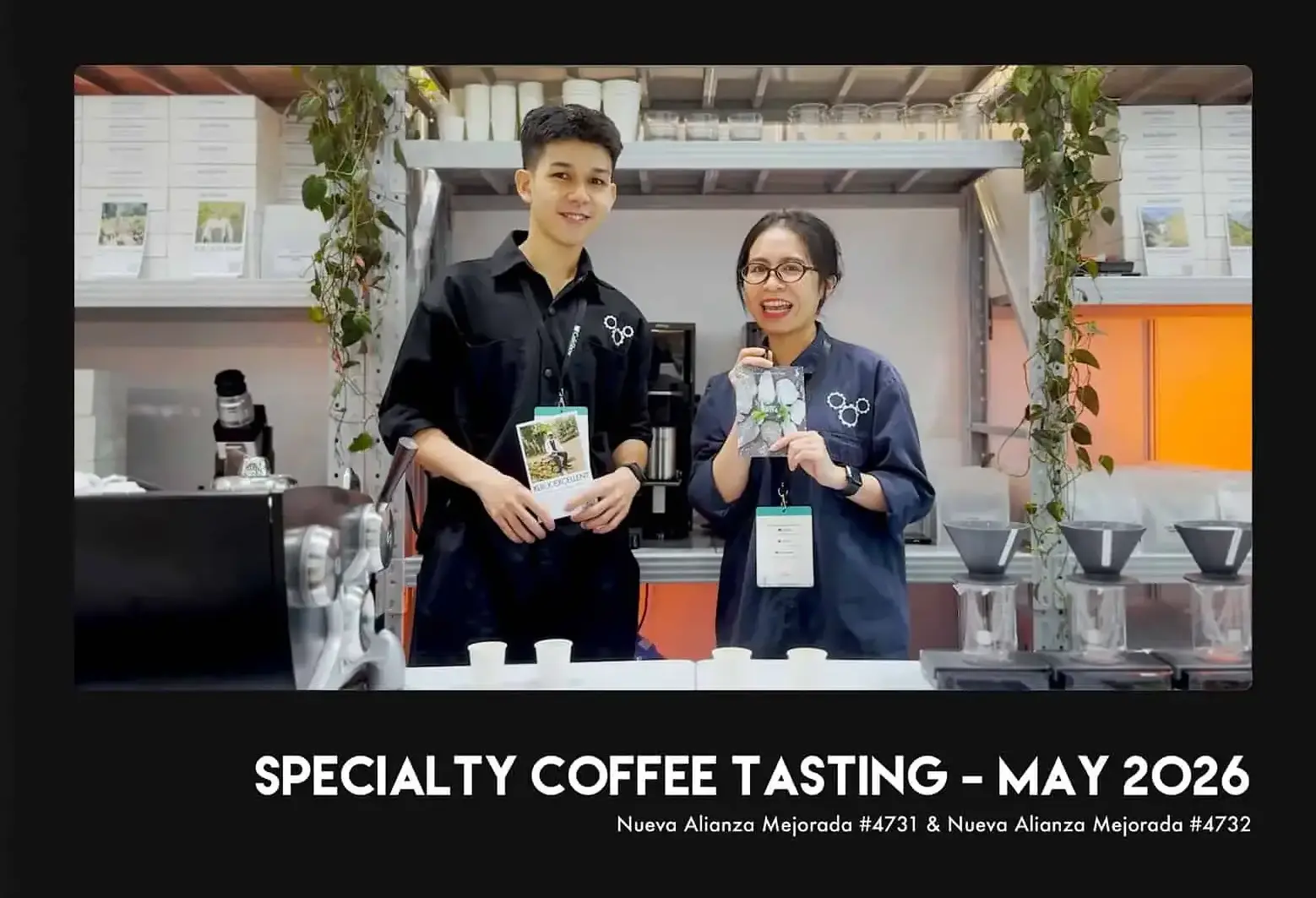
Unveiling May Discovery Subscription: Nueva Alianza Mejorada #4731 & Nueva Alianza Mejorada #4732
The Discovery Subscription is a silent dialogue, a place where the soul of the connoisseur finds a harmonious beat with distant lands. Like a transparent lens, we become storytellers, meticulously peeling back layers of cultural sediment, the breath of the soil, and the human philosophies hidden within every coffee bean.
May arrives with brilliant streaks of golden sunlight, a time when we long to hide beneath the lush, dew-drenched canopies of Santa Teresa. Amidst the silence of the Andes, when compassion touches Mother Earth, what will we hear? Perhaps it is a sweet response that nature reserves solely for souls who know how to wait patiently.

Specialty Coffee in Vietnam
BRAND VALUE
YOU SHOULD HAVE KNOWN
XLIII Coffee has been aiming to become a big, impactful company with social responsibilities,
have access to high-quality raw materials and convey the complete original values of coffee to our customer
