
How to produce sustainable coffee while maintaining coffee quality
Coffee is one of the most important agricultural products in the world providing livelihoods for more than 100 million people who grow and produce them. However, the coffee industry is facing many major challenges including climate change, pests and diseases, reduction of cultivated land, and price fluctuations. To ensure a sustainable future for the coffee industry and the coffee growing community, coffee producers need to adopt environmentally friendly farming methods while maintaining or enhancing the quality of their coffee. How to produce coffee sustainably while maintaining coffee quality? Let’s find out with XLIII Coffee!
Can coffee quality and environmental sustainability go hand in hand?
Coffee quality and environmental sustainability are closely linked. The quality and future of the coffee industry are tied to a healthy environment, because adopting high-quality coffee production practices in a sustainable way is also a way to help preserve the ecosystem. According to Flávio Franceschi – Environmental Analyst at Ipanema Coffees, if good environmental conditions are maintained and biodiversity is protected, the taste of coffee in that growing area will improve.
Antônio Michelotto, Director of Engineering, Agronomy and Certification at Ipanema Coffees, acknowledges that certain farming methods are designed to both benefit the environment, reduce water pollution and increase quality. soil can help coffee plants healthier. He said coffee is a sustainable crop. It is different from crops such as corn, sugarcane, and soybeans that have to be uprooted, affecting the soil after each harvest, causing soil degradation and loss of biodiversity. Coffee can live a long time and harvest many times to help protect the soil, reducing the risk of soil erosion. In addition, some coffee-growing areas interwoven with indigenous trees also help increase forest cover density, reduce CO2 emissions, create a living environment for wild animals, and limit environmental pollution. .

How to produce sustainable coffee while maintaining coffee quality?
Some ways to produce coffee sustainably while maintaining coffee quality are:
Improve soil quality
For sustainable coffee production while maintaining coffee quality, it is important to improve soil quality and prevent soil erosion. Soil is an essential resource for the growth and development of coffee plants, it affects the yield, quality and durability of the plant. Soil erosion will reduce the ability of the soil to hold water and nutrients, causing the deterioration of ecosystems and loss of ecological balance. To improve soil quality and prevent erosion, coffee producers can:
– Applying agroforestry farming methods, intercropping coffee with shade trees to protect the soil from the effects of sunlight, wind and rain, and provide nutrients to the soil through roots and leaves. fall off, creating favorable conditions for the growth of beneficial microorganisms in the soil and coffee
– Organic or semi-organic farming through the use of fertilizers from available resources such as coffee pods, rice straw, cattle manure, to supplement nutrients for soil and coffee plants, reduce dependence on chemical fertilizers.
– Control and implement reasonable agricultural techniques such as watering the right amount and at the right time, tilling and composting the soil, fertilizing according to the plan, pruning and harvesting coffee berries in a timely manner… to maintain soil moisture and drainage, minimizing the ingress of weeds and pests.
– Participate in sustainable coffee programs and certifications for technical and financial support in coffee production according to international standards. Sustainable coffee programs and certifications such as UTZ Certify, 4C, Rainforest Alliance, VietGAP… have criteria on land management, environmental protection and income enhancement for farmers.
Strictly control the water treatment process
Sustainable coffee production while maintaining coffee quality is an important goal for many coffee producers around the world. However, to achieve this goal, it is necessary to improve the water treatment process in the stages of coffee harvesting, processing and roasting. Water is an essential resource for the life of the coffee plant and for creating the distinctive flavor of coffee. If water is not treated efficiently and economically, it will cause environmental pollution, waste energy and reduce coffee quality. Therefore, coffee producers need to adopt advanced water treatment technologies and methods, such as the reuse of wastewater, use of natural or biological adsorbents to remove contaminants. , or use renewable energy sources to operate water treatment facilities. Thus, sustainable coffee production while maintaining coffee quality needs to improve water treatment processes to protect the environment and increase economic efficiency.
Conservation of biodiversity ecosystems
Growing coffee trees in ecosystems such as primary or regenerating forests helps protect biodiversity, maintain soil function and water cycles, and reduce the introduction of weeds and pests. Coffee in diverse ecosystems also thrives and produces better-tasting beans thanks to ideal climatic conditions and the protection of beneficial insects and animals. Some studies have shown that the presence of bees in a coffee farm can increase yields by 20-25%. They not only make pollination for coffee easy and efficient, but also help farmers earn extra income by selling honey. Flávio also says that raising more bees on a coffee farm improves air quality and balance in the environment. Therefore, besides planting trees and causing forests, producers can raise more bees to increase diversity and yield for coffee.
Limit the amount of chemical fertilizers
One of the main reasons that coffee production causes negative impacts on the environment is the excessive use of chemical fertilizers. Chemical fertilizers can increase coffee yield and quality, but can also pollute water, soil and air, reduce biodiversity and affect workers’ health.
Therefore, to produce sustainable coffee while maintaining coffee quality, it is necessary to limit the amount of chemical fertilizers. Producers can use organic fertilizers from renewable sources such as coffee bark, rice straw, cattle manure; compliance with standards and certifications for sustainable coffee production such as UTZ, Rainforest Alliance, Fairtrade; strengthen control and monitoring of the amount of chemical fertilizers used; participate in training and consulting programs on nutrient management for coffee; Collaborate with stakeholders such as local governments, NGOs, scientists to find effective and adaptive solutions. In addition, coffee growers can use disease-resistant and climate-adapted varieties to help reduce dependence on pesticides and chemical fertilizers, reduce environmental pollution and increase yields. coffee quality.
Thus, coffee quality and environmental sustainability can support and influence each other. Producers can maintain coffee quality while creating a more eco-friendly farm by using sustainable energy sources, properly disposing of waste, beekeeping, and diversity improvement. biology. If you want to enjoy the taste of sustainable coffee-growing areas, visit XLIII Coffee to experience it!
Source: perfectdailygrind
Articles you may be interested in
– Relational coffee – The link for a sustainable supply chain

Bài viết mới

- Taste the Origin
Rift Valley Coffee Caucus #03757 – A Testament to Western Kenya’s Collective Spirit
Turning our gaze to the Great Rift Valley of East Africa, the fertile volcanic landscapes are witnessing an inspiring transformation. Moving away from fierce, survival-driven competition, smallholder farmers in Western Kenya have chosen to join forces, forging a resilient and unified network. The Rift Valley Coffee Caucus #03757 lot stands as the ultimate testament to this remarkable collective synergy.

- Breaking News
Airworks Coffee & XLIII Coffee – A “handshake” that brings original flavors across borders
XLIII Coffee, alongside our key wholesale partner Airworks Coffee, officially announces the latest release of specialty coffee lots for the North American market. This event reaffirms our commitment to bringing original flavors across all geographical barriers to coffee enthusiasts.
Early access (for Subscribers of Airworks): 10:00 AM (PST) | Wednesday, April 29, 2026
General access: 10:00 AM (PST) | Friday, May 1, 2026
We invite our Customers and Partners to visit (airworkscoffee.com) for detailed information and to prepare for this special release!
- Taste the Origin
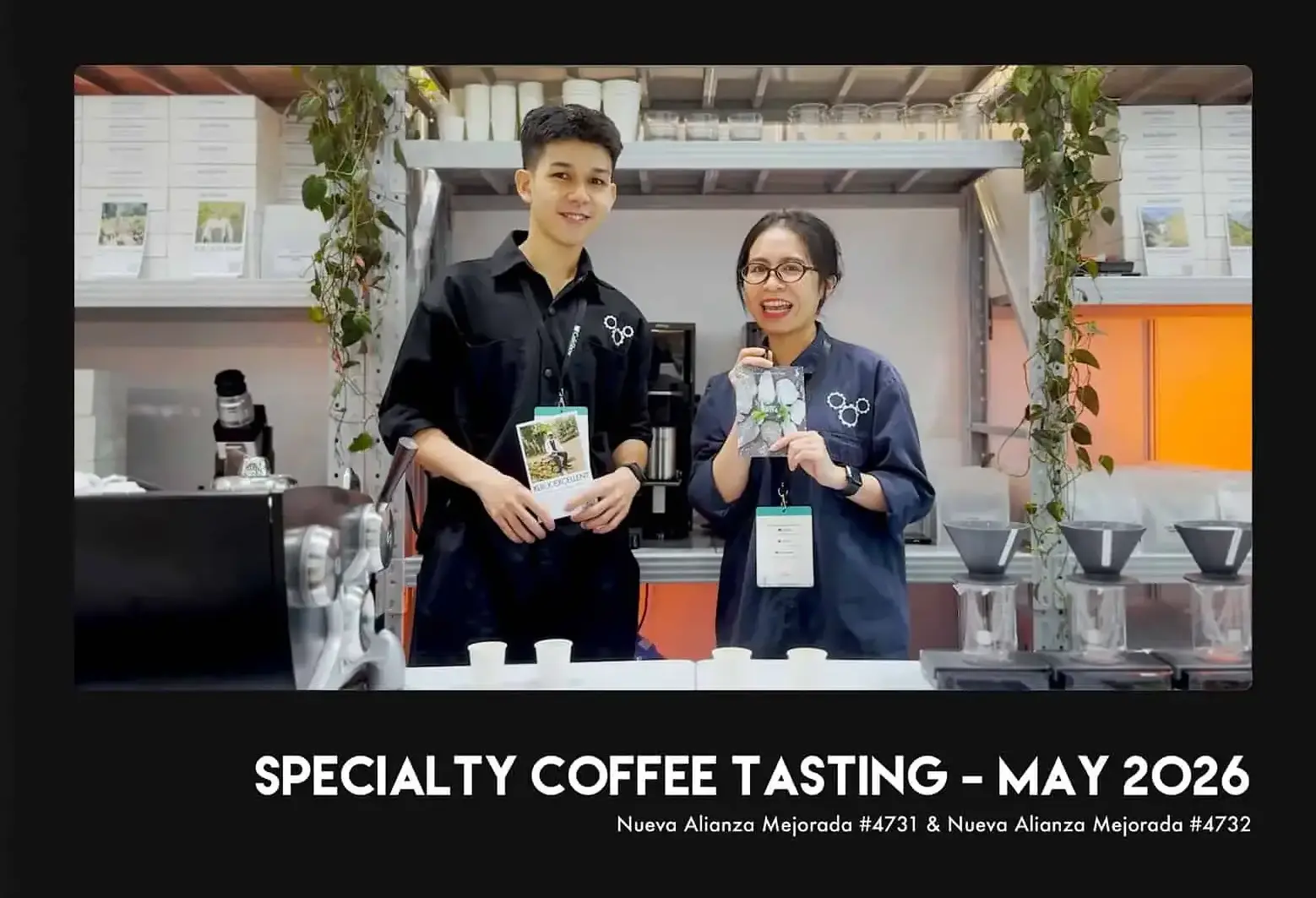
Unveiling May Discovery Subscription: Nueva Alianza Mejorada #4731 & Nueva Alianza Mejorada #4732
The Discovery Subscription is a silent dialogue, a place where the soul of the connoisseur finds a harmonious beat with distant lands. Like a transparent lens, we become storytellers, meticulously peeling back layers of cultural sediment, the breath of the soil, and the human philosophies hidden within every coffee bean.
May arrives with brilliant streaks of golden sunlight, a time when we long to hide beneath the lush, dew-drenched canopies of Santa Teresa. Amidst the silence of the Andes, when compassion touches Mother Earth, what will we hear? Perhaps it is a sweet response that nature reserves solely for souls who know how to wait patiently.

- Taste the Origin
Nueva Alianza Pacamara #4733 – The essence of Cusco with elegant jasmine notes
Nueva Alianza Pacamara #4733 is a testament to the miraculous terroir and dedicated cultivation of the renowned Cusco region. The combination of the characteristic Pacamara bean size and ideal altitude has forged a flavor profile of immense sophistication and depth. From the very first moment, this lot captivates with its elegant jasmine notes, radiating a gentle, pure fragrance akin to a flower blooming in the morning dew.

- Taste the Origin
Nueva Alianza Orange Gesha #4737 – An expedition of recessive genetic traits into the sensory realm
In a world of authenticity, Nueva Alianza Orange Gesha #4737 represents the proud emergence of rare biological traits often obscured by nature’s universality. Carrying a recessive genetic code, Lot #4737 embarks on an “expedition” into the connoisseur’s mind, where record-breaking fructose concentrations are released to perfectly fill every sensory gap with absolute smoothness and purity.
Through washed processing and extremely-light roasting, vibrant citrus nuances and ethereal floral notes, once hidden deep within the genetic structure, now manifest with power, transforming the tasting experience into a journey of ontological completion, where the rarity of recessive genes finally reigns supreme in flavor.

- Taste the Origin
Nueva Alianza Maragogipe #4735 – The “Giant” at the center of attention
Amidst a world of countless specialty coffee beans, Nueva Alianza Maragogipe #4735 emerges as a symbol of grandeur, instantly commanding attention with its distinct appearance. Affectionately dubbed the “Giant” for its impressively mutated “Elephant Bean” size, lot #4735 from Nueva Alianza stands as a testament to nature’s wonders in the Cusco region. Yet, its true allure extends far beyond its imposing exterior; hidden within these colossal beans lies a gentle “soul” blooming with pure floral and crystalline fruit notes.

Specialty Coffee in Vietnam
BRAND VALUE
YOU SHOULD HAVE KNOWN
XLIII Coffee has been aiming to become a big, impactful company with social responsibilities,
have access to high-quality raw materials and convey the complete original values of coffee to our customer
