
Pasta Classica & Specialty Coffee: Two journeys, one intersection at XLIII Coffee
When Arab traders first brought dried pasta to Sicily in the 12th century, little did they know they were sowing the seeds of a culinary legacy that would define the soul of Italy. From there, pasta began a quiet journey across the peninsula, transforming from region to region, becoming a symbol of cucina povera – the art of cooking with simple ingredients, where the heart of the dish lies in the warmth of the home kitchen. It is a story of simplicity and warmth.
In another journey, also following the footsteps of merchants, the mysterious coffee beans from the East landed in Venice in the 17th century. Italy once again became the center of attention, opening the first coffee houses in Europe and later, forever shaping the global culture of enjoyment with the invention of Espresso . This is a story of awakening, of intellectual encounters and urban life.
Two journeys, two legacies that seem to belong to two different worlds. One is the fullness and warmth of a family meal. The other is the sophistication and moment of a cup of coffee.
Centuries later, at XLIII Coffee, we decided to put these two legacies side by side. We created a stage for a profound dialogue between them. Because when we peel back the layers of habit, we are surprised to discover a common DNA, a soul woven from the same philosophical threads: the worship of raw materials, the art of craft transformation, the architecture of taste, and the philosophy of the perfect moment .
The “Materia Prima” philosophy
Art from the quintessence
The foundation of great Italian cuisine lies not in complex techniques or elaborate recipes. It lies in an almost spiritual philosophy, encapsulated in two words: ” Materia Prima” – First-class ingredients . It is the firm belief that a dish can only be great when each ingredient that goes into it is a masterpiece of nature.
In the Italian kitchen, the chef is not a creator, but a curator. His job is not to transform, but to celebrate. He lets the ingredients tell their own story.


That’s why fresh pasta needs not just flour, but Semola di grano duro , a durum wheat with a high protein content, the only thing that can create the characteristic chewiness and ” al dente ” feeling. Tomato sauce needs not just tomatoes, but craves the natural sweetness and perfect low acidity of San Marzano tomatoes , nourished by the fertile volcanic soil around Vesuvius.

This philosophy is evident in Pesto Pappardelle . It’s a rustic symphony where not a single note is out of tune. The pungency of Ligurian basil, the nuttiness of pine nuts, the richness of Parmigiano-Reggiano cheese, and the richness of extra virgin olive oil all come together. No flames or complicated techniques, just the purity of the finest ingredients.
And miraculously, this ” Materia Prima ” philosophy is the soul of the world of single origin specialty coffee .
When we talk about a coffee bean from the Sidama region of East Africa, we are also talking about “ Materia Prima ”. We are talking about red basalt soil, about altitudes above 2000 meters, about wild heirloom coffee varieties that have absorbed the essence of the earth for centuries.
At XLIII Coffee, our super light roasting technique is also an act of this philosophy. We do not try to “impose” the flavor of the roast onto the coffee bean. Instead, we use heat in the most delicate way to preserve and reveal what has already been shaped at the source.
Whether it’s an Italian grandmother selecting the freshest ingredients from the local market, or a roaster studying the characteristics of a rare batch of coffee, they all share the same truth:
True art is not about creating something out of nothing, but about recognizing and celebrating the beauty that already exists in the very essence of things.

Pasta Classica & Specialty Coffee
Transformation under the hands of the artisan
If “Materia Prima” is the soul, then the hands of the artisan are the medium through which that soul speaks. Both worlds, pasta and specialty coffee, are shaped by transformation processes that require skill, patience, and something close to dedication.
Pasta – The Art of Time and Touch
The art of making fresh pasta is a tactile dialogue. It is the chef feeling the moisture of the flour through his fingertips, using the weight of his body to knead the dough until it becomes smooth and elastic. It is the patience of rolling each strand of dough, sensing the ideal thinness not by sight, but by feel.
But the greatest transformation lies in the art of sauces – where time is the secret ingredient.
Tagliatelle alla Bolognese is a prime example. A true Bolognese sauce cannot be made in a hurry. It starts with soffritto – onions, carrots, celery are sautéed slowly in olive oil until they are soft and sweet, creating a deep layer of flavor. Then there is cottura lenta – the long simmering process, allowing the meat to melt, the sweetness of the tomatoes to blend, condensing into a rich symphony. Or the elaborate Lasagna , where the artisan patiently prepares each layer – ragù, béchamel sauce, fresh pasta, cheese – to create a harmonious and solid culinary structure.


Coffee – The Science of Transformation in Every Moment
In the world of specialty coffee, transformation is also a tightly controlled art, but on a microscopic scale and down to the second.
The first artisan is the roaster. They don’t just “cook” the beans. They “draw” a roast profile—a complex map of temperature and time tailored to each bean. Every decision, whether it’s raising the temperature by a degree or extending the “ first crack ” by a few seconds, is meant to “ unlock ” and bring out the most delicate aromatic compounds without destroying the bean’s original structure.


The second artisan is the Barista. The process of brewing a cup of pour-over coffee is a performance of concentration. From the moment the coffee “ blooms ” to release CO2, to the controlled flow of water in a steady circle, every action has a purpose. They are controlling the final transformation: selectively extracting the desired flavors from the coffee grounds into the water .
Whether it’s a wooden spoon stirring a pot of Bolognese sauce or a barista’s precise measuring device, the tools may be different, but the mindset is the same. They are both guardians of transformation, people who understand that the deepest flavors are not created, but nurtured with skill, understanding, and time.
The Architecture of Flavor
Shape and Structure
If the ingredients are the foundation and the artisan’s hand is the mason, then shape and structure are the blueprint of the culinary edifice. In both the world of pasta and specialty coffee, form is more than just aesthetics. It is a science of physical interaction, an architecture of flavor .
Pasta – Every shape has a function
The hundreds of pasta shapes in Italy are no accident. Every curve, every groove, every thickness is calculated to pair perfectly with a particular sauce.
- Wide Flat Noodles (Tagliatelle, Pappardelle) : Pasta like Tagliatelle has a large, rough surface when fresh. This is a clever design for thick meat sauces like Bolognese or the creamy sauces of Carbonara to grip, ensuring every bite is a complete blend. Pappardelle is even wider, ideal for scooping up thick, complex sauces like Pesto.
- Raviolini : With Raviolini di Carne Con Crema Tartufo, the architecture becomes even more sophisticated. The pasta shell is not just a place to hold the sauce, but has become a discreet “room”, enclosing and protecting the delicate meat filling inside. The taste experience is designed to create an explosion when the diner bites into the shell, releasing the rich flavor of the meat filling combined with the soft truffle cream sauce on the outside.


Coffee – Grind size is the blueprint for extraction
Coincidentally, this architectural thinking is precisely reflected in the art of coffee extraction, where grind size is the blueprint that determines everything. The size of each coffee bean will determine the total surface area in contact with water and the flow rate, thereby completely shaping the ” body ” (texture and richness) of the cup of coffee.
- Fine Grind : For Shots. Millions of microscopic coffee particles create a dense “wall”. When hot water is forced through under 9 bar pressure for just 25-30 seconds, it extracts a large amount of oils and compounds, creating a drink with a thick, creamy body and a dense crema .
- Medium Grind : For Filters. The table salt grind creates larger pores, allowing water to flow through in a more controlled and gentle manner. The result is a light-bodied, clear cup of coffee that highlights the delicate fruit notes.
- Coarse Grind : For Cold Brew. Large coffee beans help prevent over-extraction during long steeping times, creating a smooth, low-acid, and sweet drink.
From this, it can be seen that the Italian chef and professional barista are both architects. They understand that seemingly small elements – the shape of the pasta, the size of the coffee bean – are in fact fundamental decisions. They are the invisible structure, the skeleton on which the entire taste experience can be built, solidly and deliberately.

“Al Dente” and The Moment of Intersection
In Italian, ” Al Dente ” means ” medium done .” Technically, it’s the perfect pasta state, still with a slight chewiness at the core. But philosophically, “Al Dente” represents something much deeper: the art of capturing the perfect moment—a peak that lasts for just a moment before disappearing.
That’s the moment the chef must immediately take the pasta out of the boiling water, because even one minute later, perfection will be lost.
It’s no secret that the entire world of specialty coffee is a constant pursuit of such ” Al Dente moments “. The golden 25-30 seconds it takes to extract the perfect shot of coffee, where acidity, sweetness, etc. reach a state of absolute balance. It’s the 30-second ” bloom ” moment when brewing a filter, where the coffee’s aroma is most intense. It’s the optimal moment when a cup of coffee cools down just enough for the most complex notes to be revealed.
At XLIII Coffee, this philosophy is not just applied individually. It becomes a bridge to create magical moments of intersection at the dining table.
- A rich, creamy plate of Tagliatelle alla Carbonara, rich in guanciale and egg yolk, cooked al dente to perfection, paired with a cup of Ethiopia Natural coffee with a tart, berry-forward finish. The acidity cuts through the richness, delicately cleansing the palate, leaving the next bite of pasta as satisfying as the first.
- Or the combination of Raviolini di Carne con Crema Tartufo with its earthy truffle aroma, paired with a shot of Brazilian espresso with a full body and chocolatey finish. There is no contrast here, but a resonance, where the umami of the mushrooms and meat is pushed to new heights by the depth and richness of the coffee.
Finally , “Al Dente” is also a philosophy of connection. An Italian meal is only truly complete when there is a gathering, and a cup of specialty coffee is only meaningful when enjoyed in a space for connection.
And so, we invite you to be a part of this conversation. Whether you are looking for a cozy meal in the heart of Saigon Ben Nghe, a sophisticated date in Thao Dien, a different culinary experience on the coast of Da Nang, or a cultural perspective from the heart of ancient Hanoi, we believe that the intersection of Pasta Classica and Specialty Coffee will bring a memorable experience.

Where the dialogues take place
- A peaceful corner in Saigon :
XLIII Coffee – 19 Road No.2 Lang Bao Chi, An Khanh, Ho Chi Minh City - An oasis in the heart of Saigon :
XLIII Coffee – 1178A Pasteur, Sai Gon, Ho Chi Minh City - An experience on the beach in Da Nang :
XLIII Coffee – Lot 422 Ngo Thi Si, Ngu Hanh Son, Da Nang City - A date with historic Hanoi:
XLIII Coffee – 2nd Floor, 2D Quang Trung, Hoan Kiem, Hanoi

Bài viết mới

- Taste the Origin
Nigussie Nare – Murago Outgrowers #03028: Cultivated from the Values of Sustainable Reciprocity
Nestled beneath the shade trees of Sidama, Bensa, the Nigussie Nare – Murago Outgrowers #03028 coffee lot serves as a living testament to the values of sustainable reciprocity. This symbiosis begins with the intimate bond between a rich indigenous ecosystem and the smallholder farmers of the Murago region. Each harvested bean is the culmination of a virtuous cycle: a stable environment produces exceptional bean quality, and sustainable economic growth, in turn, continues to protect the verdant canopy of the great forest.

- Taste the Origin
Rift Valley Coffee Caucus #03757 – A Testament to Western Kenya’s Collective Spirit
Turning our gaze to the Great Rift Valley of East Africa, the fertile volcanic landscapes are witnessing an inspiring transformation. Moving away from fierce, survival-driven competition, smallholder farmers in Western Kenya have chosen to join forces, forging a resilient and unified network. The Rift Valley Coffee Caucus #03757 lot stands as the ultimate testament to this remarkable collective synergy.

- Breaking News
Airworks Coffee & XLIII Coffee – A “handshake” that brings original flavors across borders
XLIII Coffee, alongside our key wholesale partner Airworks Coffee, officially announces the latest release of specialty coffee lots for the North American market. This event reaffirms our commitment to bringing original flavors across all geographical barriers to coffee enthusiasts.
Early access (for Subscribers of Airworks): 10:00 AM (PST) | Wednesday, April 29, 2026
General access: 10:00 AM (PST) | Friday, May 1, 2026
We invite our Customers and Partners to visit (airworkscoffee.com) for detailed information and to prepare for this special release!
- Taste the Origin
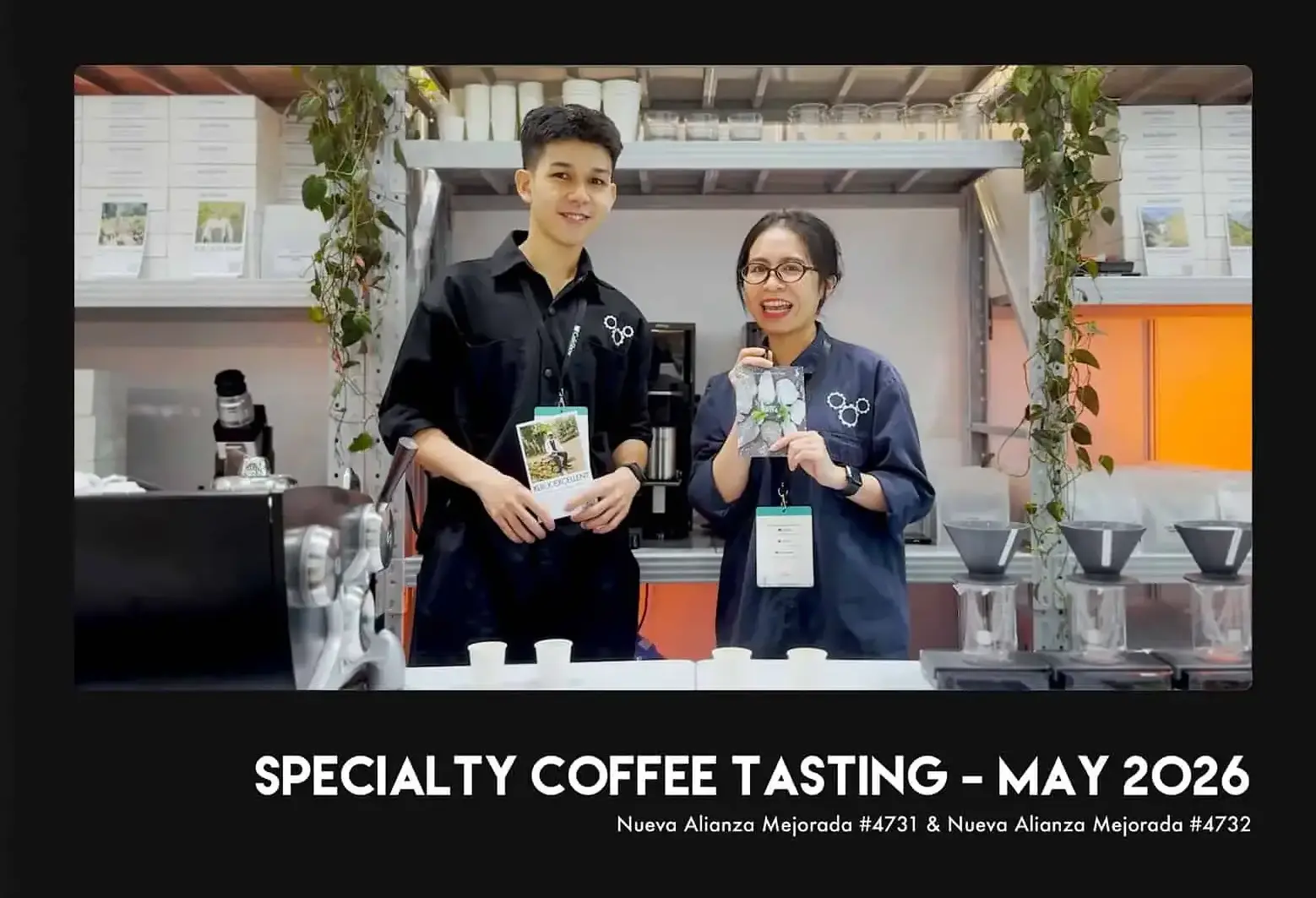
Unveiling May Discovery Subscription: Nueva Alianza Mejorada #4731 & Nueva Alianza Mejorada #4732
The Discovery Subscription is a silent dialogue, a place where the soul of the connoisseur finds a harmonious beat with distant lands. Like a transparent lens, we become storytellers, meticulously peeling back layers of cultural sediment, the breath of the soil, and the human philosophies hidden within every coffee bean.
May arrives with brilliant streaks of golden sunlight, a time when we long to hide beneath the lush, dew-drenched canopies of Santa Teresa. Amidst the silence of the Andes, when compassion touches Mother Earth, what will we hear? Perhaps it is a sweet response that nature reserves solely for souls who know how to wait patiently.

- Taste the Origin
Nueva Alianza Pacamara #4733 – The essence of Cusco with elegant jasmine notes
Nueva Alianza Pacamara #4733 is a testament to the miraculous terroir and dedicated cultivation of the renowned Cusco region. The combination of the characteristic Pacamara bean size and ideal altitude has forged a flavor profile of immense sophistication and depth. From the very first moment, this lot captivates with its elegant jasmine notes, radiating a gentle, pure fragrance akin to a flower blooming in the morning dew.

- Taste the Origin
Nueva Alianza Orange Gesha #4737 – An expedition of recessive genetic traits into the sensory realm
In a world of authenticity, Nueva Alianza Orange Gesha #4737 represents the proud emergence of rare biological traits often obscured by nature’s universality. Carrying a recessive genetic code, Lot #4737 embarks on an “expedition” into the connoisseur’s mind, where record-breaking fructose concentrations are released to perfectly fill every sensory gap with absolute smoothness and purity.
Through washed processing and extremely-light roasting, vibrant citrus nuances and ethereal floral notes, once hidden deep within the genetic structure, now manifest with power, transforming the tasting experience into a journey of ontological completion, where the rarity of recessive genes finally reigns supreme in flavor.

Specialty Coffee in Vietnam
BRAND VALUE
YOU SHOULD HAVE KNOWN
XLIII Coffee has been aiming to become a big, impactful company with social responsibilities,
have access to high-quality raw materials and convey the complete original values of coffee to our customer
