
Is precision agriculture the future of sustainable coffee?
Precision agriculture is emerging as a transformative force, reshaping the global coffee industry. With its ability to optimize resources, improve quality, and protect the environment, precision agriculture is proving to be a key player in the future of coffee.
I. Definition and vision of precision agriculture
Precision Agriculture, or Precision Coffee Growing (PCG) in the coffee sector, is a data-driven approach aimed at optimizing the production process. According to the Food and Agriculture Organization (FAO), it involves using integrated information technology to collect and analyze data from various sources, supporting decision-making across the entire coffee value chain.
How it Differs from Traditional Farming
PCG introduces three significant innovations in coffee farming:
- Data-Driven Management: Instead of relying on experience and qualitative observations, PCG uses quantitative data from sensors, satellites, and measurement devices to make accurate decisions.
- High Precision: Every activity, from fertilization and irrigation to harvesting, is calculated and executed with high precision based on the actual needs of each cultivation area.
- Predictive Capability: Technology enables the prediction of potential issues and planning responses before they impact coffee yield and quality.
A Vision for Sustainable Development
PCG plays a crucial role in promoting sustainability in the coffee industry through three main aspects:
- Resource Efficiency: Research from the University of California, Davis indicates that adopting PCG can reduce water usage by up to 30% without affecting yields. Moreover, optimizing the use of fertilizers and other inputs minimizes environmental impact.
- Consistent Quality: By closely monitoring growth factors, PCG ensures the stability and predictability of the final product’s quality.
- Supply Chain Transparency: Comprehensive data systems allow for traceability, enabling tracking of all production stages, catering to the growing consumer demand for product transparency.

Since early 2023, Helena Coffee, based in Vietnam, has integrated drone technology into coffee and industrial crop cultivation. This advanced technology uses sophisticated sensors and digital imaging to provide detailed and accurate data on crop health and needs, signaling where attention is required and optimizing overall output.
II. Core elements of precision agriculture
Technological Foundation
Precision agriculture in coffee relies on a combination of advanced technologies. GPS, remote sensing, and IoT (Internet of Things) devices form a comprehensive data collection network. Research from Brazil’s Agricultural Technology Institute suggests that integrating these technologies can increase resource efficiency by up to 40%.
At Mió, a pioneering coffee farm in Brazil, precision agriculture has delivered impressive results. The farm uses an integrated platform from Solinftec and partners to collect data from multiple sources:
- Satellite imagery for monitoring plant health
- Weather data for forecasting and planning
- Soil sensors for moisture and nutrient measurement
- Machine performance tracking systems

Using the highest precision evaluations, Mió has developed a mapping system marked with thousands of yellow dots, pinpointing the exact location of each coffee plant in perfectly aligned rows. This meticulous approach optimizes planting for maximum efficiency and productivity.
Smart Data Management
The core of precision agriculture is processing and analyzing large volumes of data to make informed decisions. Research published in Coffee Science by Brazil’s Agricultural Technology Institute highlights how modern management systems integrate data from sensors and IoT devices to optimize resource allocation. At Mió Coffee Farm, these systems can accurately calculate the water required for each area based on soil moisture, weather conditions, and plant development stages, automatically adjusting irrigation schedules.
In terms of quality control, smart data management systems act like virtual supervisors, continuously monitoring growth indicators and environmental conditions. According to Ana Luiza Pellicer, COO of Mió Coffee Farm, any unusual indicators trigger immediate alerts, allowing timely intervention to maintain optimal quality.
Enhanced data management also significantly improves product traceability. Research from the University of California, Davis, shows that detailed tracking from seed origin to harvest and processing can increase product value by up to 20% due to transparency. This meets consumer demand while helping producers identify and improve areas within their production processes.

Beyond Mió Coffee Farm, Ipanema Coffees—a 4,300-hectare coffee estate spanning three locations in Minas Gerais, Brazil—is also embracing precision agriculture. They have made significant investments in a semi-automated irrigation system, which integrates water deficit measurements and weather conditions to provide tailored recommendations for each area. This investment is helping them mitigate the impact of climate change.
III. Future and opportunities with precision agriculture
According to the International Coffee Organization (ICO), precision agriculture is becoming one of the main drivers of innovation in the global coffee industry, fueled by advancements in AI and machine learning. At pioneering farms like Mió Coffee Farm, using machine learning algorithms to analyze data has improved the accuracy of yield and quality predictions by up to 85%.
As the world’s second-largest coffee producer, Vietnam has a significant opportunity to implement precision agriculture. A study by Columbia University indicates that the geographic and climatic conditions of Vietnam’s coffee-growing regions are particularly suitable for precision farming technologies. The trend toward specialty coffee in Vietnam is driving the adoption of these technologies.
The integration of precision agriculture contributes to increased productivity, operational efficiency, and final product quality. It also strengthens the competitiveness of coffee farming in the global agricultural landscape.
Impacts Across the Coffee Value Chain
A report by World Coffee Portal identifies three key impacts:
- For Farmers: Technology helps optimize production costs and boost productivity. Data from precision agriculture farms in Brazil show input costs can be reduced by up to 30%, while yields increase by 20-25%.
- For Processors and Exporters: The ability to trace origins and control quality is greatly enhanced. According to the Specialty Coffee Association (SCA), products with full traceability can command a 15-20% higher price than conventional products.
- For Consumers: Consumers benefit from greater transparency regarding the origin and consistent quality of the coffee. A survey by the National Coffee Association (NCA) found that 73% of consumers are willing to pay a premium for coffee with comprehensive traceability information.

In an effort to convey value across the entire supply chain, including its foundation in precision agriculture, XLIII Coffee emphasizes traceability in its sales services. This commitment provides customers with a comprehensive view, enhancing the insight behind each purchasing decision.
IV. Development directions in the Specialty Coffee industry
XLIII Coffee believes the future of coffee lies at the intersection of technology and traditional values. While precision agriculture unlocks new possibilities in quality control and production efficiency, the industry’s core values—craftsmanship and cultural heritage—must continue to be preserved and promoted. This trend is also observed in longstanding coffee regions like Ethiopia, where traditional farming methods are being optimized through data and modern technology.
World Coffee Research highlights that combining precision agriculture with sustainable farming principles is creating a new development model for the industry. This model not only ensures product quality but also contributes to environmental protection and improves the livelihoods of farming communities. This approach aligns with XLIII Coffee’s commitment to a responsible and sustainable coffee industry.

What precision agriculture has achieved aligns seamlessly with XLIII Coffee’s vision of a coffee industry where technology and tradition coexist and grow together, aiming to add value across the entire supply chain.
In summary:
Precision agriculture is not just a fleeting technological trend; it is gradually becoming the foundation for sustainable growth in the coffee industry. By optimizing production processes, enhancing quality, and ensuring transparency, this approach is proving to be essential in shaping the future of the global coffee sector.
Images used in this article are owned and curated by XLIII Coffee.
V. Frequently asked questions
How does precision agriculture differ from traditional methods?
Precision agriculture uses data and technology to make decisions, whereas traditional methods rely on experience and qualitative observation. Data from sensors, satellites, and devices enable the optimization of all aspects of farming.
Is the investment in precision agriculture expensive?
According to World Coffee Research, while initial investment costs can be high, the average payback period is just 2-3 years due to reduced operating costs and increased productivity.
How does precision agriculture affect coffee quality?
SCA reports that farms using precision agriculture often achieve higher and more stable sensory scores. About 85% of batches from these farms meet specialty standards, compared to 60% for traditional methods.
How can technology and traditional values be balanced?
Ana Luiza Pellicer from Mió Coffee Farm suggests using technology to optimize traditional methods rather than replace them. Technology should support, while still maintaining the core values of coffee farming.
What is the future of precision agriculture in coffee?
World Coffee Portal predicts that by 2030, around 60% of specialty coffee-growing areas globally will adopt some form of precision agriculture, driven by increasing demand for sustainability and transparency.

Bài viết mới

- Taste the Origin
Nigussie Nare – Murago Outgrowers #03028: Cultivated from the Values of Sustainable Reciprocity
Nestled beneath the shade trees of Sidama, Bensa, the Nigussie Nare – Murago Outgrowers #03028 coffee lot serves as a living testament to the values of sustainable reciprocity. This symbiosis begins with the intimate bond between a rich indigenous ecosystem and the smallholder farmers of the Murago region. Each harvested bean is the culmination of a virtuous cycle: a stable environment produces exceptional bean quality, and sustainable economic growth, in turn, continues to protect the verdant canopy of the great forest.

- Taste the Origin
Rift Valley Coffee Caucus #03757 – A Testament to Western Kenya’s Collective Spirit
Turning our gaze to the Great Rift Valley of East Africa, the fertile volcanic landscapes are witnessing an inspiring transformation. Moving away from fierce, survival-driven competition, smallholder farmers in Western Kenya have chosen to join forces, forging a resilient and unified network. The Rift Valley Coffee Caucus #03757 lot stands as the ultimate testament to this remarkable collective synergy.

- Breaking News
Airworks Coffee & XLIII Coffee – A “handshake” that brings original flavors across borders
XLIII Coffee, alongside our key wholesale partner Airworks Coffee, officially announces the latest release of specialty coffee lots for the North American market. This event reaffirms our commitment to bringing original flavors across all geographical barriers to coffee enthusiasts.
Early access (for Subscribers of Airworks): 10:00 AM (PST) | Wednesday, April 29, 2026
General access: 10:00 AM (PST) | Friday, May 1, 2026
We invite our Customers and Partners to visit (airworkscoffee.com) for detailed information and to prepare for this special release!
- Taste the Origin
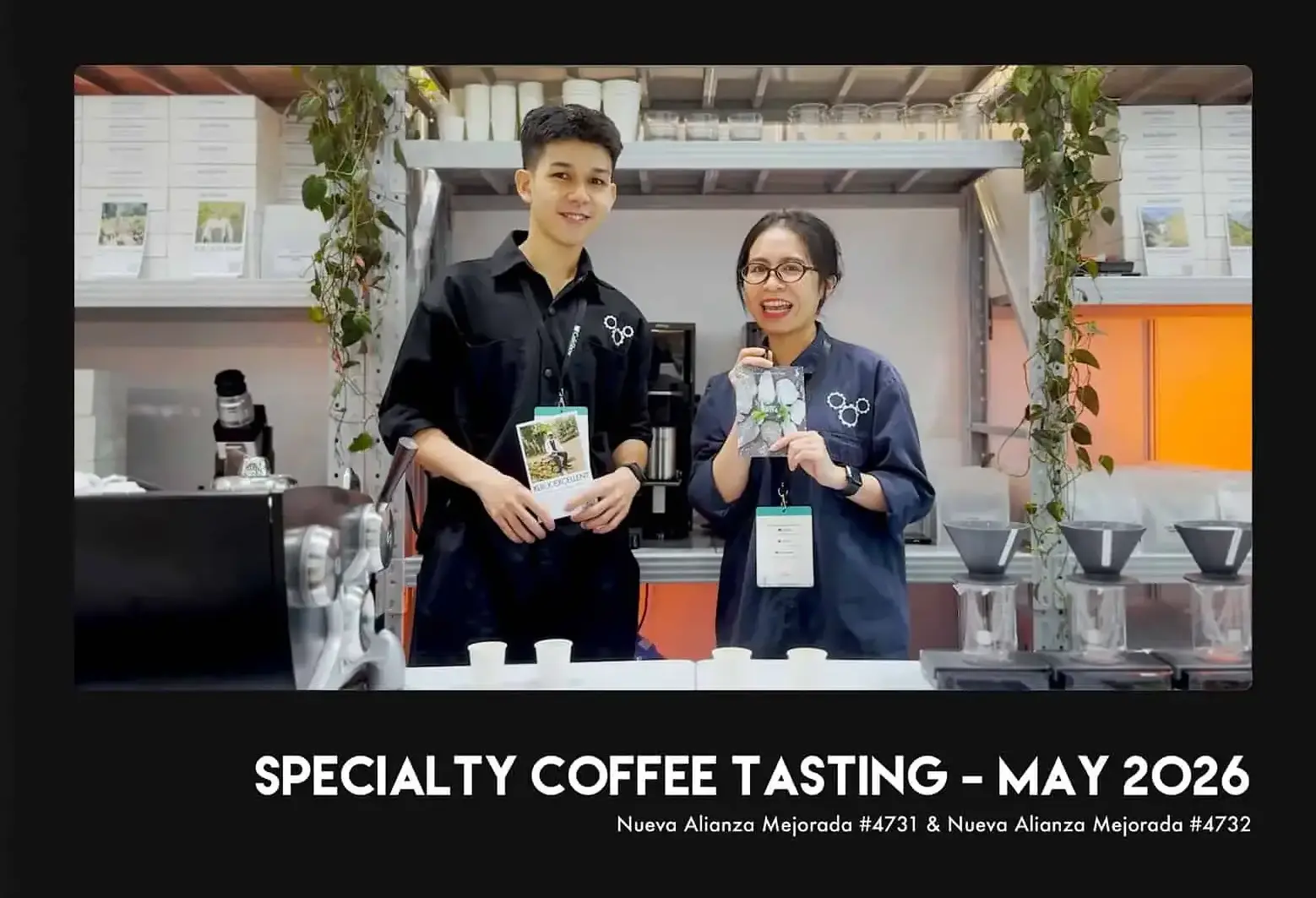
Unveiling May Discovery Subscription: Nueva Alianza Mejorada #4731 & Nueva Alianza Mejorada #4732
The Discovery Subscription is a silent dialogue, a place where the soul of the connoisseur finds a harmonious beat with distant lands. Like a transparent lens, we become storytellers, meticulously peeling back layers of cultural sediment, the breath of the soil, and the human philosophies hidden within every coffee bean.
May arrives with brilliant streaks of golden sunlight, a time when we long to hide beneath the lush, dew-drenched canopies of Santa Teresa. Amidst the silence of the Andes, when compassion touches Mother Earth, what will we hear? Perhaps it is a sweet response that nature reserves solely for souls who know how to wait patiently.

- Taste the Origin
Nueva Alianza Pacamara #4733 – The essence of Cusco with elegant jasmine notes
Nueva Alianza Pacamara #4733 is a testament to the miraculous terroir and dedicated cultivation of the renowned Cusco region. The combination of the characteristic Pacamara bean size and ideal altitude has forged a flavor profile of immense sophistication and depth. From the very first moment, this lot captivates with its elegant jasmine notes, radiating a gentle, pure fragrance akin to a flower blooming in the morning dew.

- Taste the Origin
Nueva Alianza Orange Gesha #4737 – An expedition of recessive genetic traits into the sensory realm
In a world of authenticity, Nueva Alianza Orange Gesha #4737 represents the proud emergence of rare biological traits often obscured by nature’s universality. Carrying a recessive genetic code, Lot #4737 embarks on an “expedition” into the connoisseur’s mind, where record-breaking fructose concentrations are released to perfectly fill every sensory gap with absolute smoothness and purity.
Through washed processing and extremely-light roasting, vibrant citrus nuances and ethereal floral notes, once hidden deep within the genetic structure, now manifest with power, transforming the tasting experience into a journey of ontological completion, where the rarity of recessive genes finally reigns supreme in flavor.

Specialty Coffee in Vietnam
BRAND VALUE
YOU SHOULD HAVE KNOWN
XLIII Coffee has been aiming to become a big, impactful company with social responsibilities,
have access to high-quality raw materials and convey the complete original values of coffee to our customer
