
Has Vietnam’s Specialty Coffee region taken shape?
Vietnamese coffee is traditionally associated with strong, bitter black coffee. However, a new coffee world is emerging—Specialty Coffee. This slow yet strong emergence is reshaping Vietnam’s coffee market. In this complex interplay, many overlapping definitions have become confusing. This article will provide a comprehensive view of the context of Specialty Coffee in Vietnam and help you answer whether Vietnam’s Specialty Coffee region truly exists or is still in the making.
Table of Contents
- 1. Are Vietnamese Specialty Coffee and local Specialty Coffee the same?
- 2. How XLIII Coffee pioneered Specialty Coffee in Vietnam
- 3. Overview of Vietnam's Coffee Industry
- 4. Development of Vietnam's Specialty Coffee regions
- 5. Role of businesses in the future of Vietnam's Specialty Coffee regions
- 6. Promising regions for Specialty Coffee in Vietnam
- 7. Path to developing Vietnam's Specialty Coffee regions
- FAQs
1. Are Vietnamese Specialty Coffee and local Specialty Coffee the same?
To avoid confusion, it’s essential to understand these three types of coffee:
- Fine Robusta: Comparable to a professional athlete, Fine Robusta is carefully selected from the healthiest coffee plants, offering a strong, slightly bitter taste. While superior to regular Robusta, it doesn’t match the complexity of Specialty Coffee.
- Local Specialty Coffee: This is like a traditional dish of a region, with each area having distinct coffee varieties, reflecting the region’s natural conditions, climate, and culture.
- Specialty Coffee: Defined by the Specialty Coffee Association (SCA), this term refers to high-quality Arabica coffee scoring 80 or above on a 100-point scale. These coffees offer unique flavors like floral, fruity, or chocolate notes and meet criteria of sustainability, transparency, and ethical production.
Why is there confusion?
- Names: All three are referred to as “specialty,” causing consumer confusion.
- Quality: Fine Robusta and local specialty coffee can be excellent but may not meet Specialty Coffee standards.
- Marketing: Producers sometimes misuse “specialty coffee,” making it hard for consumers to differentiate.

Specialty Coffee demands higher quality standards than what we typically understand as “specialty coffee.” Each bean is not just a local product but a masterpiece of nature and human effort.
Why clear distinction matters
- Consumer choice: Helps consumers choose the right coffee for their preferences.
- Vietnamese coffee development: Clarifying distinctions aids producers and exporters in improving product quality.
- Brand building: Producing true Specialty Coffee helps Vietnam establish its position on the global coffee map.
2. How XLIII Coffee pioneered Specialty Coffee in Vietnam
XLIII Coffee aims to build a transparent, sustainable, ethical, and responsible coffee industry, bringing Specialty Coffee closer to Vietnamese consumers. By importing high-quality beans and combining them with meticulous roasting processes, they aim to offer an authentic coffee experience.
However, XLIII Coffee is keenly interested in whether Vietnam, with its abundant natural resources and labor, can produce its own unique Specialty Coffee.
With a tropical climate, fertile red basalt soil, and a long coffee-growing tradition, Vietnam has the potential to become a high-quality Specialty Coffee producer. Achieving this goal requires overcoming challenges, including improving plant varieties, cultivation techniques, and investing in modern processing technology.
Producing Specialty Coffee is not just economic activity but a journey celebrating cultural values. Each bean tells a story of the land, climate, people, and the farmers’ secrets passed down through generations.

The Coffee Tag system, pioneered by XLIII Coffee, enhances transparency about Specialty Coffee varieties grown in unique regions worldwide.
3. Overview of Vietnam's Coffee Industry
Coffee as a mainstay crop
Coffee is one of Vietnam’s major export commodities, with revenues reaching billions of USD annually. Primarily Robusta, it constitutes about 90% of the country’s coffee exports, with Vietnam supplying over half of the global Robusta supply.
Economic contributions
The coffee sector contributes 2-3% to Vietnam’s GDP annually. From 2015-2020, coffee exports maintained an 8-10% growth rate, underscoring its importance in national economic growth. For example, Daklak produces over 400,000 tons of coffee yearly, transforming it from a poor province to an economically growing region.
Moreover, coffee is the primary income source for about 2.5 million farmers and workers, accounting for over 20% of Vietnam’s agricultural workforce. Coffee-centric regions like the Central Highlands have seen significant rural development due to coffee income.

Coffee is one of Vietnam’s major export commodities, generating billions of USD annually.
4. Development of Vietnam's Specialty Coffee regions
Vietnam has great potential for Specialty Coffee production, but most coffee cultivation focuses on Robusta, which is high-yielding but less flavorful than Arabica.
Challenges facing Vietnamese Specialty Coffee regions
Plant varieties and genetics
- Limited gene diversity: Arabica varieties grown in Vietnam are mostly hybrids with fewer distinct flavor characteristics.
- Adaptability: Finding Arabica varieties that thrive in Vietnam’s climate and soil is challenging.
Cultivation techniques
- Lack of knowledge: Many Vietnamese farmers lack the knowledge of sustainable practices, like intercropping and organic fertilization.
- Lack of capital: Investing in modern farming technology requires significant capital, which many farmers lack.

Introduced to Vietnam in the 19th century by the French, coffee was primarily Robusta, with Arabica being nearly non-existent.
Processing
- Lack of equipment: Many processing facilities use outdated equipment, affecting coffee quality.
- Lack of skilled workforce: Specialty Coffee processing requires high skill levels, which are limited.
Infrastructure
- Transportation: Poor road conditions hinder coffee transport to processing centers.
- Cold storage: A lack of modern cold storage facilities reduces product quality.
Market Systems
- Underdeveloped systems: Vietnam’s Specialty Coffee distribution channels are still in their infancy.
Potential of Vietnam’s Specialty Coffee industry
Since 2010, Specialty Coffee has gained attention from Vietnamese consumers, especially the youth and coffee enthusiasts. This trend extends beyond coffee tasting to include roasting and brewing methods. Competitions like the Vietnam Barista Championship and Vietnam Brewers Cup have raised awareness and fostered a generation of skilled and passionate baristas.
Specialty Coffee’s Promising Potential:
Global market demand
- Consumer trends: Consumers increasingly prefer clean, organic products with clear origins.
- High value: Specialty Coffee’s economic value exceeds that of ordinary coffee, offering attractive profits for farmers.
Supportive policies
- Government: Vietnam’s government supports coffee development with financial aid and technology transfer programs.
- International organizations: Entities like USAID and GIZ assist Vietnam in sustainable coffee development.
Coffee tourism potential
Tourism integration: Coffee tourism promotes Vietnamese coffee to international visitors and creates local jobs.

With rising global demand for Specialty Coffee, particularly in premium markets like North America, Europe, and Japan, Vietnamese farmers have the opportunity to export their products worldwide at higher values.
5. Role of businesses in the future of Vietnam's Specialty Coffee regions
- Pioneering and leading: Businesses should introduce and develop Vietnam’s Specialty Coffee market, educating consumers and promoting awareness.
- Supply chain connection: They should connect farmers and consumers, ensuring a transparent, sustainable supply chain.
- R&D investment: Businesses must invest in coffee product development, roasting methods, and modern brewing techniques to enhance quality.
- Community building: Companies should create coffee communities, organizing events and workshops to share knowledge and expertise.
XLIII Coffee exemplifies this role by:
- Training: XLIII Coffee regularly conducts coffee training for its team and shares information with consumers to enhance their knowledge of Specialty Coffee.
- Partnerships: XLIII Coffee collaborates with cooperatives, washing stations, and processing plants to ensure quality and supply stability.
- Equipment investment: They invest in modern roasting equipment to optimize roasting and preserve coffee’s natural flavors.
- Unique coffee Experience: XLIII Coffee creates an engaging coffee experience, helping customers understand Specialty Coffee’s intricacies and encouraging sustainable consumer choices.
6. Promising regions for Specialty Coffee in Vietnam
The Central Highlands and Lam Dong have long been coffee-growing areas, but developing Specialty Coffee requires focusing on regions suitable for Arabica.
Potential future Specialty Coffee regions:
- Lam Dong: With its cool climate, nutrient-rich red basalt soil, and ideal altitude, Lam Dong is the cradle of Arabica in Vietnam. Areas like Da Lat and Cau Dat are known for high-quality Arabica, such as Geisha, Bourbon, and Typica.
- Dak Lak: Famous for Robusta, Dak Lak’s highland areas like Krong Nang and Ea H’leo are suitable for Arabica cultivation.
- Gia Lai: Similar to Dak Lak, Gia Lai’s highland areas like Chu Pah and Mang Yang offer favorable conditions for Arabica, known for their robust flavors.
Northern provinces also show potential:
- Son La: With vast highlands and a cool climate, Son La has the potential to develop high-quality Arabica.
- Dien Bien: This province has highland areas suitable for Arabica cultivation.
Why these regions are valued
- Climate: Cool, humid climates and day-night temperature variations enhance coffee flavor.
- Soil: Nutrient-rich red basalt soil provides essential minerals for coffee growth.
- Altitude: High-altitude regions produce better-quality, more complex-flavored coffee beans.

Vietnam has significant potential to develop its Specialty Coffee industry. However, success requires substantial investment in research, development, and technology transfer, alongside building a sustainable production and consumption system.
Considerations for developing Specialty Coffee in these regions
- Variety selection: Choose Arabica varieties suited to each region’s climate and soil.
- Cultivation techniques: Implement advanced techniques like organic fertilization and drip irrigation.
- Processing: Invest in modern technology to preserve coffee flavor.
- Brand building: Create unique regional coffee brands to enhance product value.
7. Path to developing Vietnam's Specialty Coffee regions
Research and plant variety development
- Research collaboration: Increase cooperation with research institutes for high-yield, quality Arabica suited to changing climates.
- Gene banks: Establish coffee gene banks to preserve rare varieties and support research.
- Breeding programs: Implement large-scale breeding programs to provide high-quality, disease-free plants.
Farmer training
- Diverse programs: Offer short, medium, and long-term training on cultivation, processing, and storage.
- Training materials: Develop accessible training materials in various formats.
- Direct support: Provide on-site support to help farmers address production issues.
Cooperative development
- Formation support: Assist farmers in forming cooperatives with financial, technical, and advisory services.
- Production links: Organize production links to ensure product quality and quantity.
- Price negotiation: Help cooperatives negotiate fair prices with buyers.
Infrastructure investment
- Transportation systems: Improve roads and build local processing and purchasing centers.
- Cold storage: Develop modern cold storage facilities for fresh coffee preservation.
- Processing facilities: Invest in advanced coffee processing plants.
Brand building
- National branding: Promote Vietnamese coffee as a high-quality, traceable product.
- Regional branding: Develop unique brands for each region, showcasing distinctive flavors.
- International events: Participate in international fairs and exhibitions to promote Vietnamese coffee.

Developing Specialty Coffee in Vietnam is a long-term process that requires effort from many stakeholders. Yet, with existing potential and strategic investment, Vietnam can become one of the world’s leading Specialty Coffee producers.
Conclusion
Vietnam has the potential to become a high-quality Specialty Coffee producer. Achieving this goal requires efforts from the government, businesses, and farmers. Building and maintaining Vietnam’s Specialty Coffee regions demands farmers’ dedication and expertise to overcome challenges.
Businesses like XLIII Coffee are crucial in driving the growth of Specialty Coffee in Vietnam. By connecting farmers and consumers, XLIII Coffee offers great coffee experiences while contributing to a sustainable and thriving Vietnamese coffee industry. By choosing high-quality coffee products, you enjoy exquisite flavors and help advance Vietnam’s coffee sector.
What do you think about the future of Specialty Coffee in Vietnam? Will we soon see Vietnam’s Specialty Coffee regions emerge?
FAQs
1. What advantages does Vietnam have for developing Specialty Coffee?
Vietnam has many advantages for Specialty Coffee development, including:
- Natural Conditions: Tropical climate, fertile red basalt soil, and diverse altitudes create distinct coffee flavors.
- Coffee Tradition: A long history of coffee cultivation provides a skilled labor force.
- Market Demand: The growing Specialty Coffee market presents opportunities for Vietnamese products.
- Supportive Policies: The Vietnamese government offers incentives to boost coffee development, especially Specialty Coffee.
2. What are the major challenges facing Vietnam’s Specialty Coffee industry?
The industry faces several challenges, including:
- Plant Varieties: Lack of high-quality Arabica varieties suited to Vietnam’s conditions.
- Cultivation Techniques: Farmers’ limited knowledge and skills for Specialty Coffee standards.
- Processing: Lack of modern processing facilities and diverse processing methods.
- Infrastructure: Inadequate transportation, cold storage, and other facilities.
- Branding: Vietnamese coffee lacks a strong international brand presence.
3. How can consumers support Vietnamese Specialty Coffee?
Consumers can contribute by:
- Product Choice: Choose Specialty Coffee with clear origins and quality certifications.
- Coffee Knowledge: Learn about coffee types, roasting, and brewing methods for a complete experience.
- Event Participation: Attend coffee events and workshops to stay informed and share experiences.
- Support Vietnamese Businesses: Prioritize products from Vietnamese companies to boost domestic production.
4. How to distinguish Specialty Coffee from regular coffee?
Distinguish them by these factors:
- Origin: Specialty Coffee comes from special regions, carefully cultivated and harvested.
- Processing Methods: It undergoes traditional or modern processing to preserve natural flavors.
- Flavor: Specialty Coffee has diverse, complex flavors, often with floral, fruity, or chocolate notes.
- Price: Specialty Coffee costs more due to quality and complex production processes.
- Product Information: Specialty Coffee packaging provides detailed origin, variety, and processing information.
5. How to properly enjoy a cup of Specialty Coffee?
To fully appreciate Specialty Coffee, consider these tips:
- Choose the Right Brewing Method: Each Specialty Coffee has a suitable method to highlight its flavors, like pour-over, V60, Aeropress, or Moka Pot.
- Use Clean Water: Use pure, odorless water for brewing.
- Heat Water to the Right Temperature: Different coffees require specific brewing temperatures.
- Taste Evaluation: Savor each sip, experiencing the layers of flavors.
- Pair with Food: Specialty Coffee pairs well with various foods, enhancing the experience.

Bài viết mới

- Taste the Origin
Nigussie Nare – Murago Outgrowers #03028: Cultivated from the Values of Sustainable Reciprocity
Nestled beneath the shade trees of Sidama, Bensa, the Nigussie Nare – Murago Outgrowers #03028 coffee lot serves as a living testament to the values of sustainable reciprocity. This symbiosis begins with the intimate bond between a rich indigenous ecosystem and the smallholder farmers of the Murago region. Each harvested bean is the culmination of a virtuous cycle: a stable environment produces exceptional bean quality, and sustainable economic growth, in turn, continues to protect the verdant canopy of the great forest.

- Taste the Origin
Rift Valley Coffee Caucus #03757 – A Testament to Western Kenya’s Collective Spirit
Turning our gaze to the Great Rift Valley of East Africa, the fertile volcanic landscapes are witnessing an inspiring transformation. Moving away from fierce, survival-driven competition, smallholder farmers in Western Kenya have chosen to join forces, forging a resilient and unified network. The Rift Valley Coffee Caucus #03757 lot stands as the ultimate testament to this remarkable collective synergy.

- Breaking News
Airworks Coffee & XLIII Coffee – A “handshake” that brings original flavors across borders
XLIII Coffee, alongside our key wholesale partner Airworks Coffee, officially announces the latest release of specialty coffee lots for the North American market. This event reaffirms our commitment to bringing original flavors across all geographical barriers to coffee enthusiasts.
Early access (for Subscribers of Airworks): 10:00 AM (PST) | Wednesday, April 29, 2026
General access: 10:00 AM (PST) | Friday, May 1, 2026
We invite our Customers and Partners to visit (airworkscoffee.com) for detailed information and to prepare for this special release!
- Taste the Origin
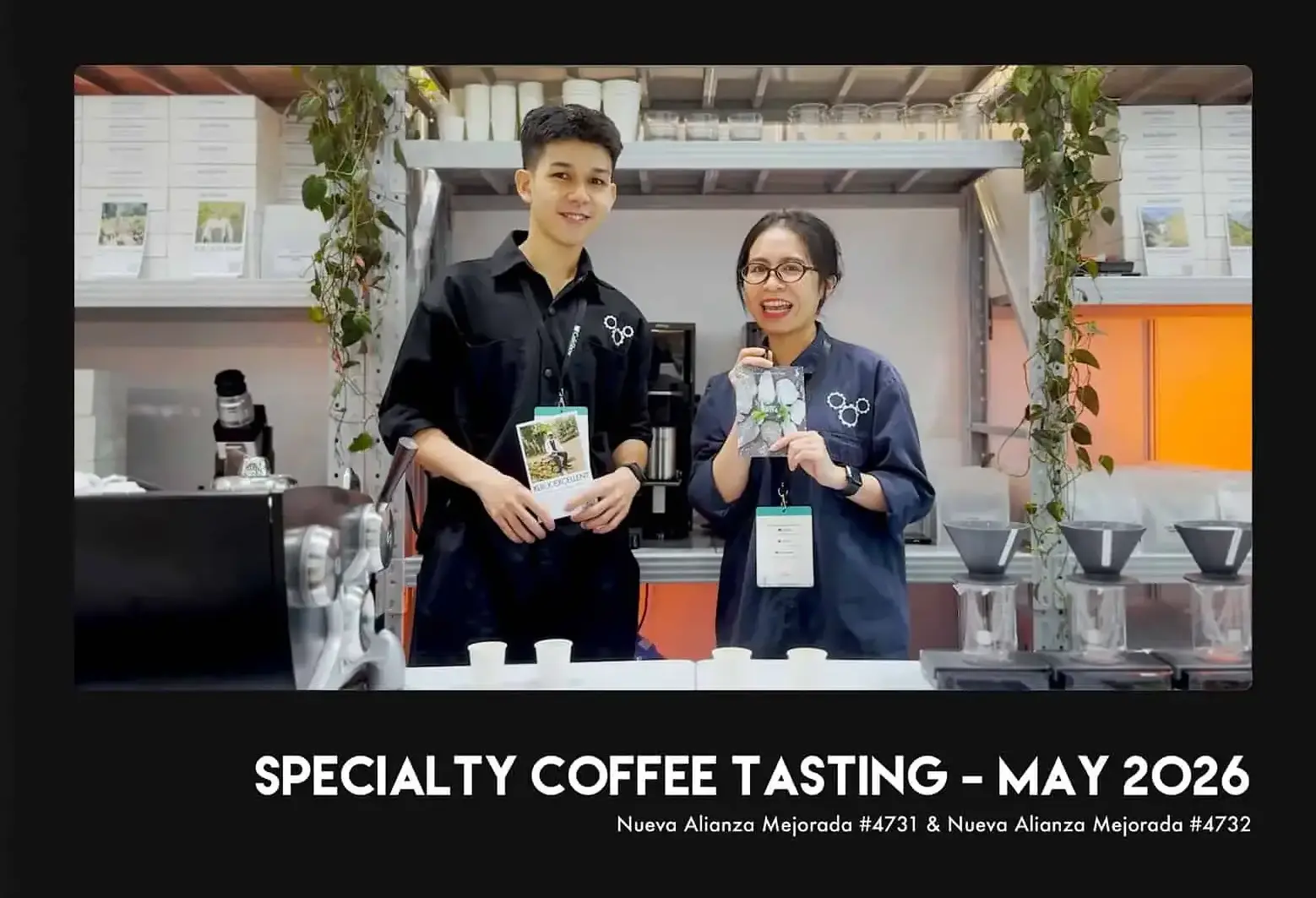
Unveiling May Discovery Subscription: Nueva Alianza Mejorada #4731 & Nueva Alianza Mejorada #4732
The Discovery Subscription is a silent dialogue, a place where the soul of the connoisseur finds a harmonious beat with distant lands. Like a transparent lens, we become storytellers, meticulously peeling back layers of cultural sediment, the breath of the soil, and the human philosophies hidden within every coffee bean.
May arrives with brilliant streaks of golden sunlight, a time when we long to hide beneath the lush, dew-drenched canopies of Santa Teresa. Amidst the silence of the Andes, when compassion touches Mother Earth, what will we hear? Perhaps it is a sweet response that nature reserves solely for souls who know how to wait patiently.

- Taste the Origin
Nueva Alianza Pacamara #4733 – The essence of Cusco with elegant jasmine notes
Nueva Alianza Pacamara #4733 is a testament to the miraculous terroir and dedicated cultivation of the renowned Cusco region. The combination of the characteristic Pacamara bean size and ideal altitude has forged a flavor profile of immense sophistication and depth. From the very first moment, this lot captivates with its elegant jasmine notes, radiating a gentle, pure fragrance akin to a flower blooming in the morning dew.

- Taste the Origin
Nueva Alianza Orange Gesha #4737 – An expedition of recessive genetic traits into the sensory realm
In a world of authenticity, Nueva Alianza Orange Gesha #4737 represents the proud emergence of rare biological traits often obscured by nature’s universality. Carrying a recessive genetic code, Lot #4737 embarks on an “expedition” into the connoisseur’s mind, where record-breaking fructose concentrations are released to perfectly fill every sensory gap with absolute smoothness and purity.
Through washed processing and extremely-light roasting, vibrant citrus nuances and ethereal floral notes, once hidden deep within the genetic structure, now manifest with power, transforming the tasting experience into a journey of ontological completion, where the rarity of recessive genes finally reigns supreme in flavor.

Specialty Coffee in Vietnam
BRAND VALUE
YOU SHOULD HAVE KNOWN
XLIII Coffee has been aiming to become a big, impactful company with social responsibilities,
have access to high-quality raw materials and convey the complete original values of coffee to our customer
