
Do you really need to rinse the paper coffee filter?
For years, rinsing the paper filter before brewing pour-over coffee has been treated as an “unwritten rule,” believed to wash away the papery taste and preserve a cleaner cup. But more and more voices argue that the difference between rinsing and not rinsing is barely noticeable, while the environmental cost of that extra step is far from trivial. In an era where sustainability is increasingly in focus, the question is clear: “Is rinsing the filter really necessary?”

Modern filter paper technology is changing old habits
For many coffee lovers, rinsing the paper filter was once considered almost essential. It was believed to wash away any papery taste, remove loose fibers, and help the filter sit snugly in the dripper for a more consistent flow. For years, this step was treated as a requirement for brewing a “proper” pour-over.
Today, however, leading filter brands like Hario, Chemex, and Cafec use advanced oxygen-based bleaching methods (with hydrogen peroxide, which fully dissipates once the paper is dried and packaged). This process eliminates any unwanted paper taste and fine dust particles that might otherwise affect both flavor and health.
In practice, many respected coffee professionals – including Peter Giuliano and James Hoffmann—have pointed out that the difference between rinsed and unrinsed filters is virtually undetectable in the final cup. As a result, rinsing the filter before brewing may no longer be necessary.
Rinsing Filters Wastes Water and Energy
At first glance, rinsing a filter may seem insignificant—it only takes a small amount of water. But in reality, many people rinse once or even twice before brewing, and each rinse can use up to 10 ounces (around 296 ml) of water.
Now scale that up: in busy cafés serving dozens or even hundreds of pour-over coffees each day, the total water consumption quickly adds up to hundreds of liters. On top of that, heating the water for rinsing requires additional energy, further increasing the environmental footprint.

Clean water and energy are finite resources, which means we need to use them mindfully. Even the smallest adjustments in our daily routines can make a meaningful difference—especially at a time when the world is calling for more sustainable practices and less waste.
What’s more, most modern coffee filters are already biodegradable, breaking down naturally without leaving a significant impact on the environment. By skipping the filter rinse before brewing, coffee drinkers not only conserve water and reduce energy use but also take a simple, practical step toward protecting the planet. It’s a small change that supports a more sustainable culture within the global coffee community.
More coffee brands are skipping the filter rinse
For many coffee lovers, rinsing the paper filter before brewing has long been considered standard practice. But as awareness of sustainability grows, more cafés and home brewers are choosing to skip this step. Doing so saves water and energy without compromising taste or health.
One pioneer in this approach is XLIII Coffee, a specialty coffee roaster based in Vietnam. The company brews its filter coffee (an elevated version of pour-over) without rinsing the paper filter. Their beans are roasted extremely light and ground coarsely to ensure a controlled flow rate, preventing underdeveloped or “green” flavors. At the same time, XLIII Coffee uses Cafec T92 Light Roast filters, designed specifically for light-roast coffees. These filters are odor-free, safe for health, fully compostable, and leave no papery taste in the cup. The result is coffee that stays clean and transparent in flavor while reducing environmental impact—an approach that reflects the brand’s strong commitment to sustainability.
With innovations in filter paper technology and growing consumer concern for the planet, this no-rinse method is expected to gain wider adoption among roasters, cafés, and home brewers worldwide. Beyond flavor, it’s part of how the coffee industry can strengthen its sustainability efforts and lessen its footprint on the Earth.


Bài viết mới

- Taste the Origin
Nigussie Nare – Murago Outgrowers #03028: Cultivated from the Values of Sustainable Reciprocity
Nestled beneath the shade trees of Sidama, Bensa, the Nigussie Nare – Murago Outgrowers #03028 coffee lot serves as a living testament to the values of sustainable reciprocity. This symbiosis begins with the intimate bond between a rich indigenous ecosystem and the smallholder farmers of the Murago region. Each harvested bean is the culmination of a virtuous cycle: a stable environment produces exceptional bean quality, and sustainable economic growth, in turn, continues to protect the verdant canopy of the great forest.

- Taste the Origin
Rift Valley Coffee Caucus #03757 – A Testament to Western Kenya’s Collective Spirit
Turning our gaze to the Great Rift Valley of East Africa, the fertile volcanic landscapes are witnessing an inspiring transformation. Moving away from fierce, survival-driven competition, smallholder farmers in Western Kenya have chosen to join forces, forging a resilient and unified network. The Rift Valley Coffee Caucus #03757 lot stands as the ultimate testament to this remarkable collective synergy.

- Breaking News
Airworks Coffee & XLIII Coffee – A “handshake” that brings original flavors across borders
XLIII Coffee, alongside our key wholesale partner Airworks Coffee, officially announces the latest release of specialty coffee lots for the North American market. This event reaffirms our commitment to bringing original flavors across all geographical barriers to coffee enthusiasts.
Early access (for Subscribers of Airworks): 10:00 AM (PST) | Wednesday, April 29, 2026
General access: 10:00 AM (PST) | Friday, May 1, 2026
We invite our Customers and Partners to visit (airworkscoffee.com) for detailed information and to prepare for this special release!
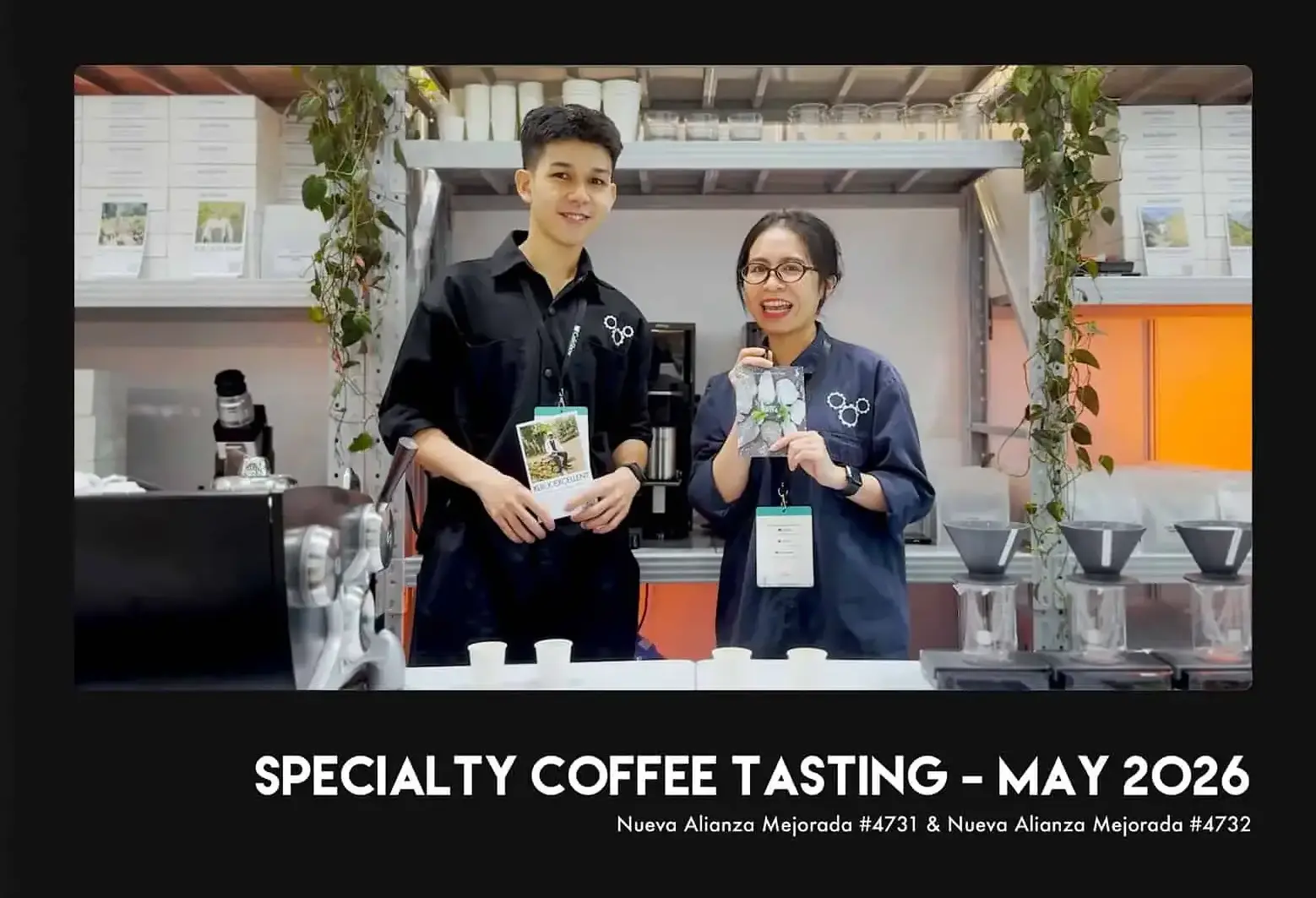
- Taste the Origin
Unveiling May Discovery Subscription: Nueva Alianza Mejorada #4731 & Nueva Alianza Mejorada #4732
The Discovery Subscription is a silent dialogue, a place where the soul of the connoisseur finds a harmonious beat with distant lands. Like a transparent lens, we become storytellers, meticulously peeling back layers of cultural sediment, the breath of the soil, and the human philosophies hidden within every coffee bean.
May arrives with brilliant streaks of golden sunlight, a time when we long to hide beneath the lush, dew-drenched canopies of Santa Teresa. Amidst the silence of the Andes, when compassion touches Mother Earth, what will we hear? Perhaps it is a sweet response that nature reserves solely for souls who know how to wait patiently.

- Taste the Origin
Nueva Alianza Pacamara #4733 – The essence of Cusco with elegant jasmine notes
Nueva Alianza Pacamara #4733 is a testament to the miraculous terroir and dedicated cultivation of the renowned Cusco region. The combination of the characteristic Pacamara bean size and ideal altitude has forged a flavor profile of immense sophistication and depth. From the very first moment, this lot captivates with its elegant jasmine notes, radiating a gentle, pure fragrance akin to a flower blooming in the morning dew.

- Taste the Origin
Nueva Alianza Orange Gesha #4737 – An expedition of recessive genetic traits into the sensory realm
In a world of authenticity, Nueva Alianza Orange Gesha #4737 represents the proud emergence of rare biological traits often obscured by nature’s universality. Carrying a recessive genetic code, Lot #4737 embarks on an “expedition” into the connoisseur’s mind, where record-breaking fructose concentrations are released to perfectly fill every sensory gap with absolute smoothness and purity.
Through washed processing and extremely-light roasting, vibrant citrus nuances and ethereal floral notes, once hidden deep within the genetic structure, now manifest with power, transforming the tasting experience into a journey of ontological completion, where the rarity of recessive genes finally reigns supreme in flavor.

Specialty Coffee in Vietnam
BRAND VALUE
YOU SHOULD HAVE KNOWN
XLIII Coffee has been aiming to become a big, impactful company with social responsibilities,
have access to high-quality raw materials and convey the complete original values of coffee to our customer
