
Specialty Coffee Industry in 2025: Adapting to Global Geopolitical Changes
The global coffee industry is entering a pivotal phase. Donald Trump’s victory in the 47th U.S. presidential election signals profound shifts not only in the U.S. economy but also throughout the entire global coffee supply chain. In light of this, the specialty coffee community must thoroughly prepare for the period from 2025 to 2029, which is expected to be highly turbulent.
I. Impacts on supply chains and international stability
The coffee supply chain is already complex, involving interconnected players from farmers in producing regions to roasters, distributors, and finally consumers. According to the latest report from the Specialty Coffee Association (SCA), profit margins across the industry are shrinking, particularly affecting small and medium enterprises. This makes the sector more vulnerable to external shocks.
Instability in Key Producing Regions
Trump’s foreign policy is projected to be more confrontational, especially in geopolitical hotspots, which may directly impact key coffee-producing regions:
- Middle East Region: Trump’s hardline stance on issues involving Gaza and Lebanon could escalate regional tensions. Reuters analysis warns that this poses serious threats to shipping routes through Yemen—a country with a rich history in coffee production.
- African Coffee Belt: Smoldering conflicts in several areas may intensify as the U.S. reduces international engagement. Major companies like Nestlé have begun diversifying supply sources and increasing strategic reserves to mitigate such risks.
Adapting to a New Reality
In response, the specialty coffee sector is undergoing significant adjustments. Starbucks, for example, has announced plans to strengthen direct relationships with farmers in stable regions like Colombia and Peru. Similarly, brands like Illy are heavily investing in blockchain technology to improve traceability and mitigate supply chain risks.
In Vietnam, despite its modest size, the specialty coffee community is gradually forging strong ties with local farmers and international partners. Companies like XLIII Coffee, among others, are working to build a sustainable ecosystem where transparency and traceability are prioritized.

Interestingly, Donald Trump, poised to become the 47th U.S. President, is not known to be a coffee drinker. While seemingly trivial, this may hint that coffee-related policies will not be a priority for the new administration.
II. Trade challenges under the “America First” policy
Impact of Protectionist Policies
Trump’s firm commitment to imposing higher tariffs on imports, especially from China, has created ripples in the global coffee industry. According to the Financial Times, the reappointment of a trade representative responsible for tariffs with China from Trump’s first term signals a renewed era of trade tensions.
This impact is particularly pronounced in coffee brewing equipment. La Marzocco, a leading Italian espresso machine manufacturer, has acknowledged that approximately 40% of its components come from China. Even Bunn, a prominent U.S. coffee equipment brand, relies heavily on Chinese supply chains.
Restructuring Supply Chains
Trade tensions during Trump’s administration have prompted a wave of global supply chain restructuring. According to a McKinsey report on the F&B sector, container shipping costs from China to the U.S. could increase by 30-45% due to new policies. Consequently, large corporations are making strategic adjustments:
- JAB Holdings (owner of Peet’s Coffee and Caribou Coffee) is relocating part of its production to Southeast Asia, aiming not only to reduce tariff risks from China but also to capitalize on the region’s rapidly developing infrastructure and labor force.
- Nestlé is expanding its manufacturing facilities in Mexico to leverage benefits under the North American Free Trade Agreement (NAFTA). This “near-shoring” strategy minimizes trade barriers with China while optimizing logistics costs.
- Gruppo Cimbali of Italy is enhancing domestic production capacity, especially for high-tech components, to reduce reliance on Asian supply chains. Although costlier, this strategy offers greater quality control and reduces disruption risks.

For small and medium-sized enterprises in the specialty coffee sector, these challenges demand creativity in operational cost optimization. Some are exploring cooperative purchasing to strengthen their bargaining power, while others are simplifying operations and seeking alternative domestic suppliers.
III. Navigating economic and market turbulence
Macroeconomic Pressures
Trump’s policies are projected to create significant fluctuations in public finance and monetary markets. The World Bank warns that interest rates may remain high for an extended period, partly due to European countries increasing military spending to compensate for reduced U.S. support to Ukraine. This creates a cascading effect on the coffee industry:
- Higher capital costs directly affect companies’ expansion plans.
- Exchange rate volatility, particularly involving currencies of major coffee-producing nations.
- Inflationary pressures continue to weigh on the global value chain.
Shifts in Consumer Behavior
According to recent studies by Nielsen and Euromonitor International, the specialty coffee market is experiencing notable trends:
- Clearer Market Segmentation: Approximately 65% of specialty coffee consumers are willing to pay a premium for sustainably certified products. They care about the origin and story behind their coffee and favor brands with strong environmental commitments.
- Changing Distribution Channels: E-commerce growth surged by 35% compared to 2023, and the “at-home” trend continues to drive demand for high-quality coffee equipment for home use. As a result, specialty coffee shops must shift toward comprehensive experiential models.

XLIII Coffee has demonstrated a deep commitment to the industry by incorporating quality and sustainability certifications into its partner and product selection processes. This not only reflects a focus on high coffee quality but also underscores the company’s social and environmental responsibility.
Industry Adaptation Strategies
In response to these challenges, major companies are making noteworthy adjustments. For example, Blue Bottle Coffee is focusing on a premium subscription model, which helps stabilize revenue and improve demand forecasting. Similarly, La Colombe is expanding its Ready-to-Drink (RTD) product line, targeting young and busy consumers. Intelligentsia Coffee is emphasizing online training programs and omnichannel retailing as another beneficial transformation approach.
For small and medium-sized enterprises, strategies centered on niche markets and building loyal communities have proven effective. According to a report by the Specialty Coffee Association (SCA), independent coffee shops have demonstrated a superior ability to adapt to market fluctuations due to their close relationships with customers and quick responses to local demand.

In Vietnam, XLIII Coffee is gradually developing a model that combines specialized coffee experiences with consumer education, creating a community of informed specialty coffee enthusiasts.
IV. Long-term climate change challenges
Trump’s anticipated second withdrawal from the Paris Agreement would have far-reaching implications. The World Meteorological Organization (WMO) predicts accelerated global warming between 2025 and 2029. The United Nations’ latest report highlights that with the U.S.—the world’s second-largest emitter—scaling back climate commitments, developing nations like China and India may relax their emission targets.
Impacts on Coffee Growing Regions
World Coffee Research presents concerning forecasts:
- Geographical Shifts in Coffee Cultivation: By 2050, up to 50% of current Arabica-growing areas may no longer be viable. Optimal growing zones will move 300-500 meters higher in elevation, endangering traditional coffee-growing regions in Ethiopia and Kenya.
- Productivity and Quality Challenges: Increased risks of diseases like coffee rust fungus, disrupted flowering and fruiting cycles, reduced yields, and higher temperatures affecting bean development, impacting flavor.
Industry Response
Global coffee communities are stepping up efforts. Prominent names like Counter Culture Coffee are collaborating with World Coffee Research on heat-resistant coffee varieties, with a $2.5 million budget from 2025 to 2027. Blue Bottle Coffee aims for carbon neutrality by 2026 and is investing in next-gen energy-saving roasting systems. Intelligentsia Coffee’s “Climate Smart Coffee” program focuses on adaptive farming techniques, crop diversification, and farm management technology.

In Vietnam, where altitude and relatively stable climate conditions offer advantages, companies like XLIII Coffee are collaborating with local farmers on sustainable farming initiatives. Future efforts include cultivating native coffee varieties and employing organic farming methods to enhance resilience to climate change.
In summary:
Trump’s second presidential term (2025-2029) will undoubtedly bring significant changes to the global specialty coffee industry. However, history has demonstrated the remarkable resilience of this sector in the face of major challenges. As part of the global coffee community, companies like XLIII Coffee must showcase adaptability and innovation while staying true to their mission: delivering high-quality, responsibly and sustainably produced coffee. Because at its heart, coffee is not just a beverage—it bridges cultures and supports millions of livelihoods worldwide.

Bài viết mới

- Taste the Origin
Nigussie Nare – Murago Outgrowers #03028: Cultivated from the Values of Sustainable Reciprocity
Nestled beneath the shade trees of Sidama, Bensa, the Nigussie Nare – Murago Outgrowers #03028 coffee lot serves as a living testament to the values of sustainable reciprocity. This symbiosis begins with the intimate bond between a rich indigenous ecosystem and the smallholder farmers of the Murago region. Each harvested bean is the culmination of a virtuous cycle: a stable environment produces exceptional bean quality, and sustainable economic growth, in turn, continues to protect the verdant canopy of the great forest.

- Taste the Origin
Rift Valley Coffee Caucus #03757 – A Testament to Western Kenya’s Collective Spirit
Turning our gaze to the Great Rift Valley of East Africa, the fertile volcanic landscapes are witnessing an inspiring transformation. Moving away from fierce, survival-driven competition, smallholder farmers in Western Kenya have chosen to join forces, forging a resilient and unified network. The Rift Valley Coffee Caucus #03757 lot stands as the ultimate testament to this remarkable collective synergy.

- Breaking News
Airworks Coffee & XLIII Coffee – A “handshake” that brings original flavors across borders
XLIII Coffee, alongside our key wholesale partner Airworks Coffee, officially announces the latest release of specialty coffee lots for the North American market. This event reaffirms our commitment to bringing original flavors across all geographical barriers to coffee enthusiasts.
Early access (for Subscribers of Airworks): 10:00 AM (PST) | Wednesday, April 29, 2026
General access: 10:00 AM (PST) | Friday, May 1, 2026
We invite our Customers and Partners to visit (airworkscoffee.com) for detailed information and to prepare for this special release!
- Taste the Origin
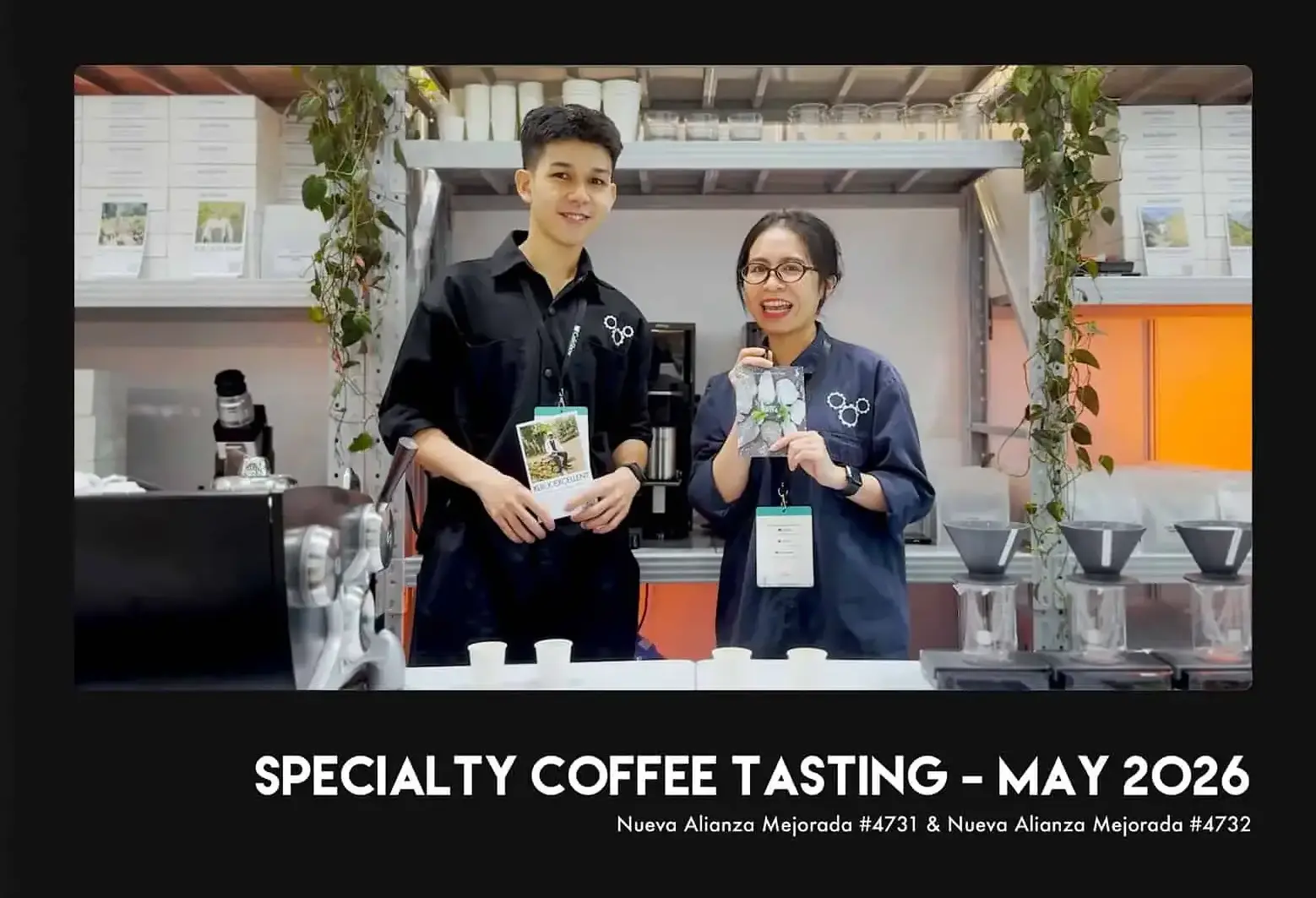
Unveiling May Discovery Subscription: Nueva Alianza Mejorada #4731 & Nueva Alianza Mejorada #4732
The Discovery Subscription is a silent dialogue, a place where the soul of the connoisseur finds a harmonious beat with distant lands. Like a transparent lens, we become storytellers, meticulously peeling back layers of cultural sediment, the breath of the soil, and the human philosophies hidden within every coffee bean.
May arrives with brilliant streaks of golden sunlight, a time when we long to hide beneath the lush, dew-drenched canopies of Santa Teresa. Amidst the silence of the Andes, when compassion touches Mother Earth, what will we hear? Perhaps it is a sweet response that nature reserves solely for souls who know how to wait patiently.

- Taste the Origin
Nueva Alianza Pacamara #4733 – The essence of Cusco with elegant jasmine notes
Nueva Alianza Pacamara #4733 is a testament to the miraculous terroir and dedicated cultivation of the renowned Cusco region. The combination of the characteristic Pacamara bean size and ideal altitude has forged a flavor profile of immense sophistication and depth. From the very first moment, this lot captivates with its elegant jasmine notes, radiating a gentle, pure fragrance akin to a flower blooming in the morning dew.

- Taste the Origin
Nueva Alianza Orange Gesha #4737 – An expedition of recessive genetic traits into the sensory realm
In a world of authenticity, Nueva Alianza Orange Gesha #4737 represents the proud emergence of rare biological traits often obscured by nature’s universality. Carrying a recessive genetic code, Lot #4737 embarks on an “expedition” into the connoisseur’s mind, where record-breaking fructose concentrations are released to perfectly fill every sensory gap with absolute smoothness and purity.
Through washed processing and extremely-light roasting, vibrant citrus nuances and ethereal floral notes, once hidden deep within the genetic structure, now manifest with power, transforming the tasting experience into a journey of ontological completion, where the rarity of recessive genes finally reigns supreme in flavor.

Specialty Coffee in Vietnam
BRAND VALUE
YOU SHOULD HAVE KNOWN
XLIII Coffee has been aiming to become a big, impactful company with social responsibilities,
have access to high-quality raw materials and convey the complete original values of coffee to our customer
