
Indigenous communities and the mission to preserve coffee heritage
In the specialty coffee world, indigenous communities are more than just farmers; they are guardians of a rich cultural and natural heritage. At XLIII Coffee, we work alongside these dedicated partners, gaining insights into the people who, despite their humble beginnings, accomplish extraordinary things.
I. Overview of indigenous community characteristics
Indigenous communities are groups of people who have inhabited a specific region for generations, cultivating a distinctive culture, customs, and traditions. According to the United Nations, they inherit and practice unique cultural systems and ways of life, maintaining a deep bond with their ancestral lands and the surrounding natural resources. In the coffee industry, Indigenous communities are not just coffee growers; they are also the keepers of valuable knowledge about the connection between people, land, and nature.
Preserving indigenous coffee-growing regions
From Ethiopia’s highlands, the birthplace of coffee, to the mountain regions of Peru and Colombia, Indigenous communities have played an essential role in the growth and preservation of the coffee industry. They were the first to develop coffee cultivation methods suited to local conditions, creating unique practices that shape the quality and characteristics of today’s specialty coffee. Their knowledge of soil composition, climate, and local ecosystems has become a foundation for the sustainable growth of the specialty coffee sector.
Fostering cultural exchange
In today’s coffee world, we witness unique examples of cultural exchange, where Indigenous traditions harmonize with modern cultivation methods.
For example, at XLIII Coffee’s partner, Finca Rosenheim in Peru’s Villa Rica coffee corridor, there is a blend of three cultures: the Yanesha Indigenous people, Austrian-German immigrants, and Andean locals, each contributing to a unique coffee-growing identity. The Yanesha, an Indigenous community of Peru’s Selva Central, share deep knowledge about the local rainforest ecosystem, where coffee is grown under the natural forest canopy.
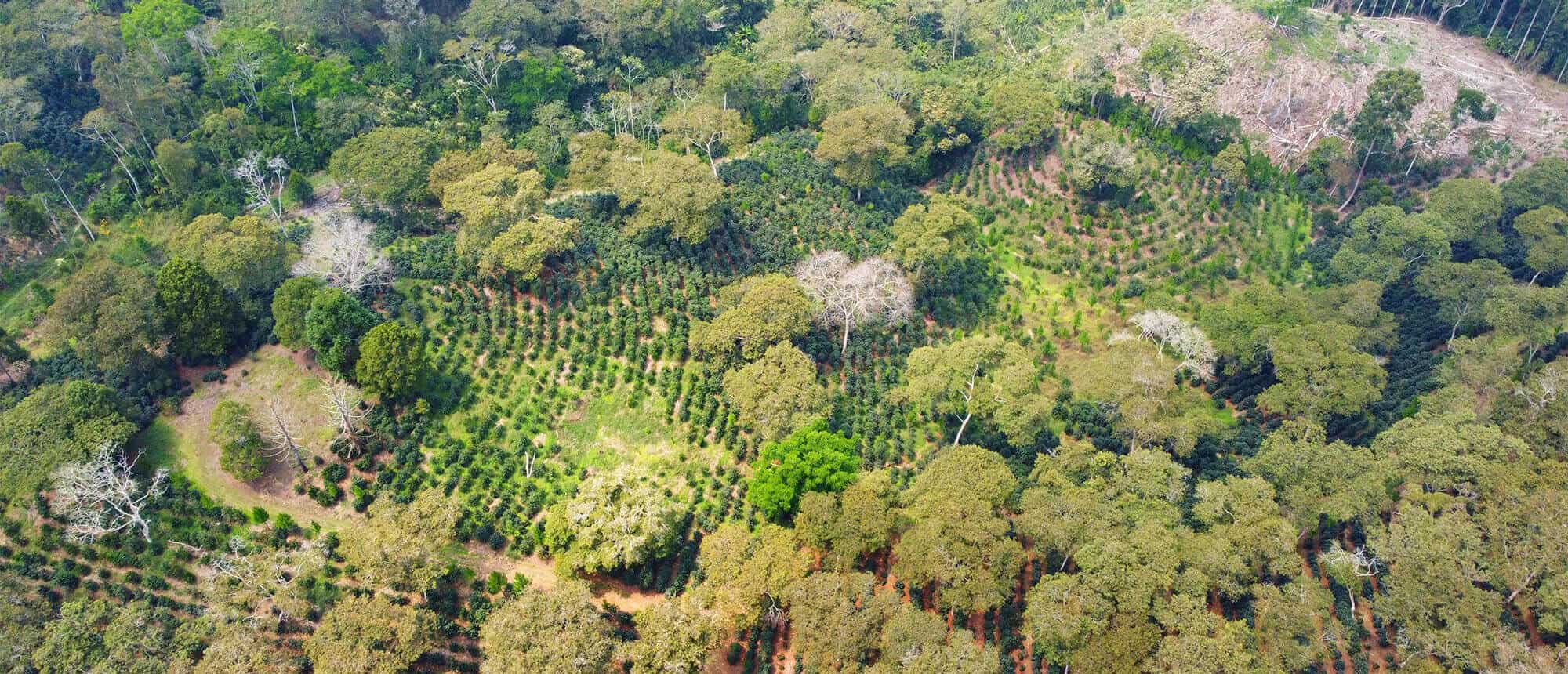
Finca Rosenheim cultivates 40 hectares of coffee within a primary forest environment, where native wild bees play an active role in pollination.
Living museums
The cultural value of coffee cultivation is evident in how Indigenous communities approach the land and crops.
In Panama’s Volcan Valley, where Ninety Plus Coffee operates, ancient rock carvings by Indigenous peoples remain preserved among coffee gardens, creating a setting where past and present intermingle. This area is more than a coffee-producing region; it is a “living museum” of Indigenous culture, where each coffee bean carries a story of heritage and tradition.
Traditional Knowledge and Sustainable Development
Indigenous knowledge in coffee cultivation, passed down over generations, plays a key role in creating unique specialty coffee products.
At Finca Soledad in Ecuador’s Intag Valley, local residents are not only laborers but also the holders of precious knowledge about cultivating coffee within their ecosystem. On 4 hectares of 120 total conserved forest hectares, they use selective cultivation methods for three specialty coffee varieties: Sidra, Gesha, and Mejorado.
Uniquely situated at 1,515 meters on the Andean mountain slopes near Colombia’s Nariño province, Finca Soledad benefits from a unique microclimate, ideal for high-quality coffee cultivation.

The farm also helps shield the local community from the negative impacts of mining activities, supporting sustainable livelihoods for Indigenous people.
II. Mission to preserve ecosystems and biodiversity
Ecosystems in sustainable coffee cultivation
In traditional coffee-growing regions, the natural ecosystem plays a role that goes far beyond simply providing a habitat. It forms a complex system where every element contributes to the distinctive quality of specialty coffee.
At Ninety Plus Estates, an XLIII Coffee partner from Panama, this is exemplified through their “pristine forest” model. Here, large shade trees, a diverse trail network, and a rich variety of flora and fauna are kept in their original state, with minimal human interference throughout the coffee-growing process.
Role of primary forests
At Barú Estates, which is adjacent to Volcan Barú National Park, Ninety Plus benefits from the development of a richly diverse ecosystem. Coffee is grown under the canopies of ancient forests, integrating the coffee plants as a natural component of the forest ecosystem. This method is not just a cultivation technique; it’s a comprehensive approach to preserving biodiversity.

The unique microclimates at varying elevations in the Barú area allow for the diverse growth of plants and microorganisms, creating an ideal environment for coffee development.
Protecting biodiversity
The commitment to biodiversity preservation is also evident in initiatives like those at Finca Rosenheim, where the farm actively protects and fosters native wild bee populations. The symbiotic relationship between bees and coffee blossoms not only improves pollination but also adds a distinctive flavor to the final product. Finca Rosenheim also maintains ecological corridors, allowing local wildlife to move freely and contributing to the overall balance of the ecosystem.
Adaptive farming methods
Deep knowledge of local ecosystems has led to the development of unique cultivation methods. For instance, at Ninety Plus Gesha Estates, they have recreated natural conditions that resemble the original environment of the Gesha coffee variety in Ethiopia. By replicating this standard growth environment, from temperature to biological factors, they have enabled this century-old coffee variety to thrive, producing high-quality beans with exceptional flavor.
Similarly, at the Layo Toraga cooperative in Ethiopia, 1,814 farmers maintain a semi-forest model at an impressive elevation of 2,342 meters, where coffee fields naturally integrate with the surrounding landscape, creating a unique ecosystem.
Positive environmental impact
These sustainable farming models not only enhance product quality but also positively impact the environment.
At Finca Soledad in Ecuador, 120 hectares of forest are preserved, with only 4 hectares dedicated to coffee cultivation. This commitment to environmental conservation is evident as coffee is grown on the steep, 45% slopes of the Andean mountains, where the terraced farming system helps prevent soil erosion while leveraging the terrain’s unique features.

The Genji Challa washing station, nestled at the edge of the Belete-Gera forest, embodies a harmonious blend of coffee cultivation and a primary forest ecosystem, where local climate conditions and biodiversity contribute to the coffee’s distinctive flavor characteristics.
III. Sustainable development for indigenous communities
The sustainable growth of the specialty coffee industry is closely tied to empowering local communities. At Finca Soledad, this is achieved through a support program for single mothers in the region, providing stable employment and regular income. This program goes beyond job creation; it is an effort to preserve Indigenous knowledge and develop skilled human resources for the specialty coffee industry.
In light of the expanding industrial and mining activities, protecting Indigenous communities’ rights has become more crucial than ever. In Ecuador’s Intag Valley, Finca Soledad has accomplished this by creating sustainable employment opportunities for locals, helping them avoid dependence on environmentally harmful mining activities. This model not only protects livelihoods but also preserves the community’s connection to their ancestral land.

At Finca Soledad, Pepe Jion and his family support and hire local single mothers, providing steady income, weekly payments, and family support.
Another example is Kinini in Rwanda, where 85% of the members are women, demonstrating a strong commitment to gender equality in the coffee industry. Initially a project to build schools for children after the genocide, Kinini has grown into a responsible business model, investing 10% of its profits directly into educational and health projects for the community.
Through direct trade models, XLIII Coffee and its partners have built transparent and fair relationships with producing communities. At Ninety Plus, this is reflected in their commitment to human resource development through comprehensive welfare policies, including quality education and living standards. They are willing to sacrifice high-volume profits to maintain sustainable farming practices, prioritizing quality and biodiversity preservation with smaller product batches.

In Ethiopia, the Layo Toraga Cooperative, established in 1976, has created a strong support network for 1,814 farming households, helping them access markets and increase the value of their products in a region that traditionally faces challenging trade conditions.
IV. Future directions for indigenous communities
Balancing tradition and modernity
The growth of the specialty coffee sector showcases a fascinating trend in combining traditional knowledge with modern technology. An example of this balance is Ninety Plus’ Volcan Valley project, founded by Joseph Brodsky. This initiative upholds core values of biodiversity preservation and Indigenous culture while adopting modern management and traceability techniques. On over 1,000 hectares of land in Panama, they have built a comprehensive management system from cultivation to export, offering partners opportunities for farm ownership and management.
In Kenya’s Muburi wet mill, traditional wet processing methods have been refined with a classic three-channel system, tightly controlled soaking, washing, and conditioning times, preserving traditional identity while ensuring consistent product quality.
Preserving heritage in the digital age
Volcan Valley goes beyond coffee production, becoming a model for heritage preservation in the modern era. By moving from fixed coffee varieties to Lot-based production and traceability, they increase market accessibility while retaining core values. Notably, preserving natural and cultural Indigenous values, such as ancient rock carvings, waterfalls, and old-growth forests, is a critical part of their development strategy.
Building a sustainable future
Modern initiatives must strike a balance between economic development and Indigenous cultural preservation. At Nueva Alianza, another partner of XLIII Coffee from Peru, this is reflected in integrating modern production technology with traditional farming methods. Their success in winning the Cup of Excellence Peru twice in five years demonstrates that outstanding quality can be achieved through a harmonious blend of tradition and innovation.

The Ninety Plus Estate’s Volcan Valley project has been recognized by XLIII Coffee as a strategic transformation, blending innovation with traditional excellence.
Summary
The journey to preserve the coffee heritage of Indigenous communities is not just a story of tradition preservation. It is a narrative of adaptation and sustainable development, where cultural values are celebrated and advanced in a modern context. Through models like Ninety Plus, Finca Soledad, and Nueva Alianza, we see the crucial role Indigenous communities play in shaping the future of specialty coffee, where “protecting the origin” becomes a practical commitment to sustainable development.
Images collected by XLIII Coffee from partners
V. Related questions
1. What role do Indigenous communities play in the specialty coffee industry?
Indigenous communities play a vital role in preserving and advancing the specialty coffee industry through traditional cultivation knowledge, a deep understanding of local ecosystems, and sustainable practices passed down through generations.
2. How is the balance between modern development and tradition achieved?
As shown by the Volcan Valley model, this balance is achieved by integrating modern technology for management and traceability while preserving traditional cultivation practices and Indigenous culture.
3. What are the main challenges in preserving Indigenous coffee heritage?
The biggest challenges include industrial pressures like mining, climate change, and balancing economic development with environmental and cultural preservation.
4. Why is biodiversity important in specialty coffee production?
Biodiversity, as illustrated by Ninety Plus and Finca Rosenheim farms, is essential in creating sustainable farming environments, enhancing soil quality, and contributing to the unique flavor profiles of coffee.
5. What are the characteristics of sustainable development in specialty coffee?
This model typically includes three main elements: environmental conservation (such as Ninety Plus with 120 preserved forest hectares), community development (like Finca Soledad’s support programs), and product quality (evidenced by international awards like the Cup of Excellence).

Bài viết mới

- Taste the Origin
Nigussie Nare – Murago Outgrowers #03028: Cultivated from the Values of Sustainable Reciprocity
Nestled beneath the shade trees of Sidama, Bensa, the Nigussie Nare – Murago Outgrowers #03028 coffee lot serves as a living testament to the values of sustainable reciprocity. This symbiosis begins with the intimate bond between a rich indigenous ecosystem and the smallholder farmers of the Murago region. Each harvested bean is the culmination of a virtuous cycle: a stable environment produces exceptional bean quality, and sustainable economic growth, in turn, continues to protect the verdant canopy of the great forest.

- Taste the Origin
Rift Valley Coffee Caucus #03757 – A Testament to Western Kenya’s Collective Spirit
Turning our gaze to the Great Rift Valley of East Africa, the fertile volcanic landscapes are witnessing an inspiring transformation. Moving away from fierce, survival-driven competition, smallholder farmers in Western Kenya have chosen to join forces, forging a resilient and unified network. The Rift Valley Coffee Caucus #03757 lot stands as the ultimate testament to this remarkable collective synergy.

- Breaking News
Airworks Coffee & XLIII Coffee – A “handshake” that brings original flavors across borders
XLIII Coffee, alongside our key wholesale partner Airworks Coffee, officially announces the latest release of specialty coffee lots for the North American market. This event reaffirms our commitment to bringing original flavors across all geographical barriers to coffee enthusiasts.
Early access (for Subscribers of Airworks): 10:00 AM (PST) | Wednesday, April 29, 2026
General access: 10:00 AM (PST) | Friday, May 1, 2026
We invite our Customers and Partners to visit (airworkscoffee.com) for detailed information and to prepare for this special release!
- Taste the Origin
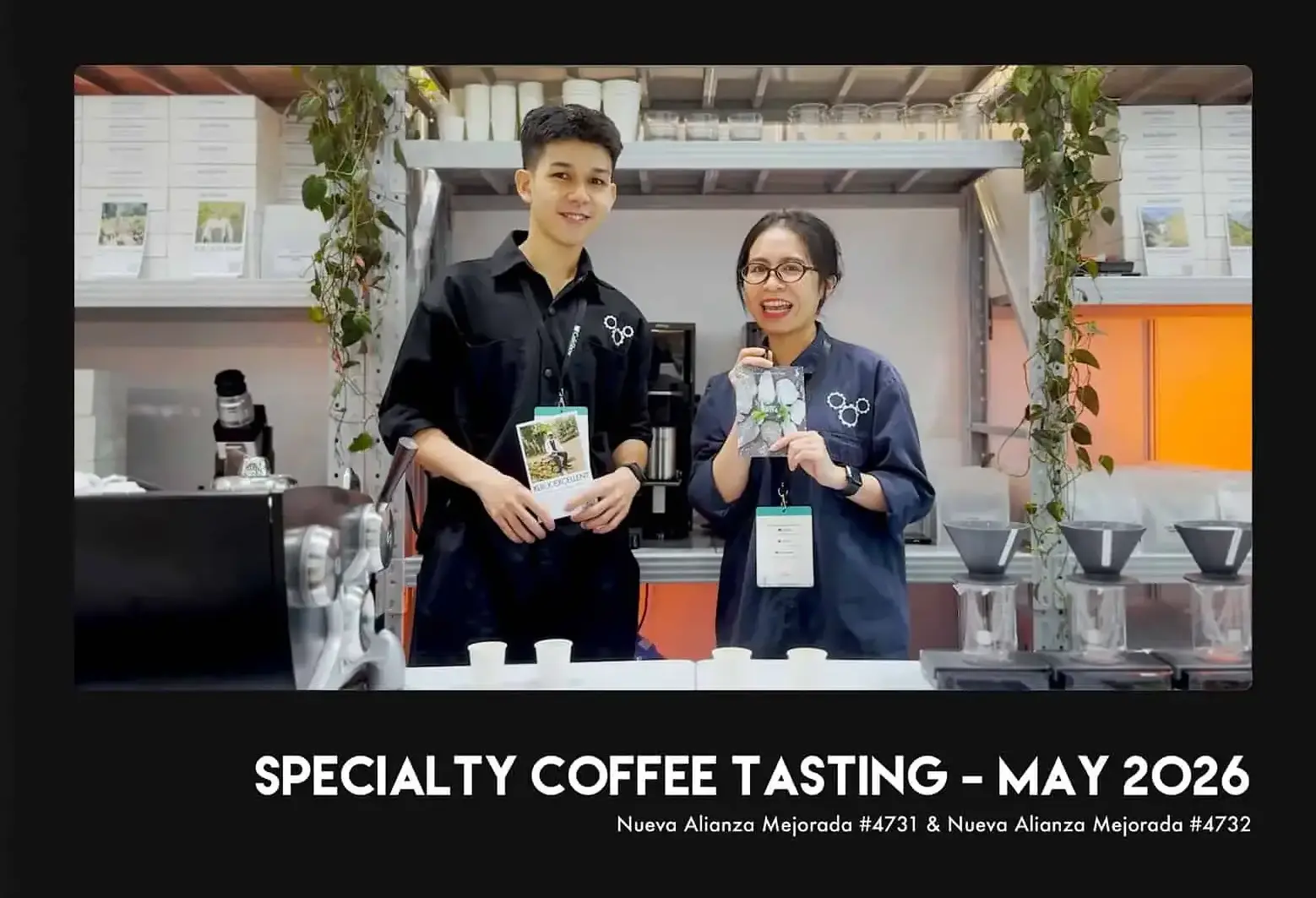
Unveiling May Discovery Subscription: Nueva Alianza Mejorada #4731 & Nueva Alianza Mejorada #4732
The Discovery Subscription is a silent dialogue, a place where the soul of the connoisseur finds a harmonious beat with distant lands. Like a transparent lens, we become storytellers, meticulously peeling back layers of cultural sediment, the breath of the soil, and the human philosophies hidden within every coffee bean.
May arrives with brilliant streaks of golden sunlight, a time when we long to hide beneath the lush, dew-drenched canopies of Santa Teresa. Amidst the silence of the Andes, when compassion touches Mother Earth, what will we hear? Perhaps it is a sweet response that nature reserves solely for souls who know how to wait patiently.

- Taste the Origin
Nueva Alianza Pacamara #4733 – The essence of Cusco with elegant jasmine notes
Nueva Alianza Pacamara #4733 is a testament to the miraculous terroir and dedicated cultivation of the renowned Cusco region. The combination of the characteristic Pacamara bean size and ideal altitude has forged a flavor profile of immense sophistication and depth. From the very first moment, this lot captivates with its elegant jasmine notes, radiating a gentle, pure fragrance akin to a flower blooming in the morning dew.

- Taste the Origin
Nueva Alianza Orange Gesha #4737 – An expedition of recessive genetic traits into the sensory realm
In a world of authenticity, Nueva Alianza Orange Gesha #4737 represents the proud emergence of rare biological traits often obscured by nature’s universality. Carrying a recessive genetic code, Lot #4737 embarks on an “expedition” into the connoisseur’s mind, where record-breaking fructose concentrations are released to perfectly fill every sensory gap with absolute smoothness and purity.
Through washed processing and extremely-light roasting, vibrant citrus nuances and ethereal floral notes, once hidden deep within the genetic structure, now manifest with power, transforming the tasting experience into a journey of ontological completion, where the rarity of recessive genes finally reigns supreme in flavor.

Specialty Coffee in Vietnam
BRAND VALUE
YOU SHOULD HAVE KNOWN
XLIII Coffee has been aiming to become a big, impactful company with social responsibilities,
have access to high-quality raw materials and convey the complete original values of coffee to our customer
