
The Semi-Washed method: Elevating the flavors of Specialty coffee
For the coffee flavor to develop and explode, post-harvest processing plays an extremely important role. Farmers need to find the most suitable processing method to support flavor. The semi-washed processing is one of three basic and popular coffee processing methods. Let’s find out how this method helps coffee improve its flavor!
Table of Contents
- Understanding the Semi-Washed process
- The origins of the Semi-Washed process
- Steps in the Semi-Washed processing method
- Types of honey processing (Semi-Washed process)
- Flavor and Quality through Semi-Washed processing
- Comparing Semi-Washed to Other Processing Methods
- Impact of Semi-Washed processing on Specialty coffee
- FAQs
Understanding the Semi-Washed process
What is the Semi-Washed process?
The semi-washed process, also known as the honey process, simplifies the traditional washed process. Here, the coffee cherries are depulped, but some of the mucilage—the sticky pulp—is left on the beans. They are then dried with this mucilage still on, unlike in the washed process, where the beans are completely washed clean of mucilage. The name “honey” process comes from the sticky honey-like feel of the coffee beans before they are dried, not because honey is used in the process.
Common misconceptions about the Semi-Washed process
It’s a common misconception that honey is used in the honey process. In reality, no honey is involved at any stage. The name derives from the sticky texture of the mucilage that coats the beans during drying, which becomes tacky as it absorbs moisture from the air.

The name honey processing comes from the mucous membrane outside the coffee beans
The origins of the Semi-Washed process
This method originated in the 1950s at the Campinas Agricultural Institute in Brazil and gained commercial traction in the 1980s in Southern Minas Gerais. Originally designed to enhance quality and reduce costs, the method has also been used to enrich the flavor profile of the beans. After gaining popularity in Brazil, it spread to Central America, where it’s also known as the honey process. Notably, honey-processed Costa Rican coffees have achieved high acclaim, highlighting this method’s ability to produce award-winning coffee.

The Institute of Agronomy Campinas (IAC) in Brazil was the first to test the semi-washed processing method
Steps in the Semi-Washed processing method
The semi-washed processing method is often seen as a hybrid of the dry and washed processes. It combines elements of both, starting with steps typical of washed processing and finishing with aspects of dry processing. Here’s a closer look at each step involved:
Sorting and Cleaning
Before processing begins, the coffee beans are sorted and washed to ensure quality and hygiene. This step is similar to that in washed processing, where unripe, rotten coffee cherries, and impurities are removed using water and mechanical or manual screening methods.

Before processing, coffee needs to be cleaned and classified
Depulping
This step is done using mechanical depulpers or specialized milling equipment. During depulping, the outer fruit layer is removed, leaving behind a thin layer of mucilage on the beans.

Semi-washed processed coffee is rubbed to separate the outer shell of the beans
Drying with Mucilage
Unlike the washed process, the beans in the semi-washed process are not completely separated from the mucilage. After depulping, farmers take the beans to a drying area. Depending on the environmental conditions and production goals, this phase can vary significantly.
Some farmers spread the beans in a thin layer on raised beds or patios covered with tarps to dry under the sun. Others may place the beans in special environments, like greenhouses, where they are piled up to encourage mucilage fermentation. The duration of this fermentation process can vary, depending on weather conditions and the farmer’s schedule, which can enhance certain desirable flavor characteristics in the coffee.

Coffee is dried while there is still mucus around the beans
Moisture Optimization
The final step in the semi-washed process is moisture optimization, typically achieved under sunlight or in mechanical dryers. This phase is crucial as it reduces the remaining water content in the beans to about 12%, minimizing the risk of mold and spoilage. This careful drying ensures the beans are well-preserved and maintain their quality until roasting.

Coffee needs optimal humidity to prevent damage and mold
Types of honey processing (Semi-Washed process)
In honey processing, the degree of mucilage left on the coffee beans is often indicated by color descriptors: yellow, red, and black. These terms reflect the amount of mucilage that remains on the beans and varies based on drying time.
- Yellow Honey Process: In this method, most of the mucilage is removed, leaving about 25% on the beans. The drying process is relatively quick, lasting 8-10 days. As the mucilage dries, it becomes sticky and takes on a yellow hue reminiscent of honey.
- Red Honey Process: Here, about 75% of the mucilage is retained. The drying process, which involves some shading, extends to 12-15 days. Farmers frequently turn the beans to ensure even drying and prevent mold. The resulting coffee beans have a darker color with a reddish tint.
- Black Honey Process: This method keeps nearly all the mucilage. Due to the high stickiness, the beans require constant turning to prevent clumping. It takes about 30 days to fully dry the beans. This lengthy process results in coffee beans that are darker than those processed using the red honey method.

Based on the ratio of mucus layer, the honey extraction process can be divided into 3 types
Flavor and Quality through Semi-Washed processing
What does the semi-washed process bring to the table in terms of coffee quality and flavor?
Flavor
The mucilage, rich in acids and sugars, ferments during the drying process, significantly affecting the coffee’s characteristics. As the outer layers are removed, fermentation happens more quickly than in dry processing. Sugars and organic compounds penetrate the beans, interacting with their natural components. This interaction can reduce the beans’ inherent acidity while introducing new layers of flavor. The enhanced sugar concentration during the drying process brings out a pronounced sweetness, giving the coffee a fuller body compared to its original profile.
Quality
Quality control in semi-washed processing is challenging. Since the green beans are enclosed in a mucilage layer, any defects or damages in the beans are hard to detect, potentially lowering the overall quality of the batch. Damaged beans could also increase the risk of contaminating the batch. Furthermore, the longer drying and exposure times associated with semi-washed processing make the beans more susceptible to mold and insect damage, especially under adverse weather conditions.
To ensure high-quality semi-washed processed coffee, meticulous effort is required. Drying and exposure conditions must be carefully monitored to prevent mold growth. Farmers must also frequently turn the coffee to maintain desired moisture levels and protect the beans from pests.

It is difficult to control coffee quality in the semi-washed processing process
Comparing Semi-Washed to Other Processing Methods
How does semi-washed processing stand out from the dry and washed methods?
- Semi-Washed (Honey)
- Process: Starts with sorting and depulping, followed by drying while mucilage remains, and concludes with moisture optimization.
- Flavor: Known for its honey-like sweetness and notes of brown sugar and caramel.
- Pros: Shortens some of the drying time compared to the natural process and uses less water.
- Cons: Complex and labor-intensive, requiring specialized equipment.
- Dry (Natural)
- Process: Involves simple steps of sorting, sun drying, and depulping.
- Flavor: High sweetness, low acidity, with flavors reminiscent of ripe and fermented fruits, and chocolate.
- Pros: Requires fewer resources and less equipment.
- Cons: More susceptible to damage and quality issues due to longer exposure to elements.
- Washed (Washed)
- Process: Involves sorting, depulping, mucilage removal, thorough washing, and drying.
- Flavor: Clean, bright, with distinct acidity and sharp, intricate flavors.
- Pros: Allows greater control over processing, resulting in consistent, high-quality output.
- Cons: More stages involved, requiring significant effort and complex equipment, potentially using a lot of water if not managed efficiently.
The semi-washed process sits between the natural and washed methods, offering a unique approach that can influence the coffee’s flavor and quality in distinct ways.
Impact of Semi-Washed processing on Specialty coffee
Specialty coffee focuses on quality, unique flavor profiles, and sustainable values. Let’s examine how the semi-washed processing method affects these aspects:
Flavor impact on Specialty coffee
Many coffee enthusiasts and experts find that semi-washed processed coffees exhibit unique, amplified flavors that often score highly and meet the standards of Specialty coffee. These beans tend to have complex flavor layers and a balanced sweetness. However, some experts argue that the flavors derived largely from the mucilage can mask the beans’ inherent characteristics. During fermentation, the distinct acids and flavors within the bean are altered, which can obscure the true essence and unique efforts of cultivation and regional characteristics. This raises a question: while semi-washed processing can introduce exciting new flavors, does it truly serve those seeking an authentic taste of Specialty coffee?
Challenges and opportunities for Specialty coffee producers
The semi-washed method, which merges elements of traditional washed and dry processes, offers procedural improvements (like enhanced drying efficiency) and resource conservation (less water used), which positively impact the environment. However, it presents challenges that can affect the economic sustainability of Specialty coffee producers.
One of the main drawbacks is the difficulty in controlling quality and flavor. Because the beans are only partially separated from the cherry, they retain a lot of the fruit’s natural sugars, which can lead to excessively sweet or even fermented flavors. This partial drying makes the beans susceptible to mold and other defects, increasing the risks associated with the fermentation process compared to fully washed methods. The complexity of semi-washed processing demands a significant investment of time and effort from producers, particularly during the critical stages of fermentation and drying.

The semi-washed processing method has many risks for manufacturers
Overall, while semi-washed processing can create uniquely flavored coffees, these flavors might not truly reflect the beans’ inherent qualities, instead overshadowing them with sweetness from the fruit pulp. Although this method has its advantages, it also carries inherent risks and complexities. However, the world of coffee flavors is vast and constantly evolving. Currently, the Specialty Coffee sector is exploring semi-washed processing more deeply, weighing its ability to enhance flavors against the risk of diminishing the distinctiveness of regional characteristics. The success of this method ultimately depends on the specific practices and goals of the producers involved.
Image source provided and collected by partner farm XLIII Coffee
FAQs
Question 1: What is semi-washed coffee?
Semi-washed, or honey-processed coffee, refers to coffee that has undergone partial washed processing. This means that after the coffee cherries are depulped, they are dried with a portion of the mucilage (the fruit’s pulp) still attached.
Question 2: How does semi-washed processing affect the flavor of Specialty coffee?
Semi-washed processed coffee tends to have higher sugar content and more complex acids due to the mucilage absorption during fermentation. This can result in a sweet cup of coffee that scores well in flavor profiles. However, it’s challenging to ensure that the distinct flavors of the coffee’s origin are highlighted due to the potential overshadowing by the mucilage. Furthermore, the fermentation process in semi-washed processing can introduce risks, potentially leading to undesirable flavors that could impact the quality of Specialty coffee.
Question 3: What are the advantages and disadvantages of semi-washed processing?
Advantages:
- Enhances drying efficiency and flavor characteristics through fermentation.
- Uses minimal water, which is beneficial in water-scarce regions.
- Produces intensely flavored coffee that is highly valued.
Disadvantages:
- High risk of mold, spoilage, or over-fermentation due to the mucilage on the beans.
- Requires strict control over the fermentation process, making it more expensive than dry or washed processing methods.
Question 4: What are the types of honey processing and their differences?
There are several variations of honey processing, such as yellow, red, and black, differentiated by the amount of mucilage left on the beans and the subsequent drying time.
- Yellow Honey: Most of the mucilage is removed, leaving about 25%. The beans are quickly dried over 8-10 days, resulting in coffee with a honey-like yellow color.
- Red Honey: About 75% of the mucilage is retained, and the beans are dried under shade for 12-15 days, producing a darker hue than yellow honey.
- Black Honey: Nearly all the mucilage is retained (about 90%), requiring about 30 days for complete drying. The beans must be constantly turned during drying, resulting in the darkest colored beans among the honey processes.
Question 5: Where is semi-washed processing most commonly used?
Semi-washed processing is most prevalent in Central and South America, likely due to the favorable climatic conditions for drying coffee beans. Recently, it has also gained popularity in Ethiopia as many farmers seek to enhance the sweetness of their coffee. This method’s ability to adjust sweetness levels makes it a growing choice among coffee producers looking to optimize flavor profiles in their beans.

Bài viết mới

- Taste the Origin
Nigussie Nare – Murago Outgrowers #03028: Cultivated from the Values of Sustainable Reciprocity
Nestled beneath the shade trees of Sidama, Bensa, the Nigussie Nare – Murago Outgrowers #03028 coffee lot serves as a living testament to the values of sustainable reciprocity. This symbiosis begins with the intimate bond between a rich indigenous ecosystem and the smallholder farmers of the Murago region. Each harvested bean is the culmination of a virtuous cycle: a stable environment produces exceptional bean quality, and sustainable economic growth, in turn, continues to protect the verdant canopy of the great forest.

- Taste the Origin
Rift Valley Coffee Caucus #03757 – A Testament to Western Kenya’s Collective Spirit
Turning our gaze to the Great Rift Valley of East Africa, the fertile volcanic landscapes are witnessing an inspiring transformation. Moving away from fierce, survival-driven competition, smallholder farmers in Western Kenya have chosen to join forces, forging a resilient and unified network. The Rift Valley Coffee Caucus #03757 lot stands as the ultimate testament to this remarkable collective synergy.

- Breaking News
Airworks Coffee & XLIII Coffee – A “handshake” that brings original flavors across borders
XLIII Coffee, alongside our key wholesale partner Airworks Coffee, officially announces the latest release of specialty coffee lots for the North American market. This event reaffirms our commitment to bringing original flavors across all geographical barriers to coffee enthusiasts.
Early access (for Subscribers of Airworks): 10:00 AM (PST) | Wednesday, April 29, 2026
General access: 10:00 AM (PST) | Friday, May 1, 2026
We invite our Customers and Partners to visit (airworkscoffee.com) for detailed information and to prepare for this special release!
- Taste the Origin
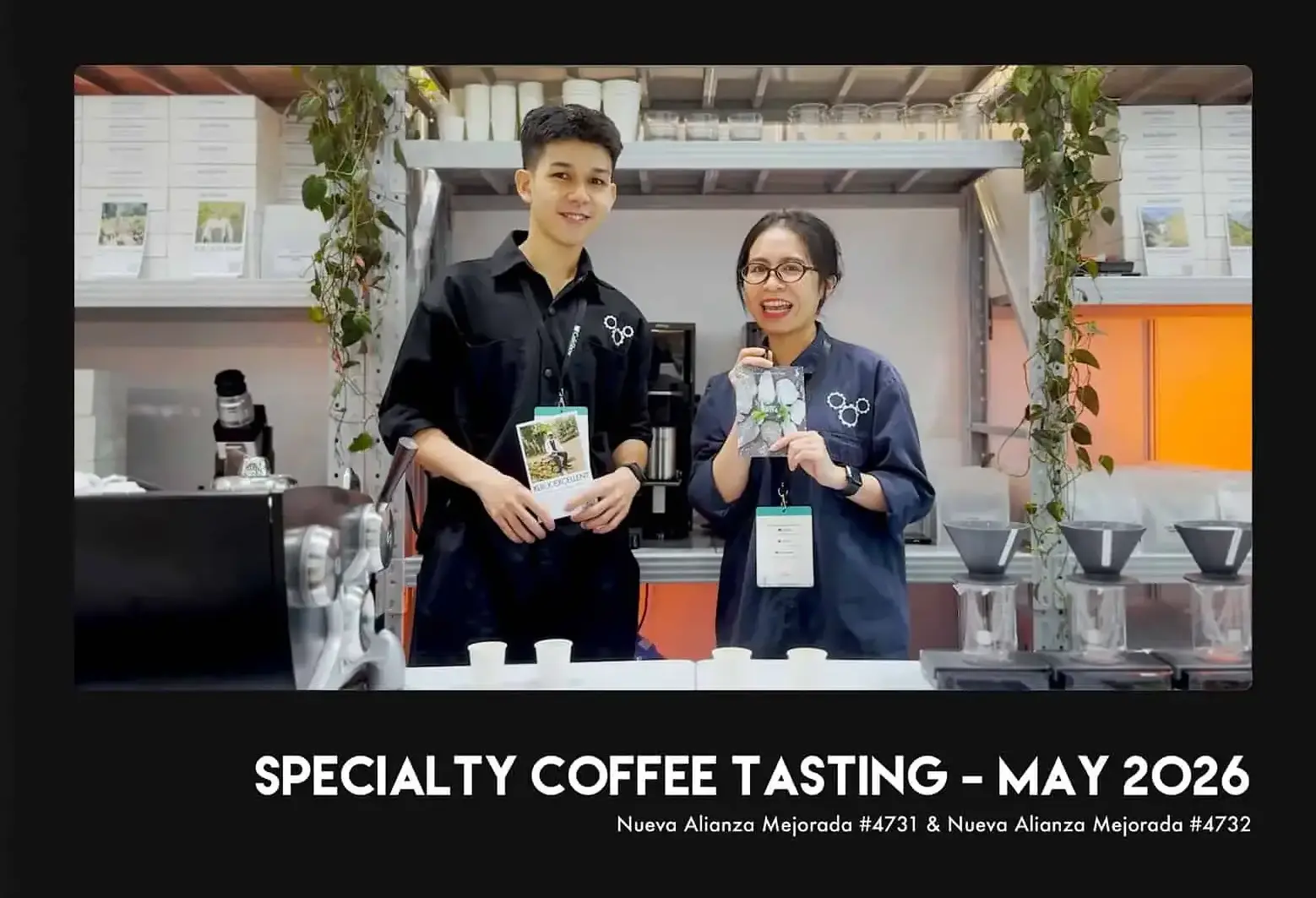
Unveiling May Discovery Subscription: Nueva Alianza Mejorada #4731 & Nueva Alianza Mejorada #4732
The Discovery Subscription is a silent dialogue, a place where the soul of the connoisseur finds a harmonious beat with distant lands. Like a transparent lens, we become storytellers, meticulously peeling back layers of cultural sediment, the breath of the soil, and the human philosophies hidden within every coffee bean.
May arrives with brilliant streaks of golden sunlight, a time when we long to hide beneath the lush, dew-drenched canopies of Santa Teresa. Amidst the silence of the Andes, when compassion touches Mother Earth, what will we hear? Perhaps it is a sweet response that nature reserves solely for souls who know how to wait patiently.

- Taste the Origin
Nueva Alianza Pacamara #4733 – The essence of Cusco with elegant jasmine notes
Nueva Alianza Pacamara #4733 is a testament to the miraculous terroir and dedicated cultivation of the renowned Cusco region. The combination of the characteristic Pacamara bean size and ideal altitude has forged a flavor profile of immense sophistication and depth. From the very first moment, this lot captivates with its elegant jasmine notes, radiating a gentle, pure fragrance akin to a flower blooming in the morning dew.

- Taste the Origin
Nueva Alianza Orange Gesha #4737 – An expedition of recessive genetic traits into the sensory realm
In a world of authenticity, Nueva Alianza Orange Gesha #4737 represents the proud emergence of rare biological traits often obscured by nature’s universality. Carrying a recessive genetic code, Lot #4737 embarks on an “expedition” into the connoisseur’s mind, where record-breaking fructose concentrations are released to perfectly fill every sensory gap with absolute smoothness and purity.
Through washed processing and extremely-light roasting, vibrant citrus nuances and ethereal floral notes, once hidden deep within the genetic structure, now manifest with power, transforming the tasting experience into a journey of ontological completion, where the rarity of recessive genes finally reigns supreme in flavor.

Specialty Coffee in Vietnam
BRAND VALUE
YOU SHOULD HAVE KNOWN
XLIII Coffee has been aiming to become a big, impactful company with social responsibilities,
have access to high-quality raw materials and convey the complete original values of coffee to our customer
