
What is coffee crust? Why is it important in cupping?
When participating in coffee cupping, you’ll encounter an essential term: coffee crust. This is not just the layer that forms on the surface after pouring hot water over ground coffee, but it also plays a crucial role in evaluating the flavor and quality of the coffee. To gain a deeper understanding of coffee crust and its significance, let’s dive into the details of this process.
I. What is coffee crust?
Coffee crust is a coffee terminology that refers to the layer of coffee grounds and volatile compounds that form on the surface when hot water is poured over ground coffee during cupping. The crust acts as a protective layer, helping to trap the coffee’s aromas within the cup, allowing them to fully develop before tasting. When this crust is broken, the complex aromas of the coffee are released.
II. Formation and role of the crust
The crust forms when hot water contacts ground coffee, causing the rapid release of water-soluble compounds and volatile elements, including coffee oils, fine coffee particles, and aromatic gases, which are crucial to the coffee’s flavor.
The role of the crust during cupping is significant. It not only traps the volatile compounds but also protects the aromas from exposure to air, allowing them to blend and intensify. This gives the taster time to focus on other aspects of the coffee before assessing the main aromas.

The crust forms when hot water comes into contact with ground coffee, leading to the rapid release of water-soluble compounds and volatile elements.
III. How to properly break the crust
Breaking the crust is a crucial step in accurately tasting and evaluating the flavors of Specialty Coffee. According to the SCA (Specialty Coffee Association), the crust should be broken 3-5 minutes after pouring hot water. This time frame allows the aromas to blend fully.
Breaking the crust technique:
- Use a cupping spoon: The cupping spoon is similar to a soup spoon but with a deeper bowl, allowing tasters to scoop the right amount of coffee without disturbing too much of the grounds.
- Break gently: Use the back of the spoon to gently push through the layer of coffee grounds. This should be done carefully to avoid disturbing the coffee sediment at the bottom of the cup.
- Skim off the foam: After breaking the crust, use two spoons to skim off the foam that rises to the surface, keeping as much liquid as possible without stirring up the settled grounds. This maintains consistency during tasting.

Breaking the crust is an essential step that allows you to taste and evaluate the flavors of Specialty Coffee accurately.
IV. How crust affects coffee flavor
The coffee crust has a significant impact on how we perceive the flavor of the coffee. When the crust is broken, the aromas trapped beneath are released, creating an explosion of fragrance that allows the taster to experience the coffee’s flavor notes more clearly. If the crust is broken improperly or at the wrong time, it can lead to inaccurate tasting results.
A study by Barista Hustle showed that the timing of crust breaking can greatly affect extraction and the final flavor. Their experiment revealed that breaking the crust after 5 minutes can increase the level of extraction, indicating that adjusting the timing of crust breaking can optimize flavor. However, the study also emphasized the need for consistency in the breaking technique to ensure accurate cupping results.
Conclusion
Coffee crust plays a crucial role in the cupping process, helping to protect and enhance the complex aromas of specialty coffee. Breaking the crust is an essential technique for exploring the richness and diversity of the coffee world. With the right understanding and practice, you can improve your tasting skills and discover new aspects of your favorite coffee. Try these techniques in your next cupping session and notice the difference in each cup!

When the crust is broken, the accumulated aromas beneath are released, creating an explosion of fragrance, enabling the taster to perceive the coffee’s flavor notes more clearly.
V. FAQs
Q1: What is coffee crust and its role in cupping?
Coffee crust is the layer of coffee grounds and volatile compounds that forms when hot water is poured over ground coffee. Its role is to trap aromas, preventing them from escaping, and optimizing the assessment of coffee flavor during cupping.
Q2: When should the crust be broken during cupping?
According to SCA guidelines, the crust should be broken 3-5 minutes after pouring hot water over the coffee grounds. This allows the coffee’s aroma and flavors to fully develop before tasting.
Q3: Why is breaking the crust important?
Breaking the crust is important because it releases the trapped aromas, allowing the taster to experience the coffee’s complex and subtle flavor notes, which aids in accurately evaluating the coffee’s quality.
Q4: What is the proper technique for breaking the crust?
The correct technique involves gently using the back of a cupping spoon to push through the crust without disturbing the coffee grounds too much, followed by skimming off the foam to avoid disrupting the liquid.
Q5: How does the crust affect cupping results?
The crust greatly influences cupping results by holding and then releasing coffee aromas, allowing the taster to accurately identify the coffee’s flavor characteristics. If not handled properly, the flavor and extraction process can be affected.

Bài viết mới

- Find the Origin
Mandela coffee variety – A convergence of generations from a masterpiece breeding strategy
Amidst the constant fluctuations of the era, Mandela emerges as a gentle yet resilient response from the soil. Instead of attempting to alter or impose upon nature, this breeding strategy is, in essence, a profound act of listening. Each Mandela coffee bean carries the bloodline of multiple generations, possessing both the serene, steadfast nature of native trees and the sparkling elegance of premium varieties. It is a sacred continuation, where the flow of generations ultimate honors the original value of the species, imparting an intact and sustainable vitality into every cup.


- Taste the Origin
Nigussie Nare – Murago Outgrowers #03028: Cultivated from the Values of Sustainable Reciprocity
Nestled beneath the shade trees of Sidama, Bensa, the Nigussie Nare – Murago Outgrowers #03028 coffee lot serves as a living testament to the values of sustainable reciprocity. This symbiosis begins with the intimate bond between a rich indigenous ecosystem and the smallholder farmers of the Murago region. Each harvested bean is the culmination of a virtuous cycle: a stable environment produces exceptional bean quality, and sustainable economic growth, in turn, continues to protect the verdant canopy of the great forest.

- Taste the Origin
Rift Valley Coffee Caucus #03757 – A Testament to Western Kenya’s Collective Spirit
Turning our gaze to the Great Rift Valley of East Africa, the fertile volcanic landscapes are witnessing an inspiring transformation. Moving away from fierce, survival-driven competition, smallholder farmers in Western Kenya have chosen to join forces, forging a resilient and unified network. The Rift Valley Coffee Caucus #03757 lot stands as the ultimate testament to this remarkable collective synergy.

- Breaking News
Airworks Coffee & XLIII Coffee – A “handshake” that brings original flavors across borders
XLIII Coffee, alongside our key wholesale partner Airworks Coffee, officially announces the latest release of specialty coffee lots for the North American market. This event reaffirms our commitment to bringing original flavors across all geographical barriers to coffee enthusiasts.
Early access (for Subscribers of Airworks): 10:00 AM (PST) | Wednesday, April 29, 2026
General access: 10:00 AM (PST) | Friday, May 1, 2026
We invite our Customers and Partners to visit (airworkscoffee.com) for detailed information and to prepare for this special release!
- Taste the Origin
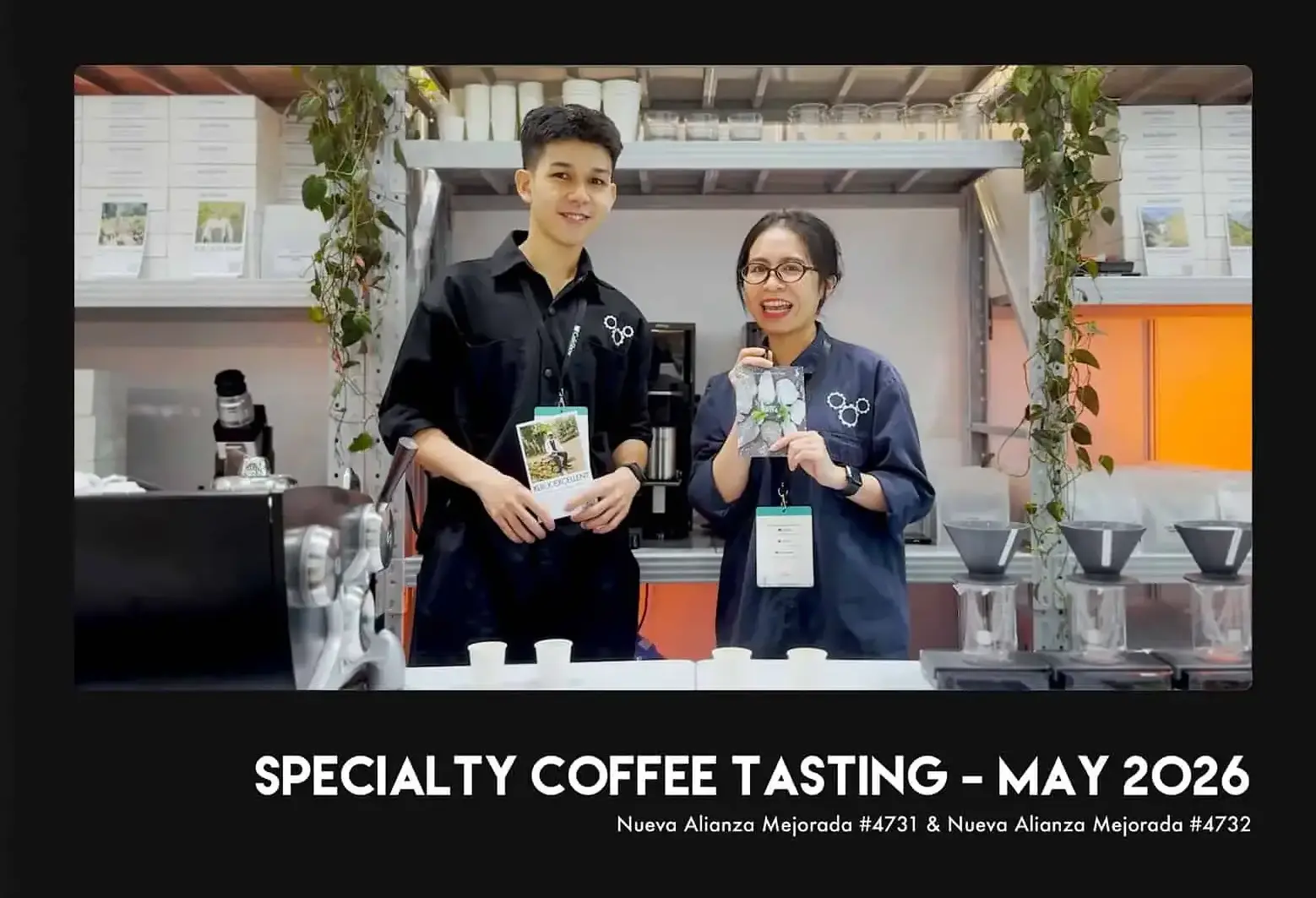
Unveiling May Discovery Subscription: Nueva Alianza Mejorada #4731 & Nueva Alianza Mejorada #4732
The Discovery Subscription is a silent dialogue, a place where the soul of the connoisseur finds a harmonious beat with distant lands. Like a transparent lens, we become storytellers, meticulously peeling back layers of cultural sediment, the breath of the soil, and the human philosophies hidden within every coffee bean.
May arrives with brilliant streaks of golden sunlight, a time when we long to hide beneath the lush, dew-drenched canopies of Santa Teresa. Amidst the silence of the Andes, when compassion touches Mother Earth, what will we hear? Perhaps it is a sweet response that nature reserves solely for souls who know how to wait patiently.

Specialty Coffee in Vietnam
BRAND VALUE
YOU SHOULD HAVE KNOWN
XLIII Coffee has been aiming to become a big, impactful company with social responsibilities,
have access to high-quality raw materials and convey the complete original values of coffee to our customer
