
Why develop specialty coffee terminology?
The term “specialty coffee” was introduced in 1974 by Erna Knutsen, a pioneer in the coffee industry. This initial definition described unique, high-quality coffees grown in specific microclimates. Over the decades, the term has evolved and been redefined with more stringent and detailed criteria. At any point in time, the importance and necessity of these terms for the development of the specialty coffee industry cannot be denied. Let’s explore the role of these specialty coffee terminology more closely with XLIII Coffee.
I. Overview of Specialty Coffee terminology
The origins of the term
The term “specialty coffee” emerged as early as 1974, during a period when the specialty coffee wave had not yet reached its peak. The creation of this terminology reflected a new movement in the coffee industry, focusing on quality, origin, and processing methods.
Refinement over time
For a long time, when people mentioned specialty coffee, it conjured up images of fine coffees accompanied by terms like third wave, artisanal, and single origin. The establishment of the Specialty Coffee Association (SCA) in 1982 marked a significant turning point in shaping and developing this concept. SCA set strict quality standards from cultivation and harvesting to processing and brewing, ensuring that every coffee bean met the highest standards.
The terminology around specialty coffee became more specific with the quality scale developed by the SCA. According to this scale, coffee scoring 80 points or higher, with no more than 5 defects in a 350g sample of green coffee, is categorized as specialty coffee:
- 80 to 84.99 points: Very good
- 85 to 89.99 points: Excellent
- 90 to 100 points: Outstanding
Recently, in a new report by the SCA, the term specialty coffee has been updated based on attributes. Specialty coffee now includes both internal attributes (free of defects, flavor profile, bean size, etc.) and external attributes (origin, producer, agricultural style, etc.). Moreover, the SCA’s definition of specialty coffee has evolved to incorporate not only technical aspects but also broader considerations such as “sustainability,” “traceability,” “transparency,” and “direct trade.”

Specialty coffee terminology has become more specific, detailed, and clear with attribute descriptions provided by the SCA.
II. Introduction to common Specialty Coffee terminology
Bean-related terminology
|
Terminology |
Meaning |
|
Refers to specific coffee plant varieties like Typica, Bourbon, Caturra, each with distinct characteristics in flavor, bean shape, and disease resistance. |
|
|
Single Origin |
Coffee sourced from a single geographic location, often from a specific farm or region, allowing consumers to distinctly experience the terroir of that area. |
|
Processing methods |
Includes methods like washed (wet processing), natural (dry processing), and honey (semi-wet processing), each influencing the final flavor of the coffee. |
|
Cupping score |
A crucial tool in the specialty coffee industry used to assess and rank the quality of coffee. Coffees scoring over 80 on the SCA scale are typically considered specialty coffee. |
|
Attributes |
Specific factors used to evaluate the quality and flavor profile of coffee, including aroma, flavor, acidity, body, and aftertaste. |
|
Micro-lot |
A small quantity of coffee harvested and processed from a specific part of a farm, often from a special variety or process |
|
Defects |
Issues with coffee beans, which can occur in green beans or after roasting, affecting quality. |
|
Coffee beans that do not roast correctly, remaining lighter in color and needing to be removed due to their negative impact on brewing. |
Brewing method terminology
|
Terminology |
Meaning |
|
Filter |
A coffee brewing method where water passes through ground coffee held in a filter. |
|
A manual brewing method involving pouring hot water over coffee grounds in a filter, often using tools like the Hario V60, Kalita Wave, or Chemex. |
|
|
V60 |
A pour-over method using a V-shaped cone with a 60-degree angle, through which coffee grounds and filter are placed. |
|
Cold-brew |
A brewing method where coffee grounds are steeped in cold or room-temperature water for an extended period (usually 12-24 hours). |
|
Syphon |
A brewing method using two glass chambers, where water is heated in the lower chamber, rises to the upper chamber to brew coffee, and then flows back down due to pressure. |
Flavor-related terminology
|
Terminology |
Meaning |
|
Basic Taste |
The fundamental taste elements perceived when tasting coffee, forming the foundation of its overall flavor profile. |
|
Acidity |
A critical criterion in coffee cupping, where the balance of various acids contributes to the overall tasting experience |
|
Aftertaste |
The lingering sensation and flavor in the mouth after swallowing coffee, essential for quality assessment. |
|
Aroma |
The smell of coffee, which significantly influences its flavor profile, ranging from fruity to smoky depending on the roast |
|
A dry, rough sensation in the mouth caused by compounds like tannins, often experienced when consuming unripe fruit. |
|
|
The harmony of flavors in a cup of specialty coffee, where no single element dominates. |
|
|
The weight, texture, or richness of the coffee as perceived in the mouth. |
Quality-related terminology
|
Terminology |
Meaning |
|
Refers not only to beans free from chemicals or impurities but also to coffee grown, harvested, and processed under the highest environmental and social sustainability standards. |
|
|
Organic Coffee |
Coffee grown without the use of pesticides or chemical fertilizers, usually certified by organizations like USDA Organic. |
III. The role of Specialty Coffee terminology
In the world of Specialty Coffee, terminology plays a crucial role as an identifier to distinguish high-quality specialty coffee.
More accurate identification of Specialty Coffee
New terms, with strict requirements regarding scores, certifications, traceability, and transparency from the SCA, have helped redefine specialty coffee with greater clarity and detail. For example, standards for ensuring sustainability by minimizing the impacts of climate change, balancing ecosystems, mitigating coffee price crises, and supporting the overall livelihoods and stability of coffee producers have become central to defining specialty coffee today.
Now, the key for coffee to be considered “specialty” is that it must be sustainably produced. This sustainability is built on several factors, including economic sustainability for both producers and the overall market, as well as ecological sustainability, reducing harm to land, the environment, natural resources, and people. If we were to stick with the old definition, it would be difficult to identify and ensure sustainability standards in specialty coffee since unique and high-quality coffee alone doesn’t guarantee sustainable production.
Improving consumer accessibility
With stringent standards for quality, sustainability in production, supply, and exclusivity, most specialty coffees come at a significantly higher price than the average. Often marketed as premium products, many people feel that specialty coffee is not for them. Developing specific terminology for specialty coffee helps consumers better understand and focus on their own experience without needing extensive training in coffee. Through the specialty coffee label and packaging information, they can know that the coffee they purchase is sustainably produced, of exceptional quality, and specially certified.
Assessing coffee quality
Terms like aroma, flavor, acidity, body, and aftertaste are critical in evaluating coffee quality. These attributes help both consumers and experts perceive and assess the complexity and refinement of coffee. In the cupping process, these terms are central to evaluation, clearly defining the essential factors for ranking and determining the value of specialty coffee. Precision in using this terminology helps maintain consistency and standards within the industry.

The clearer and more detailed the specialty coffee terminology, the easier it is for consumers to grasp the value of sustainability.
Conclusion
The development and standardization of specialty coffee terminology, starting from Erna Knutsen’s definition in 1974, have not only highlighted the quality of coffee but also promoted sustainability and transparency in the industry. This development not only enhances the consumer experience but also raises production and marketing standards for coffee. Accurate and detailed terminology is a key factor in ensuring the success and reputation of specialty coffee in the global market.
IV. FAQs
Question 1: When was the term “specialty coffee” introduced by Erna Knutsen, and what does it mean?
The term “specialty coffee” was introduced by Erna Knutsen in 1974 to describe unique, high-quality coffees grown in specific microclimates.
Question 2: How did the establishment of the Specialty Coffee Association (SCA) impact the terminology of specialty coffee?
The Specialty Coffee Association (SCA), founded in 1982, set strict quality standards from cultivation to processing and brewing, shaping and developing the concept of specialty coffee in a more detailed and clear manner.
Question 3: How does Single Origin coffee differ from blended coffee?
Single Origin coffee is sourced from a single geographic area, allowing the distinct flavors of the region where the coffee is grown to shine through. In contrast, blended coffee combines beans from different origins to create a composite flavor profile.
Question 4: What is a Micro-lot, and why is it important in the specialty coffee industry?
A Micro-lot is a small batch of coffee harvested and processed from a specific part of a farm. It is important because it allows for a focus on special varieties or specific processing methods, enhancing the quality and uniqueness of the coffee.
Question 5: Why is the development and standardization of specialty coffee terminology important?
The development and standardization of specialty coffee terminology are crucial because they help define and ensure coffee quality, create industry consistency, and improve consumer accessibility and understanding of specialty coffee products. They also support raising production and marketing standards while promoting sustainability in the industry.

Bài viết mới

- Taste the Origin
Nigussie Nare – Murago Outgrowers #03028: Cultivated from the Values of Sustainable Reciprocity
Nestled beneath the shade trees of Sidama, Bensa, the Nigussie Nare – Murago Outgrowers #03028 coffee lot serves as a living testament to the values of sustainable reciprocity. This symbiosis begins with the intimate bond between a rich indigenous ecosystem and the smallholder farmers of the Murago region. Each harvested bean is the culmination of a virtuous cycle: a stable environment produces exceptional bean quality, and sustainable economic growth, in turn, continues to protect the verdant canopy of the great forest.

- Taste the Origin
Rift Valley Coffee Caucus #03757 – A Testament to Western Kenya’s Collective Spirit
Turning our gaze to the Great Rift Valley of East Africa, the fertile volcanic landscapes are witnessing an inspiring transformation. Moving away from fierce, survival-driven competition, smallholder farmers in Western Kenya have chosen to join forces, forging a resilient and unified network. The Rift Valley Coffee Caucus #03757 lot stands as the ultimate testament to this remarkable collective synergy.

- Breaking News
Airworks Coffee & XLIII Coffee – A “handshake” that brings original flavors across borders
XLIII Coffee, alongside our key wholesale partner Airworks Coffee, officially announces the latest release of specialty coffee lots for the North American market. This event reaffirms our commitment to bringing original flavors across all geographical barriers to coffee enthusiasts.
Early access (for Subscribers of Airworks): 10:00 AM (PST) | Wednesday, April 29, 2026
General access: 10:00 AM (PST) | Friday, May 1, 2026
We invite our Customers and Partners to visit (airworkscoffee.com) for detailed information and to prepare for this special release!
- Taste the Origin
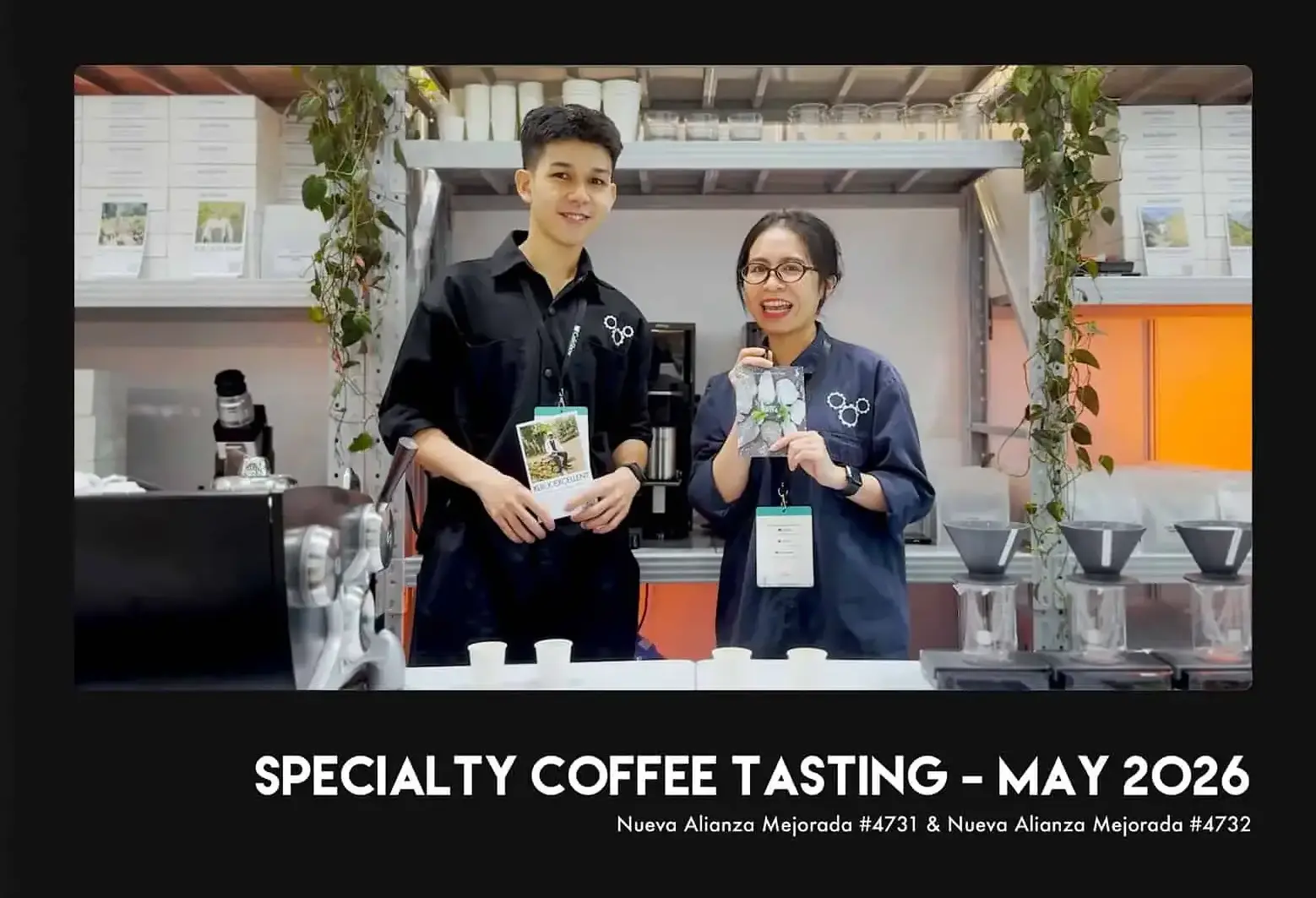
Unveiling May Discovery Subscription: Nueva Alianza Mejorada #4731 & Nueva Alianza Mejorada #4732
The Discovery Subscription is a silent dialogue, a place where the soul of the connoisseur finds a harmonious beat with distant lands. Like a transparent lens, we become storytellers, meticulously peeling back layers of cultural sediment, the breath of the soil, and the human philosophies hidden within every coffee bean.
May arrives with brilliant streaks of golden sunlight, a time when we long to hide beneath the lush, dew-drenched canopies of Santa Teresa. Amidst the silence of the Andes, when compassion touches Mother Earth, what will we hear? Perhaps it is a sweet response that nature reserves solely for souls who know how to wait patiently.

- Taste the Origin
Nueva Alianza Pacamara #4733 – The essence of Cusco with elegant jasmine notes
Nueva Alianza Pacamara #4733 is a testament to the miraculous terroir and dedicated cultivation of the renowned Cusco region. The combination of the characteristic Pacamara bean size and ideal altitude has forged a flavor profile of immense sophistication and depth. From the very first moment, this lot captivates with its elegant jasmine notes, radiating a gentle, pure fragrance akin to a flower blooming in the morning dew.

- Taste the Origin
Nueva Alianza Orange Gesha #4737 – An expedition of recessive genetic traits into the sensory realm
In a world of authenticity, Nueva Alianza Orange Gesha #4737 represents the proud emergence of rare biological traits often obscured by nature’s universality. Carrying a recessive genetic code, Lot #4737 embarks on an “expedition” into the connoisseur’s mind, where record-breaking fructose concentrations are released to perfectly fill every sensory gap with absolute smoothness and purity.
Through washed processing and extremely-light roasting, vibrant citrus nuances and ethereal floral notes, once hidden deep within the genetic structure, now manifest with power, transforming the tasting experience into a journey of ontological completion, where the rarity of recessive genes finally reigns supreme in flavor.

Specialty Coffee in Vietnam
BRAND VALUE
YOU SHOULD HAVE KNOWN
XLIII Coffee has been aiming to become a big, impactful company with social responsibilities,
have access to high-quality raw materials and convey the complete original values of coffee to our customer
