
XLIII Coffee: Partnering with Specialty coffee producers for sustainable development
XLIII Coffee is committed to staying true to its origins by fostering the growth and development of specialty coffee. After acquiring high-quality coffee batches, XLIII Coffee remains dedicated to supporting specialty coffee producers, working together to build a sustainable supply chain.
Table of Contents
- 1. XLIII Coffee’s commitment to fair relationships with farmers
- 2. Fair and deserved prices for Specialty coffee farmers
- 3. XLIII coffee supports technical assistance and knowledge sharing with producers
- 4. XLIII Coffee motivates farms to invest in infrastructure
- 5. XLIII Coffee for the overall development of the Specialty coffee community
- FAQs
1. XLIII Coffee’s commitment to fair relationships with farmers
XLIII Coffee recognizes and values the hard work of farmers in cultivating premium coffee beans.
What does a fair relationship with farmers look like?
A fair relationship with farmers ensures that they receive just rewards for their efforts.
Farmers’ lives are closely tied to their farms and coffee plants. However, when a batch of coffee is highly praised and profitable, the contributions of the farmers are often overlooked. Many farmers face exploitation, receiving wages below the minimum wage despite their significant contributions.
Why does XLIII Coffee emphasize relationships with farmers?
For the benefit of the entire industry
In many specialty coffee-growing regions, farmers’ benefits are often neglected. In the long run, this can disrupt the supply chain balance and negatively impact the industry’s future. If farmers are not fairly compensated, they may abandon coffee cultivation for more profitable crops, leading to a continuous decline in coffee production, supply shortages, and price crises.
XLIII Coffee understands that for the specialty coffee industry to develop stably, it is essential to balance the interests of all parties, including farmers, farms, transporters, roasters, and businesses.
Enhancing the quality of Specialty coffee
Farmers have a close relationship with the quality of coffee beans. Establishing a fair relationship with farmers helps roasters ensure the quality and quantity of coffee for end users. When farmers can confidently carry out their work, there is a remarkable increase in efficiency. Coffee beans infused with nature and the love of the farmers possess a fuller aroma, making them unforgettable to those who taste them. This is one of the secrets behind XLIII Coffee’s continuous improvement in the quality of its coffee batches.

Building fair relationships with farmers helps roasters ensure the quality and quantity of coffee for end users
XLIII Coffee’s efforts to achieve fairness for farmers
XLIII Coffee has long adhered to the Farm to Cup model, with a commitment to transparency down to each farming household. Information about the growing region, farming households, and coffee processing methods is printed on a tag accompanying each cup of coffee. This allows consumers to understand how the coffee they drink is made. Along with coffee consumption, the names, techniques, and love for coffee from the farmers are widely recognized, facilitating the search for quality partners in the future.
Additionally, XLIII Coffee prioritizes coffee batches from regions that treat farmers fairly and humanely. Besides focusing on quality and aroma, XLIII Coffee also considers the lives of the coffee farmers in these regions before deciding to collaborate with a producer. This selection criterion aims to combat the injustices that farmers face in their labor process.

XLIII Coffee prioritizes coffee batches from regions that treat farmers fairly and humanely
2. Fair and deserved prices for Specialty coffee farmers
Paying a fair and deserved price for specialty coffee beans is crucial for ensuring a stable livelihood for farmers. Sustainable development emphasizes fair compensation, not just high prices.
Reasonable prices for Specialty coffee farmers: A sustainable solution
With increasing market demand, the specialty coffee sector appears to be growing positively. However, the industry faces significant risks from price volatility, declining production quality, and supply chain disruptions, threatening sustainable development.
Experts suggest that addressing core issues, particularly sustainability at the beginning of the supply chain, is vital for overcoming these threats and revitalizing the industry. A key objective is to ensure fair prices for the laborers who produce coffee beans. When farmers receive fair prices, various other benefits follow, such as:
Improving farmers’ livelihoods and social welfare
Many specialty coffee farmers worldwide live below the poverty line, facing rising production costs, inflation, price pressures, and crop failures due to climate change. This makes it difficult for them to sustain themselves through coffee farming, potentially leading to farm abandonment, increased unemployment, and social instability.
Fair pricing allows farmers to earn good profits, improving their living conditions and ensuring a sustainable life for their families. With fair compensation, producers can provide a safer working environment, enhance welfare, and organize training for workers. As a result, farm workers receive stable wages, enabling them to care for themselves and their families’ future.
Encouraging quality improvement
Specialty coffee farmers often invest significant time, money, and effort into cultivating, caring for, and harvesting high-quality coffee. When farmers receive fair value for their products, they are motivated to maintain and enhance coffee quality. This benefits consumers and contributes to the sustainable development of the coffee industry.

Fair pricing provides farmers with the financial means to invest in environmental protection measures, such as organic farming, efficient water management, and biodiversity conservation
Protecting the environment
Specialty coffee production often requires sustainable and environmentally friendly farming methods. Fair pricing provides farmers with the financial means to invest in environmental protection measures, such as organic farming, efficient water management, and biodiversity conservation.
Promoting fair trade
Fair pricing helps reduce injustices in the coffee supply chain. Farmers are often the most vulnerable and disadvantaged group in the value chain. Ensuring they receive fair compensation improves social and economic equity.
Preserving traditions and culture
Many farming communities have long-standing traditions of coffee cultivation. Fair pricing helps maintain and develop these traditions and cultures while preserving the unique coffee farming knowledge and skills of each region.

Fair pricing allows farmers to earn good profits, improving their living conditions and ensuring a sustainable life for their families
Strengthening relationships between consumers and producers
When roasters and consumers are willing to pay fair prices for specialty coffee, they create stronger connections with producers. This not only generates ethical value but also raises consumer awareness about the origins and production processes of coffee.
Overall, fair pricing for specialty coffee farmers benefits producers directly and contributes to creating a sustainable, equitable, and high-quality supply chain.
XLIII coffee always pays fair prices to Specialty coffee farmers
As a sustainably oriented business, XLIII Coffee remains committed to providing fair compensation for farmers’ efforts. Transactions are conducted through direct trade, minimizing intermediaries to ensure maximum value reaches the farmers.
XLIII Coffee independently seeks, contacts, and builds fair relationships with partners, farmers, and cooperatives, giving farmers more power in pricing. Coffee prices are determined based on the sustainable efforts of producers and product quality, not market fluctuations. Farmers propose their prices, and XLIII Coffee strives to meet or exceed their expectations, ensuring they always receive fair compensation.

XLIII Coffee remains committed to providing fair compensation for farmers’ efforts
3. XLIII coffee supports technical assistance and knowledge sharing with producers
Most specialty coffee is grown by small-scale farmers in mountainous regions with relatively difficult conditions. Farmers have limited access to new information about resources such as new plant varieties, production techniques, or market trends. This creates significant barriers to the development of specialty coffee farms.
Therefore, XLIII Coffee strives to enhance its role in helping partner farmers improve their access to technical knowledge and market information. Viewing itself as a cog in a larger operational machine, the brand consistently builds sustainable cooperation, supporting both sides toward common values. By regularly sharing market information, producers can update their resources and opportunities. They can use this information to diversify and change their farming methods or processing techniques to better meet market demands, increase competitiveness, and achieve sustainable long-term development.
XLIII Coffee is also willing to exchange and collaborate with farmers in developing new techniques, laying the groundwork for improving sustainability and product quality. For example, the Finca Rosenheim XLIII batch consists of specialty coffee beans produced through the experimental processing techniques of Finca Rosenheim Farm and XLIII Coffee.

XLIII Coffee consistently seeks ways to enhance its role in helping partner farmers access technical knowledge and market information
4. XLIII Coffee motivates farms to invest in infrastructure
Investing in infrastructure is a key part of the sustainable development strategy. It not only brings economic benefits but also helps protect the environment and contributes to social development.
The importance of encouraging farms to invest in infrastructure
Modern infrastructure investment improves coffee production and processing processes, thereby enhancing product quality. Farms equipped with modern machinery and equipment save time and reduce production costs, increasing economic efficiency. This enables farms to compete better in the market and improve profitability. Many modern technologies also incorporate functions that minimize negative impacts on the ecosystem and surrounding communities, protecting the environment.
Infrastructure investment also includes upgrading protective labor equipment and providing safe and hygienic workspaces, protecting workers’ health. When workers feel cared for and have opportunities for development, they are more likely to stay with the farm long-term, maintaining a stable, high-quality workforce.
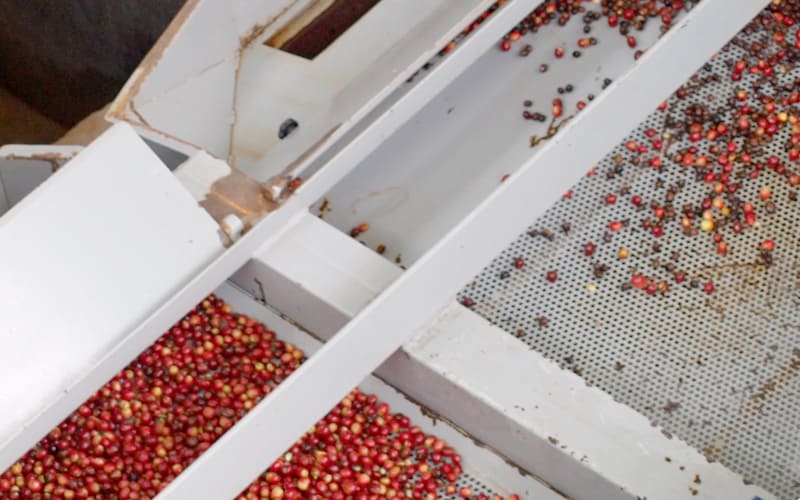
Farms equipped with modern machinery and equipment save time and reduce production costs, increasing economic efficiency for farmers
XLIII Coffee promotes farm infrastructure investment
As a reliable and responsible partner, XLIII Coffee values and fully supports the development steps of specialty coffee producers. By choosing and supporting sustainably produced specialty coffee beans, XLIII Coffee not only aims to improve farmers’ incomes but also encourages them to invest in advanced, environmentally friendly infrastructure.
By paying higher-than-proposed prices to producers, XLIII Coffee provides the resources needed for them to improve farm infrastructure, thereby enhancing product quality and sustainability. Premium fees are also readily paid at higher rates to demonstrate a deep commitment to supporting producers on their sustainable coffee journey. XLIII Coffee’s respect for each coffee bean is a powerful motivation for producers to improve working conditions and infrastructure, resulting in high-quality products that meet global market demands.

XLIII Coffee values and fully supports the development steps of specialty coffee producers
5. XLIII Coffee for the overall development of the Specialty coffee community
Any business activity aiming for long-term sustainability must consider its relationship with the community. XLIII Coffee is no exception, positioning itself as a specialty coffee business committed to the growth of the entire industry.
Collaborating to protect the environment
Coffee production activities put pressure on the environment. A 2021 study by University College London indicates that these activities emit a significant amount of carbon due to the use of agricultural chemicals during production and even transportation. To ensure quality, many premium coffee beans are transported by air, increasing carbon emissions by over 70%. Additionally, the misuse of pesticides and chemical fertilizers can degrade soil fertility and pollute groundwater.
Environmental protection is becoming increasingly urgent as climate change threatens human lives and crops with historic floods and droughts. XLIII Coffee is acutely aware of its responsibility to protect nature and support sustainable initiatives in coffee-producing countries.
Firstly, XLIII Coffee only purchases coffee batches from organic farms, prioritizing coffee certified with environmental certifications such as Organic Coffee and Rainforest Alliance. Current XLIII Coffee batches, including Finca Soledad Sydra, Nueva Alianza Yellow Gesha #3188, and Nueva Alianza Red Gesha #3189, are all certified as sustainably cultivated. This approach motivates producers to build an environmentally friendly supply chain together.
Additionally, XLIII Coffee’s roasting, storage, and brewing processes always prioritize environmental factors. By using eco-friendly, reusable materials, XLIII Coffee helps reduce waste pressure on the planet. GrainPro packaging used for coffee storage is a recyclable plastic bag that keeps coffee beans fresh while limiting external waste.

XLIII Coffee only buys coffee batches from organic farms, prioritizing coffee certified with environmental certifications like Organic Coffee and Rainforest Alliance
Respecting the value of origins
Gratitude for one’s birthplace is a way to preserve identity and progress steadily. XLIII Coffee carries a passionate love for original beauty, consciously preserving the inherent characteristics of coffee beans to deliver the most authentic experience to users. The wet processing method combined with ultra-light roasting helps XLIII Coffee compress the pure notes of each coffee bean, possessing bright, flexible acidity that creates a precious flavor symphony.
Thus, coffee beans can develop naturally, ensuring species diversity. Each coffee bean represents its growing region, spreading its fragrance worldwide. Identified by quality, growing regions strive to research optimal farming methods to maximize the flavor profiles of their coffee batches.
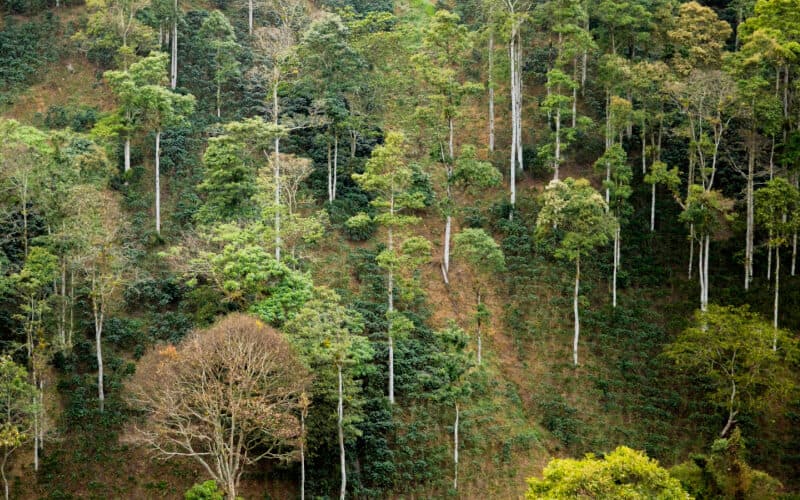
XLIII Coffee carries a passionate love for original beauty, consciously preserving the inherent characteristics of coffee beans to deliver the most authentic experience to users
Focusing on people
People are the ultimate goal of the ethical, sustainable coffee industry.
XLIII Coffee respects farmers’ labor
XLIII Coffee understands the hard work of farmers in producing quality coffee beans and wants them to be fairly compensated. XLIII Coffee’s partners are producers who ensure fair pay and stable working conditions for farmers. Additionally, the company acknowledges the efforts of coffee growers with comprehensive information on coffee tags.
Creating value for consumers
XLIII Coffee provides consumers with excellent quality coffee batches that are absolutely safe for health. By being transparent about all information from farm to price, XLIII Coffee treats customers as close friends and interacts with them sincerely.

XLIII Coffee’s partners are producers who ensure fair pay and stable working conditions for farmers
Supporting specialty coffee producers to develop sustainably is an integral part of XLIII Coffee’s strategic plan and operations from the very beginning. With this strategy, XLIII Coffee not only builds a sustainable and reliable supply chain but also contributes to economic and social development in coffee-producing regions, creating a better future for both producers and consumers. This approach brings economic benefits while creating cultural and social value, protecting the environment, and improving the lives of coffee farmers. XLIII Coffee believes that only when both sides develop sustainably can the journey back to the origins be truly complete and meaningful, resulting in excellent and sustainable coffee for the global market.
Image source provided and collected by partner farm XLIII Coffee
FAQs
Q1: Is building a fair relationship with farmers important?
A1: Building a fair relationship with farmers is crucial for the strong development of the specialty coffee industry. Farmers are the foundation and an indispensable link in the supply chain, directly creating value and quality for coffee beans, promoting sustainable industry development.
Q2: How does XLIII Coffee build fair relationships with farmers?
A2: XLIII Coffee builds fair relationships with farmers through direct trade. Negotiations and cooperation are built on ethics, responsibility, and transparency, aiming for common values.
Q3: Why is it necessary to pay fair and deserved prices to farmers?
A3: Sustainable development emphasizes paying fair prices to farmers due to the benefits it creates, including:
– Improving farmers’ livelihoods and social welfare
– Encouraging quality improvement
– Protecting the environment
– Promoting fair trade
– Preserving traditions and culture
– Strengthening relationships between consumers and producers
Overall, paying fair prices to specialty coffee farmers not only provides direct benefits to producers but also contributes to creating a sustainable, equitable, and high-quality supply chain.
Q4: What has XLIII Coffee done to support farmers in investing in farm infrastructure?
A4: By valuing and paying fair prices and high premiums to producers, XLIII Coffee provides the resources needed for them to improve farm infrastructure, enhancing product quality and sustainability.
Q5: How do XLIII Coffee’s activities impact the overall development of the specialty coffee community?
A5: XLIII Coffee’s activities always aim for sustainable development, contributing to the long-term growth of the entire industry by:
1. Collaborating to protect the environment: XLIII Coffee only buys coffee batches from farms certified as sustainably cultivated, motivating producers to build an environmentally friendly supply chain together. Additionally, the roasting, storage, and brewing processes at XLIII Coffee prioritize environmental factors, using eco-friendly and reusable materials to reduce waste pressure on the planet.
2. Respecting the value of origins: XLIII Coffee emphasizes transparency, traceability, and the originality of coffee beans. This ensures that coffee beans can develop naturally, preserving species diversity. Each coffee bean represents its growing region, spreading its fragrance worldwide.
3. Respecting farmers’ labor: XLIII Coffee’s partners are producers who ensure fair pay and stable working conditions for farmers. Additionally, the company acknowledges the efforts of coffee growers with comprehensive information on coffee tags.
4. Creating value for consumers: XLIII Coffee provides consumers with excellent quality coffee batches that are absolutely safe for health. By being transparent about all information from farm to price, XLIII Coffee treats customers as close friends and interacts with them sincerely.

Bài viết mới

- Taste the Origin
Nueva Alianza Pacamara #4733 – The essence of Cusco with elegant jasmine notes
Nueva Alianza Pacamara #4733 is a testament to the miraculous terroir and dedicated cultivation of the renowned Cusco region. The combination of the characteristic Pacamara bean size and ideal altitude has forged a flavor profile of immense sophistication and depth. From the very first moment, this lot captivates with its elegant jasmine notes, radiating a gentle, pure fragrance akin to a flower blooming in the morning dew.

- Taste the Origin
Nueva Alianza Orange Gesha #4737 – An expedition of recessive genetic traits into the sensory realm
In a world of authenticity, Nueva Alianza Orange Gesha #4737 represents the proud emergence of rare biological traits often obscured by nature’s universality. Carrying a recessive genetic code, Lot #4737 embarks on an “expedition” into the connoisseur’s mind, where record-breaking fructose concentrations are released to perfectly fill every sensory gap with absolute smoothness and purity.
Through washed processing and extremely-light roasting, vibrant citrus nuances and ethereal floral notes, once hidden deep within the genetic structure, now manifest with power, transforming the tasting experience into a journey of ontological completion, where the rarity of recessive genes finally reigns supreme in flavor.

- Taste the Origin
Nueva Alianza Maragogipe #4735 – The “Giant” at the center of attention
Amidst a world of countless specialty coffee beans, Nueva Alianza Maragogipe #4735 emerges as a symbol of grandeur, instantly commanding attention with its distinct appearance. Affectionately dubbed the “Giant” for its impressively mutated “Elephant Bean” size, lot #4735 from Nueva Alianza stands as a testament to nature’s wonders in the Cusco region. Yet, its true allure extends far beyond its imposing exterior; hidden within these colossal beans lies a gentle “soul” blooming with pure floral and crystalline fruit notes.

Nueva Alianza Sidra #4736 – The sweetness born from the resilience of the Andes
Unlike the airy aromatic layers so often encountered, a cup of Nueva Alianza Sidra #4736 takes command of the palate through a distinctly physical sense of “weight” the creamy richness of Blueberry Yogurt and the dense, syrupy sweetness of a spoonful of Berry Jam. This shimmering, viscous body, achieved through the traditional Natural process, is the compressed result of the harsh cold currents that sweep across the Andes at 1,820 meters above sea level. At a deeper level, the sheer weight carried within this cup becomes a beautiful metaphor for the iron discipline and resilience of producer Dwight Aguilar Masías a man who has spent his entire life holding his ground, protecting an inherited landscape against the brutal upheavals of time and circumstance.

- Taste the Origin
Ziriguidum #2 – A Proud Rhythm from the Heart of the Cerrado Savanna
In the native language of Brazil, Ziriguidum is an onomatopoeia capturing the powerful, frenetic rhythm of Samba percussion. Yet, as the namesake for the Ziriguidum #2 – Masterpieces Auction 2025 lot, this rhythm takes on a quieter, more profound meaning. It perfectly encapsulates a beautiful natural paradox: the flourishing of the fragile, caffeine-deficient Laurina variety amidst the harsh, arid expanse of the Cerrado savanna.
Rejecting all artificial fermentation techniques, producer Daterra Coffee preserves this pure genetic code through a meticulous Natural process, guided only by the primal sun. To taste Ziriguidum #2 is not merely to experience a sparkling flavor profile; it is an exploration of nature’s resilience, ecological restoration, and the absolute pinnacle of artisanal craft.

- Taste the Origin
Big Tree Estate PB #2516 – A Healing Symphony of the Western Rift Valley
Originating from the majestic Western Rift Valley, Big Tree Estate PB #2516 is an emotional symphony, offering a healing melody to souls seeking tranquility. Crafted from rounded Peaberry beans – the convergence of the highlands’ essence and vital energy, this coffee lot delivers a deep, sweet purity interwoven with pristine aromas and a persistent aftertaste. Behind every cup lies a commitment to the “medical ethics” spirit, manifested through kindness from sustainable cultivation to meticulous processing, honoring both health and the original value of the coffee bean.

Specialty Coffee in Vietnam
BRAND VALUE
YOU SHOULD HAVE KNOWN
XLIII Coffee has been aiming to become a big, impactful company with social responsibilities,
have access to high-quality raw materials and convey the complete original values of coffee to our customer
