
74112 Coffee Variety: A Promising Heir from Ethiopia Following in the Footsteps of Its “Sibling” 74110
Selected from elite Arabica trees in Ethiopia, 74112 coffee variety shares the same “lineage” as 74110 but stands out with its stable yields, strong adaptability to high-altitude regions, and a cup profile marked by bright acidity and a sweet aftertaste. As a promising heir, 74112 is increasingly recognized and valued in the world of specialty coffee.
I. The origins of 74112 coffee variety
Ethiopia has long been known as the birthplace of Arabica coffee, home to one of the world’s richest genetic reservoirs. In the highlands, thousands of wild coffee trees have adapted and evolved over generations, forming a diverse and resilient gene pool.
From this foundation, systematic breeding programs were launched, most notably at the Jimma Agricultural Research Center (JARC). In the mid-1970s, researchers at JARC initiated a large-scale breeding project aimed at identifying Arabica varieties that could combine outstanding cup quality with resistance to coffee leaf rust – the most devastating disease for coffee worldwide.

Hundreds of naturally occurring coffee trees were surveyed, tested, and evaluated over several years. Out of this rigorous selection emerged several varieties of the 74 series (including 74158, 74110, and 74112). Among them, 74112 quickly stood out as one of the most promising lines. The number “74” refers to the year 1974 when the program began, while “112” is the identification code of the successfully selected line.
Image credit: Jimma Agricultural Research Center Fanpage
What makes 74112 particularly remarkable is that it originated from the same “mother tree” and the same village of Bishari in Metu as 74110, earning it the reputation of being its “twin sibling.” While both varieties share origins and rust resistance, 74112 distinguishes itself with more consistent yields, stronger adaptability to high altitudes, and a brighter flavor potential compared to 74110. This made it one of the most notable “heirs” of Ethiopia’s Arabica breeding program.
The development of 74112 was not just the result of scientific research; it also carried significance for the preservation and advancement of Arabica’s genetic heritage. By balancing cup quality with resilience against unfavorable conditions, 74112 has played an important role in Ethiopia’s strategy to expand cultivation while safeguarding its legacy as the birthplace of the world’s most renowned Arabica coffees.
II. Genetic imprint and key traits of 74112 coffee variety

74112 coffee variety carries both the scientific heritage of Ethiopia’s breeding programs and the rare genetic traits of wild Arabica. From its genome to its morphology and agronomic performance, it reflects a careful balance between natural vigor, disease resistance, and flavor potential. For this reason, 74112 is considered one of the most representative varieties of the 74 series, valued for both scientific and commercial purposes.
Image credit: Eggyolk Coffee.
Genetic imprint
74112 originated from Ethiopia’s large-scale breeding program, sourced from wild Arabica populations in the southeastern region – particularly Bishari, Metu. Unlike modern inbred lines, 74112 retains valuable genetic diversity from wild Arabica populations. This not only enriches its flavor complexity but also provides traits of natural adaptability.
Through multi-generational selection, researchers focused on individuals with strong leaf rust resistance and stable yields. Thus, 74112 represents a balance between preserving wild Arabica genes and stabilizing agronomic traits through scientific trials. Its rust resistance is polygenic (partial resistance) rather than governed by a single gene, which results in more durable performance under real farming conditions.
Morphological and growth traits
74112 belongs to the group of compact Arabica trees, with smaller canopies, leaves, and cherries compared to many other Arabica varieties. This makes it particularly well-suited to highland cultivation, where steep terrain and cool climates prevail.
In practice, 74112 thrives above 2,000 meters, notably in regions like Buku and Hambella in Guji. Here, fertile volcanic soils and significant diurnal temperature shifts extend the cherry maturation period, enabling greater sugar accumulation and flavor development. The variety also shows strong resistance to leaf rust, reliable yields, and relatively uniform ripening—an advantage for selective harvesting and consistent post-harvest processing, directly enhancing cup quality.


Image credits: Jimma Agricultural Research Center Fanpage & Colipse Coffee
Agronomic Traits and Cultivation Recommendations
In farming, 74112 is prized for its stable productivity and good bean size when grown under suitable conditions. However, “stability” does not mean neglect because systematic care and management are essential to unlock its full potential.
74112 performs best in high-altitude regions with well-drained, organic-rich soils. Moderate shade helps regulate temperature and retain soil moisture without hindering photosynthesis. Regular organic amendments not only improve soil structure but also sustain long-term fertility. Balanced fertilization with both organic inputs and NPK is recommended, with special attention to magnesium and potassium for flavor compound development, along with trace elements as needed.
Pruning is key: keeping the canopy compact and removing misaligned branches allows the plant to channel energy into productive branches while reducing pest risks. Despite its good rust resistance, integrated pest management, including sanitation, monitoring, and timely intervention remains essential.
At harvest, 74112’s relatively uniform ripening is a major advantage. Selective picking of red cherries, followed by controlled fermentation and drying, ensures preservation of its hallmark bright acidity, clean sweetness, and balanced profile.

In short, 74112 is a variety that readily reveals its potential under proper care. With attentive cultivation, it rewards farmers with stable yields and cups that satisfy both commercial and specialty markets.
III. Flavor potential of 74112 coffee variety
As a variety selected from Ethiopia’s wild genetic stock and cultivated at high altitudes above 2,000 meters, 74112 benefits from slow cherry maturation, allowing sugars and aromatics to build. This has made it a recognized contributor to the flavor diversity of specialty coffee regions such as Guji and Sidamo.
74112 often presents delicate floral aromatics – jasmine or orange blossom – intertwined with ripe fruit notes. Compared to its “sibling” 74110, known for its warm, sweet character, 74112 leans toward a lighter, more fruit-forward profile that feels vibrant from the first sip. Its acidity is bright and juicy, with citrus or ripe plum tones, often described as lively and refreshing. In contrast, 74110 typically shows a softer, steadier acidity that is more approachable.
Body-wise, 74112 is medium and well-balanced, providing structure without heaviness. Notably, its low tannin content enhances smoothness, avoiding harsh bitterness or astringency. This clean, silky texture elevates the perception of sweetness, making the cup more elegant.
Perhaps its most striking feature is the long, clean finish, often evoking honey or light caramel, that lingers more distinctly than 74110’s rounder, mellow aftertaste. This distinction makes 74112 particularly attractive to specialty buyers seeking a bright, refined, and energetic cup profile.

Overall, 74112 delivers a fresh, floral, and fruit-forward experience, ideal for those seeking standout specialty characteristics. Meanwhile, 74110 offers balance and accessibility. Together, they embody the “sibling” legacy of the 74 series, each with a unique personality but equal relevance in Ethiopia’s specialty coffee heritage.
IV. Commercial opportunities and challenges ahead
74112 coffee variety holds several advantages for commercial adoption, especially in specialty markets. With its rust resistance, reliable yields, and distinct flavor profile, it appeals to both farmers and roasters. Across Ethiopia, it has proven adaptable and consistently produced high-quality cups, meeting export standards as well as the demands of global specialty buyers.
Yet its path is not without obstacles. As a highland-adapted variety, 74112 requires specific soil and climate conditions to reach its potential, limiting expansion beyond suitable zones. Additionally, the specialty coffee market is intensely competitive, where each variety must establish a clear flavor identity and maintain consistency across harvests – a demanding task for producers.

Beyond cultivation, success depends on the entire value chain.
Image credit: XLIII Coffee.
For 74112 to truly shine, investment is needed not only at the farm level but also in careful post-harvest processing, fermentation control, and brand-building tied to its Ethiopian origin. Only with this holistic approach can 74112 transcend local significance and become a global symbol of both commercial reliability and specialty excellence.
In conclusion,
74112 coffee variety is the product of rigorous scientific selection rooted in Ethiopia’s rich genetic heritage. With its high-altitude adaptability, bright flavor potential, and commercial promise, it has earned a distinctive place in the specialty coffee world. While challenges in sustainable cultivation remain, attentive farming and dedicated craftsmanship can ensure its continued role on the global flavor map.
V. FAQs
1. How does 74112 coffee variety differ from its “sibling” 74110?
Both belong to Ethiopia’s 74 series and are resistant to coffee leaf rust. However, 74112 often delivers more stable yields at high altitudes and brighter floral-fruity flavors, while 74110 is rounder, smoother, and more approachable.
2. What soil and altitude conditions are best for 74112?
It thrives above 1,800-2,000 meters in cool climates with large day-night temperature ranges. Volcanic, well-drained, organic-rich soils are ideal, enabling slow cherry ripening and optimal flavor development.
3. What is the characteristic flavor profile of 74112?
It typically offers delicate floral notes (jasmine, orange blossom), vibrant fruitiness (citrus, ripe plum), bright acidity, and a clean, sweet finish reminiscent of honey or light caramel – traits prized in specialty coffee.
4. How does low tannin content affect the cup?
Low tannins create a smooth, silky mouthfeel without harsh bitterness or astringency. This allows natural floral, fruity, and sweet notes to stand out more clearly, resulting in a refined drinking experience.
5. What should farmers keep in mind when cultivating 74112?
Choose high-altitude sites with good drainage and organic-rich soils, maintain moderate shade, prune regularly, and apply balanced fertilization (organic and NPK, with magnesium and potassium emphasized). At harvest, selective picking of ripe cherries and precise post-harvest processing are key to unlocking its full flavor potential.

Bài viết mới

- Taste the Origin
Nigussie Nare – Murago Outgrowers #03028: Cultivated from the Values of Sustainable Reciprocity
Nestled beneath the shade trees of Sidama, Bensa, the Nigussie Nare – Murago Outgrowers #03028 coffee lot serves as a living testament to the values of sustainable reciprocity. This symbiosis begins with the intimate bond between a rich indigenous ecosystem and the smallholder farmers of the Murago region. Each harvested bean is the culmination of a virtuous cycle: a stable environment produces exceptional bean quality, and sustainable economic growth, in turn, continues to protect the verdant canopy of the great forest.

- Taste the Origin
Rift Valley Coffee Caucus #03757 – A Testament to Western Kenya’s Collective Spirit
Turning our gaze to the Great Rift Valley of East Africa, the fertile volcanic landscapes are witnessing an inspiring transformation. Moving away from fierce, survival-driven competition, smallholder farmers in Western Kenya have chosen to join forces, forging a resilient and unified network. The Rift Valley Coffee Caucus #03757 lot stands as the ultimate testament to this remarkable collective synergy.

- Breaking News
Airworks Coffee & XLIII Coffee – A “handshake” that brings original flavors across borders
XLIII Coffee, alongside our key wholesale partner Airworks Coffee, officially announces the latest release of specialty coffee lots for the North American market. This event reaffirms our commitment to bringing original flavors across all geographical barriers to coffee enthusiasts.
Early access (for Subscribers of Airworks): 10:00 AM (PST) | Wednesday, April 29, 2026
General access: 10:00 AM (PST) | Friday, May 1, 2026
We invite our Customers and Partners to visit (airworkscoffee.com) for detailed information and to prepare for this special release!
- Taste the Origin
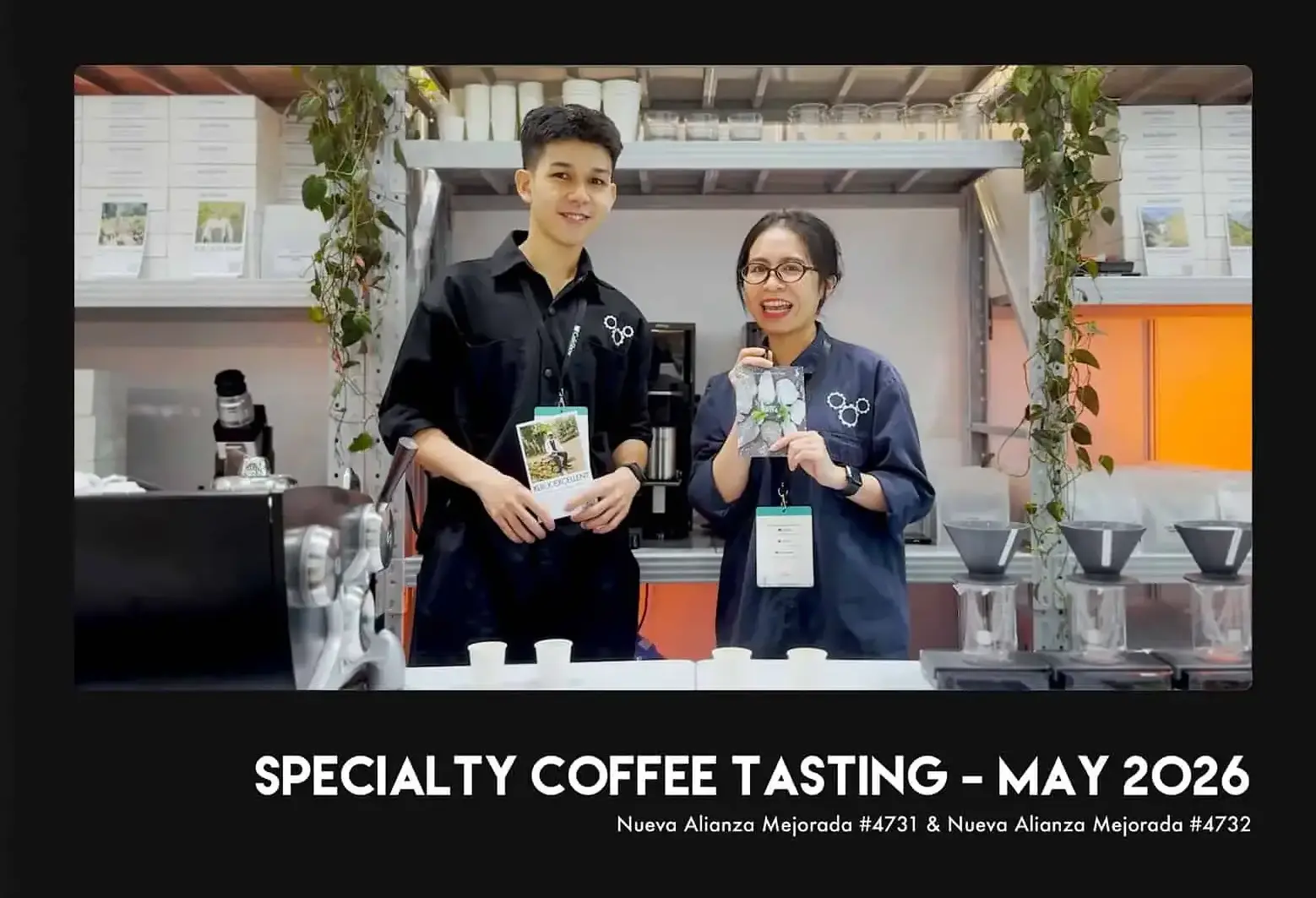
Unveiling May Discovery Subscription: Nueva Alianza Mejorada #4731 & Nueva Alianza Mejorada #4732
The Discovery Subscription is a silent dialogue, a place where the soul of the connoisseur finds a harmonious beat with distant lands. Like a transparent lens, we become storytellers, meticulously peeling back layers of cultural sediment, the breath of the soil, and the human philosophies hidden within every coffee bean.
May arrives with brilliant streaks of golden sunlight, a time when we long to hide beneath the lush, dew-drenched canopies of Santa Teresa. Amidst the silence of the Andes, when compassion touches Mother Earth, what will we hear? Perhaps it is a sweet response that nature reserves solely for souls who know how to wait patiently.

- Taste the Origin
Nueva Alianza Pacamara #4733 – The essence of Cusco with elegant jasmine notes
Nueva Alianza Pacamara #4733 is a testament to the miraculous terroir and dedicated cultivation of the renowned Cusco region. The combination of the characteristic Pacamara bean size and ideal altitude has forged a flavor profile of immense sophistication and depth. From the very first moment, this lot captivates with its elegant jasmine notes, radiating a gentle, pure fragrance akin to a flower blooming in the morning dew.

- Taste the Origin
Nueva Alianza Orange Gesha #4737 – An expedition of recessive genetic traits into the sensory realm
In a world of authenticity, Nueva Alianza Orange Gesha #4737 represents the proud emergence of rare biological traits often obscured by nature’s universality. Carrying a recessive genetic code, Lot #4737 embarks on an “expedition” into the connoisseur’s mind, where record-breaking fructose concentrations are released to perfectly fill every sensory gap with absolute smoothness and purity.
Through washed processing and extremely-light roasting, vibrant citrus nuances and ethereal floral notes, once hidden deep within the genetic structure, now manifest with power, transforming the tasting experience into a journey of ontological completion, where the rarity of recessive genes finally reigns supreme in flavor.

Specialty Coffee in Vietnam
BRAND VALUE
YOU SHOULD HAVE KNOWN
XLIII Coffee has been aiming to become a big, impactful company with social responsibilities,
have access to high-quality raw materials and convey the complete original values of coffee to our customer
