
Amatenango de la Frontera 90-1903 Coffee: The Pure Essence of Chiapas Highlands
Amatenango de la Frontera 90-1903 is the essence of the Chiapas highlands, where majestic mountains, a cool climate, and mineral-rich soil create ideal conditions for coffee cultivation. From traditional manual farming to meticulous selective harvesting, this coffee lot is a testament to the journey of experiencing the Chiapas terroir’s finesse in every small sip.
I. The story from borderland farmers creating exceptional coffee beans
Amatenango de la Frontera 90-1903 coffee originates from a special place: Amatenango de la Frontera, a small town nestled in the Chiapas highlands, just a few steps from the Guatemalan border. This very location has created a distinct hybrid cultural identity, and also shaped a unique microclimate where the cold mountain air blends with the warmth of the valleys, providing ideal conditions for Arabica coffee trees to achieve superior quality.
At an average altitude of about 1,600 meters in the Sierra Madre de Chiapas range, this region bears the mark of a rare terroir, combining a cool climate, stable rainfall, and nutrient-rich volcanic soil. All these elements converge to create the perfect natural environment for coffee beans to accumulate subtle flavors and exceptional complexity.


Image source: Belco.
The farming community here mostly consists of small families relying on traditional agriculture. On the green slopes, they preserve farming methods passed down through generations: intercropping coffee with native food crops, maintaining natural shade from forest vegetation, and respecting the soil’s developmental cycle. This semi-forest, semi-agricultural environment slows down the coffee cherry’s ripening process, allowing full sugar accumulation and helping the beans develop richer flavors.
However, these small farmers also face a significant challenge: intensive, high-yield agricultural models are increasingly dominating the market, requiring them to constantly seek solutions to preserve the value of heirloom Arabica varieties instead of chasing the trend of high-yield but lower-quality varieties.
In their journey to conserve both the farming methods and the local coffee culture’s value, they receive crucial support from Jesús Salazar and the Caféologo team. With a vision to promote sustainable agricultural models, this project aims to empower Mayan communities. Instead of merely viewing coffee as a raw commodity, they help farmers gain a deeper understanding of the role of terroir, the biological factors affecting quality, and the decisive influence of harvesting and processing on the final flavor.
II. Unique processing and decaffeination
The Amatenango de la Frontera 90-1903 coffee lot is a harmonious blend of several traditional Arabica varieties belonging to the fieldblend group, including Bourbon, Catuai, Garnica, and Typica. These are all classic varieties highly valued for their flavor, each contributing a unique nuance that adds to the coffee’s richness and depth. This diversity reflects the actual farming practices of the Chiapas mountain farmers, where coffee is intercropped with subsistence crops, natural shade is maintained by native trees, and the coffee is influenced by varying terrain and climate conditions within the same area.
Processing with Pure Finesse

The first highlight of this coffee lot is the wet process (washed), a characteristic method of the Chiapas region. Although most farmers in the area own small plots, they possess a wealth of coffee processing experience passed down through many generations. Instead of relying on modern machinery, their technique is largely based on sensitive sensory perception, the ability to control fermentation under different microclimate conditions, and a deep understanding of the fresh bean’s behavior.
Coffee cherries are hand-harvested (usually selected by ripeness), then the pulp is removed and transferred to cement or tiled fermentation tanks. Here, the mucilage is broken down through natural fermentation, controlled primarily by ambient temperature and manual time monitoring. Interestingly, each household may maintain a different fermentation style, creating small but distinct flavor nuances. When the lots are consolidated at the buying stage, this local identity blends into a harmonious whole. After fermentation, the coffee is washed with cool mountain stream water and spread out on concrete patios for hours under the highland sun, allowing the beans to reach the desired moisture content and retain the characteristic bright, clean profile of the Washed method.
Image source: Shiren Coffee.
Advanced Decaffeination Method
If the traditional processing brings purity to the flavor, the decaffeination step demonstrates advancement and subtlety in preserving the bean’s sensory characteristics. Amatenango de la Frontera 90-1903 is decaffeinated using the Mountain Water Process (patented by Descamex in 1989). This technique completely avoids chemical solvents, relying instead on an osmosis and purified water filtration mechanism to remove caffeine while maintaining the molecular structure of the coffee bean’s flavor compounds.


Image source: Helena Coffee, Economia Gobierno de Mexico.
The process begins by soaking the green coffee beans in water sourced from Pico de Orizaba, the highest mountain in Mexico, famous for its pure, mineral-rich water. As the beans soak, caffeine dissolves into the water, along with a small amount of flavor compounds. This water mixture is then introduced into a specialized carbon filtration system to retain the caffeine while preserving the flavor molecules. The “flavor-rich” water is reused to soak subsequent batches of beans, creating a flavor-saturated environment that minimizes further escape of aromatic substances from the beans.
The combination of traditional wet processing, the unique natural conditions of the Chiapas highlands, and modern, flavor-friendly decaffeination technique has resulted in a truly rare and exceptional decaf coffee lot!
III. The efreshing flavor of Amatenango de la Frontera 90-1903
The flavor profile of Amatenango de la Frontera 90-1903 clearly reflects the harmony between the varieties, the natural conditions of the Chiapas mountains, and the subtly executed processing and decaffeination techniques. When this coffee lot is roasted at a super light level by XLIII Coffee, the natural flavors of the bean are fully revealed, exposing a rich yet delicate aroma structure that is highly evocative.
The first impression often comes from a bright, fruity layer, reminiscent of apple pie – a blend of the delicate sweetness of baked apple and a light acidity, highlighting the cleanliness and purity of high-altitude Arabica beans. It is not a sharp sourness, but a gentle, soft acidity that is “aged” by the cool climate of Chiapas, where coffee cherries ripen slowly and accumulate more natural sugars. This factor creates the smooth yet distinct sensation of the first aroma layer.
Next, the body is supported by a fudge nuance – deeply sweet, smooth, and dense, offering a thicker mouthfeel. This is a notable characteristic, as retaining a rounded flavor structure is typically a challenge for a decaf lot. However, thanks to the Mountain Water Process, the coffee bean retains almost all of its flavor compounds, allowing it to maintain the creaminess and strong intrinsic sweetness that many decafs often lack.

Image source: Detour Coffee Roasters.
As the finish gradually emerges, a gentle butterscotch note acts as the conclusion. This is the distinguishing feature of this lot – an aftertaste that is warm, soft, and has the characteristic comforting quality of buttery caramel, yet subtle enough not to overshadow the gentle brightness of the fruit acidity at the start. It is this clear transition from fruit to deep sweetness, ending in buttery caramel, that creates a complete, seamless, and truly “super light” experience: not intensely bold in the traditional sense, but compelling through its purity and detail.
Amatenango de la Frontera 90-1903 is proof of the persuasive power of high-quality decaf lots: its flavor is flexible, clean, rich in layers, and in no way “dull” or faded compared to fully caffeinated coffee. It is the synergy of the Chiapas terroir, delicate wet processing technique, the Mountain Water Process, and a roasting style that respects the bean’s natural structure.
IV. Amatenango de la Frontera 90-1903 takes you on a journey to Chiapas
Enjoying Amatenango de la Frontera 90-1903 is not merely drinking a cup of decaf; it is a journey into the world of borderland farmers and the cultural mosaic of the Chiapas highlands. From the misty high mountains to the hands of the grower, from small drying beds in their yards to tiled fermentation tanks, every stage of the bean carries the imprint of the people and nature of this place.
Commercially, this coffee lot is operated under an indirect trade model – a form of intermediated cooperation that still ensures transparency regarding origin, value, and quality. Compared to mass commodity trade, this model allows for a fairer distribution of value, helping small-scale farmers receive an equitable price. The exporter for this lot was paid 19,03 USD/kg, a figure that demonstrates respect for the farmers’ efforts and the quality of the coffee produced. In a context where many coffee-growing regions must sell their product for less than its true value, this payment level is an effort toward a more humane and sustainable supply chain.

Image source: Adventure Peaks.
Upon reaching XLIII Coffee, Amatenango de la Frontera 90-1903 is roasted at an extremely-light level to retain the maximum characteristic nuances of the bean. This roasting style does not “mask” the natural notes with strong caramelization like a dark roast; instead, it allows the drinker to fully experience the purity, brightness, and originality of the Chiapas terroir. With this roast, every sip of coffee reminds the drinker that they are tasting a real place: the cool forests, the fertile volcanic soil, the coffee plots interspersed with food crops, and the simple rhythm of life of the local Mayan community.
This journey is not just about the flavor; it is also a story of transformation in the border coffee industry. Small farmers, who have long faced intensive extractive farming models, now have the opportunity to develop quality instead of trading it for yield. The re-selection of heirloom Arabica varieties, the maintenance of the agro-forestry ecosystem, the improvement of domestic processing techniques, and participation in on-site decaffeination programs like the Mountain Water Process are all significant steps forward. And every drinker, as they raise a cup of Amatenango de la Frontera 90-1903 to their lips, unconsciously becomes a part of that journey!
In conclusion,
Amatenango de la Frontera 90-1903, therefore, takes you on a journey to the Chiapas highlands not just through flavor, but also through its origin story, transparency, and the effort to cherish every bean across generations. This is a coffee for those who seek to feel the profoundness in every detail, even in a seemingly light cup of decaf. If you listen closely, you will realize: in every small sip, there is the earth, the sky, the people, and a borderland full of character whispering its own story.
V. FAQs
1. How were the farmers from whom Amatenango de la Frontera 90-1903 was sourced?
This coffee lot was sourced from small, family-scale farms in the Chiapas mountains, where farmers use traditional methods and rely on experience accumulated over generations. They intercrop coffee with native food crops and maintain natural shade, allowing the coffee beans to develop slowly and acquire rich flavors.
2. How do the natural features of the Chiapas region affect the coffee flavor?
Chiapas possesses an ideal altitude, nutrient-rich volcanic soil, and abundant rainfall, creating stable conditions for coffee trees to thrive and accumulate numerous aromatic compounds. Thanks to the cool climate and diverse microclimates, the coffee here often exhibits a clean profile, bright acidity, and a rich flavor structure.
3. What benefits does fermentation in cement/tiled tanks bring to flavor development?
Cement or tiled tanks maintain a stable temperature, allowing the fermentation process to occur uniformly and be more easily controlled. As a result, the mucilage is naturally broken down at an optimal rate, allowing the beans to retain their purity and clearly express their inherent flavor characteristics.
4. How does the use of water from Pico de Orizaba affect the quality of the decaf coffee?
The water source from Pico de Orizaba has high purity and is mineral-rich, helping the decaffeination process occur efficiently without damaging the bean’s natural flavor structure. This helps the decaf coffee retain its sweetness, aftertaste, and sensory completeness after caffeine removal.
5. Why can decaf coffee still achieve such a rich flavor profile?
Thanks to the Mountain Water Process, flavor compounds are maximally preserved throughout the decaffeination process. When the “flavor-rich” water is reintroduced to the beans, most of the original aromatic and flavor characteristics are restored, allowing the decaf coffee to still display impressive depth and complexity.

Bài viết mới

- Taste the Origin
Nigussie Nare – Murago Outgrowers #03028: Cultivated from the Values of Sustainable Reciprocity
Nestled beneath the shade trees of Sidama, Bensa, the Nigussie Nare – Murago Outgrowers #03028 coffee lot serves as a living testament to the values of sustainable reciprocity. This symbiosis begins with the intimate bond between a rich indigenous ecosystem and the smallholder farmers of the Murago region. Each harvested bean is the culmination of a virtuous cycle: a stable environment produces exceptional bean quality, and sustainable economic growth, in turn, continues to protect the verdant canopy of the great forest.

- Taste the Origin
Rift Valley Coffee Caucus #03757 – A Testament to Western Kenya’s Collective Spirit
Turning our gaze to the Great Rift Valley of East Africa, the fertile volcanic landscapes are witnessing an inspiring transformation. Moving away from fierce, survival-driven competition, smallholder farmers in Western Kenya have chosen to join forces, forging a resilient and unified network. The Rift Valley Coffee Caucus #03757 lot stands as the ultimate testament to this remarkable collective synergy.

- Breaking News
Airworks Coffee & XLIII Coffee – A “handshake” that brings original flavors across borders
XLIII Coffee, alongside our key wholesale partner Airworks Coffee, officially announces the latest release of specialty coffee lots for the North American market. This event reaffirms our commitment to bringing original flavors across all geographical barriers to coffee enthusiasts.
Early access (for Subscribers of Airworks): 10:00 AM (PST) | Wednesday, April 29, 2026
General access: 10:00 AM (PST) | Friday, May 1, 2026
We invite our Customers and Partners to visit (airworkscoffee.com) for detailed information and to prepare for this special release!
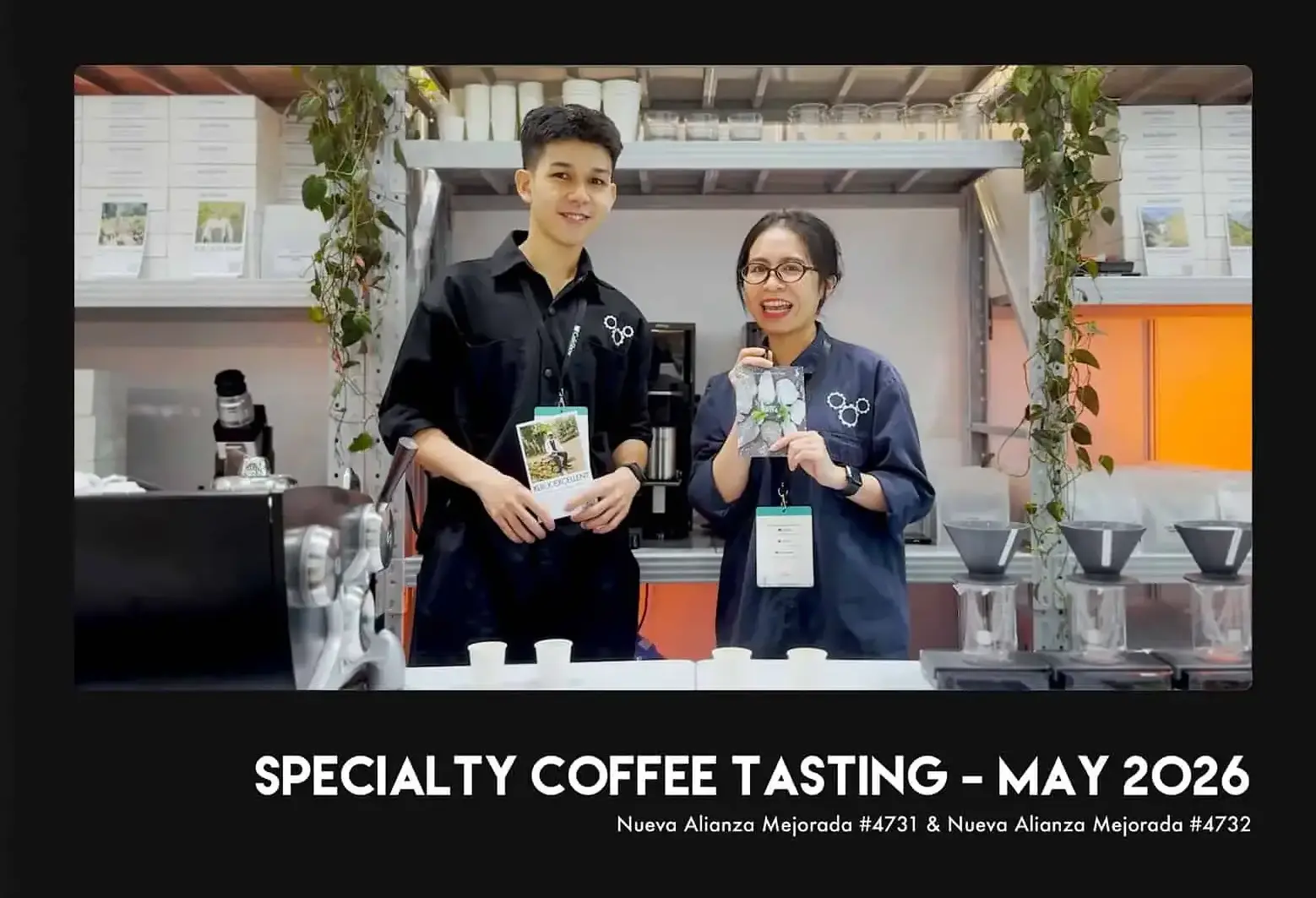
- Taste the Origin
Unveiling May Discovery Subscription: Nueva Alianza Mejorada #4731 & Nueva Alianza Mejorada #4732
The Discovery Subscription is a silent dialogue, a place where the soul of the connoisseur finds a harmonious beat with distant lands. Like a transparent lens, we become storytellers, meticulously peeling back layers of cultural sediment, the breath of the soil, and the human philosophies hidden within every coffee bean.
May arrives with brilliant streaks of golden sunlight, a time when we long to hide beneath the lush, dew-drenched canopies of Santa Teresa. Amidst the silence of the Andes, when compassion touches Mother Earth, what will we hear? Perhaps it is a sweet response that nature reserves solely for souls who know how to wait patiently.

- Taste the Origin
Nueva Alianza Pacamara #4733 – The essence of Cusco with elegant jasmine notes
Nueva Alianza Pacamara #4733 is a testament to the miraculous terroir and dedicated cultivation of the renowned Cusco region. The combination of the characteristic Pacamara bean size and ideal altitude has forged a flavor profile of immense sophistication and depth. From the very first moment, this lot captivates with its elegant jasmine notes, radiating a gentle, pure fragrance akin to a flower blooming in the morning dew.

- Taste the Origin
Nueva Alianza Orange Gesha #4737 – An expedition of recessive genetic traits into the sensory realm
In a world of authenticity, Nueva Alianza Orange Gesha #4737 represents the proud emergence of rare biological traits often obscured by nature’s universality. Carrying a recessive genetic code, Lot #4737 embarks on an “expedition” into the connoisseur’s mind, where record-breaking fructose concentrations are released to perfectly fill every sensory gap with absolute smoothness and purity.
Through washed processing and extremely-light roasting, vibrant citrus nuances and ethereal floral notes, once hidden deep within the genetic structure, now manifest with power, transforming the tasting experience into a journey of ontological completion, where the rarity of recessive genes finally reigns supreme in flavor.

Specialty Coffee in Vietnam
BRAND VALUE
YOU SHOULD HAVE KNOWN
XLIII Coffee has been aiming to become a big, impactful company with social responsibilities,
have access to high-quality raw materials and convey the complete original values of coffee to our customer
