
Is it necessary to find an authentic specialty coffee brand?
Unlike regular coffee, specialty coffee is rigorously evaluated for quality, flavor, and production methods. Every bean carries a unique story, from the farm where it was grown to the hands of the farmer. But with the surge of specialty coffee brands today, do we need to differentiate between brands to truly reach the essence of quality, or is a good cup of coffee enough to start the day?
I. Specialty Coffee: Classification standards and the values hat define quality
In today’s contemporary coffee landscape, the term Specialty Coffee is no longer merely a trend, but has become a globally recognized standard. Specialty coffee is understood as coffee of exceptional quality, evaluated through rigorous technical criteria spanning cultivation, harvesting, processing, and roasting.
However, to truly understand the nature of Specialty Coffee, it must be viewed not only as a premium product, but as the result of a value system in which quality, transparency, and respect for the supply chain play a central role.
Classification standards of Specialty Coffee: The foundation of quality
From a technical standpoint, coffee is classified as Specialty when it scores 80 points or above on the 100-point scale established by the Specialty Coffee Association (SCA). This scoring system evaluates coffee across multiple attributes, including aroma, flavor, balance, aftertaste, and cup cleanliness.

Beyond numerical scores, Specialty Coffee also requires a rigorous quality control process at every stage. From varietal selection, sustainable farming practices, and selective harvesting to processing methods tailored to each bean’s characteristics, every step directly influences the final quality. This is precisely why Specialty Coffee cannot be produced on an industrial, mass-production scale.
Transparency of origin and traceability
One of the core values that distinguishes Specialty Coffee is origin transparency. Unlike commercial coffee, which often blends beans from multiple sources to achieve consistency, Specialty Coffee emphasizes clear traceability: growing region, altitude, coffee variety, processing method, and even the story of the farmer behind the beans.
This transparency not only serves quality control purposes, but also allows consumers to gain a deeper understanding of the value behind the cup they are drinking. As a result, Specialty Coffee becomes an educational and connective experience, rather than merely a familiar beverage.
Sensory value: When flavor becomes a language
Specialty Coffee offers a rich and multi-layered sensory world, clearly reflecting the characteristics of each origin and processing method. Instead of a dominant and uniform bitterness, drinkers can perceive flavor notes such as fruit, florals, caramel, or chocolate, with clear balance and a defined aftertaste.
This sensory value does not come from brewing techniques alone, but from close collaboration among farmers, roasters, and baristas. It is this cooperation that creates depth of flavor—one of the key factors behind the lasting appeal of Specialty Coffee.


Values beyond quality: Sustainability and responsibility
In addition to quality and flavor, Specialty Coffee carries values that go beyond the product itself. Prioritizing sustainable coffee cultivation, paying fair prices to farmers, and minimizing negative environmental impact are increasingly considered integral components of Specialty Coffee.
These values allow Specialty Coffee to both satisfy sensory enjoyment and meet the growing expectations of consumers regarding ethical consumption and social responsibility.
From product standards to the foundation of Specialty Coffee brands
All of the standards and values above form a solid foundation for the emergence of Specialty Coffee brands. Bean quality, origin transparency, and sustainability are necessary conditions, but they are not sufficient on their own to create a strong brand.
It is from this foundation that Specialty Coffee brands begin to build their own identity, philosophy, and experiences – elements that will be explored in greater depth in the following sections. From this perspective, Specialty Coffee is not merely a quality benchmark, but the starting point of a journey toward building brands with depth and long-term value.
II. The mission of a Specialty Coffee brand
For many years, discussions around Specialty Coffee have focused primarily on bean quality, cupping scores, and technical standards. From a branding perspective, however, these elements represent only the foundation. A true Specialty Coffee brand neither begins nor ends with coffee beans; it begins with its reason for existence, what the brand exists to do, what it represents, and what value it brings to people.
The mission of a Specialty Coffee brand, therefore, is not simply to “sell good coffee”, but to build a clear value system in which quality is a necessary condition, while identity and philosophy are what create long-term differentiation.
Defining the mission: When a brand becomes a promise

At a deeper level, the mission of a Specialty Coffee brand is its brand promise – a consistent commitment to customers, partners, and the wider community. This promise is expressed throughout every aspect of the brand, from sourcing decisions and roasting approaches to service style, communication, and storytelling.
Unlike commercial coffee brands that prioritize convenience or price, Specialty Coffee brands focus on integrity, transparency, and depth of experience. Each product contains not only flavor, but also a story of origin, people, and philosophy behind it – an “intangible” element that ultimately creates sustainable brand value.
A mission rooted in experience and service
 One defining characteristic of a Specialty Coffee brand’s mission is its customer-centric approach to experience. This experience begins when customers search for information, enter the brand’s space, interact with staff, and gradually understand and resonate with the story the brand tells.
As such, the mission of a Specialty Coffee brand is inseparable from service with depth: knowledgeable guidance, transparent sharing, and the ability to help customers better understand the coffee they are drinking. The brand does not position itself merely as a seller, but as a guide in both customer experience and knowledge.
Brand mission and responsibility within the value chain

A Specialty Coffee brand cannot be separated from the value chain behind each cup. The brand’s mission therefore extends beyond customers to include relationships with farmers, roasters, and producing communities.
Through models such as direct trade, Specialty Coffee brands clearly demonstrate their responsibility in building fair, long-term, and transparent relationships. This is not simply a business choice, but a fundamental part of the brand mission: creating sustainable value for the entire coffee ecosystem rather than optimizing short-term gains.
The mission as a compass for Specialty Coffee brand identity

Ultimately, the mission serves as a compass that shapes the identity of a Specialty Coffee brand. From this mission, the brand defines who it is, how it is different, and why customers should choose it over others.
When a mission is clearly defined and consistently upheld, a brand no longer depends on fleeting trends or price competition. Instead, Specialty Coffee brands build trust, emotional connection, and loyalty – core elements that enable sustainable growth in an increasingly crowded and choice-rich market.
III. The necessity of differentiating Specialty Coffee brands
As the market continues to expand, the concept of Specialty is no longer unfamiliar. Many brands now use the term “Specialty” to describe their products, placing consumers in a paradoxical situation: everyone talks about quality, yet very few brands clearly articulate how they are different from one another.
For this reason, differentiating a Specialty Coffee brand is no longer an option, it has become a necessity for long-term survival. At this stage, differentiation is not about whose beans are marginally better, but about brand models, operating philosophy, and the experiences a brand delivers.
What are people searching for when they look for “Brand”?
When users search for the keyword “Specialty Coffee Brand,” they are not simply asking whether the coffee tastes good. In reality, they are seeking answers to deeper questions:
-
What values does this brand represent?
-
How is the experience different from others?
-
Does this brand model align with my taste, lifestyle, and beliefs?
This indicates that brand-related search behavior is inherently comparative. Readers need a clear frame of reference to understand the differences between coffee brand models, especially between Specialty Coffee brands and other common coffee models in the market.


Differentiating brands through operating models and philosophy
To understand why differentiating Specialty Coffee brands is essential, it is necessary to place different brand models within the same frame of reference. Rather than comparing individual brands, examining operating models, philosophies, and value-creation approaches allows us to see the fundamental differences in a more objective and systematic way.
| Criteria | Specialty Coffee Brands | Commercial Chain Brands |
|---|---|---|
| Core objective | Building brand identity and long-term value | Scaling and revenue optimization |
| Brand philosophy | Quality, transparency, and experience-centered | Convenience and consistency-focused |
| Sourcing model | Direct Trade – direct relationships with farmers | Mass Production – industrial supply chains |
| Customer experience | Personalized, educational, and in-depth | Standardized, fast, and accessible |
| Brand role | A guide for experience and knowledge | A provider of products and services |
| Emotional value | Connection, empathy, shared lifestyle philosophy | Familiarity and convenience |
From this comparison, it becomes clear that the difference between models is not about which is “better,” but about the path a brand chooses and the values it pursues. While commercial chains optimize for scale and convenience, Specialty Coffee brands focus on building identity, depth of experience, and sustainable relationships throughout the value chain. Recognizing these differences helps consumers make informed choices and enables brands to clearly define their role and mission in an increasingly competitive Specialty Coffee market.
Differentiation as a way to avoid brand homogenization
One of the greatest risks facing today’s Specialty Coffee market is brand homogenization. When brands focus primarily on beans, scores, or roasting techniques, consumers may perceive them as essentially the same and make decisions based solely on price or location.

Clear differentiation of Specialty Coffee brands helps to:
-
Enable consumers to understand the true value of what they are choosing.
-
Allow brands to move beyond purely product-based competition.
-
Encourage the market to develop in depth rather than merely expanding in quantity.
From this perspective, differentiation is not about creating distance, but about helping each brand occupy its rightful position.
Brand differentiation as the foundation for sustainable growth
Ultimately, clearly differentiating a Specialty Coffee brand forms the foundation for sustainable development. When a brand understands which model it follows, whom it serves, and why it exists, decisions across products, services, and communication become consistent and coherent.
In an increasingly competitive market, brands with a clear identity do not need to speak loudly to be recognized. Consumers are drawn not only by coffee flavors, but by the philosophy and experience they see reflected in the brand, one that resonates with their own values and way of life.
IV. XLIII Coffee - A representative Specialty Coffee brand model in Vietnam
In recent years, Vietnam’s Specialty Coffee market has shown significant growth, marked by the emergence of many new brands with diverse styles and approaches. In this context, a brand is not considered representative because of its scale or popularity, but because of how it defines its identity, pursues a consistent philosophy, and creates a distinctive experience.
XLIII Coffee is recognized as a representative Specialty Coffee brand not merely because it offers high-quality coffee, but because it chooses to develop through depth, ranging from origin stories and its trade approach to the way it serves and communicates with customers.
Brand identity: When Specialty Coffee is shaped by a clear philosophy

What distinguishes XLIII Coffee is the clarity with which we define who we are within the broader Specialty Coffee landscape. Rather than pursuing mass appeal or rapid expansion, XLIII Coffee builds its brand identity through selectivity, restraint, and a focus on core experiences.
The identity of a Specialty Coffee brand like XLIII Coffee is not expressed through grand statements, but through consistency in every detail, from space and storytelling to how the brand approaches customers as companions on a coffee discovery journey, rather than merely as consumers.
Direct trade and the brand’s role in the value chain

A key factor that positions XLIII Coffee as a representative Specialty Coffee brand in Vietnam is how the brand participates in the coffee value chain. Through a direct trade model, we focus not only on sourcing quality coffee, but also on building long-term relationships with farmers and producers.
From a branding perspective, direct trade is not simply a purchasing method; it is part of the brand philosophy – transparency, fairness, and respect for labor. This allows XLIII Coffee to tell a consistent story, where each cup reflects both quality and the brand’s responsibility and commitment to the producing community.
Experience and service: Where brand philosophy is realized

For a Specialty Coffee brand, experience and service are where brand philosophy is truly realized. At XLIII Coffee, customer experience is not designed to create quick impressions, but to foster understanding and long-term connection.
The brand acts as a guide, providing information, sharing knowledge, and helping customers better understand the coffee they are enjoying. This approach demonstrates that we do not position ourselves merely as sellers of products, but as builders of relationships grounded in knowledge and experience – an essential characteristic of Specialty Coffee brands.
XLIII Coffee as a reference model for Specialty Coffee brands

Viewed holistically, XLIII Coffee can be seen as a reference model for how a Specialty Coffee brand in Vietnam can develop through depth. We clearly affirm that becoming a true Specialty Coffee brand does not require rapid growth or widespread presence, but rather consistency in mission, clarity in identity, and honesty in value creation.
As consumers increasingly care more about brand than just product, XLIII Coffee represents a direction in which Specialty Coffee is not only about coffee quality, but about a complete value system, expressed consistently through philosophy, service, and customer experience.
V. FAQs
1. How is specialty coffee different from regular coffee?
Specialty coffee is rigorously evaluated based on high-quality standards, such as the SCA score, clear traceability of origin, and meticulous processing methods. This creates a refined, rich, and unique flavor compared to regular coffee, which typically lacks complexity and variety in taste.
2. Why is it important to differentiate between specialty coffee brands?
Differentiating specialty coffee brands is essential as it helps consumers identify products that meet high-quality standards, understand their origin and production methods, and choose products that truly match their value and cost.
3. What standards are used to evaluate a specialty coffee brand?
The three main standards for evaluating specialty coffee are the SCA score (coffee must score at least 80/100 points), clear traceability of origin, and the processing method. These factors ensure that the beans are produced and processed to the highest standards, delivering a unique flavor and a commitment to sustainability.
4. What sets XLIII Coffee apart in terms of quality and sustainability as a specialty coffee brand?
XLIII Coffee stands out due to its careful selection of coffee beans, the use of extremely light roasting to preserve the original flavors, and its strict quality control. The brand also emphasizes fair trade with farmers and promotes environmentally-friendly farming methods, such as organic cultivation and shade-grown coffee.
5. What values do specialty coffee brands offer?
Specialty coffee brands offer unique flavor profiles, a strong commitment to environmental sustainability, and support for farming communities. These brands also raise consumer awareness of coffee quality, from the production process to proper enjoyment, while driving positive change in the coffee industry.

Bài viết mới

- Taste the Origin
Nigussie Nare – Murago Outgrowers #03028: Cultivated from the Values of Sustainable Reciprocity
Nestled beneath the shade trees of Sidama, Bensa, the Nigussie Nare – Murago Outgrowers #03028 coffee lot serves as a living testament to the values of sustainable reciprocity. This symbiosis begins with the intimate bond between a rich indigenous ecosystem and the smallholder farmers of the Murago region. Each harvested bean is the culmination of a virtuous cycle: a stable environment produces exceptional bean quality, and sustainable economic growth, in turn, continues to protect the verdant canopy of the great forest.

- Taste the Origin
Rift Valley Coffee Caucus #03757 – A Testament to Western Kenya’s Collective Spirit
Turning our gaze to the Great Rift Valley of East Africa, the fertile volcanic landscapes are witnessing an inspiring transformation. Moving away from fierce, survival-driven competition, smallholder farmers in Western Kenya have chosen to join forces, forging a resilient and unified network. The Rift Valley Coffee Caucus #03757 lot stands as the ultimate testament to this remarkable collective synergy.

- Breaking News
Airworks Coffee & XLIII Coffee – A “handshake” that brings original flavors across borders
XLIII Coffee, alongside our key wholesale partner Airworks Coffee, officially announces the latest release of specialty coffee lots for the North American market. This event reaffirms our commitment to bringing original flavors across all geographical barriers to coffee enthusiasts.
Early access (for Subscribers of Airworks): 10:00 AM (PST) | Wednesday, April 29, 2026
General access: 10:00 AM (PST) | Friday, May 1, 2026
We invite our Customers and Partners to visit (airworkscoffee.com) for detailed information and to prepare for this special release!
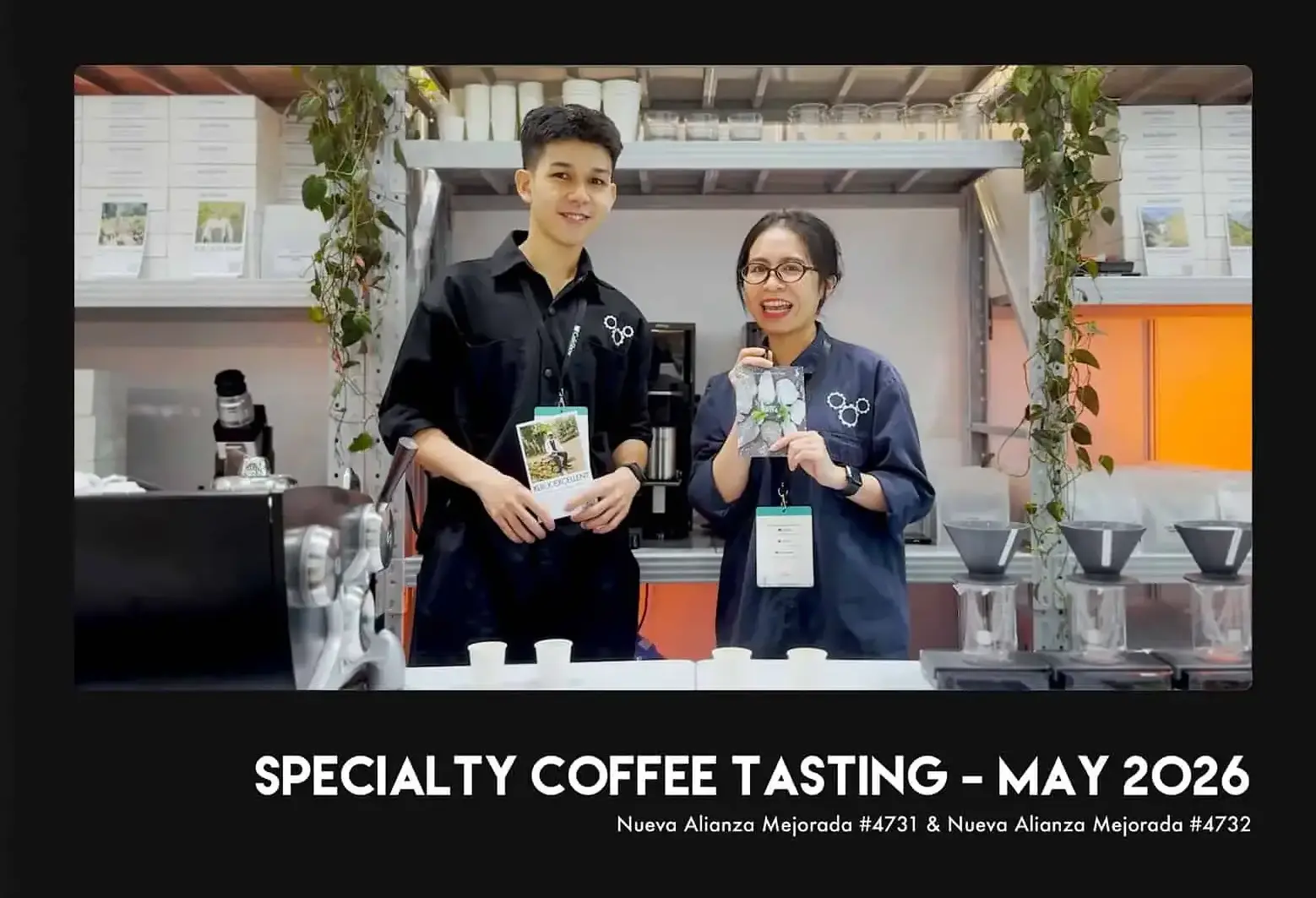
- Taste the Origin
Unveiling May Discovery Subscription: Nueva Alianza Mejorada #4731 & Nueva Alianza Mejorada #4732
The Discovery Subscription is a silent dialogue, a place where the soul of the connoisseur finds a harmonious beat with distant lands. Like a transparent lens, we become storytellers, meticulously peeling back layers of cultural sediment, the breath of the soil, and the human philosophies hidden within every coffee bean.
May arrives with brilliant streaks of golden sunlight, a time when we long to hide beneath the lush, dew-drenched canopies of Santa Teresa. Amidst the silence of the Andes, when compassion touches Mother Earth, what will we hear? Perhaps it is a sweet response that nature reserves solely for souls who know how to wait patiently.

- Taste the Origin
Nueva Alianza Pacamara #4733 – The essence of Cusco with elegant jasmine notes
Nueva Alianza Pacamara #4733 is a testament to the miraculous terroir and dedicated cultivation of the renowned Cusco region. The combination of the characteristic Pacamara bean size and ideal altitude has forged a flavor profile of immense sophistication and depth. From the very first moment, this lot captivates with its elegant jasmine notes, radiating a gentle, pure fragrance akin to a flower blooming in the morning dew.

- Taste the Origin
Nueva Alianza Orange Gesha #4737 – An expedition of recessive genetic traits into the sensory realm
In a world of authenticity, Nueva Alianza Orange Gesha #4737 represents the proud emergence of rare biological traits often obscured by nature’s universality. Carrying a recessive genetic code, Lot #4737 embarks on an “expedition” into the connoisseur’s mind, where record-breaking fructose concentrations are released to perfectly fill every sensory gap with absolute smoothness and purity.
Through washed processing and extremely-light roasting, vibrant citrus nuances and ethereal floral notes, once hidden deep within the genetic structure, now manifest with power, transforming the tasting experience into a journey of ontological completion, where the rarity of recessive genes finally reigns supreme in flavor.

Specialty Coffee in Vietnam
BRAND VALUE
YOU SHOULD HAVE KNOWN
XLIII Coffee has been aiming to become a big, impactful company with social responsibilities,
have access to high-quality raw materials and convey the complete original values of coffee to our customer
