
What is Specialty Coffee? A Comprehensive Exploration of High-Value Coffee
What is Specialty Coffee? Specialty Coffee is a term used to refer to coffees of exceptional quality, graded at 80 points or above according to SCA standards. This concept is not only about the score but also encompasses the entire process, from variety, cultivation, harvesting, processing, to roasting and brewing to create a pure and distinctive flavor profile compared to ordinary commercial coffee.
Table of Contents
- I. A Comprehensive Definition of Specialty Coffee
- II. The History and Development of Specialty Coffee
- III. Specialty Coffee Standards and Related Certifications
- IV. The Standard Production Process of Specialty Coffee
- V. Distinctive Flavor Characteristics of Specialty Coffee
- VI. Differentiating Specialty Coffee from Regular Coffee
- VII. The Sustainable Value System of Specialty Coffee
- VIII. Prospects for Vietnamese Specialty Coffee
- IX. XLIII Coffee and the Journey of Preserving the Specialty Coffee Essence
- X. FAQs
I. A Comprehensive Definition of Specialty Coffee
The concept of Specialty Coffee is no longer unfamiliar in the coffee industry, but the previous common understanding often revolved around just one criterion: coffee scoring 80 cupping points or higher on the Specialty Coffee Association (SCA) evaluation scale. While correct, this definition is too narrow because Specialty Coffee goes beyond a mere number.
Mario Fernández, Technical Director of the SCA, once stated in the SCA Coffee Standards Update 2018: “Specialty coffee is not just a score. It is a combination of quality, consistency and traceability across the entire supply chain”.
To fully grasp the essence of Specialty Coffee, one must view it as a complete value system: from bean quality, the entire process of planting, processing, roasting, and brewing, to transparency, sustainability, and the relentless human effort throughout the journey. It is this collection of characteristics that creates a coffee with outstanding flavor, rich character, and a value that far exceeds ordinary sensory criteria.
Quality
Specialty Coffee is a high-quality coffee line, processed and roasted using optimal methods to preserve the bean’s original flavor. The special feature of Specialty Coffee is not about being “good” in the usual sense, but about its uniqueness: each growing region creates a distinct flavor layer, influenced by terroir, climate, and cultivation techniques, acting as an unreplicable “fingerprint.”

Thanks to processing and roasting techniques that respect these natural characteristics, consumers can clearly perceive the difference between coffees from different regions or farms, making Specialty Coffee a high-value product both commercially and for the sensory experience.
Coffee Attributes
Regarding coffee attributes, they can be divided into two types: internal and external attributes.
II. The History and Development of Specialty Coffee
Specialty Coffee is not a trend that appeared overnight. It is the result of over a century of exploration, innovation, and relentless pursuit of quality by coffee professionals around the world. From the first shift in roasting techniques, to the emergence of concepts like origin, transparency, and refined processing methods – each stage has contributed to shaping the modern specialty coffee industry.
The Origin Stage (Early 20th Century)
The history of Specialty Coffee is often associated with the name Alfred Peet, considered the “father” of the high-quality coffee wave. Starting in the 1900s, he focused on sourcing better coffee beans and using roasting techniques that delivered richer, more refined flavors. This approach inspired many other roasters and laid the foundation for the “premium coffee” mindset.
Concurrently, producers in Latin America and Africa began experimenting with new cultivation and processing methods, gradually establishing the initial foundation for Specialty Coffee.

The history of Specialty Coffee is often associated with the name Alfred Peet, considered the “father” of the high-quality coffee wave.
Image source: collected from Sprudge.
The Concept Definition Stage (1970s)
Building on the initial positive changes, the term “Specialty Coffee” officially emerged in the 1970s to meet the growing demand for premium coffee. This concept emphasized the value of coffee lots from specific growing regions that possessed distinct flavor characteristics.
The concept of “single-origin” coffee, coffee from a single source, began to be mentioned more frequently, highlighting the influence of terroir, altitude, climate, and cultivation methods on the bean’s flavor.
The Rapid Development Stage (1980s-1990s)
Entering the 1980s and 1990s, Specialty Coffee experienced a boom. More and more roasters and businesses focused on delivering a refined, highly personalized coffee experience.

Fair trade creates a long-term, transparent relationship between farms and roasters.
Image source: Fair Trade Peru Cafe Femenino
During this period, cooperative models such as fair trade emerged, aimed at improving the lives of farmers by ensuring reasonable purchase prices and greater transparency in the coffee supply chain.
The Refinement and Globalization Stage (2000s to Present)
Today, Specialty Coffee has become a major global trend, with the participation of many organizations and increasingly clear standards. The concept of Specialty Coffee has expanded, emphasizing:
-
sustainability,
-
direct trade,
-
traceability,
-
the uniqueness of the flavor profile,
-
transparency and fairness in production.
Many specialty roasters now work directly with farmers to ensure bean quality and build responsible supply chains. At the same time, the culture of enjoying Specialty Coffee has also become richer with various brewing methods such as Filter, Espresso, Syphon, and many other modern techniques.
III. Specialty Coffee Standards and Related Certifications
Specialty Coffee has gone through a long developmental process and has become increasingly familiar to the market, but this does not mean that this type of coffee can be grown commercially in every region. For a coffee lot to be classified as Specialty, it must meet a series of strict criteria regarding natural conditions, production process, and final product quality.
Conditions and Standards for Specialty Coffee Recognition
Farms and Natural Conditions
Most factors determining the quality of Specialty Coffee originate from the growing region. Natural conditions such as altitude, terroir, climate, sunlight, and level of care all directly affect the final flavor of the coffee bean. A potentially excellent farm must ensure:
-
ideal altitude,
-
nutrient-rich soil,
-
stable climate,
-
standard care, harvesting, and processing procedures.
These factors combine to create distinctive flavors that commercial coffee is unlikely to possess.

Each growing region is a unique, natural “fingerprint” that cannot be replicated in the world of specialty coffee.
Image source: Indian Coffee Growing Region
Post-Harvest Coffee Preservation
As soon as the coffee cherries are harvested, protecting the flavor becomes the top priority. The longer the time from harvest to processing, the easier the quality can decline. Therefore, the coffee beans must be:
-
stored correctly and under stable conditions,
-
minimizing the impact of humidity, temperature, and microorganisms,
-
stored using methods that both maintain the bean’s integrity and are environmentally friendly.
Good preservation helps the bean maintain its pure flavor before entering the rough processing and transportation stage.

Proper storage helps green coffee beans retain their full flavor potential before the roasting process.
Image source: Bean Scene
Extraction: Roasting – Grinding – Brewing
The extraction stage is where the flavor is “unlocked.”
-
Roasters need to understand the potential of each coffee lot to select the appropriate roasting profile, enhancing the bean’s original flavor.
-
Grinding is also a critical step: the fineness must be precisely adjusted according to each brewing method.
-
Brewing requires strict adherence to standards for water quality, temperature, extraction time, and coffee-to-water ratio.
All these steps must coordinate seamlessly to ensure that the final flavor correctly expresses the identity of the Specialty Coffee.

Roasting is not intended to “hide” imperfections, but to reveal the original flavor profile of the coffee bean.
Image source: owned by XLIII Coffee
Important Certifications in the Specialty Coffee Industry
After being assessed as meeting specialty standards, coffee can also possess additional international certifications to reinforce transparency and sustainability. Some common certifications include:
-
USDA Organic: guarantees that the coffee is organically grown, without the use of chemical fertilizers or pesticides.
-
4C (Common Code for the Coffee Community): applies to growing regions that meet basic sustainable development criteria.
-
UTZ Certified: focuses on effective farm management, safe working conditions, and traceability.
-
Rainforest Alliance: emphasizes environmental protection, biodiversity, and support for local communities.
-
Bird Friendly (Smithsonian): requires coffee to be organically grown under a natural forest canopy, preserving habitats for native bird species.
These certifications help consumers feel more confident about quality and environmental responsibility, while also supporting the development of a sustainable value chain for the entire specialty coffee industry.


IV. The Standard Production Process of Specialty Coffee
Like all coffee beans, Specialty Coffee must undergo a long journey from farm construction, planting, harvesting, processing, transportation, to roasting and grinding before appearing in your cup. However, to become Specialty Coffee, each stage must be performed at a much more sophisticated level, with significant investment in technique, effort, and discipline throughout the entire production chain.

Establishing Optimal Growing Conditions
From the very first step, farmers must establish a standard growing region – a factor that largely determines the quality potential of Specialty Coffee. These requirements include:
-
Ideal altitude (typically 1,200-2,000m depending on the variety), which helps the beans develop slowly and accumulate more sugars.
-
Stable climate, with cool temperatures year-round.
-
Nutrient-rich soil, with a structure suitable for deep root development.
-
Unique terroir, creating the characteristic identity of each growing region.
In addition to natural factors, cultivation methods must also follow sustainable agriculture: controlling water, nutrients, shade canopy, limiting chemicals, and prioritizing biodiversity. Seeds are meticulously selected, nurtured under strict control, and only the healthiest seedlings are planted.

Care – Harvesting – Processing: The Flavor-Defining Stage
During cultivation, farmers continuously monitor:
-
plant health,
-
soil and water conditions,
-
pests and diseases,
-
ripeness level of the fruit.
Coffee cherries are only harvested when fully ripe (ripe picking), without picking green or flawed cherries, unlike commercial coffee.

Next is the processing step, where a significant difference in flavor characteristics is created:
-
Wet processing yields a bright, clean, and mildly acidic flavor.
-
Dry processing yields rich, sweet, fruity aromas and a heavier body.
-
Semi-washed processing creates a balance between the two styles.
-
Experimental processing (Carbonic Maceration, Anaerobic, etc.) creates complex, unique flavors.
In Specialty Coffee, the processing must be strictly controlled regarding temperature, humidity, fermentation time, and drying conditions to preserve the bean’s natural quality.

After processing, the beans continue to be:
-
sorted by size and weight,
-
flawed beans removed,
-
moisture measured,
-
sensory evaluated (cupping).
Only lots that exceed the standard proceed into the Specialty Coffee supply chain.

Storage – Warehousing – Transportation
Green beans are highly susceptible to absorbing odors, moisture, and flavor degradation. Therefore, Specialty Coffee must be:
-
stored in warehouses meeting temperature and humidity standards,
-
using specialized packaging like GrainPro,
-
transported under conditions that minimize environmental changes.
Standard preservation helps the beans maintain stable quality until they reach the roaster.

Roasting – Grinding: “Unlocking” the Bean’s Original Flavor
Roasting is one of the most crucial steps for Specialty Coffee to express its value. The roaster needs to:
-
clearly understand the varietal characteristics, process, moisture, and bean density;
-
select the appropriate roast profile to enhance the natural flavor;
-
closely monitor metrics: charge temperature, Rate of Rise (RoR), development time.
Only with precise skill and experience can the roaster fully express the bean’s potential. After roasting, the coffee is ground according to the brewing method: espresso (fine), filter (medium), cold brew (coarse), and must ensure uniformity for accurate extraction.

To the Consumer: Completing the Specialty Coffee Experience
Specialty Coffee is only truly complete when:
-
the brewing process adheres to standards: coffee-to-water ratio, temperature, time, grind size,
-
the water meets SCA quality standards,
-
the equipment is suitable for the method.
From the farm to the cup, every step in the chain is performed with transparency, fairness, and respect for the bean’s natural flavor. This is why Specialty Coffee is not simply a high-quality product but also a sophisticated artisanal journey that embodies the effort of an entire ecosystem of coffee professionals.
V. Distinctive Flavor Characteristics of Specialty Coffee
Flavor is the pride of Specialty Coffee, accumulated and formed from the best within the origins of the coffee beans. Talking about the flavor of Specialty Coffee means talking about the overall flavor, including notes of fruit, nuts, chocolate, spices, or even flowers.
There are many different factors that influence the flavor of specialty coffee:
Growing Region
The specific environmental conditions where the coffee is grown – soil, climate, altitude, and even local flora, all contribute to the flavor of specialty coffee.
At high altitudes, low temperatures and thin air cause the plant to grow slower, concentrating energy on developing hard and dense beans. This allows the fruit to accumulate more nutrients, especially sugar—increasing 10% sucrose for every 300m of elevation. Additionally, high-altitude environments above 1000m have fewer pests, ensuring the healthy development of the plant. This is clearly demonstrated in the quality of Ethiopian Yirgacheffe coffee with its characteristic berry-like sweetness.

The terroir of the growing region, a combination of soil, water, climate, and people, is the foundation of specialty coffee.
Image source: Java Specialty Coffee Growing Region
Besides altitude, terroir also directly affects the flavor through various factors. Nutrient content (nitrogen, phosphorus, potassium) determines bean size and quality. Balanced water retention helps avoid diseases. pH affects taste characteristics – acidic soil yields bright citrus notes, while alkaline soil yields mellow notes. Specific minerals like magnesium enhance sweetness, while iron intensifies the coffee’s bitterness.
Processing Method
Each coffee processing method has a different impact on the flavor of the coffee bean:
-
In the natural processing method, the coffee fruit is dried before the hull is removed, which often gives the coffee a fruity, berry-like flavor.
-
In the washed processing method, the cleaning process involves removing the seed before drying, which emphasizes the inherent flavor of the coffee bean.
-
Semi-washed processing leaves some of the fruit mucilage during drying, which can lead to a pleasant balance between fruit sweetness and clean flavors.
-
Experimental processing (Anaerobic, Carbonic Maceration) creates complex, unique flavors.

From washed, honey to natural – each preparation method is a deliberate choice, not a random one.
Image source: XLIII Coffee’s partner
Roasting Process
The level of roast is decided by roasters to match their intended profile. The roast levels significantly affect the flavor of Specialty Coffee.
-
Light roasts often preserve more of the specialty coffee’s original characteristics, highlighting the coffee’s acidity and bringing out flavors contributed by origin and processing.
-
Medium roasts typically create a balance, slightly reducing acidity while producing more caramelized flavors like nuts and chocolate.
-
Dark roasts can lose many of the specialty coffee’s original flavors but add intense notes, often described as bitter or smoky.

Coffee roasting is a transformative stage – where the potential from the growing region is unlocked through technique and experience.
Image source: owned by XLIII Coffee
Brewing Method
Brewing technique plays a crucial role in shaping the flavor. Each method has its own way of extracting the coffee.
-
With the Filter manual brewing method, coffee is brewed through filter paper, extracted at 92°C – the temperature range for flavor development. A reasonable extraction percentage is 20 ± 0.5%, and the total dissolved solids reach a perfect level of 1,25%, resulting in a delicate, light cup of coffee like tea.
-
Conversely, if a strong, explosive flavor is preferred, one can switch to the Shot brewing method. The shot is made by forcing very hot water at high pressure through finely ground Arabica coffee beans.


VI. Differentiating Specialty Coffee from Regular Coffee
Although both Specialty Coffee and regular coffee originate from the same plant, they are completely different in terms of quality, production process, and the experience they offer. While Specialty Coffee is the result of rigorous selection and meticulous care at every stage, regular coffee is mass-produced, prioritizing yield and low cost.
| Criterion | Specialty Coffee | Regular Coffee (Commercial Coffee) |
| Bean Quality | Scored ≥80 according to SCA standards; manually selected, defects removed | Not scored; beans often contain impurities, many defects, basic selection |
| Growing Region & Natural Conditions | Ideal growing region, good altitude, stable climate and soil (terroir) | Diverse growing regions, not strictly prioritizing optimal conditions |
| Traceability | Transparent: farm, lot, variety, processing method are clearly known | Often lacks clear origin or only mentioned at the national level |
| Processing Method | Strictly controlled; maximum focus on preserving distinctive flavor | Large-scale processing, prioritizing productivity |
| Flavor | Complex, diverse, clean, and distinct layers of flavor (fruit, floral, spice) | Strong, distinctly bitter, less distinctive flavor; often uniform |
| Roasting | Light to medium roast to preserve original flavor, using a specific profile for each bean type | Often dark roasted to mask defects and create a strong bitter taste |
| Brewing | Requires high skill; careful attention to temperature, grind size, extraction ratio | Easy to brew, does not require much technique |
| Price | Higher due to elaborate selection and production process | Cheaper and more common |
| User Experience | Focus on exploring the depth of flavor and the story of each region | Focus on strength, intensity, and quick wakefulness |
Overall, Specialty Coffee is the choice for those who want to explore the depth of flavor and appreciate the meticulousness in every stage of production. Conversely, regular coffee is suitable for quick consumption, easy accessibility, and low cost. Understanding the difference between these two types of coffee makes it easy to choose a style that suits your palate and purpose.
VII. The Sustainable Value System of Specialty Coffee
According to the updated definition by the SCA in 2021, Specialty Coffee is recognized for its superior attributes in quality, flavor, and production process. But the value of specialty coffee is not simply in the sensory experience; it also extends to the environment, the community, and the entire coffee commerce ecosystem.
Superior Quality and Flavor
The core factor that creates the value of Specialty Coffee is the bean quality and the refinement of its flavor. The clear, complex flavor layers, ranging from fruit and floral to spice, fully reflect the distinctiveness of the variety, terroir, and processing method.
“Altitude is one of the key factors that determine the pleasant acidity and clarity of the flavor”, stated Dr. Chahan Yeretzian (Zurich University of Applied Sciences) in a 2019 report.
This explains why Specialty Coffee is always associated with unique growing regions, where coffee trees grow slowly to develop deep and distinctive flavors.


Environmental and Ecosystem Protection
Specialty Coffee is closely linked to sustainable farming models such as organic, intercropping, and agroforestry. When coffee trees are nurtured under a forest canopy or within a diverse ecosystem, the soil is protected, nature regenerates, and greenhouse gases are reduced. This transforms specialty coffee into a part of the green value chain, contributing to maintaining environmental balance.

Sustainable farming practices are a commitment to the future of the coffee industry.
Social Value and Worker Rights
In the Specialty world, product quality goes hand-in-hand with the quality of life for producers. Fair standards regarding income, working conditions, safety, and gender equality ensure that farmers and local communities benefit more. When growers are respected and fairly compensated, social sustainability is truly guaranteed.


Driver for Sustainable Economic Development
The specialty coffee trade chain prioritizes transparency and direct transactions, minimizing intermediaries so that farmers receive a fair share of the benefit. Higher selling prices are evidence of the quality and effort they have invested. This model does not stop at creating stable income but also promotes long-term, responsible cooperation aimed at the sustainable development of the entire industry.

Direct trade enables growers to proactively improve quality and ensure sustainable production.
VIII. Prospects for Vietnamese Specialty Coffee
With its position as the world’s second-largest coffee producer, Vietnam possesses both natural advantages and resources to step strongly onto the Specialty Coffee stage. Many businesses and brands are actively pursuing sustainable models, deeply researching quality, and elevating the value of Vietnamese coffee on the international map.
The Specialty Coffee Market in Vietnam
For many years, Vietnamese coffee was mainly exported as low-priced raw material, lacking quality recognition. But the development of various “coffee waves”, from craft (3rd wave), technology-science (4th wave) to sustainable and transparent experience (5th wave) has opened up a new journey for the domestic specialty coffee industry.

Each wave of coffee represents a step forward in how the industry views the value of the coffee bean.
As the global demand for Specialty Coffee increases sharply, Vietnamese farmers and businesses begin to focus on:
-
improving bean quality,
-
enhancing processing procedures,
-
and investing in technology for traceability and roasting.
Thanks to this, many growing regions like Lam Dong, Dak Nong, Pleiku, and Dak Lak have produced high-standard coffee lots. Notably, Robusta Bao Lam (900 – 1,100 masl) offers rich chocolate and caramel notes, while in Dak Nong, many products have won high ranks at the Vietnam Amazing Cup 2019-2020, demonstrating the superior potential of Vietnamese coffee.
Vietnamese Specialty Coffee: An Opportunity to Shine in the Future?
The signs of transformation are very clear: Vietnam is not stopping at large-volume exports but is gradually building its own Specialty Coffee identity.
Some key factors driving this development include:
-
Upgrading cultivation techniques: selective harvesting, ripeness management, slow drying according to standards.
-
Investing in deep processing: from washed, natural, semi-washed to controlled fermentation.
-
Scientific approach to Robusta: improving varieties, enhancing flavor to compete in quality with Arabica.
-
Sustainable orientation: environmental control, increasing farmer income, transparent supply chain.
Coupled with favorable natural conditions and the involvement of the production and roasting community, Vietnam holds immense potential to create Specialty Coffee growing regions with a distinct identity, becoming a high-quality source for the domestic and international markets.


IX. XLIII Coffee and the Journey of Preserving the Specialty Coffee Essence
The world of coffee is constantly moving, vast, multi-faceted, and full of surprises. From small farms nestled on high mountainsides to modern roasting rooms where every batch of coffee is meticulously cared for, each development in the industry opens up countless new experiences for the global coffee community.
For XLIII Coffee, this journey of discovery has never stopped. We entered the world of Specialty Coffee with a simple yet strong belief: only by preserving the original value can coffee truly touch the hearts of those who enjoy it.
Preserving Original Values
In over 7 years accompanying Specialty Coffee, XLIII Coffee has always placed “originality” at the center of every decision: from selecting the growing region and processing method to each roasting profile. We believe that every coffee bean carries the imprint of the land where it was born, and our job is to respect that, without forcing, without excessive intervention, only highlighting what it inherently possesses.

That is why XLIII Coffee continuously seeks and builds sustainable relationships with high-potential partners across the globe. We prioritize sources with maximum traceability, transparent cultivation records, and adherence to sustainable agriculture principles.
From the Farm to the Cup
For XLIII Coffee, transparency is not a trend but a responsibility. We proactively provide comprehensive information about the coffee bean’s origin:
-
cultivation and harvesting methods,
-
processing procedure,
-
quality standards and scoring methods,
-
as well as a clear roasting profile.
This helps customers understand the story behind every cup of coffee, while also creating a strong connection between the coffee drinker and the producer.
Flavor Diversity from Understanding and Persistence
The diversity of processing methods helps XLIII Coffee maximize the potential of each variety and bean, from pure notes like jasmine, citrus, and honey to rich profiles of cacao, caramel, and roasted nuts.
For XLIII Coffee, the story of Specialty Coffee is not just about today, it is a commitment to the future!
Images used in this article are owned by XLIII Coffee and are collected.
X. FAQs
1. What is Specialty Coffee and how does it differ from regular coffee?
Specialty Coffee is coffee graded at 80 points or higher by a Q-Grader based on SCA standards, featuring outstanding, clean, clear, and complex flavors. Unlike regular coffee, Specialty is meticulously selected from the farm, transparently traceable, and roasted/processed to highlight the bean’s original characteristics.
2. What is the production process for Specialty Coffee?
Specialty Coffee is produced from fully ripe fruits, selectively harvested, and processed using optimal methods such as washed, natural, or honey to ensure cleanliness and pure flavor. The entire journey from cultivation, harvesting, sorting, roasting, to storage is strictly controlled to maintain quality integrity.
3. What factors influence the flavor of Specialty Coffee?
Specialty flavor is influenced by the plant variety, growing region (terroir), altitude, climate, and soil composition. The processing procedure, roasting technique, and brewing method also contribute to defining the final sweetness, acidity, and flavor layers in the cup of coffee.
4. What are the development prospects for Specialty Coffee in the Vietnamese market?
Vietnam possesses diverse natural conditions and a farming community increasingly focused on high-quality cultivation techniques, creating a strong foundation for Specialty Coffee. Modern consumption trends are also shifting toward a preference for transparency and flavor experience, giving Vietnamese Specialty Coffee an opportunity to reach the international market and compete with major producing nations.
5. Which standards does XLIII Coffee apply to ensure Specialty Coffee quality?
XLIII Coffee adheres to the international SCA standard system, cooperates with farms capable of traceability and selective harvesting. Each coffee lot is cupped and evaluated, roasted according to an optimal profile, and information is transparently shared to ensure that every batch of coffee consistently meets Specialty quality.

Bài viết mới

- Taste the Origin
Nigussie Nare – Murago Outgrowers #03028: Cultivated from the Values of Sustainable Reciprocity
Nestled beneath the shade trees of Sidama, Bensa, the Nigussie Nare – Murago Outgrowers #03028 coffee lot serves as a living testament to the values of sustainable reciprocity. This symbiosis begins with the intimate bond between a rich indigenous ecosystem and the smallholder farmers of the Murago region. Each harvested bean is the culmination of a virtuous cycle: a stable environment produces exceptional bean quality, and sustainable economic growth, in turn, continues to protect the verdant canopy of the great forest.

- Taste the Origin
Rift Valley Coffee Caucus #03757 – A Testament to Western Kenya’s Collective Spirit
Turning our gaze to the Great Rift Valley of East Africa, the fertile volcanic landscapes are witnessing an inspiring transformation. Moving away from fierce, survival-driven competition, smallholder farmers in Western Kenya have chosen to join forces, forging a resilient and unified network. The Rift Valley Coffee Caucus #03757 lot stands as the ultimate testament to this remarkable collective synergy.

- Breaking News
Airworks Coffee & XLIII Coffee – A “handshake” that brings original flavors across borders
XLIII Coffee, alongside our key wholesale partner Airworks Coffee, officially announces the latest release of specialty coffee lots for the North American market. This event reaffirms our commitment to bringing original flavors across all geographical barriers to coffee enthusiasts.
Early access (for Subscribers of Airworks): 10:00 AM (PST) | Wednesday, April 29, 2026
General access: 10:00 AM (PST) | Friday, May 1, 2026
We invite our Customers and Partners to visit (airworkscoffee.com) for detailed information and to prepare for this special release!
- Taste the Origin
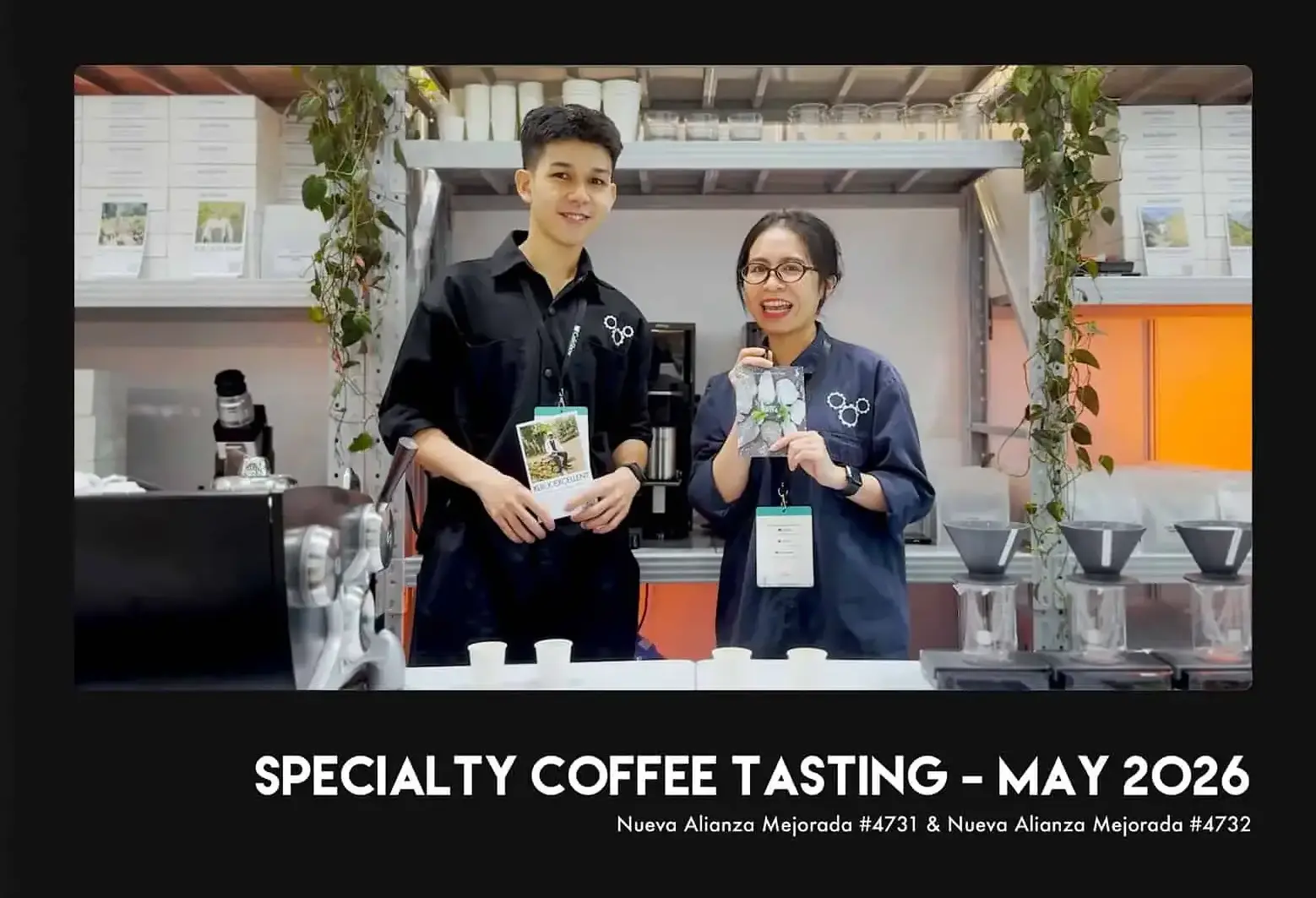
Unveiling May Discovery Subscription: Nueva Alianza Mejorada #4731 & Nueva Alianza Mejorada #4732
The Discovery Subscription is a silent dialogue, a place where the soul of the connoisseur finds a harmonious beat with distant lands. Like a transparent lens, we become storytellers, meticulously peeling back layers of cultural sediment, the breath of the soil, and the human philosophies hidden within every coffee bean.
May arrives with brilliant streaks of golden sunlight, a time when we long to hide beneath the lush, dew-drenched canopies of Santa Teresa. Amidst the silence of the Andes, when compassion touches Mother Earth, what will we hear? Perhaps it is a sweet response that nature reserves solely for souls who know how to wait patiently.

- Taste the Origin
Nueva Alianza Pacamara #4733 – The essence of Cusco with elegant jasmine notes
Nueva Alianza Pacamara #4733 is a testament to the miraculous terroir and dedicated cultivation of the renowned Cusco region. The combination of the characteristic Pacamara bean size and ideal altitude has forged a flavor profile of immense sophistication and depth. From the very first moment, this lot captivates with its elegant jasmine notes, radiating a gentle, pure fragrance akin to a flower blooming in the morning dew.

- Taste the Origin
Nueva Alianza Orange Gesha #4737 – An expedition of recessive genetic traits into the sensory realm
In a world of authenticity, Nueva Alianza Orange Gesha #4737 represents the proud emergence of rare biological traits often obscured by nature’s universality. Carrying a recessive genetic code, Lot #4737 embarks on an “expedition” into the connoisseur’s mind, where record-breaking fructose concentrations are released to perfectly fill every sensory gap with absolute smoothness and purity.
Through washed processing and extremely-light roasting, vibrant citrus nuances and ethereal floral notes, once hidden deep within the genetic structure, now manifest with power, transforming the tasting experience into a journey of ontological completion, where the rarity of recessive genes finally reigns supreme in flavor.

Specialty Coffee in Vietnam
BRAND VALUE
YOU SHOULD HAVE KNOWN
XLIII Coffee has been aiming to become a big, impactful company with social responsibilities,
have access to high-quality raw materials and convey the complete original values of coffee to our customer
