
The “Co-Creation” era of Specialty Coffee
An inseparable aspect of the new era in specialty coffee is deep collaboration – where each stakeholder becomes a co-creator in the broader value chain. Specialty coffee is entering an era of “co-creation” – where the boundaries between farmers, roasters, and consumers are no longer clear-cut, replaced instead by a symbiotic creative relationship.
I. From supply chain to creative community
The traditional coffee industry model operated in a linear chain: farmers produce → roasters process → consumers purchase. But the co-creation era has completely disrupted this logic.
Three stakeholders creating value together
Instead, we’re witnessing the emergence of a creative triangle – where three stakeholders interact simultaneously and continuously:
- Farmers are no longer merely raw material suppliers but have become artists creating “terroir stories” – unique tales of their land. They experiment with new fermentation methods, create micro-lots with distinctive flavor profiles, and interact directly with end consumers through digital platforms.
- Roasters have shifted from being “processors” to “curators” – storytellers who manage narratives. They don’t just roast coffee but tell the story of each bean, create educational experiences, and bridge the gap between farmers and consumers.
- Consumers have evolved from “passive customers” to “active collaborators” – they participate in cupping sessions, provide feedback to improve products, and even co-design blends according to their personal preferences.

The most fundamental change in the co-creation era lies in humanizing every link in the value chain. Coffee is no longer an anonymous commodity but becomes a product that carries human stories.
Coffee of relationships, not just transactions
A prime example is the “Adopt a Coffee Tree” model gaining traction in Vietnamese and Colombian coffee regions. Consumers can “adopt” a specific coffee tree, track its growth through mobile apps, and receive coffee from that very tree after harvest. This transcends the traditional buy-sell transaction model to build emotional relationships that last for years.
In Costa Rica, Starbucks’ Hacienda Alsacia pioneered the “Visitor-Farmer Program” – allowing consumers to experience coffee farming firsthand for 3-7 days. The result: these customers become natural brand ambassadors, willing to pay 40-60% more for coffee from farms where they’ve worked.
Digital platforms for connection & transparency
The co-creation revolution couldn’t happen without technological support. Digital platforms are creating unprecedented “connection spaces” between the three stakeholders.
- Blockchain in Traceability: Platforms like Moyee Coffee have implemented blockchain to create “100% transparent coffee.” Each coffee bean can be traced from seed, through growing, harvesting, processing, and shipping to the final cup. Consumers can scan QR codes to view the complete “journey” of the coffee they’re enjoying.
- AI-Assisted Matching: Applications like the “Coffee Genome Project” use AI to analyze flavor profiles and match them with individual consumer preferences. This system not only suggests suitable coffees but also directly connects consumers with farmers who have corresponding products.
- Virtual Cupping Platforms: Especially during and after the pandemic, platforms like “Virtual Cupping Room” allow farmers, roasters, and consumers to participate in online cupping sessions together, discussing flavors and collaboratively improving products.
II. Farmers: From suppliers to co-creators
Direct Trade – direct commerce between roasters and farmers – has evolved through three distinct generations. While Direct Trade 1.0 focused on eliminating intermediaries, and Direct Trade 2.0 emphasized quality and fair pricing, Direct Trade 3.0 delves into personal relationships and co-creation.
From knowing “origin” to knowing “people”
Looking toward the future, well-established farming operations like Ninety Plus Coffee could develop into networks of “Coffee Artists” – farmers trained to create unique flavor profiles according to specific requirements. Each micro-lot would carry not just the farm’s name but also the “artistic signature” of the farmer who created it.
Large farms like Café Granja La Esperanza in Colombia could envision developing “Varietal Libraries” – collections of different coffee varieties grown on the same farm. Instead of selling in large lots, they could allow roasters to “order” according to desired flavor profiles.


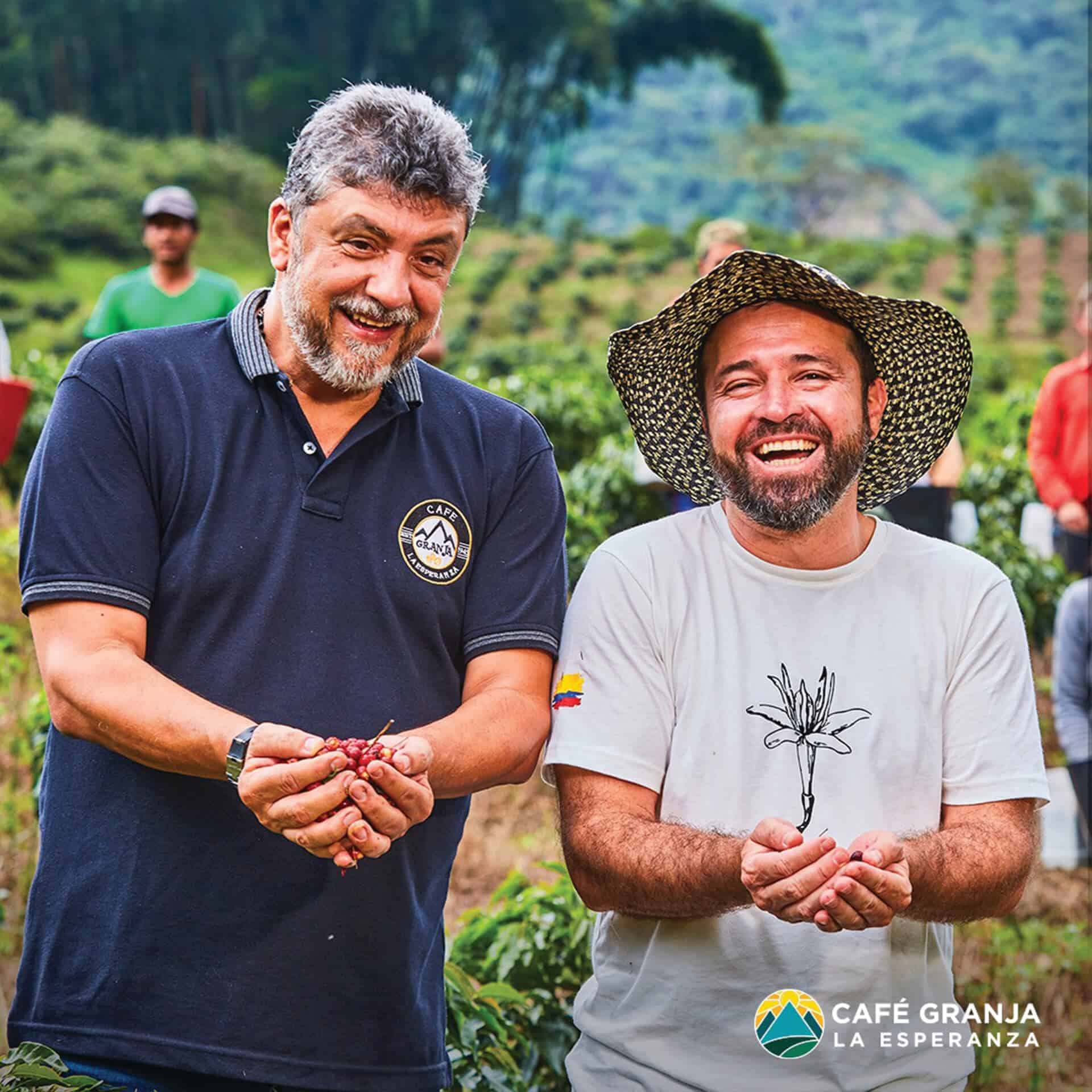
In the co-creation era, each micro-lot is not just a batch of goods but a “collective artwork” – created through collaboration between farmers, roasters, and the consumer community.
- The micro-lot revolution: Instead of producing coffee in large volumes, specialty farmers are shifting to a “short story writer” model – creating micro-lots with their own stories, character, and unique experiences.
- Micro-climate mapping trends: Advanced farms can be divided into multiple micro-zones, each with distinct microclimatic conditions. Instead of blending, they process each zone separately and create multiple micro-lots with different flavor profiles.
- Collaborative fermentation: An emerging trend is “collaborative fermentation” – where farmers experiment with new fermentation methods based on community suggestions. Voted ideas are tested on a small scale, and if successful, are produced as limited micro-lots.
III. Roasters & consumers as curators and co-creators
The role of roasters in the co-creation era has evolved from “processor” to “storyteller” and “experience curator.” They don’t just roast coffee but guide the entire narrative from farm to cup.
Roasters as storytellers
XLIII Coffee (formerly 43 Factory Coffee Roaster) represents this new generation of roasters with a curator mindset.

Beyond focusing on roasting techniques, the brand has never been stronger in building a “narrative ecosystem” – a storytelling ecosystem. Moreover, the brand applies the principle of “maximum traceability” for all experiences, helping consumers trace, authenticate, and evaluate the accuracy of provided information while recognizing the ethical and sustainable efforts of producers.
Consumers as collaborative critics
Specialty coffee consumers are undergoing “prosumerization” – they are simultaneously consumers and producers of content and experiences.

The new generation of consumers is no longer satisfied with just “buying and drinking.” They want to “evaluate, analyze, and share.” Platforms like Beanhunter – dubbed the “Instagram for coffee” – have created a global community with tens of thousands of amateur “coffee reviewers.”
The latest trend is consumers directly participating in product development. Onyx Coffee Lab in Arkansas has launched the “Community Roaster” program – allowing consumers to participate in the roasting process. Similarly, Ritual Coffee Roasters created quarterly “Innovation Challenges” – where the community can propose new product ideas. The most voted ideas are turned into prototypes and tested with volunteer customer groups.
In conclusion, coffee is transforming into a common language of creativity.
In this ecosystem, value is no longer created in a linear chain but through multidimensional networks. Each cup of coffee is the result of hundreds of different creative decisions. The success of this model is measured not by the quantity of products sold but by the depth of relationships built. When a customer can name the farmer who grew the coffee they’re drinking, when a farmer can adjust their cultivation methods based on direct feedback from end consumers, that’s when we know co-creation has truly occurred.
Images used in this article are owned by XLIII Coffee and are collected.
IV. Related questions
1. Does co-creation make coffee more expensive?
In the short term, yes, but long-term, co-creation actually creates more sustainable value. When consumers understand and empathize with the story behind their cup of coffee, they become less “price-sensitive” and willing to pay premiums. More importantly, this model helps farmers receive a larger share of the final value.
2. Do ordinary consumers have the time and capacity to “co-create”?
This is the best question! Co-creation doesn’t mean everyone must become experts. It can be as simple as sharing flavor impressions, voting for favorite packaging designs, or joining an online cupping session. Technology is making these interventions easier than ever.
3. How can we distinguish between “real co-creation” and “marketing gimmicks”?
Real co-creation creates actual changes in products, not just in presentation. If your feedback is implemented, if you can track your influence in the value chain, that’s real co-creation. If you’re only invited to “participate” without seeing concrete results, it might just be marketing.
4. Can this model be applied to Vietnamese coffee?
Absolutely! Vietnam has major advantages: geography (proximity to Asian consumer markets), deep coffee culture, and innovative mindset of younger generations. The challenge is changing the mindset from “volume-oriented” to “story-oriented” and investing in technology to connect the three stakeholders.
5. What will the future of co-creation look like?
We might see the emergence of “Virtual Coffee Farms” – where consumers can “grow” coffee in the metaverse, experiment with different conditions, and then ask real farmers to implement successful ideas. Or AI could help “translate” between farmers’ technical language and consumers’ sensory language, creating deeper understanding between both sides.

Bài viết mới

- Taste the Origin
Rift Valley Coffee Caucus #03757 – A Testament to Western Kenya’s Collective Spirit
Turning our gaze to the Great Rift Valley of East Africa, the fertile volcanic landscapes are witnessing an inspiring transformation. Moving away from fierce, survival-driven competition, smallholder farmers in Western Kenya have chosen to join forces, forging a resilient and unified network. The Rift Valley Coffee Caucus #03757 lot stands as the ultimate testament to this remarkable collective synergy.

- Breaking News
Airworks Coffee & XLIII Coffee – A “handshake” that brings original flavors across borders
XLIII Coffee, alongside our key wholesale partner Airworks Coffee, officially announces the latest release of specialty coffee lots for the North American market. This event reaffirms our commitment to bringing original flavors across all geographical barriers to coffee enthusiasts.
Early access (for Subscribers of Airworks): 10:00 AM (PST) | Wednesday, April 29, 2026
General access: 10:00 AM (PST) | Friday, May 1, 2026
We invite our Customers and Partners to visit (airworkscoffee.com) for detailed information and to prepare for this special release!
- Taste the Origin
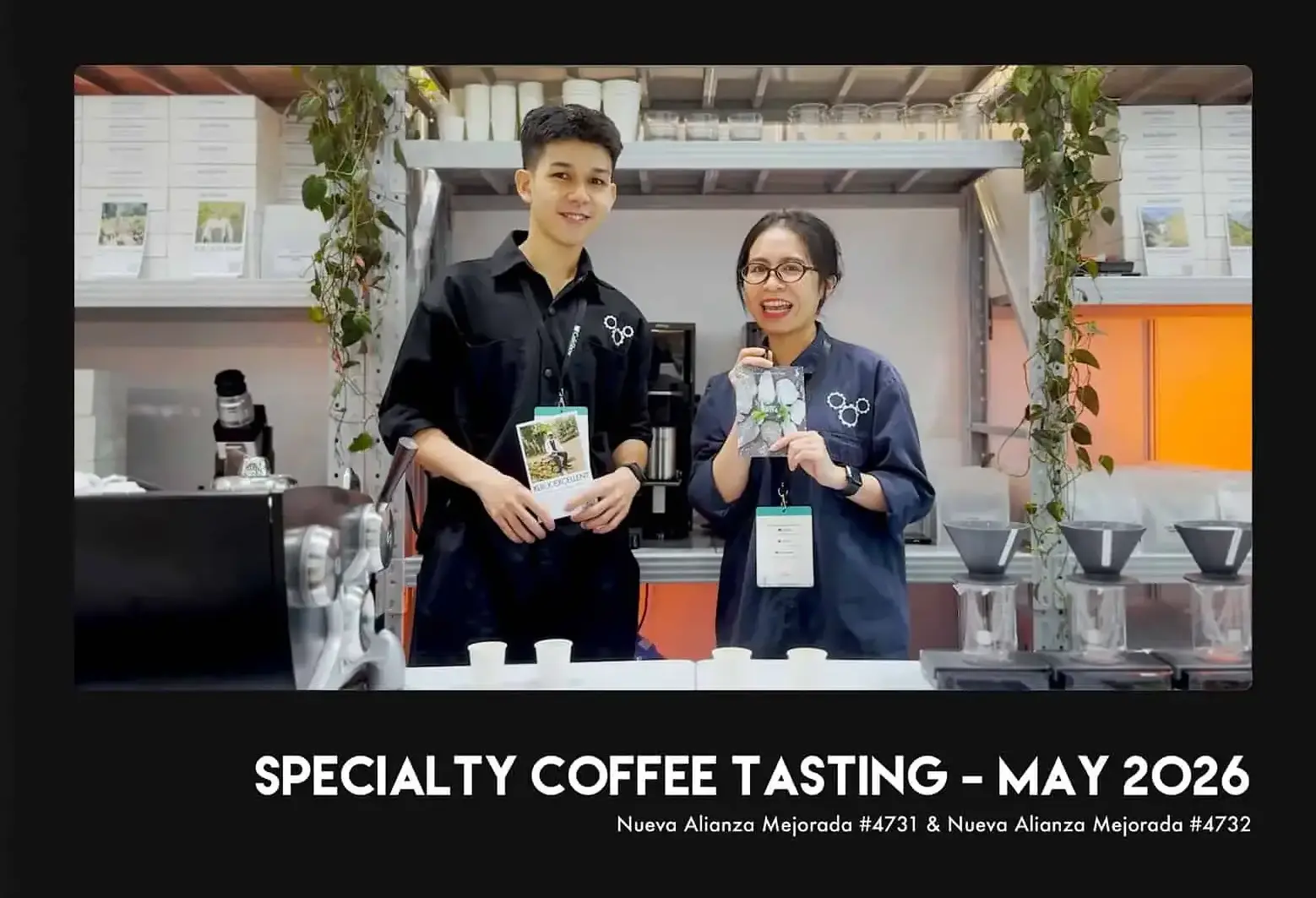
Unveiling May Discovery Subscription: Nueva Alianza Mejorada #4731 & Nueva Alianza Mejorada #4732
The Discovery Subscription is a silent dialogue, a place where the soul of the connoisseur finds a harmonious beat with distant lands. Like a transparent lens, we become storytellers, meticulously peeling back layers of cultural sediment, the breath of the soil, and the human philosophies hidden within every coffee bean.
May arrives with brilliant streaks of golden sunlight, a time when we long to hide beneath the lush, dew-drenched canopies of Santa Teresa. Amidst the silence of the Andes, when compassion touches Mother Earth, what will we hear? Perhaps it is a sweet response that nature reserves solely for souls who know how to wait patiently.

- Taste the Origin
Nueva Alianza Pacamara #4733 – The essence of Cusco with elegant jasmine notes
Nueva Alianza Pacamara #4733 is a testament to the miraculous terroir and dedicated cultivation of the renowned Cusco region. The combination of the characteristic Pacamara bean size and ideal altitude has forged a flavor profile of immense sophistication and depth. From the very first moment, this lot captivates with its elegant jasmine notes, radiating a gentle, pure fragrance akin to a flower blooming in the morning dew.

- Taste the Origin
Nueva Alianza Orange Gesha #4737 – An expedition of recessive genetic traits into the sensory realm
In a world of authenticity, Nueva Alianza Orange Gesha #4737 represents the proud emergence of rare biological traits often obscured by nature’s universality. Carrying a recessive genetic code, Lot #4737 embarks on an “expedition” into the connoisseur’s mind, where record-breaking fructose concentrations are released to perfectly fill every sensory gap with absolute smoothness and purity.
Through washed processing and extremely-light roasting, vibrant citrus nuances and ethereal floral notes, once hidden deep within the genetic structure, now manifest with power, transforming the tasting experience into a journey of ontological completion, where the rarity of recessive genes finally reigns supreme in flavor.

- Taste the Origin
Nueva Alianza Maragogipe #4735 – The “Giant” at the center of attention
Amidst a world of countless specialty coffee beans, Nueva Alianza Maragogipe #4735 emerges as a symbol of grandeur, instantly commanding attention with its distinct appearance. Affectionately dubbed the “Giant” for its impressively mutated “Elephant Bean” size, lot #4735 from Nueva Alianza stands as a testament to nature’s wonders in the Cusco region. Yet, its true allure extends far beyond its imposing exterior; hidden within these colossal beans lies a gentle “soul” blooming with pure floral and crystalline fruit notes.

Specialty Coffee in Vietnam
BRAND VALUE
YOU SHOULD HAVE KNOWN
XLIII Coffee has been aiming to become a big, impactful company with social responsibilities,
have access to high-quality raw materials and convey the complete original values of coffee to our customer
