
Coffea travancorensis – Conserving India’s precious indigenous genetic resource
Coffea travancorensis is a rare native coffee species with limited distribution in the Western Ghats of India. With its unique genetic value, this species holds significant importance in research and the development of sustainable coffee varieties against climate change. However, habitat decline and pressure from agricultural exploitation are pushing Coffea travancorensis into an urgent need for conservation.
I. Indigenous origin of Coffea travancorensis

The story of Coffea travancorensis begins in the 19th century when the plant was first documented in the research work of Wight and Arnott’s Prodr. (1834). Botanists described it as a native coffee species in the Travancore region – an area now part of the Kanyakumari district, Tamil Nadu, India. This discovery opened a new chapter in identifying ancient coffee species, which naturally thrive only in the Western Ghats range, one of the world’s global biodiversity “hotspots”.
Image credit: collected.
Not only Coffea travancorensis, but other native Indian coffee species like Coffea bengalensis and Coffea deccanensis are also considered among the most ancient groups within the coffee family. They have undergone thousands of years of evolution, perfectly adapting to the humid tropical climate of the Western Ghats – the mountain range running parallel to India’s western coast. These specific climatic and ecological conditions have nurtured the species’ distinct characteristics.
Taxonomically, Coffea travancorensis belongs to:
- Kingdom: Plantae
- Phylum: Angiosperms
- Class: Eudicots
- Order: Gentianales
- Family: Rubiaceae
- Genus: Coffea
- Species: C. travancorensis
Source: Canopy Kaapi (Premium Shade Grown Indian Coffee And Species)
Precisely determining its taxonomic position holds both academic significance and establishes a solid scientific foundation for subsequent research on its genetics, ecology, and conservation.

Image credit: collected.
Currently, Coffea travancorensis is predominantly distributed in the states of Kerala and Karnataka, within the moist rainforest regions of the Western Ghats. Although less known compared to Coffea arabica or Coffea canephora, this plant continues to attract significant attention from the scientific community due to its unique genetic value. Notably, in 2017, the International Union for Conservation of Nature (IUCN) officially classified C. travancorensis as “Vulnerable”, highlighting the risk of decline and the urgency of conservation efforts.
As an integral part of the tropical rainforest ecosystem, Coffea travancorensis has contributed to the rich biodiversity of the Western Ghats, playing a crucial role in the region’s ecological balance. The story of this native coffee species is thus not only tied to the history of plant science but also serves as a reminder of the collective responsibility in preserving India’s invaluable genetic resources.
II. Morphological characteristics of Coffea travancorensis
At first glance, Coffea travancorensis appears far more humble than its famous relatives like Coffea arabica or Coffea canephora. It is a small shrub with a sturdy stem, rather straight branches, and fine, soft hairs lightly covering the leaves. The stem nodes are slender yet visibly thickened, while young branches are slightly flattened, clad in a light brown bark. All these features create a simple yet distinct appearance compared to the commercial coffee species we are familiar with.
The leaves of C. travancorensis are small, typically only 2.5–3.75 cm long and 7.5–10 cm wide. The upper surface is dark green and slightly glossy, while the underside is paler, helping the plant adapt well to the filtered light beneath the forest canopy. When the leaves dry, the green color fades to a pale yellow, leaving a distinct trace of a natural physiological process. The leaf morphology, with prominent veins, both bears the hallmark of the Coffea genus and confirms the species’ native identity.
The flowers of Coffea travancorensis are the highlight that sparks curiosity among researchers. They typically grow singly or in clusters of 3-4 blossoms, with small white petals and a delicate fragrance reminiscent of jasmine. The blooming period lasts from April to June, covering the small shrubs with a pure and fragile beauty. This is also a crucial time for researchers to monitor the plant’s growth and natural pollination capabilities.


Images collected from South India Coffee Company, This Side Up Coffee.
After the flowering season comes the fruit. The ripe fruit of C. travancorensis is black, slightly flattened in shape, and approximately 0.8 cm in diameter. Inside each fruit are usually two seeds – a structure familiar to most coffee species. However, the small size and unusual dark color make the fruit a special morphological feature, reflecting its distinct evolution in the tropical rainforest environment.
It is thanks to these characteristics that Coffea travancorensis has become a valuable subject for scientific study. In India, many research institutions, such as the South India Coffee Company (SICC), have established specialized conservation areas for native coffee species, including C. travancorensis. Observations on flowering, fruiting, or leaf changes not only aid in understanding its ecological characteristics but also open up opportunities for genetic research, serving conservation efforts and guiding sustainable agriculture in the future.
Thus, the morphological characteristics of Coffea travancorensis are not merely botanical details but essential “pieces” in the overall picture of the Western Ghats’ biodiversity and the conservation value of this rare native coffee species.
III. Biodiversity value
What makes special is not just its rarity, but the rich genetic value it possesses. Genetic studies have shown that this native coffee species holds a distinct gene pool compared to currently popular coffee species.
This diversity opens up vast opportunities for breeders, from developing coffee varieties with better disease resistance and improved flavor to increasing adaptability to climate change. In a context where the global coffee industry faces many challenges, the genetic resources from are a precious scientific “treasure”.
Beyond its genetic value, also holds significant ecological importance within the tropical rainforest ecosystem of the Western Ghats. This plant contributes to enriching biodiversity, playing a role in maintaining the structure and balance of the local plant community.

Image credit: collected.
Its canopy and fruit provide habitat and food sources for various animal species, while its fragrant flowers become a “rendezvous point” for countless pollinators like bees and butterflies. Each bloom not only marks the plant’s biological cycle but is also an event that nurtures the entire surrounding ecological network.
Furthermore, although not yet a species with major commercial value, still carries notable economic potential. With its unique flavor and rarity, this species could pave a new way in the specialty coffee market, where distinctiveness and native value are cherished. If researched and utilized appropriately, both coffee science and local communities could benefit from the sustainable conservation and development of this plant.
From a genetic, ecological, to economic perspective, truly serves as a vivid testament to the importance of biodiversity. Conserving this species is not just about preserving a rare coffee lineage; it’s about maintaining a vital link in the Western Ghats’ web of life and protecting a long-term potential for the global coffee industry.
IV. Current status and conservation challenges
Today, is facing multiple threats that make the species’ existence more fragile than ever. The expansion of agriculture and deforestation have significantly shrunk the species’ natural habitat within the Western Ghats region. The tropical rainforest, which is the native home of , is gradually being replaced by commercial plantations, causing the species to lose its growing space and established ecological relationships.
In 2017, the International Union for Conservation of Nature (IUCN) officially classified as “Vulnerable”. This is both a warning and a reminder of the urgency of conservation work. Recent studies indicate that, besides deforestation, climate change is also a worrying factor, directly impacting the flowering, fruiting cycles, and genetic stability of the species. Without timely protection measures, this coffee species could gradually disappear, taking with it all the valuable biological assets it holds.
In response to this situation, various conservation efforts have been and are being implemented. In India, specialized research centers have been established to preserve and propagate native coffee species, including . For instance, the “species blocks” set up by research centers allow scientists to monitor the flowering and fruiting process and study the plant’s genetic structure. The collected data supports conservation efforts and provides a scientific basis for breeding and developing sustainable coffee varieties in the future.


Images collected from This Side Up Coffee.
Another challenge is that the commercial value of Coffea travancorensis has not been clearly realized. Compared to Coffea arabica or Coffea canephora, this species does not yet have a foothold in the global coffee market. However, this very obscurity necessitates a call to the scientific community: more research is needed on its commercial viability, flavor profile, and potential applications. If sustainably proven and exploited, C. travancorensis could absolutely become a new source of inspiration for the specialty coffee sector, while providing supplementary livelihoods for local communities.
In conclusion, conserving Coffea travancorensis is not just an act of preserving a rare plant; it is a responsibility to maintain biodiversity, protect native genetic resources, and safeguard the history of Indian coffee. The story of this coffee species is a living testament to the necessity of conservation: so that future generations can still find this small, yet immensely valuable plant for science, ecology, and global coffee culture, deep within the Western Ghats forest.
In conclusion,
Coffea travancorensis is a rare native coffee species from India, carrying unique genetic and ecological value. With its ancient origins and distinct morphology, this plant contributes to enriching the biodiversity of the Western Ghats. However, habitat loss and the impacts of climate change are pushing the species into a vulnerable state. The conservation and study of this coffee species are prerequisites for preserving its precious gene pool and opening up opportunities for sustainable coffee agriculture.
V. FAQs
1. What are the morphological differences between Coffea travancorensis and other common coffee species?
Coffea travancorensis is a small shrub with leaves much smaller than those of Coffea arabica or Coffea canephora. Its white, jasmine-scented flowers typically grow singly or in small clusters, while the fruit is black and quite small (∼0.8 cm), differing from the familiar red or purple fruit of commercial coffee species.
2. How can the gene pool of Coffea travancorensis contribute to research on sustainable coffee variety development?
The diverse gene pool of this species can provide traits for disease resistance, adaptation to harsh climates, and the potential for improved flavor. These are key factors for developing new coffee varieties, ensuring yield and quality amid climate change.
3. Does Coffea travancorensis have commercial potential in the global coffee industry?
Currently, the species does not have significant commercial value due to low yield and limited cultivation. However, with its unique flavor and special genetic resources, Coffea travancorensis could become a highlight in the specialty coffee market if researched and sustainably utilized.
4. What efforts are being made to conserve this native coffee species?
In India, research centers have established specialized conservation areas and research blocks for Coffea travancorensis. Scientists are monitoring growth, analyzing genes, and seeking propagation methods to conserve the species while maintaining the biodiversity of the Western Ghats.
5. Why is the conservation of native Indian coffee species important for the future of the global coffee industry?
Native coffee species like Coffea travancorensis preserve ancient gene pools that can provide solutions to global challenges such as pests, climate change, and the demand for diverse flavors. Conserving them means protecting the natural “gene bank” for the world’s coffee industry in the future.

Bài viết mới

- Find the Origin
Mandela coffee variety – A convergence of generations from a masterpiece breeding strategy
Amidst the constant fluctuations of the era, Mandela emerges as a gentle yet resilient response from the soil. Instead of attempting to alter or impose upon nature, this breeding strategy is, in essence, a profound act of listening. Each Mandela coffee bean carries the bloodline of multiple generations, possessing both the serene, steadfast nature of native trees and the sparkling elegance of premium varieties. It is a sacred continuation, where the flow of generations ultimate honors the original value of the species, imparting an intact and sustainable vitality into every cup.


- Taste the Origin
Nigussie Nare – Murago Outgrowers #03028: Cultivated from the Values of Sustainable Reciprocity
Nestled beneath the shade trees of Sidama, Bensa, the Nigussie Nare – Murago Outgrowers #03028 coffee lot serves as a living testament to the values of sustainable reciprocity. This symbiosis begins with the intimate bond between a rich indigenous ecosystem and the smallholder farmers of the Murago region. Each harvested bean is the culmination of a virtuous cycle: a stable environment produces exceptional bean quality, and sustainable economic growth, in turn, continues to protect the verdant canopy of the great forest.

- Taste the Origin
Rift Valley Coffee Caucus #03757 – A Testament to Western Kenya’s Collective Spirit
Turning our gaze to the Great Rift Valley of East Africa, the fertile volcanic landscapes are witnessing an inspiring transformation. Moving away from fierce, survival-driven competition, smallholder farmers in Western Kenya have chosen to join forces, forging a resilient and unified network. The Rift Valley Coffee Caucus #03757 lot stands as the ultimate testament to this remarkable collective synergy.

- Breaking News
Airworks Coffee & XLIII Coffee – A “handshake” that brings original flavors across borders
XLIII Coffee, alongside our key wholesale partner Airworks Coffee, officially announces the latest release of specialty coffee lots for the North American market. This event reaffirms our commitment to bringing original flavors across all geographical barriers to coffee enthusiasts.
Early access (for Subscribers of Airworks): 10:00 AM (PST) | Wednesday, April 29, 2026
General access: 10:00 AM (PST) | Friday, May 1, 2026
We invite our Customers and Partners to visit (airworkscoffee.com) for detailed information and to prepare for this special release!
- Taste the Origin
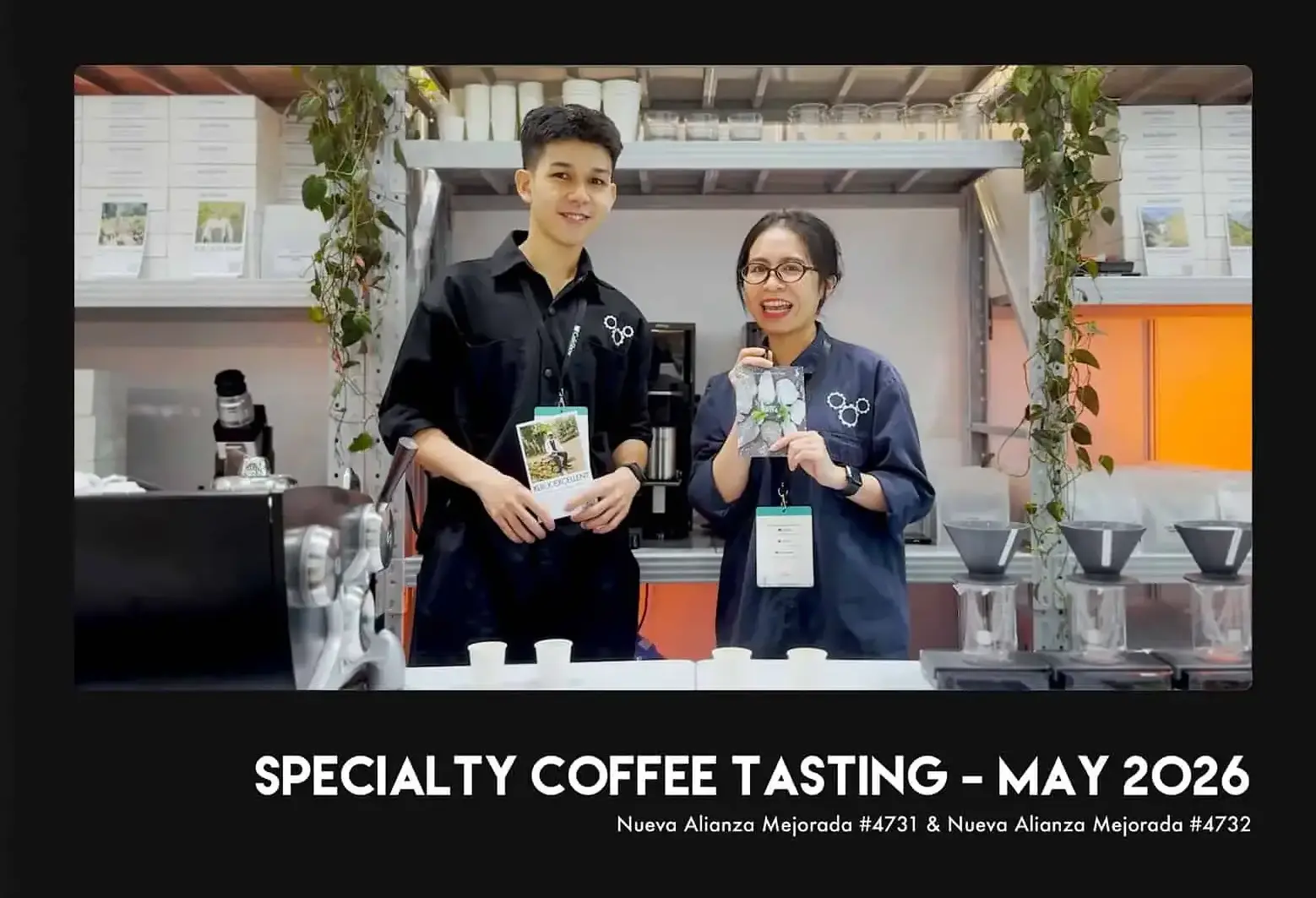
Unveiling May Discovery Subscription: Nueva Alianza Mejorada #4731 & Nueva Alianza Mejorada #4732
The Discovery Subscription is a silent dialogue, a place where the soul of the connoisseur finds a harmonious beat with distant lands. Like a transparent lens, we become storytellers, meticulously peeling back layers of cultural sediment, the breath of the soil, and the human philosophies hidden within every coffee bean.
May arrives with brilliant streaks of golden sunlight, a time when we long to hide beneath the lush, dew-drenched canopies of Santa Teresa. Amidst the silence of the Andes, when compassion touches Mother Earth, what will we hear? Perhaps it is a sweet response that nature reserves solely for souls who know how to wait patiently.

Specialty Coffee in Vietnam
BRAND VALUE
YOU SHOULD HAVE KNOWN
XLIII Coffee has been aiming to become a big, impactful company with social responsibilities,
have access to high-quality raw materials and convey the complete original values of coffee to our customer
