
Does price transparency pose a risk of price suppression for coffee farmers?
In the world of specialty coffee, where people really care about quality and where the coffee comes from, coffee price transparency is becoming an increasingly important standard. It’s not just about publishing price lists; it’s a way for businesses to demonstrate their commitment to both producers and consumers. However, this raises an important question: Does sharing the price paid to farmers and the selling price give competitors a chance to take advantage and push farmgate prices down?
Table of Contents
I. Price transparency in the context of Specialty coffee
The global coffee industry has evolved over thousands of years and is now transitioning toward more positive and sustainable values. Particularly in the Specialty Coffee sector, there is increasing emphasis on fair trade standards, sustainable development, and transparency in product information. In this context, price transparency is one of the practical approaches adopted by coffee producers to help create a purpose-driven and equitable ecosystem for all parties across the supply chain.
Coffee price transparency can be understood as the clear and detailed disclosure of pricing at each stage of the supply chain. Some of the key figures that producers choose to make public include the farmgate price, the FOB (Free on Board) price, and local logistics costs. This transparency helps build trust and demonstrates a strong commitment to fairness and accountability toward all stakeholders in the supply chain.
Farmgate Price
The farmgate price refers to the amount of money that farmers actually receive at their farm, before the coffee goes through processing, transport, and export. However, this price is not always fixed or easy to determine, especially in supply chains with multiple intermediaries. Therefore, sourcing coffee directly from farms that have their own processing facilities makes it easier to define and verify the farmgate price.

Buying coffee directly from farms helps clarify the farmgate price and ensures better benefits for the growers.
FOB Price (Free on Board)
The FOB price, or delivery-at-port price, is the amount at which the coffee is transferred from the seller to the buyer at the export port. This price is often used to compare green coffee contracts in the global market, including Fairtrade-certified deals. The FOB price includes the cost of green coffee, processing, sorting, packaging, domestic transport, loading, warehousing, export fees, and profit. In essence, the FOB price equals the farmgate price plus export-related costs and applicable taxes and fees.
II. Concerns about coffee price transparency leading to farmer exploitation
Some have raised concerns that if businesses publicly disclose the prices they pay farmers and the prices at which they sell their products, competitors could take advantage of this information. They might lower their retail prices to attract more customers. To maintain profit margins at those lower prices, they may in turn pressure farmers to accept lower payments, leading to a situation where farmers are underpaid.
The complex reality context
The reality, however, is far more complex. The farmgate price is not a fixed figure that can be copied directly. Every supply chain has its own structure and associated costs. Moreover, the value of a coffee bean is influenced by constantly shifting factors—ranging from the specific quality of each lot, the overall yield of the season, and the exact timing of harvest, to currency exchange fluctuations and localized operational costs.

Competitors relying solely on published price data to “benchmark” or “replicate” pricing strategies are unlikely to gain any sustainable advantage.
The Risks of Suppressing Farmgate Prices
Undervaluing farmers comes with greater risks than rewards. When farmers are not paid fairly, they will naturally prioritize selling to buyers who offer prices that reflect the true value of their work. Furthermore, a lack of fairness and transparency in pricing weakens trust and long-term partnerships. This can lead to unstable supply and inconsistent quality—ultimately damaging a company’s reputation and market share.
In summary, while concerns about price transparency potentially leading to farmer exploitation are not unfounded in certain cases, a broader perspective shows that the long-term benefits of transparency far outweigh the risks.
III. Why Price Transparency Is an Advantage in the Specialty Coffee Industry
Unlike conventional commercial coffee, Specialty Coffee does not compete on low prices. Instead, its appeal lies in the exceptional quality of each bean—expressed through rich, distinctive flavors—as well as in inspiring brand stories, clearly traceable origins, and strong ethical and sustainability commitments across the entire supply chain.
In addition, conscious and responsible consumption is on the rise, especially in developed markets such as Western countries. In these regions, Consumers increasingly seek products that are sustainable, certified (e.g. Fairtrade), and that come from transparent, traceable origin. If a business is found to be underpaying farmers, it risks facing backlash from both the farming community and a broader consumer base—including potential boycotts.

Fairtrade-certified coffees are becoming increasingly popular among consumers.
Price transparency can therefore encourage competitors to follow suit by fairly compensating farmers and being open about their pricing structures. This fosters trust, builds brand reputation, and appeals to customers who prioritize ethical values. In doing so, it also contributes to a healthier, more equitable competitive environment—ultimately helping raise the overall value of the Specialty Coffee sector.
IV. XLIII Coffee and their commitment to coffee price transparency
At XLIII Coffee, transparency is a core value. The brand publicly shares detailed pricing data, from sourcing coffee at the farm to serving it in-store. Every stage of the value chain is disclosed—including what the company pays producers and the final retail price charged to consumers.
Moreover, XLIII Coffee is firmly committed to paying fair prices. This is reflected in its direct payments to farmers at a level that supports a sustainable supply chain—not only economically, but also socially, for the producers themselves. As the brand puts it: “A cup of coffee may seem simple, but it has traveled a long journey, full of hard work and risk.” XLIII Coffee acknowledges that effort with fairness and integrity.

XLIII Coffee’s product tags display both the farmgate price and the retail price, reflecting the brand’s commitment to price transparency.
Conclusion
Concerns about coffee price transparency leading to farmer exploitation are understandable, but in the context of Specialty Coffee, they are largely unfounded. With its emphasis on quality, ethical values, and long-term farmer relationships, the industry is not one where price suppression creates advantage—in fact, it often brings risk. Transparency, on the other hand, builds trust and drives sustainable growth for everyone involved in the Specialty Coffee ecosystem.
Images from XLIII Coffee and collected by XLIII Coffee
V. FAQs
1. What does price transparency mean in the context of Specialty Coffee?
It refers to the clear and open disclosure of pricing across the supply chain, including the farmgate price (paid to farmers), the FOB (Free on Board) price, and the final retail price. The goal is to ensure fairness, traceability, and trust between producers and consumers.
2. Does publishing farmgate prices put farmers at risk of being underpaid?
Not necessarily. While there are concerns that competitors could use this information to push prices down, in reality, each supply chain has its own structure and cost base. Attempts to underpay farmers often carry the risk of losing high-quality supply and damaging a company’s reputation.
3. What advantages does coffee price transparency bring to businesses?
It helps build brand credibility, earns the trust of ethically minded consumers, and attracts long-term partnerships with producers. This is a major advantage in the Specialty Coffee sector, where customers increasingly care about sustainability and ethical values.
4. How does XLIII Coffee practice coffee price transparency?
XLIII Coffee clearly displays both the farmgate price and the retail price on each coffee tag. The brand is committed to fair compensation for farmers, aiming to secure their livelihoods and foster a sustainable, equitable supply chain.

Bài viết mới

- Taste the Origin
Nigussie Nare – Murago Outgrowers #03028: Cultivated from the Values of Sustainable Reciprocity
Nestled beneath the shade trees of Sidama, Bensa, the Nigussie Nare – Murago Outgrowers #03028 coffee lot serves as a living testament to the values of sustainable reciprocity. This symbiosis begins with the intimate bond between a rich indigenous ecosystem and the smallholder farmers of the Murago region. Each harvested bean is the culmination of a virtuous cycle: a stable environment produces exceptional bean quality, and sustainable economic growth, in turn, continues to protect the verdant canopy of the great forest.

- Taste the Origin
Rift Valley Coffee Caucus #03757 – A Testament to Western Kenya’s Collective Spirit
Turning our gaze to the Great Rift Valley of East Africa, the fertile volcanic landscapes are witnessing an inspiring transformation. Moving away from fierce, survival-driven competition, smallholder farmers in Western Kenya have chosen to join forces, forging a resilient and unified network. The Rift Valley Coffee Caucus #03757 lot stands as the ultimate testament to this remarkable collective synergy.

- Breaking News
Airworks Coffee & XLIII Coffee – A “handshake” that brings original flavors across borders
XLIII Coffee, alongside our key wholesale partner Airworks Coffee, officially announces the latest release of specialty coffee lots for the North American market. This event reaffirms our commitment to bringing original flavors across all geographical barriers to coffee enthusiasts.
Early access (for Subscribers of Airworks): 10:00 AM (PST) | Wednesday, April 29, 2026
General access: 10:00 AM (PST) | Friday, May 1, 2026
We invite our Customers and Partners to visit (airworkscoffee.com) for detailed information and to prepare for this special release!
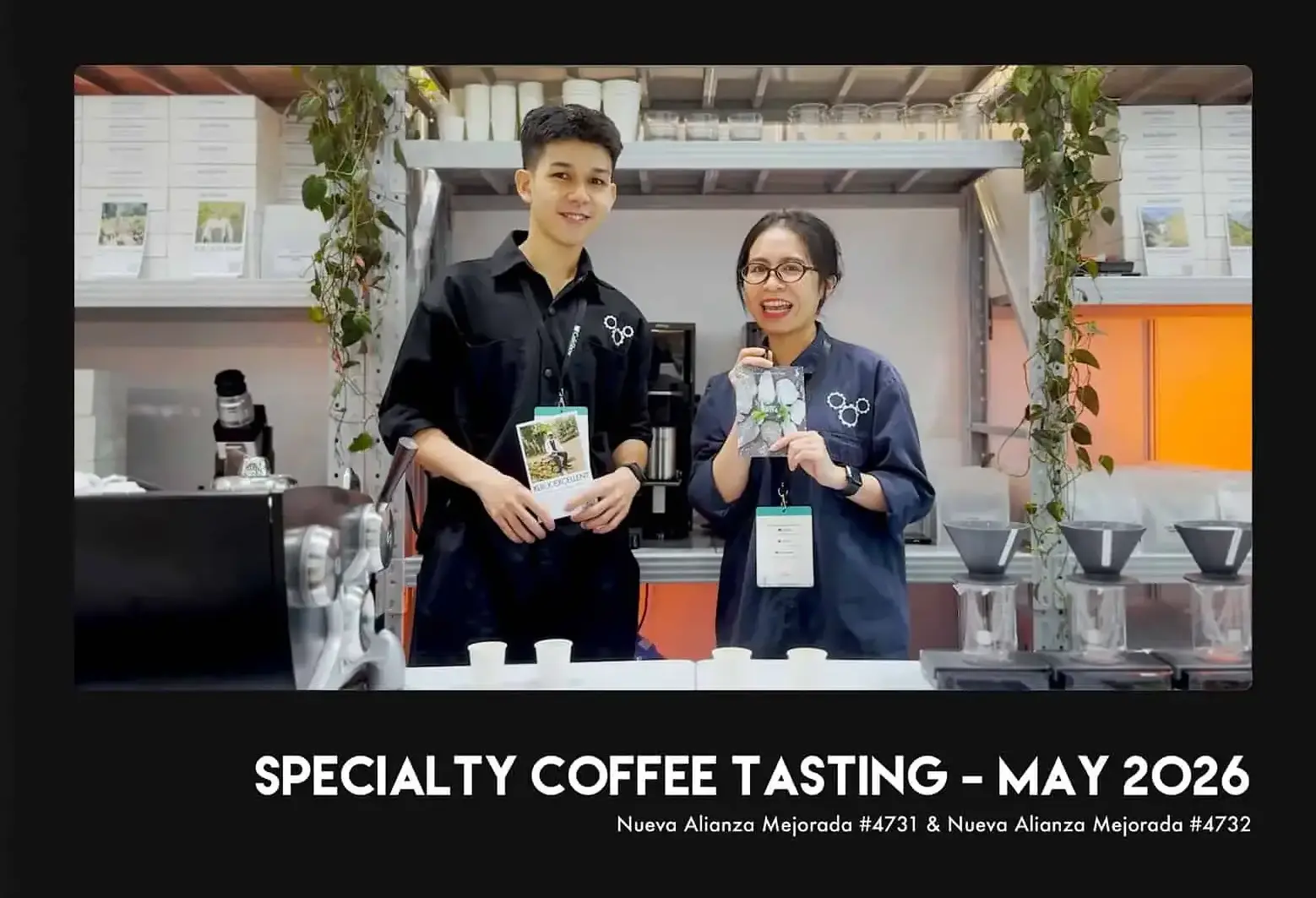
- Taste the Origin
Unveiling May Discovery Subscription: Nueva Alianza Mejorada #4731 & Nueva Alianza Mejorada #4732
The Discovery Subscription is a silent dialogue, a place where the soul of the connoisseur finds a harmonious beat with distant lands. Like a transparent lens, we become storytellers, meticulously peeling back layers of cultural sediment, the breath of the soil, and the human philosophies hidden within every coffee bean.
May arrives with brilliant streaks of golden sunlight, a time when we long to hide beneath the lush, dew-drenched canopies of Santa Teresa. Amidst the silence of the Andes, when compassion touches Mother Earth, what will we hear? Perhaps it is a sweet response that nature reserves solely for souls who know how to wait patiently.

- Taste the Origin
Nueva Alianza Pacamara #4733 – The essence of Cusco with elegant jasmine notes
Nueva Alianza Pacamara #4733 is a testament to the miraculous terroir and dedicated cultivation of the renowned Cusco region. The combination of the characteristic Pacamara bean size and ideal altitude has forged a flavor profile of immense sophistication and depth. From the very first moment, this lot captivates with its elegant jasmine notes, radiating a gentle, pure fragrance akin to a flower blooming in the morning dew.

- Taste the Origin
Nueva Alianza Orange Gesha #4737 – An expedition of recessive genetic traits into the sensory realm
In a world of authenticity, Nueva Alianza Orange Gesha #4737 represents the proud emergence of rare biological traits often obscured by nature’s universality. Carrying a recessive genetic code, Lot #4737 embarks on an “expedition” into the connoisseur’s mind, where record-breaking fructose concentrations are released to perfectly fill every sensory gap with absolute smoothness and purity.
Through washed processing and extremely-light roasting, vibrant citrus nuances and ethereal floral notes, once hidden deep within the genetic structure, now manifest with power, transforming the tasting experience into a journey of ontological completion, where the rarity of recessive genes finally reigns supreme in flavor.

Specialty Coffee in Vietnam
BRAND VALUE
YOU SHOULD HAVE KNOWN
XLIII Coffee has been aiming to become a big, impactful company with social responsibilities,
have access to high-quality raw materials and convey the complete original values of coffee to our customer
