
Ecuador’s Specialty coffee regions: What makes Ecuadorian coffee unique?
Ecuador’s specialty coffee regions are known for producing beans with a rich, balanced flavor, boasting an incredible harmony of acidity and sweetness. These flavors are distinctly influenced by the terroir, with beans from various regions offering subtle differences. Curious about the reason behind this? Let’s explore with XLIII Coffee!
Table of Contents
- I. Introduction to Ecuador's Specialty coffee regions
- II. History of Ecuadorian coffee
- III. Geography and climate of Ecuador's coffee growing regions
- IV. Main coffee varieties of Ecuador
- V. Coffee production and processing methods in Ecuador
- VI. Quality certifications for Ecuadorian coffee
- VII. Challenges and prospects for Ecuador's coffee industry
- VIII. Socio-economic impact of Ecuador's coffee industry
- IX. Related questions
I. Introduction to Ecuador's Specialty coffee regions
Ecuador, nestled along the Pacific coast and stretching across the Andes, surprises with its incredible natural diversity. Often referred to as the treasure of South America, Ecuador’s geographical variety greatly influences its coffee production.
Ecuador’s position in the global coffee industry
Ecuador is the 20th largest coffee producer globally, with approximately 500,000 60kg bags of coffee produced in the 2019/20 season. From October 2020 to February 2021, Ecuador exported about 198,000 60kg bags. Although not as large a producer as Brazil, Vietnam, or Colombia, Ecuador is renowned for its diverse coffee production, offering both Arabica and Robusta beans. The country’s unique climate and geography result in coffee with distinctive flavors, often described as floral, fruity, and chocolatey. Despite challenges like climate change and economic instability, Ecuador remains a notable player in the specialty coffee market, attracting coffee enthusiasts worldwide.
The economic importance of coffee in Ecuador
While not the dominant economic sector, coffee plays a crucial role in Ecuador’s economy, significantly contributing to socio-economic development, especially for farmers.

Ecuador is the 20th largest coffee producer in the world
– Income for Farmers: Ecuador dedicates 85,000 hectares to Arabica and 110,000 hectares to Robusta coffee cultivation. Coffee is the main income source for about 75,000 producers, improving the economic conditions of rural communities.
– Export Value: Coffee is a significant export product for Ecuador. Though the volume is smaller compared to other countries, Ecuador’s high-quality coffee boosts its export value.
– Tourism Development: Coffee tourism is growing in Ecuador, attracting visitors to coffee farms and promoting cultural and coffee-related experiences, increasing farm incomes and promoting Ecuadorian coffee culture.
II. History of Ecuadorian coffee
Ecuador’s coffee industry has a long, eventful history dating back to the early 19th century.
Introduction of coffee to Ecuador
Coffee was commercially planted in Ecuador in the 1860s, with the first plantations established in the coastal province of Manabí, at elevations of 500-700 meters above sea level. This region quickly became the country’s largest coffee-producing area.
Key milestones in Ecuadorian coffee history
– Early Years (1860-1900): The coffee industry initially developed in lowland and coastal areas. Ecuador began exporting coffee to Europe in 1905, marking a significant milestone.
– Early 20th Century (1900-1950): Ecuador expanded coffee production and exports, despite setbacks in 1903 that caused a significant decline. By 1935, exports to Europe resumed, leading to notable growth in the coffee industry, which became a leading export in the 1970s.
– 1980s: The global economic crisis led to a coffee production decline in Ecuador, with continuous decreases until the early 2000s.
– 2000s to Present: Efforts by local farmers and roasters have revitalized Ecuador’s coffee industry. By 2001, coffee production reached 63,720 tons, with an annual average of about 650,000 60kg bags by 2012. Today, Ecuador is one of only 15 countries that grow and export both Arabica and Robusta coffee. Ecuadorian farmers invest in innovative practices to improve productivity and quality, ensuring sustainability and creating new job opportunities for future generations.

Coffee plants were officially introduced and commercially cultivated in Ecuador in the 1860s.
III. Geography and climate of Ecuador's coffee growing regions
Ecuador’s coffee is cultivated not only along the Andes but also in the coastal areas, the Amazon basin, and the Galapagos Islands. While large plantations exist, coffee production has gradually shifted to smaller, family-managed farms.
Main coffee growing regions
Ecuador’s primary coffee regions each offer unique conditions of temperature, rainfall, and climate, creating diverse ecosystems that enrich the coffee’s flavor profile.
– Intag Valley
+ Geographic Location: Intag Valley is located on the outskirts of Otavalo, adjacent to the Cotocachi Cayapas ecological reserve. Farmers in this Andean region specialize in growing organic Arabica coffee under the shade of native trees.
+ Terrain: Intag Valley features mountainous terrain and deep valleys, with elevations ranging from 1,500 to 3,000 meters above sea level. This varied topography creates distinct microclimates ideal for high-quality coffee cultivation. The region’s rivers and streams provide ample water, ensuring the necessary humidity for coffee plants.
+ Climate: The valley enjoys a cool, stable tropical highland climate, with average temperatures between 15 and 25 degrees Celsius.
+ Coffee Flavor: Intag coffee is known for its complex and multi-dimensional flavors, often a blend of rich soil and cool mountain climate influences. Flavors may include citrus fruits like orange and pineapple, berries like cherry, and deeper notes of dark chocolate or caramel.
– Pacto

Ecuadorian coffee is grown not only along the Andes mountains but also along the coast, in the lower Amazon basin, and on the Galapagos Islands.
+ Geographic Location: Pacto is situated in Pichincha province, about 70 kilometers northwest of Quito.
+ Terrain: Pacto encompasses the Andes mountains and deep valleys, ideal for cultivating crops like coffee and cacao.
+ Climate: Known for its cool climate and biodiversity, Pacto’s high humidity from nearby forests and valleys creates optimal growing conditions.
+ Coffee Flavor: Pacto coffee often exhibits diverse fruity flavors, combined with cacao notes. The balanced structure offers a harmonious interplay of flavors.
– Loja
+ Geographic Location: Loja is located in southern Ecuador, near the Peru border.
+ Terrain: Loja features diverse landscapes, from high mountains to deep valleys.
+ Climate: With a tropical highland climate, Loja’s temperatures vary from 10 to 25 degrees Celsius, cooler in the highlands during winter.
+ Coffee Flavor: Ecuadorians claim Loja coffee as the best in the country, particularly from the El Airo community near Yacuri National Park. Arabica coffee from this highland region is known for its balanced structure and complex flavors reminiscent of fruits like orange and pineapple.
– Manabí
+ Geographic Location: Manabí province lies on Ecuador’s western Pacific coast and was the first coffee-growing region in the country.
+ Terrain: Manabí’s diverse terrain includes coastlines, plains, valleys, hills, rivers, and forests, fostering a rich ecosystem suitable for coffee growth.
+ Climate: The province has a humid tropical climate, with temperatures ranging from 25 to 32 degrees Celsius on the coast and 22 to 30 degrees Celsius in the plains and valleys.
+ Coffee Flavor: Manabí coffee boasts rich fruit flavors like orange, pineapple, and berries, sometimes mixed with other tropical fruits. The smooth and balanced aftertaste leaves a lasting impression.
– Zaruma
+ Geographic Location: Zaruma is a town in southern Ecuador, about 400 kilometers south of Quito and 60 kilometers southeast of Machala, the capital of El Oro province.
+ Terrain: Zaruma’s landscape includes mountains, waterfalls, and lush forests.
+ Climate: Zaruma’s ideal coffee-growing conditions include ample sunlight, a rainy season, moderate temperatures, and an elevation of around 1,000 meters.
+ Coffee Flavor: Zaruma coffee, grown at ideal altitudes, has a robust flavor with earthy, root-like aromas and floral hints. The complex yet harmonious flavor layers offer a pleasant drinking experience.

Alongside the existence of large plantations, coffee production has gradually shifted to smaller, family-managed farms.
Impact of natural conditions on Ecuadorian coffee quality
Ecuador’s coffee is a treasure trove of extraordinary flavors. Despite its small land area, Ecuador’s natural conditions create an ideal environment for coffee plants to thrive.
– Elevation: The Andes’ high altitudes provide perfect balance in acidity, sweetness, and slight bitterness. Coffee plants at higher elevations grow more slowly, resulting in harder beans that absorb complex nutrients over time. The ideal altitude helps beans retain rich acids, enhancing their vibrant taste.
– Temperature: In the cool climate of the Galapagos, coffee flavors develop subtle changes. Temperature directly influences growth rate and flavor development. Higher temperatures can speed growth but may adversely affect quality. Stable, moderate temperatures ensure even ripening and high-quality beans.
– Soil: Fertile volcanic soils, like those in Chimborazo, yield coffee with more pronounced flavors, higher acidity, and distinctive character. Soil nutrients like nitrogen, phosphorus, and potassium, along with minerals, affect the coffee’s flavor profile and nutrient absorption.

Despite the small land areas, the natural conditions in Ecuador create an ideal environment for coffee plants to express the superior characteristics of their growing regions.
IV. Main coffee varieties of Ecuador
Ecuador’s rich geography and climate support the cultivation of numerous coffee varieties, from traditional strains to new experimental breeds.
Traditional coffee varieties
Ecuadorian farmers primarily grow Typica, Bourbon, and Caturra varieties, along with Robusta in some regions to supplement lower-quality Arabica yields.
– Typica:
+ Biological Characteristics: Typica, the oldest and most widely cultivated variety in Ecuador, has tall plants with dark green leaves and oval-shaped beans.
+ Flavor: Typica offers complex flavors with mild acidity, smooth body, and lingering aftertaste, often with fruity and floral notes.
– Bourbon:
+ Biological Characteristics: Originating from Bourbon Island (now Réunion), Bourbon plants are upright with round beans and high yield.
+ Flavor: Bourbon is renowned for its sweet, well-balanced flavor with chocolate and red fruit notes.
– Caturra:
+ Biological Characteristics: A natural mutation of Bourbon, Caturra plants are shorter and easier to manage, with high yields and disease resistance.
+ Flavor: Caturra delivers bright flavors with clear acidity and medium body, often featuring citrus and floral notes.
– Robusta:

Ecuador is known for its diverse coffee varieties, ranging from traditional ones that have been cultivated for a long time to newly tested and developed varieties.
+ Biological Characteristics: Robusta is widely grown in Ecuador to boost Arabica production. It thrives in hot, humid climates, with high yield and disease resistance.
+ Flavor: Robusta has strong, bitter flavors with less aroma than Arabica, a thick body, and a lasting aftertaste, often used in instant coffee production.
New coffee varieties
In Ecuador’s specialty coffee regions, farmers experiment with new varieties like SL28 and Sydra.
– SL28:
+ Biological Characteristics: Famous in Kenya, SL28 is tested in Ecuador for high-quality production. It is drought-resistant with moderate yield.
+ Flavor: SL28 has complex flavors, bright acidity, and strong body, often with citrus, berry, and spice notes.
– Sydra:
+ Biological Characteristics: Sydra, a rare variety from Ethiopia, is cultivated in Ecuador. It has dark green leaves and oval beans.
+ Flavor: Sydra stands out with sweet flavors, delicate acidity, and smooth body, featuring tropical fruit, honey, and floral aromas.

In regions specializing in Ecuadorian Specialty Coffee, farmers often produce new experimental varieties such as SL28 and Sydra.
V. Coffee production and processing methods in Ecuador
Ecuador’s diverse terrain and ideal climate provide the perfect conditions for growing exceptional coffee. However, producing a world-class cup of coffee involves numerous factors from the coffee plant to the final cup. Ecuadorian coffee producers have developed unique production techniques to ensure the quality and distinctiveness of their final product.
Cultivation techniques
Coffee production in Ecuador emphasizes quality over quantity. Small farmers typically grow coffee on hillside plots, historically clearing primary forests to grow coffee under various environmental conditions and elevations. This practice has shifted due to the negative impact of deforestation. The Ecuadorian Ministry of Agriculture and private organizations now support sustainable farming practices.
In recent decades, Ecuadorian farmers have embraced organic farming, harmonizing with nature. They leverage diverse ecosystems to produce rich, unique coffee flavors. Most coffee farms also intercrop with other crops like bananas, beets, and artichokes for additional income. Key cultivation techniques include natural shading and pest control, using plants like castor, indigo, and inga for shade, insect repellence, and nitrogen fixation to enhance coffee quality.
Harvesting methods
Coffee harvesting in Ecuador typically occurs from June to October, with most coffee picked by hand. This meticulous process ensures only the ripest cherries are selected, while unripe ones are left behind. Farmers closely observe the color and ripeness of cherries, picking only those that are red or bright yellow, depending on the variety. This manual harvesting not only maintains quality but also reduces damage to unripe cherries, ensuring a stable and uniform harvest.
Processing methods

Coffee in Ecuador is usually processed using two main methods: washed processing and dry processing.
After harvesting, coffee cherries in Ecuador are usually processed using two main methods: wet processing and dry processing. Some specialty coffee producers also experiment with innovative fermentation methods to extract complex and unique flavors.
– Washed Processing
Washed processing is popular in Ecuador for producing clean, delicate-flavored coffee. This method involves removing the cherry’s skin and pulp using a pulping machine, leaving only the beans. The beans are then dried on raised beds or in drying machines until they reach a moisture content of about 10-12%.
– Dry Processing
Dry processing is a traditional method where whole cherries are dried in the sun after being cleaned of dirt and unripe cherries. Once the cherries reach the desired moisture content, they are hulled to remove the skin and pulp, leaving the beans. This method preserves more of the fruit’s flavors, resulting in naturally sweet, fruity, and full-bodied coffee. However, dry-processed coffee can be less consistent in quality due to drying variations.
– Fermentation Processing
Some Ecuadorian specialty coffee producers experiment with various fermentation methods, using proprietary techniques for competitive advantage. Typically, cherries or beans are fermented in controlled environments with specific temperature and humidity levels. Beneficial microorganisms are often added to enhance unique flavors. After fermentation, the beans are dried to the desired moisture content. This method allows for controlled flavor development, creating complex and deep coffee profiles.
Innovations in coffee production
Ecuador’s coffee industry has shifted from relying heavily on green bean imports for instant coffee production, reclaiming its reputation through process improvements.
– Sustainability focus
Previously, some Ecuadorian regions cleared local forests to create coffee plantations, leading to significant ecological damage. Recognizing this mistake, many farms now operate sustainably, replanting trees and growing coffee under native shade. Many farmers have transitioned to organic farming, replacing chemicals with natural fertilizers. Manabi, the coastal province where Ecuador’s coffee journey began, exemplifies this sustainable approach.
– Quality emphasis

Today, many sustainable farms in Ecuador are replanting trees and growing coffee under the shade of native species.
With support from private and government organizations, farms have adopted modern technology to exploit terrain advantages, producing high-quality Arabica varieties like Gesha and SL-28. Ecuador won its first ‘Cup of Excellence’ award in 2021, with a Typica Mejorado coffee from Loja scoring 90.93 points.
– Technological integration
+ Modern Irrigation Systems: Using drip and sprinkler irrigation systems to conserve water and provide consistent moisture to coffee plants.
+ Drones: Supporting crop health monitoring, soil analysis, and optimized fertilization.
VI. Quality certifications for Ecuadorian coffee
Through impressive recovery efforts, Ecuadorian coffee has achieved significant certifications, enhancing its market value and international reputation.
– Organic Certification: Certified by organizations like USDA Organic, EU Organic, and Ecocert, ensuring coffee is grown without synthetic chemicals, pesticides, or artificial fertilizers.
– Fair Trade: Certified by organizations like Fair Trade USA and Fairtrade International, ensuring farmers and workers receive fair wages and work in good conditions.
– Rainforest Alliance: Ensures coffee is grown according to sustainable environmental and social standards, including forest protection, wildlife conservation, and improved working conditions.
– UTZ: Focuses on sustainable production practices, guaranteeing coffee is produced with social and environmental responsibility.
– Bird Friendly: Certified by the Smithsonian Migratory Bird Center, ensuring coffee is grown under shade, creating habitats for migratory birds and protecting biodiversity.
– Geographical Indication (GI) Certification: Indicates coffee is grown in specific regions with unique characteristics, promoting the special quality of coffee from areas like Loja or the Galápagos.

Ecuadorian coffee has achieved many important certifications, enhancing the value and prestige of the product in the international market, such as USDA Organic, Fair Trade, Bird Friendly, and more.
VII. Challenges and prospects for Ecuador's coffee industry
Ecuador’s coffee industry, enriched by its remarkable terrain and landscape, holds immense potential. However, it faces several challenges, including small harvests, low productivity, high production costs, and climate change.
– Negative impact of climate change
+ Disease outbreaks: Changing temperatures and humidity levels promote diseases like coffee leaf rust. Loja is heavily affected, with some farms losing 30-40% of their coffee production during severe outbreaks.
+ Quality variability: Climate change alters natural conditions like soil quality and rainfall, affecting coffee quality and consistency, thus reducing its commercial value.
+ Reduced arable land: Heavy rains and floods cause soil erosion, reducing land available for coffee cultivation and significantly impacting production volumes.
– Competition from other coffee-producing nations
As the coffee industry evolves, producers strive to create higher quality and more productive coffee, intensifying competition. Key competitors include:
+ Brazil: The world’s largest coffee producer, Brazil accounts for about one-third of global coffee production.
+ Colombia: Known for high-quality Arabica coffee, strongly supported by government and national organizations.
+ Vietnam: The largest Robusta producer, contributing about 40% of global Robusta production.
Aware that it cannot compete in volume with its competitors, Ecuador focuses on quality and unique offerings. Many producers form cooperatives and associations, establishing direct relationships with importers and roasters. The Mesa Provincial del Café council helps local producers and roasters collaborate, develop the coffee industry, and provide training in production, processing, trade, and tourism.

The coffee industry in Ecuador still faces many challenges, such as small harvests, low productivity, high production costs, and climate change.
– Sustainable development trends in Ecuadorian coffee
Sustainability is a global trend in the coffee industry, and Ecuador is no exception. Coffee production in Ecuador increasingly emphasizes environmental protection and improving farmers’ livelihoods.
+ Organic farming: More Ecuadorian coffee farms are obtaining organic certification from organizations like USDA Organic and Ecocert, using shade-growing methods and organic fertilizers to protect soil and water resources.
+ Biodiversity conservation: Bird Friendly certification demonstrates efforts to protect ecosystems. For example, Finca Maputo in Loja has earned this certification by maintaining natural vegetation and forest protection. Some farms have established natural reserves to protect wildlife and maintain ecological balance.
+ Efficient resource management: Producers adopt efficient irrigation techniques and sustainable water management to minimize waste and protect water sources. They also use renewable energy sources like solar and biomass to reduce carbon emissions and save energy costs.
These efforts reflect Ecuador’s commitment to sustainable coffee production, enhancing the quality and reputation of its coffee on the global stage.

The entire coffee sector in Ecuador is aiming to protect the environment and improve the lives of farmers.
VIII. Socio-economic impact of Ecuador's coffee industry
The coffee industry is not only a crucial part of Ecuador’s agriculture but also plays a pivotal role in the socio-economic development of the country. With ideal terrain and climate, Ecuador maximizes its potential to produce high-quality coffee, contributing to the national economy and improving the lives of its people, especially in rural areas.
Contribution to GDP and exports
Coffee is a major agricultural export, significantly contributing to Ecuador’s GDP and export activities. According to the Ecuadorian Ministry of Agriculture, in 2022, coffee accounted for approximately 4% of the country’s total agricultural export value, with export earnings reaching $215 million. Ecuador’s coffee export volumes have steadily increased, enhancing the country’s position in the global coffee market.
Ecuador’s high-quality and uniquely flavored coffee is exported to numerous countries, including the United States, Germany, Japan, and Canada. In recent years, new markets such as China and South Korea have also started importing Ecuadorian coffee, opening up new opportunities for the country. This not only improves the trade balance but also provides vital foreign exchange, contributing to the stability of Ecuador’s economy.
Job creation and rural development

The coffee industry is one of the main agricultural export products, contributing significantly to Ecuador’s GDP and export activities.
The coffee industry creates thousands of jobs, especially in rural areas, significantly contributing to the socio-economic development of these regions. According to the International Coffee Organization (ICO), Ecuador’s coffee industry generates over 500,000 direct and indirect jobs, including roles in production, processing, and transportation. The increase in job opportunities not only improves people’s incomes but also reduces unemployment rates and enhances the quality of life in rural areas.
The development of the coffee industry also improves infrastructure in rural regions. Investment programs in transportation, electricity, water, and education have been implemented, funded by coffee industry revenues. This not only elevates living standards but also facilitates coffee production and business, promoting sustainable development in rural communities.
Support programs for coffee farmers
The Ecuadorian government and international organizations have implemented numerous programs to support coffee farmers, aiming to increase productivity and product quality while improving their livelihoods. One notable program is the “Programa de Fortalecimiento del Sector Cafetalero,” launched by the Ministry of Agriculture. This program provides technical training, financial support, and agricultural extension services to farmers.
The program has helped thousands of farmers improve their cultivation techniques, adopt sustainable practices, and increase crop yields. Additionally, it supports farmers’ access to financial resources, enabling them to invest in modern infrastructure and equipment. According to the Ministry of Agriculture, this program has increased coffee productivity by 15% and improved product quality, raising farmers’ incomes.
The International Coffee Organization (ICO) also collaborates with NGOs and private enterprises to implement projects supporting farmers, including sustainable development programs, Fair Trade, and Organic certifications. These programs not only enhance production conditions but also strengthen farmers’ access to international markets, increasing the value and sustainability of Ecuador’s coffee industry.
Furthermore, competitions like the Cup of Excellence, held in Ecuador in 2021, honor the hard work of coffee producers across the country. These competitions motivate producers to continually improve productivity and quality, maintaining production amidst changing climate conditions and challenges.
Thanks to efforts and support from the government and international organizations, Ecuador’s coffee industry not only contributes to the national economy but also improves the lives of thousands of farmers, promoting sustainable and prosperous rural communities.

The Ecuadorian government and international organizations have implemented various programs to support coffee farmers in improving productivity and product quality, as well as their livelihoods.
Conclusion
Ecuador has established itself in the global coffee industry thanks to the high quality and unique flavor of its specialty coffee. Continuous efforts from farmers, government support, and non-profit organizations have created a solid foundation for sustainable development and success in Ecuador’s coffee industry. By continually enhancing product quality, expanding export markets, and attracting coffee tourism, Ecuador has the potential to become a leading country in specialty coffee. Commitment to sustainable development and innovation in production techniques will help Ecuadorian coffee maintain and elevate its position in the international market, bringing significant economic and social benefits to the country.
IX. Related questions
Question 1: What role does the coffee industry play in Ecuador’s economy?
The coffee industry is crucial in Ecuador’s economy, generating income for around 75,000 producers, increasing export value, and developing coffee tourism. Coffee is the main income source for many rural residents, significantly contributing to the socio-economic development of rural communities.
Question 2: What are the prominent coffee varieties in Ecuador?
Ecuador is known for its Arabica varieties like Typica, Bourbon, and Caturra, as well as hybrid varieties like SL28 and Sydra, and Robusta.
Question 3: What are the main coffee-growing regions in Ecuador?
The main coffee-growing regions in Ecuador include Intag Valley, Pacto, Loja, Manabí, and Zaruma.
Question 4: How do Ecuador’s natural conditions affect coffee quality?
Ecuador’s natural conditions, including altitude, temperature, and soil, directly influence coffee quality. High altitudes in the Andes allow coffee beans to develop slowly, creating hard beans rich in acids, leading to a perfect balance of acidity, sweetness, and slight bitterness. The cool temperatures in the Galapagos bring subtle coffee flavors, while fertile volcanic soils in Chimborazo provide nutrients that enhance the coffee’s rich aroma.
Question 5: What are the main coffee processing methods in Ecuador?
The main coffee processing methods in Ecuador include wet processing, dry processing, and fermentation (mainly used by specialty coffee producers). Wet processing is preferred for producing clean, naturally flavored coffee. Dry processing enhances the sweetness and flavor diversity of the coffee. Fermentation methods help increase original flavor concentration or develop new flavor layers.

Bài viết mới
- Find the Origin
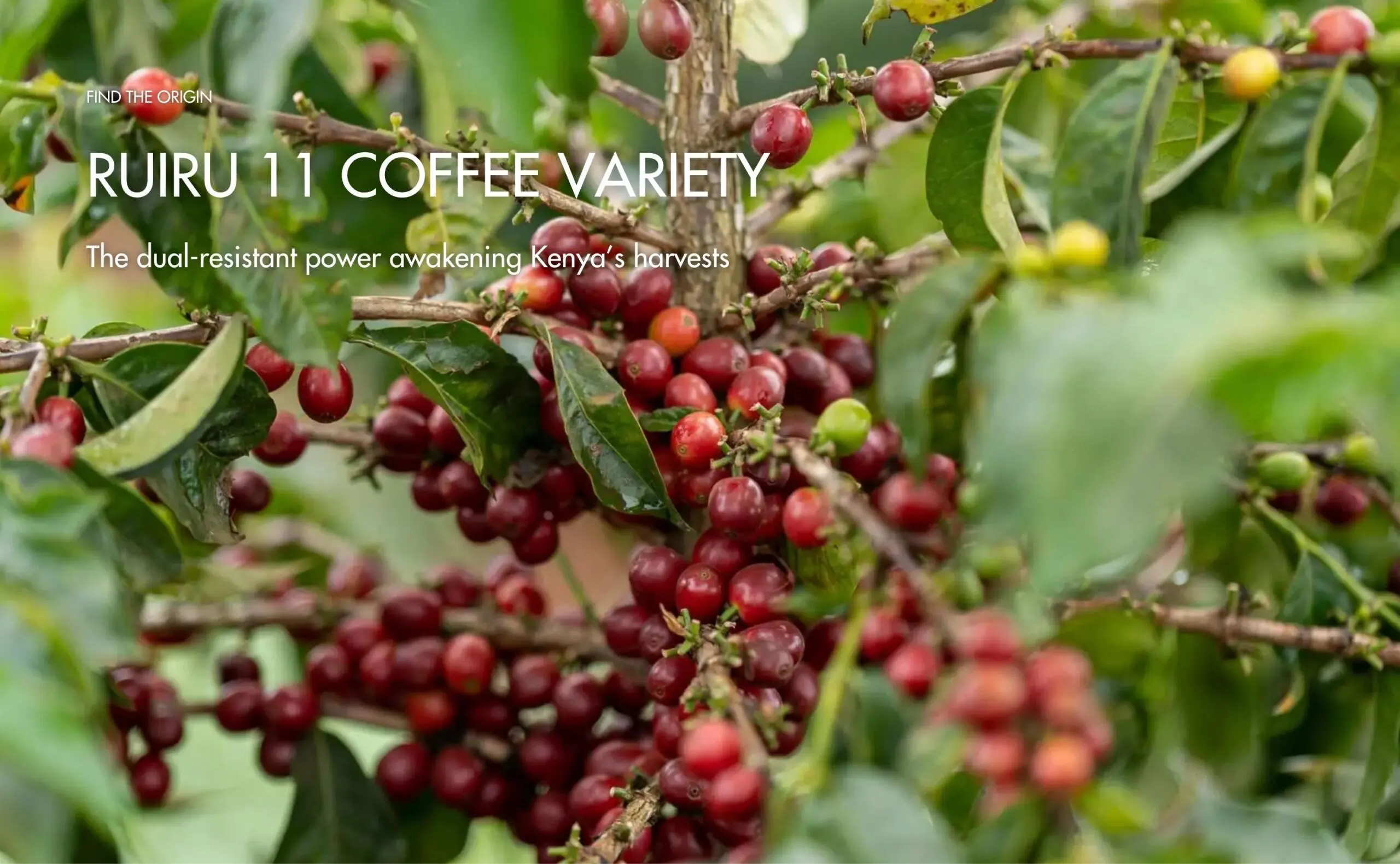
Ruiru 11 coffee variety – The dual-resistant power awakening Kenya’s harvests
Born from the ashes of a devastating pandemic, Ruiru 11 is a resilient response of indigenous wisdom to the trials of nature. Carrying a complex genetic code from 66 sibling isolines, this humbly statured coffee variety possesses superb “dual-resistance” against the twin shadows of Coffee Berry Disease and Coffee Leaf Rust. Overcoming early prejudices and the paradox of trade-offs between yield and flavor, Ruiru 11 has been weaving through nurseries, awakening dormant harvests across highland hillsides, and igniting a proud flame of self-reliance for Kenyan coffee.

- Taste the Origin
Sudan Rume #00313 by CGLE – The origin legend beneath the Eucalyptus canopy
From a wild coffee lineage discovered in the Rume Mountains in the 1940s to the enduring conservation efforts of Café Granja La Esperanza, Sudan Rume #00313 by CGLE invites drinkers on a sensory pilgrimage to the birthplace of the Arabica world. It is a rare biological legacy preserved through unwavering dedication, integrity, and deep reverence for history.
- Taste the Origin
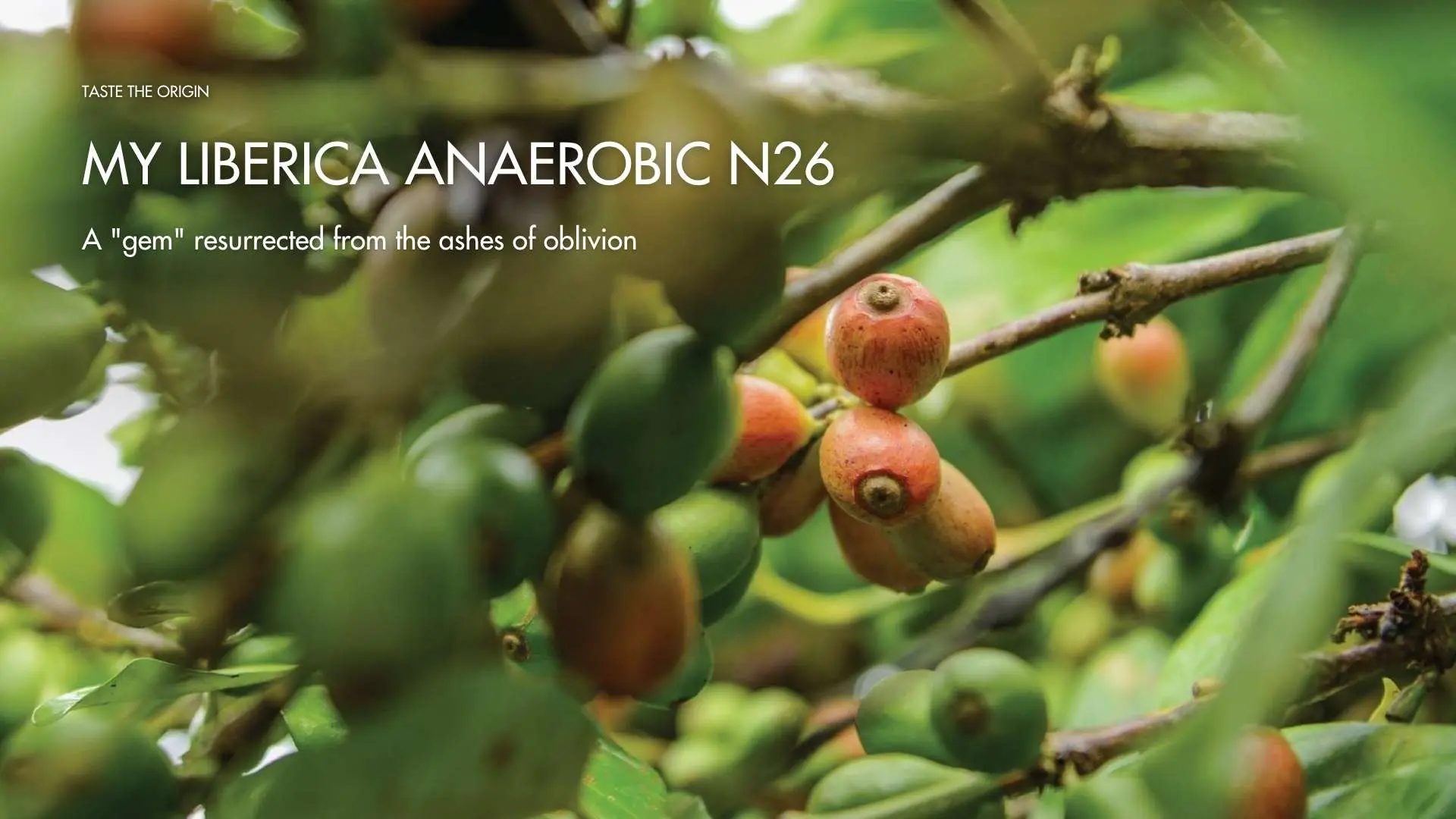
My Liberica Anaerobic N26 – A “gem” resurrected from the ashes of oblivion
The journey of My Liberica Anaerobic N26 is the triumph of a forgotten species, awakened by the depth of understanding, patience, and faith in its original essence. From the heavy clay layers of Kulai to 26 days of transformation in absolute darkness, each step contributes to unlocking layers of flavor that the world once thought could not exist in Liberica. More than just a cup of coffee, My Liberica Anaerobic N26 is a powerful declaration that all great values begin with the courage to delve into their essence, and then rise to a unique voice that resonates throughout the world.


- Taste the Origin
Finca Soledad Mejorado Tyoxy & Fincas Putushio Mejorado – The red thread of the Jijón family
The simultaneous arrival of Finca Soledad Mejorado Tyoxy and Fincas Putushio Mejorado at XLIII Coffee paints a remarkable portrait of the adaptability of the Mejorado variety within Ecuador’s specialty coffee landscape. Nurtured by a shared family philosophy and a commitment to principled cultivation, these two processed lots represent both a breakthrough in microbial innovation and the remarkable return of an exceptional flavor profile.

- Taste the Origin
Finca La Palestina Gesha #5482 – A new chapter in the legend from Cajamarca
From the renowned Cajamarca region, Finca La Palestina Gesha #5482 returns after a period of absence with a proud and fresh appearance. Nurtured in ideal altitude conditions and the cool climate characteristic of the Andes, each coffee bean slowly accumulates subtle flavor nuances before being perfected using the Washed method to maximize the purity of the Gesha variety. Under a carefully refined extremely-light roast profile, this batch of coffee reveals layers of white jasmine, ripe citrus, and sweet golden apricot aromas, interwoven in an elegant and rich flavor structure.

Specialty Coffee in Vietnam
BRAND VALUE
YOU SHOULD HAVE KNOWN
XLIII Coffee has been aiming to become a big, impactful company with social responsibilities,
have access to high-quality raw materials and convey the complete original values of coffee to our customer
