
How does Specialty Coffee impact local economic and social life?
Specialty Coffee is more than just a valued beverage that offers a moment of contemplation of its pure beauty; Specialty Coffee impacts local economic and social life. This high-value coffee industry has brought about positive changes economically, culturally, and socially in regions that grow specialty coffee.
Table of Contents
- I. Life of coffee farmers
- II. Challenges in growing Specialty coffee
- III. Specialty coffee and sustainable development in growing regions
- IV. The role of Specialty coffee in enhancing quality of life
- V. Specialty coffee and the preservation of local culture and traditions
- VI. Challenges and opportunities of Specialty coffee in socio-economic development
- VII. FAQs
I. Life of coffee farmers
Coffee farmers are the backbone of the Specialty Coffee industry. They harvest ripe coffee beans, which are then processed and supplied along the production chain.
Main duties of coffee farmers
Farmers must work diligently to ensure that their coffee plants and beans are healthy and meet the stringent standards of the specialty coffee market. Although the harvest season lasts only a few months, their responsibilities and tasks continue throughout the year, involving various stages of cultivation.
Soil preparation
The soil for Specialty Coffee nurseries must be meticulously prepared to suit the growth conditions of the plants. Farmers sometimes need to modify the soil and substrate to optimize growth conditions, paying close attention to temperature and humidity. The altitude, humidity, and temperature of the coffee-growing region directly affect the success of the crop. Plants are generally cultivated during the dry season to minimize disease risks. Farmers cover the seeds with organic material to protect them during germination. After six weeks, these materials are removed, and the growers must ensure that the young plants have sufficient shade.
Germination
When the first tiny leaves sprout, farmers move the seedlings to a nursery. This process requires appropriate shade and water supply while avoiding pollutants. Organic farms may use different fertilization methods than non-organic farms at this stage.
Planting
As the young plants are nurtured in the nursery, farmers dig planting holes to prevent erosion during the rainy season. After several months in the nursery, the healthy plants are moved to these pre-prepared holes. The farmers sort the plants by examining the roots and leaves to ensure only the healthiest are planted, considering the shade provided by other trees, the altitude, and the climate of the specialty coffee growing area. It is important to water the soil before relocating the plants.
Management and Waiting
Throughout the growth period, farmers regularly check the plants to manage their condition and respond promptly to any issues. Pruning is also necessary to encourage growth and concentrate nutrients in the beans.
Harvesting and Processing
Harvest time is the busiest for coffee farmers. They manually pick the ripe beans or use machinery. Once the beans are harvested to standards, they prepare them for drying, washing, and fermenting, depending on the processing method used.

Farmers must work diligently to ensure that their crops and coffee beans are healthy, meeting the strict standards of the specialty coffee market
Despite being crucial to coffee production, many coffee farmers face significant challenges:
Lack of employment contracts
In 2016, the independent research group Danwatch reported poor working conditions for coffee farmers on Brazilian farms — the world’s largest specialty coffee-growing region. The report highlighted that nearly half of the workers did not have employment contracts, crucial for protecting their rights.
Low wages
Despite their hard work, coffee farmers are often underpaid, partly due to the small scale of the producers. In Honduras, for example, the wages for coffee pickers are even below the minimum wage set by labor law.
Demanding work
Farmers are typically paid based on the amount of coffee they harvest, requiring hours of continuous labor. Picking coffee is a demanding job that involves working under harsh sunlight, leading to exhaustion and increased risk of skin cancer.
Unsafe working conditions
Seasonal workers often live on the farms where they work, in crowded conditions with limited water and poor sanitation, increasing the risk of infectious diseases. Additionally, many farmers are exposed to chemicals without proper protective equipment, raising the risk of chemical poisoning and cancer.

Coffee farmers still lack the necessary and safe living and working conditions
II. Challenges in growing Specialty coffee
Compared to other crops, Specialty Coffee is particularly demanding, requiring specific altitudes, water levels, and being less disease-resistant. Thus, growing specialty coffee demands that farmers have expert knowledge and skills to cultivate and maintain the quality of the plants.
Risks in Cultivating Specialty Coffee
Climate change
Coffee thrives in tropical, warm, and moist conditions, but climate change has increased the pressures on growers. Farmers face unpredictable weather patterns, including frequent droughts and floods, which no longer follow previous predictable patterns. This unpredictability sometimes results in farmers being caught unprepared.
Pests and Diseases
Being a tropical crop, coffee is susceptible to pests and diseases, most notably the devastating rust disease that has wreaked havoc on crops in Central America. Additionally, other hard-to-control pests like the coffee borer beetle cause significant concern and require effective management strategies.

Farmers may face production risks, financial shortages, and a lack of resources
Financial worries
Even after overcoming various risks and achieving a standard coffee crop, farmers still face financial uncertainties.
Low coffee prices
In recent years, coffee prices have been unstable and trending downwards. For example, July 2024 Arabica coffee prices fell by 0.3 cents per pound to 201.15 cents, and September 2024 prices decreased by 0.05 cents to 199.95 cents per pound. These low selling prices make it difficult for farmers to afford new plants or invest in modern equipment, creating a vicious cycle that degrades coffee quality due to lower crop quality.
Difficulty managing production costs
Coffee is typically harvested once a year, meaning farmers receive payment only once annually. However, they face significant ongoing expenses throughout the year, such as pruning, harvesting, fertilizing, fuel, and coffee storage costs. Managing these costs can be challenging, and sometimes farmers may cut back on essential farm maintenance activities, which can directly impact crop quality.
Overwhelmed by upfront costs and long-term investments
Beyond operation and maintenance, producers also need to cover upfront costs for farm infrastructure investments and modern machinery and equipment. These costs can be overwhelming for small-scale farms with limited capital reserves.

Specialty coffee farms implement organic farming and agroforestry practices to conserve natural ecosystems
III. Specialty coffee and sustainable development in growing regions
Far surpassing ordinary commercial coffee, the uniqueness of Specialty Coffee is not confined to its vibrant flavor profiles that enchant consumers. The value of these exceptional beans encompasses sustainability aspects right from the point of origin—where they are cultivated.
Minimizing environmental degradation in Specialty coffee production
The operational dynamics of supply and demand, coupled with market competition, compel supply businesses to enhance production efficiency. Increasingly, many industrial coffee farms have automated their processes, leading to adverse environmental consequences. Soil quality, groundwater sources, and biodiversity suffer from the monoculture plantation systems. Numerous studies published in international scientific journals have raised concerns about the environmental health impacts due to the cultivation, processing, and export of coffee.
Unlike monoculture coffee production models, Specialty Coffee growing regions prioritize sustainable practices. Farms adopt organic farming techniques, agroforestry, and conservation of natural ecosystems. The techniques employed throughout the supply chain adhere to environmentally friendly principles, limiting the use of chemicals, enhancing forest recovery rates, conserving energy, and reducing greenhouse gas emissions. These practices not only increase shade cover, providing habitats for various animals but also help combat genetic erosion in coffee. Through these means, Specialty Coffee production positively influences agricultural resource sustainability season after season, preserving ecosystem integrity and fostering sustainable development in the growing areas.

The relatively high value of Specialty Coffee, which is favored by many international markets, encourages farmers to adopt more sustainable farming practices
Specialty coffee encourages farmers to transform and develop sustainably
To qualify as Specialty Coffee, growing regions must meet certain standards that protect the overall health of the environment. However, the relatively high value of Specialty Coffee, favored by many international markets, encourages farmers to make their farming practices more sustainable. Moreover, Specialty production methods can improve the natural structure and fertility of the growing areas, enhancing farmers’ resilience against climate change. Increased production efficiency ensures the sustainability and long-term development of the farms.
This narrative illustrates how Specialty Coffee not only brings economic benefits but also plays a crucial role in promoting environmental stewardship and sustainable agricultural practices among coffee growers.

Specialty coffee buyers prioritize farms that offer wages commensurate with the farmers’ efforts, helping to reduce labor exploitation and improve workers’ livelihoods
IV. The role of Specialty coffee in enhancing quality of life
Sustainability is one of the prominent features that define the enduring value of Specialty Coffee. This premium coffee type does more than just celebrate the original aromas of the regions it is grown in; it also contributes to stabilizing human life across the entire industry, particularly for the farmers.
Economic improvement for farmers and farms
A clear and firm message has emerged from recent fair trade consultations regarding the Fair Trade Standards: Coffee farmers need to be paid more, or they will not be able to continue farming. This is crucial as farmers form the foundation of the coffee production process, facing many hardships but often not seeing fair returns for their labor.
The specialty coffee sector emphasizes the role of farmers and partners capable of ensuring the rights of growers. In response to the challenges faced by these farmers, the Specialty Coffee industry strives to provide:
Fair wages
When sourcing Specialty Coffee, in addition to bean quality, purchasing entities prioritize farms that pay wages commensurate with the efforts of the farmers. This criterion helps limit the exploitation of labor and improves the livelihoods of these hardworking, yet often underappreciated, individuals.
Motivation for smallholder farms
In reality, the coffee sector includes many small-scale farms that lack the facilities to set up large washing stations equipped with modern machinery, and most processes depend heavily on manual labor. Despite these difficulties, they continue to cultivate their regions to produce high-value coffee beans. Producers in the Specialty Coffee industry support these farms by selecting coffee that is a product of their labor and love, initially maintaining livelihoods for the farmers. Transparency and traceability of the coffee’s origin are then enhanced, promoting and recognizing the dedication and expertise of the farms and setting a foundation for long-term development.

Specialty coffee purchasing units prioritize farms in paying wages commensurate with farmers’ efforts, helping to limit labor exploitation and improve workers’ livelihoods
Environmental protection
Alongside financial values, Specialty Coffee is committed to a “sustainable” environment through organic farming practices and environmentally friendly waste management. Nature provides the nutrients necessary for coffee plants to grow and develop full flavors. However, some coffee production methods are destroying the very sources of these plants. Chemicals and waste have degraded forests, altering soil properties and vegetation, which directly impacts the surrounding ecosystem.
Aware of this situation, the entire Specialty Coffee industry has implemented eco-friendly farming solutions, minimizing the use of harmful chemicals in planting and production. The cultivation of Specialty Coffee must ensure optimal quality while committing not to harm the soil, water, forests, and ecosystems. For example, in pest management, farmers use human and nature-safe pheromone traps instead of chemical pesticides.
Thus, by protecting soil health, preserving water sources, and respecting natural ecosystems, Specialty Coffee demonstrates its commitment to improving living environments, bringing long-term value to the planet.

The entire Specialty coffee industry has proposed friendly farming solutions, ensuring optimal quality and committing not to harm land, water, forests and ecosystems
V. Specialty coffee and the preservation of local culture and traditions
Specialty Coffee carries a deep appreciation for authenticity. Rather than creating new and exotic flavor profiles, reputable producers focus on protecting and highlighting the inherent characteristics of each coffee bean. This approach is how Specialty Coffee preserves local cultures and traditions, bringing them to the global stage.
Emphasizing local cultural and traditional elements
It can be confidently stated that no coffee cherishes the traditions of its growing regions more than Specialty Coffee. The origin has long been a guiding principle and benchmark for shaping the development of each coffee plant. Those in the Specialty Coffee industry recognize the importance and permanence of the beauty inherent in the name of their homeland. While novel flavor notes may attract consumers temporarily, the unique beauty of one’s origin offers deeper and more lasting appeal than a mere beverage.
Many batches of Specialty Coffee become meaningful due to the original values they convey. Through a cup of aromatic coffee, consumers can immerse themselves in the wind, sun, and abundant water of the farm—elements that nurture life and flavor in each coffee bean.
Specialty Coffee suppliers constantly seek precious beans—precious in that they “appreciate” and remember their roots. Meanwhile, farmers and Specialty Coffee producers strive to create harvests that preserve the originality to the utmost.
XLIII Coffee shares a passion for Specialty Coffee and its initial purity. The café’s four strategic approaches are closely linked to Origin, including: Find the origin, Protect the origin, Describe the origin, Taste the origin. This reflects a strong desire to explore, preserve, and bring the cultural beauty of each coffee bean directly to customers. Moreover, from processing and roasting to brewing, XLIII Coffee prioritizes methods that preserve the inherent characteristics of the beans. The wet processing method limits the impact of external factors, allowing the coffee bean to shine in its true form while controlling timely changes to produce excellent quality coffee. Following this, XLIII Coffee opts for a very light roast level—at the moment the first crack appears, the roaster can evaluate and accordingly decide the appropriate time to end the roast. This method ensures that the coffee beans retain their most pristine qualities and a bright, rich acidity, creating a captivating flavor symphony in the drinker’s palate.

People in the Specialty coffee industry are also aware of the importance and eternity of the beauty named after their homeland
Nurturing a unique coffee culture
Enjoying Specialty Coffee allows us to explore and appreciate the diverse flavors and origins of coffee. Each batch from a specific growing region has its own unique beauty, compelling us to learn more about why they are so vibrant and fresh. Why does Finca Soledad Sydra from Ecuador carry floral, tea-like notes? Why does Nueva Alianza Yellow Gesha #3188 from Peru taste sweetly of orange blossom and jasmine? These questions fuel curiosity, which eventually grows into a love for the refined coffee culture, rich in value.
Thus, by supporting the Specialty Coffee industry, you can contribute to the development of a vibrant coffee culture, encouraging innovation, education, and an appreciation of craftsmanship. Specialty Coffee opens up a world of exploration, where each cup of coffee becomes a journey to discover new flavors and experiences.

Each batch of coffee from a specific growing region possesses a unique beauty that makes everyone want to learn more about why they are so fresh and vibrant
VI. Challenges and opportunities of Specialty coffee in socio-economic development
Specialty Coffee offers a pathway toward a more comprehensive and promising future for the industry. However, this journey also presents significant challenges that need to be addressed in the supply chain.
Opportunities for sustainable socio-economic development with Specialty coffee
Sustainable socio-economic development strategies often emphasize maximizing economic benefits while ensuring the stability of environmental and social factors. Essentially, the operation of the Specialty Coffee supply chain aims for a long-term balance between these aspects.
The core of Specialty Coffee focuses on quality over quantity, promoting a more conscious approach among stakeholders regarding the impacts of production and consumption. This includes valuing sustainability, the efforts of producers, and the consumer experience, which collectively help the industry gradually shift away from the pitfalls of mass industrial coffee production.
In detail, Specialty Coffee sets specific standards for producers, requiring them to enhance natural quality through environmentally beneficial production models and practices. Activities in the field are also built on direct, ethical, and responsible relationships between farmers and roasters. Farmers are empowered and respected, receiving fair prices. Producers can improve their quality of life and reinvest in their growing areas and communities with the profits earned, thereby motivating them to continue their profession and develop further. Workers are assured of stable income and fair benefits, reducing unemployment and poverty rates and enhancing access to education, which contributes to elevating the overall value chain of the industry.
Furthermore, transparency and traceability in the Specialty Coffee supply process bring end consumers closer to the farmers. Through this, consumers can better appreciate and value the journey of creation—the health, flavor, regional identity, production efforts, supply, and profound industry impacts on social life. This attention can attract more stakeholders interested in investing and transitioning toward sustainability, potentially creating a positive cycle for the sustainable development of the socio-economy.

Transparency and traceability in the supply process of Specialty Coffee open doors that bring end consumers closer to the farmers
Challenges of Specialty coffee in socio-economic development
Beyond flavor, a distinctive aspect of Specialty Coffee is its sustainability across economic, social, and environmental dimensions. Meaning, a product that positively impacts the environment but fails to be profitable for producers cannot be considered sustainable. Although high-quality, valuable Specialty Coffee can provide good livelihoods for millions, achieving comprehensive sustainability and popularizing Specialty Coffee production methods remains challenging.
The input costs for Specialty Coffee are significant. Producers must invest considerable capital, resources, and effort to establish suitable cultivation environments and infrastructure that meet strict standards. This results in Specialty Coffee prices being substantially higher than those of standard commercial coffees, limiting its market reach. Without consumer support, can the supply chain sustain itself?
Moreover, global climate change seriously impacts the industry. Increasing temperatures and harsh weather conditions raise risks for Specialty Coffee farmers. Issues such as gender inequality, competitive pressures, and poverty force many farmers to abandon the profession, threatening quality and production levels and causing price spikes that affect the industry’s sustainable development.

Soaring production costs and the severe impact of climate change increase the risks for farmers growing Specialty Coffee
The journey of Specialty Coffee begins with the farmers, who dedicate their lives to creating these aromatic beans. Each flavor note offers a unique experience, portraying the vivid journey of the region’s beauty, the resilience of the workforce, and the positive values brought to socio-economic life. It opens new opportunities for sustainable development by promoting sustainability and respecting coffee culture worldwide. However, maintaining these values comprehensively faces many difficulties. Significant investment in terms of money and time is required, involving support for farmers, integrating sustainability and ethics in operations, promoting the impact of coffee production, and creating a broad community that spreads the inspirational source of Specialty Coffee concerning respect and dedication to a shared vision.
Image source provided by the farm, partner XLIII Coffee and collected by XLIII Coffee
VII. FAQs
Question 1: What challenges do coffee farmers typically face?
Coffee farmers are a vulnerable group within the industry. They encounter multiple challenges:
– Lack of formal employment contracts
– Low wages that do not meet their living needs
– Physically demanding work
– Unsafe working conditions
– Production and transaction risks
Question 2: What does sustainability mean in the production of specialty coffee?
Sustainability in specialty coffee production encompasses three dimensions: economic, social, and environmental.
– Economically, specialty coffee encourages improving quality over quantity and ensures fair income for farmers, promoting sustainable farming methods that enhance long-term viability.
– Socially, specialty coffee farms ensure fair and stable livelihoods for workers. Producers invest in infrastructure, education, and local health care, strengthening the communities where they operate.
– Environmentally, specialty coffee farms prioritize sustainable farming practices, such as shade-grown coffee and organic farming, to provide habitats for diverse species and reduce environmental impact.
Question 3: Why does producing specialty coffee minimize environmental degradation?
Specialty coffee production emphasizes sustainable activities. Growing regions operate with organic and agroforestry models, conserve natural ecosystems, are environmentally friendly, minimize chemical use, increase forest recovery rates, save energy, and reduce greenhouse gas emissions. These practices protect forest areas, prevent soil and water erosion, and enhance biodiversity.
Question 4: How does specialty coffee preserve local culture and traditions?
Specialty Coffee appreciates and respects the unique identities of each growing region. It focuses on spreading inspiration about the distinctive beauty and diversity of species, landscapes, and traditional production methods of each area. Farms are encouraged to develop a coffee culture that reflects local flavors, creating a diverse world where each coffee bean represents a journey exploring the beautiful aspects of its origins.
Question 5: Why is it said that specialty coffee supports farmers in improving their quality of life?
One of the standards of specialty coffee is ensuring fair wages and better benefits for farmers. With a stable livelihood and income, farmers can improve their quality of life, focusing more on health, education, and future prospects. Additionally, this enables farmers to access more development opportunities in the field, which contributes to elevating the societal intelligence.

Bài viết mới
- Find the Origin
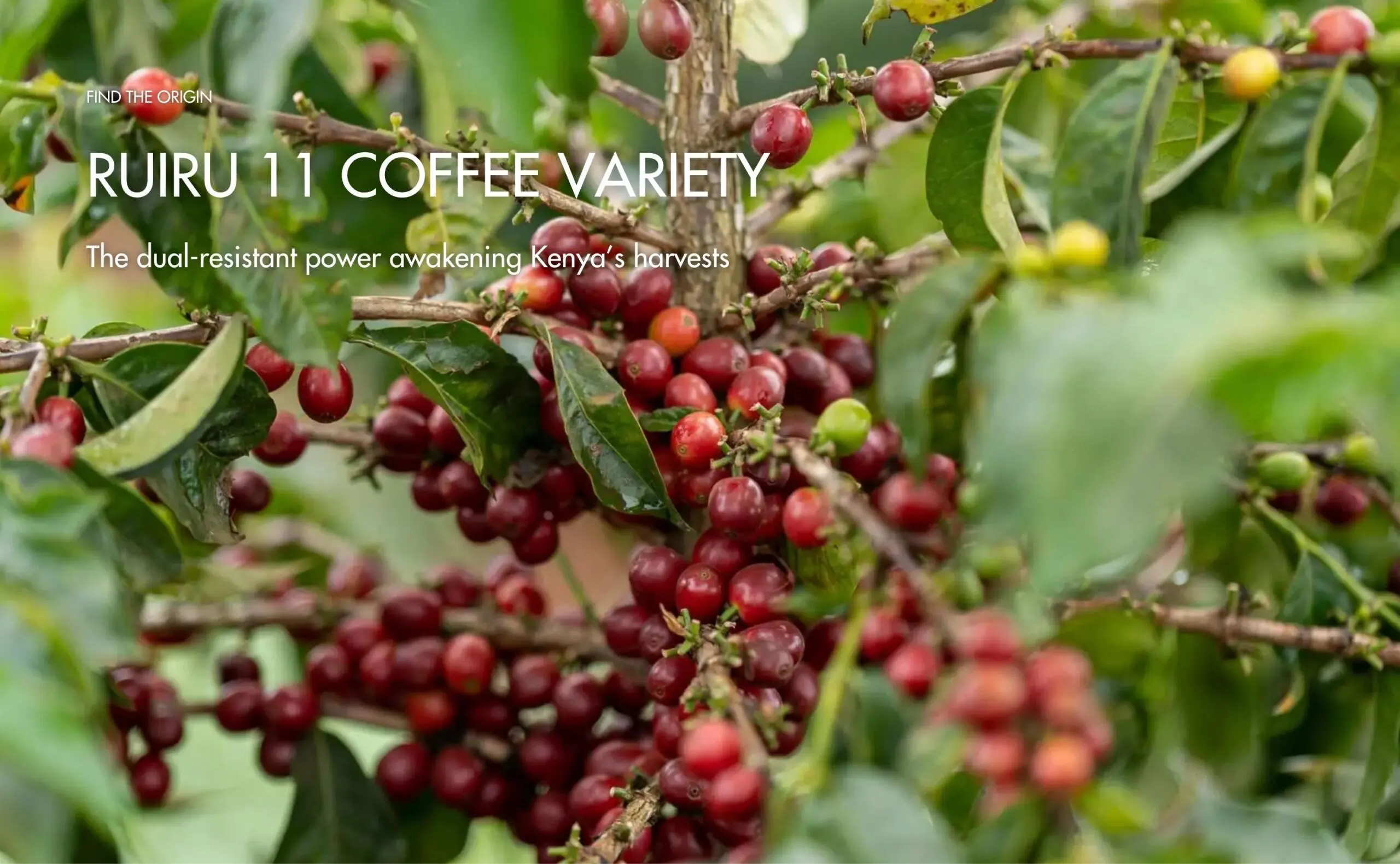
Ruiru 11 coffee variety – The dual-resistant power awakening Kenya’s harvests
Born from the ashes of a devastating pandemic, Ruiru 11 is a resilient response of indigenous wisdom to the trials of nature. Carrying a complex genetic code from 66 sibling isolines, this humbly statured coffee variety possesses superb “dual-resistance” against the twin shadows of Coffee Berry Disease and Coffee Leaf Rust. Overcoming early prejudices and the paradox of trade-offs between yield and flavor, Ruiru 11 has been weaving through nurseries, awakening dormant harvests across highland hillsides, and igniting a proud flame of self-reliance for Kenyan coffee.

- Taste the Origin
Sudan Rume #00313 by CGLE – The origin legend beneath the Eucalyptus canopy
From a wild coffee lineage discovered in the Rume Mountains in the 1940s to the enduring conservation efforts of Café Granja La Esperanza, Sudan Rume #00313 by CGLE invites drinkers on a sensory pilgrimage to the birthplace of the Arabica world. It is a rare biological legacy preserved through unwavering dedication, integrity, and deep reverence for history.
- Taste the Origin
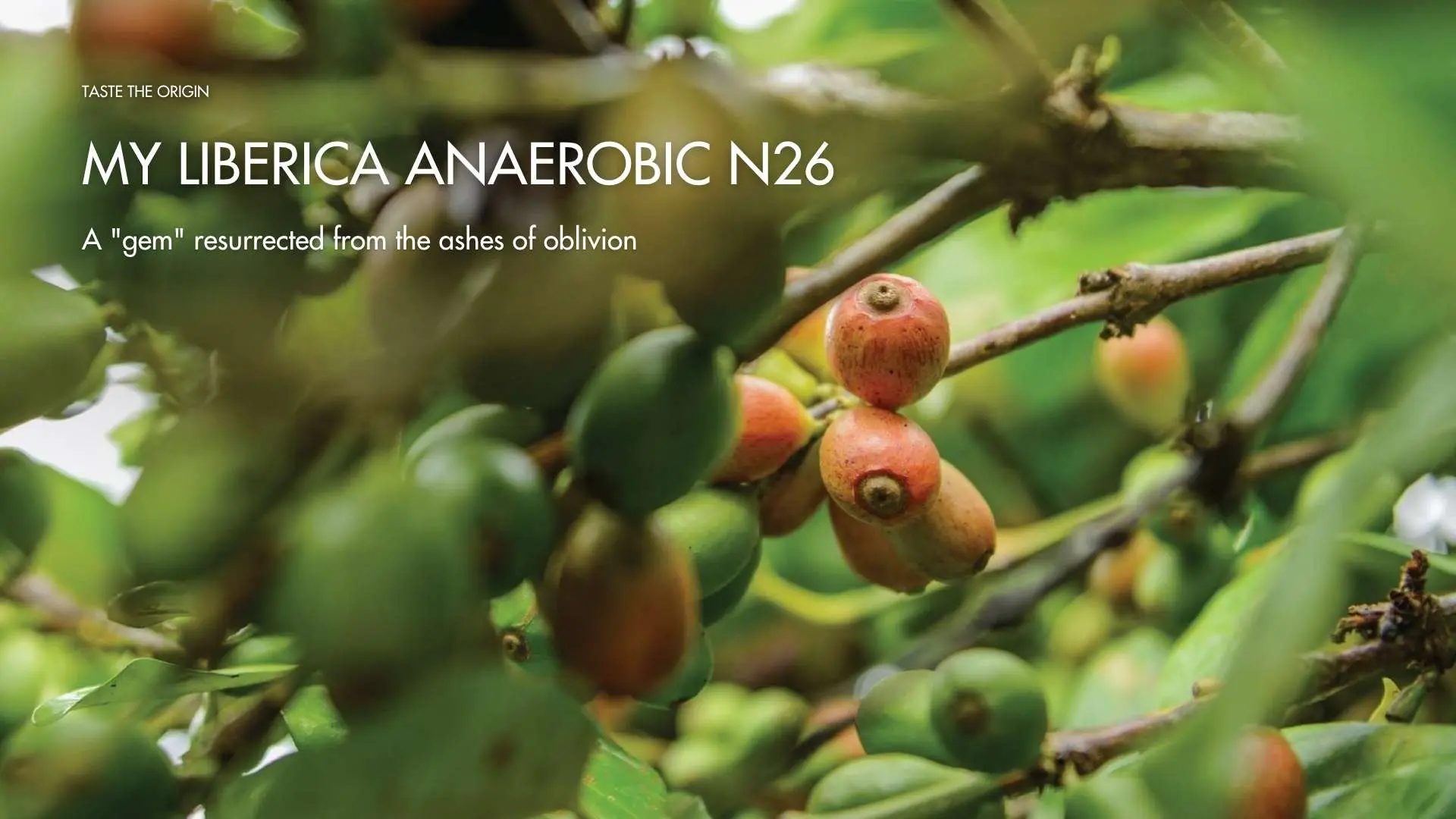
My Liberica Anaerobic N26 – A “gem” resurrected from the ashes of oblivion
The journey of My Liberica Anaerobic N26 is the triumph of a forgotten species, awakened by the depth of understanding, patience, and faith in its original essence. From the heavy clay layers of Kulai to 26 days of transformation in absolute darkness, each step contributes to unlocking layers of flavor that the world once thought could not exist in Liberica. More than just a cup of coffee, My Liberica Anaerobic N26 is a powerful declaration that all great values begin with the courage to delve into their essence, and then rise to a unique voice that resonates throughout the world.


- Taste the Origin
Finca Soledad Mejorado Tyoxy & Fincas Putushio Mejorado – The red thread of the Jijón family
The simultaneous arrival of Finca Soledad Mejorado Tyoxy and Fincas Putushio Mejorado at XLIII Coffee paints a remarkable portrait of the adaptability of the Mejorado variety within Ecuador’s specialty coffee landscape. Nurtured by a shared family philosophy and a commitment to principled cultivation, these two processed lots represent both a breakthrough in microbial innovation and the remarkable return of an exceptional flavor profile.

- Taste the Origin
Finca La Palestina Gesha #5482 – A new chapter in the legend from Cajamarca
From the renowned Cajamarca region, Finca La Palestina Gesha #5482 returns after a period of absence with a proud and fresh appearance. Nurtured in ideal altitude conditions and the cool climate characteristic of the Andes, each coffee bean slowly accumulates subtle flavor nuances before being perfected using the Washed method to maximize the purity of the Gesha variety. Under a carefully refined extremely-light roast profile, this batch of coffee reveals layers of white jasmine, ripe citrus, and sweet golden apricot aromas, interwoven in an elegant and rich flavor structure.

Specialty Coffee in Vietnam
BRAND VALUE
YOU SHOULD HAVE KNOWN
XLIII Coffee has been aiming to become a big, impactful company with social responsibilities,
have access to high-quality raw materials and convey the complete original values of coffee to our customer
